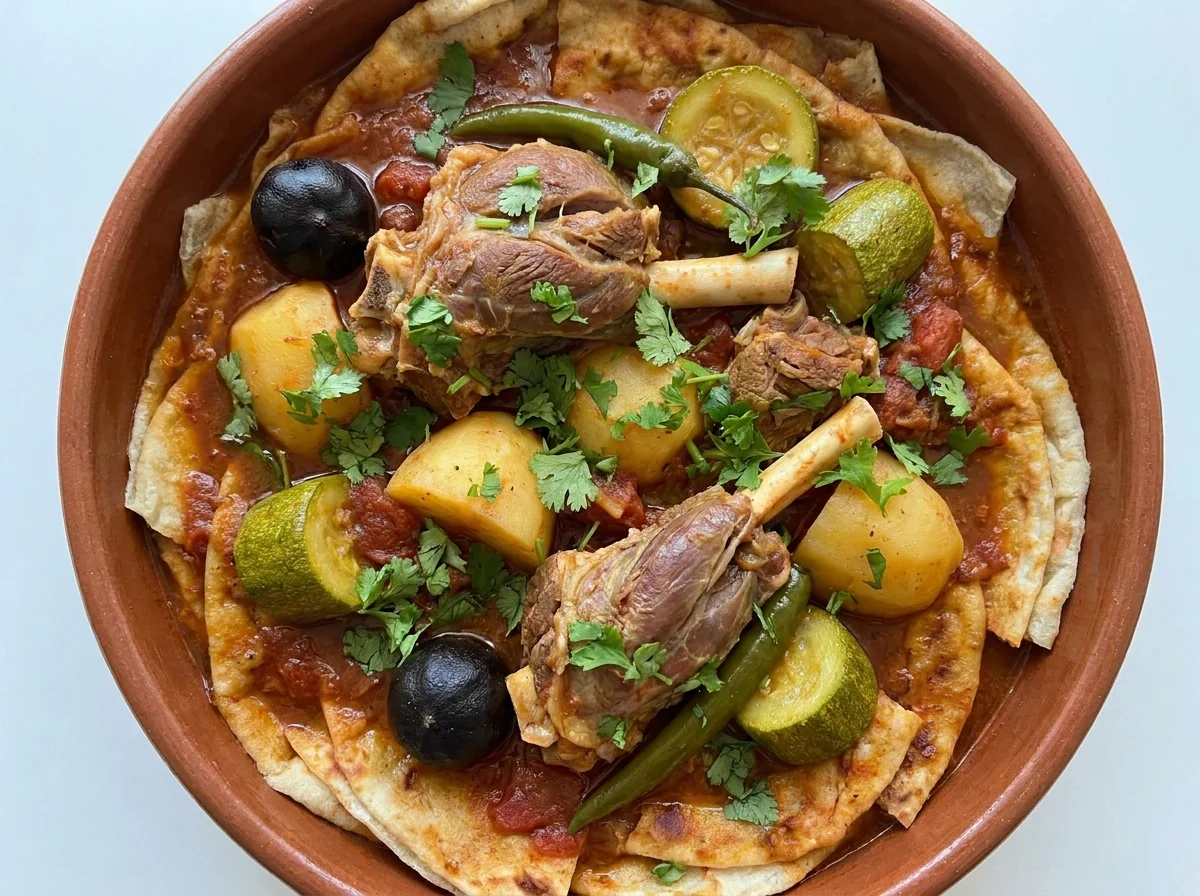
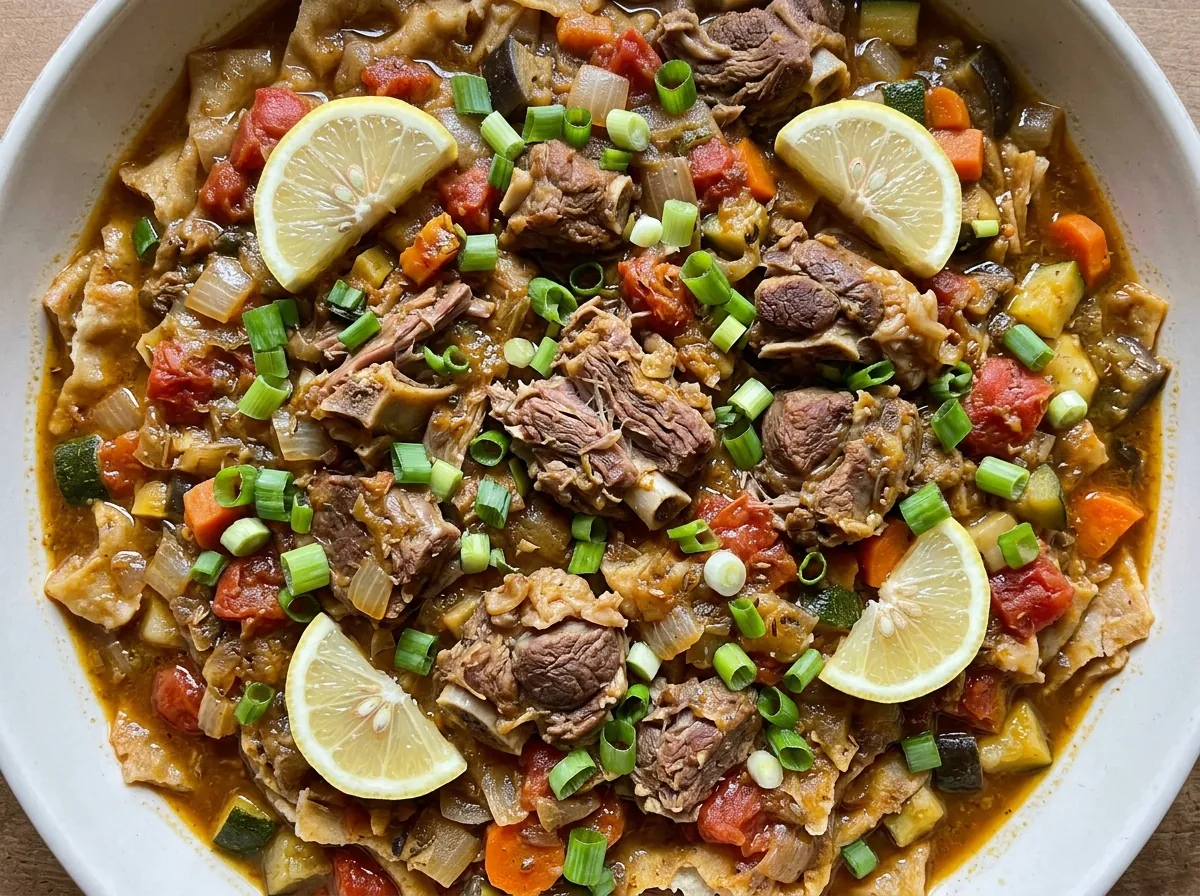
Tashreeb is among the most famous Ramadan dishes in the Gulf, its name coming from soaking (tashreeb) the bread in the red Loomi-spiced meat broth.
It is cooked in the homes of Kuwait, Saudi Arabia, and the UAE in similar ways, and is known among Iraqis as tashreeb.
Preparation Steps
Brown the meat with the onion
In a wide pot, heat the oil and stir the chopped onion until golden, then add the meat pieces and brown them on all sides until they take on color and stop sticking to the bottom. Good browning gives the broth a deeper color and flavor.
Build the red broth with Loomi
Add the crushed garlic, Baharat, and turmeric and stir for half a minute until fragrant, then add the grated tomato, tomato paste, the pierced Loomi, and the hot pepper for those who want it, and cover with one and a half liters of hot water. After it comes to a boil, lower the heat and cover for a full hour until the meat softens and the broth takes on the tartness of the Loomi.
Cut the vegetables and add them in
Cut the potatoes into large cubes and the zucchini into medium pieces, add them with the salt, and leave them for twenty minutes until the vegetables are tender and the broth concentrates. Keep plenty of broth, because the bread will soak up a lot of it.
Soak the bread right before serving
Cut up the Raqaq bread and spread it in a deep serving dish, then ladle the hot broth generously over it until it soaks through and softens, the very soaking that gave the dish its name. Then arrange the meat and vegetables on top.
Serve immediately
Scatter the fresh coriander and serve the dish at once, with the bread at its best right after soaking, for if the bread sits in the broth too long it falls apart.
Blood Sugar Impact
The glycemic index (GI) measures how quickly a food raises blood sugar, while the glycemic load (GL) measures how much a full serving raises it. Together they give the complete picture.
Glycemic Index
GI
62Medium
Low0–55Medium56–69High70+
A low value (≤55) means a gradual rise in blood sugar — the most suitable range for diabetes and insulin resistance.
Glycemic Load
GL
19Medium
Low0–10Medium11–19High20+
Glycemic load reflects the impact of the full serving. To lower it: take half a serving, or pair the recipe with a source of protein and fiber.
Nutritional Information
Per ServingMakes 6 servings · one serving is about 340 g of raw ingredients
Calories489 kcal24%of Daily Value*
Protein23 g46%of Daily Value*
Carbohydrates33 g12%of Daily Value*
Fat29 g37%of Daily Value*
Fiber3 g11%of Daily Value*
Sodium492 mg21%of Daily Value*
Potassium756 mg16%of Daily Value*
Phosphorus260 mg21%of Daily Value*
* Percent Daily Values are based on a 2,000-calorie diet per FDA food-label reference values — your daily needs may be higher or lower. Values are derived from the recipe's ingredients via the USDA database.
Troubleshooting
The most common problems when preparing Gulf Meat Tashreeb, and how to fix them:
The broth is scant and the bread soaked up most of it
This is normal because Raqaq bread soaks up a lot. Keep plenty of broth and ladle it over the bread right before serving, not a quarter hour ahead.
The meat is tough after an hour
The pieces are large or the boil was too vigorous. Leave it on low heat, covered, for an extra half hour, for bone-in meat needs more time but its broth is tastier.
The broth is more sour than it should be
The number of Loomi pieces or the amount of paste was too high. Two pieces are enough for the pot, and a teaspoon of sugar balances out the excess sourness.
The bread fell apart until it became like dough
The bread is too thin or sat in the broth too long. Lightly toasted Raqaq holds together better, and the dish is assembled at the moment of serving.
Storage and Make-Ahead
Immediately
The bread is assembled with the broth and eaten right away, for soaked bread does not keep for waiting.
In the refrigerator
The broth with the meat and vegetables keeps for three days, kept separate from the bread, with fresh bread soaked at each meal.
In the freezer
The broth and meat keep for two months, with the vegetables and bread added fresh after thawing.
Tested Ingredient Substitutions
Original Ingredient
Tested Substitute
Ratio
Flavor Difference
Lamb
Bone-in chicken
1:1
Chicken Tashreeb cooks half an hour faster
Raqaq bread
Toasted Arabic flatbread
1:1
Holds together in the broth for longer
Loomi
Lemon juice added at the end
30 ml
Fresh tartness without the smoky flavor
Potato and zucchini
Carrot and eggplant
1:1
The vegetable mix is free to suit the household's taste
How Much Does It Make? Scaling Guide
Ingredient
6 servings
3 servings
12 servings
Meat
800 g
400 g
1.6 kg
Bread
200 g
100 g
400 g
Tomatoes
300 g
150 g
600 g
EEINA Nutrition Tip
Pierce the Loomi pieces with a knife before adding them to the pot. A whole, sealed Loomi floats without releasing its flavor, while a pierced one lets the broth seep inside it so it gives off the smoky, tart taste that distinguishes Tashreeb.
Add This Recipe to Your Plan
The EEINA app saves your favorite recipes, calculates them from their real ingredients, and shows your daily numbers toward your goal. Try it free now.
All three combine bread with broth in different ways: Thareed (bread-soaked stew) has its bread torn up and drowned in broth, Margoog (vegetable stew with flatbread) is raw dough cooked inside the broth, and Tashreeb is fully baked bread moistened with broth at the moment of serving. Three methods and three independent dishes.
Why is something like it recommended for breaking the fast?
Because the warm broth rehydrates the body, and the bread's carbohydrates with the meat's protein supply energy gradually, so it is a complete, easy-to-digest meal that does not burden the stomach.
Can it be made in a pressure cooker for a workday?
Yes: cook the meat in the broth for half an hour from the start of the whistle, then add the vegetables for ten minutes without pressure, and assemble the dish as usual.
Where do I find Loomi?
At spice sellers and Gulf grocers under the name Loomi or dried black lime, choosing the light, dry-inside ones.