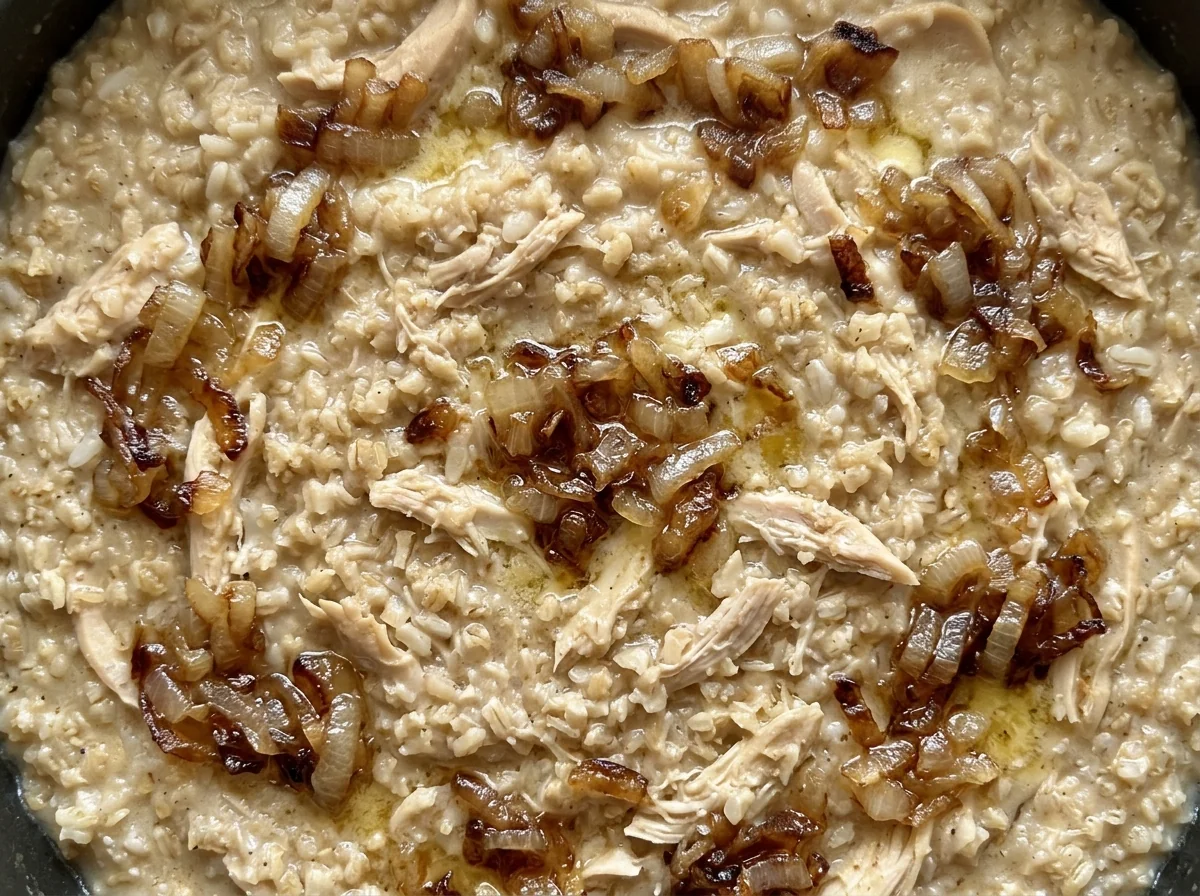
Chicken jareesh the Saudi way: chicken breasts are poached and shredded into threads, while fine cracked wheat with a little rice cooks in the poaching broth and is finished with milk until it turns creamy, almost like rageed porridge. A lighter version with skinless breasts, low-fat milk, and salt kept to a minimum with no stock cubes.
The original is a Saudi-style chicken jareesh recipe from Sayidaty Kitchen, whose signature is that the jareesh cooks in the chicken's poaching broth and is finished with milk, turning it white and creamy.
We lightened the original with declared changes: we chose skinless breasts — an option the original itself allows — used low-fat milk, dropped the stock cube in favor of the natural poaching broth and just four grams of salt, and soaked the fine jareesh, cutting the original's long hours of slow simmering to about an hour, enough for soaked fine jareesh to reach its texture.
Preparation Steps
Soak and rinse the jareesh
Rinse the jareesh and rice in cold water until the water runs clear, then soak them for 30 minutes. Soaking softens the jareesh, shortens the cooking time, and helps it reach its creamy texture.
Poach the chicken and build the broth
Cover the chicken breasts with the water in a pot along with the cardamom, bay leaf, and half the salt. Bring to a boil, then lower the heat and simmer 20 minutes until cooked through and the center reaches 74°C. Lift out the breasts and shred them into threads with two forks, then strain the broth and keep it — it is our replacement for stock cubes.
Brown the onion in the butter
In the same pot, melt the butter over medium heat and stir the onion for 6 to 7 minutes until golden and sweet. Set a quarter of it aside for garnish.
Cook the jareesh in the broth
Add the drained jareesh and rice with the remaining salt to the onion, and pour in enough hot broth to cover by two fingers. Let it come to a boil, then lower the heat, cover, and cook 30 minutes, stirring now and then, until the jareesh grains burst open and most of the broth is absorbed.
Add the milk and chicken and simmer slowly
Pour in the milk with the cumin and white pepper, return the shredded chicken, and cook uncovered over the gentlest heat for 30 to 40 minutes, stirring often to prevent sticking, until the texture is creamy and homogeneous — it should hold the trail of the spoon for a few seconds before settling back.
Beat the jareesh and serve
Beat the jareesh with a wooden spoon or hand whisk for a minute until it grows smoother and more cohesive, just as the people of Najd do, then pour it into a deep dish, top with the browned onion, and serve warm.
Blood Sugar Impact
The glycemic index (GI) measures how quickly a food raises blood sugar, while the glycemic load (GL) measures how much a full serving raises it. Together they give the complete picture.
Glycemic Index
GI
20Low
Low0–55Medium56–69High70+
A low value (≤55) means a gradual rise in blood sugar — the most suitable range for diabetes and insulin resistance.
Glycemic Load
GL
14Medium
Low0–10Medium11–19High20+
Glycemic load reflects the impact of the full serving. To lower it: take half a serving, or pair the recipe with a source of protein and fiber.
Nutritional Information
Per ServingMakes 5 servings · one serving is about 645 g of raw ingredients
Calories565 kcal28%of Daily Value*
Protein38 g76%of Daily Value*
Carbohydrates78 g28%of Daily Value*
Fat11 g14%of Daily Value*
Fiber10 g36%of Daily Value*
Sodium415 mg18%of Daily Value*
* Percent Daily Values are based on a 2,000-calorie diet per FDA food-label reference values — your daily needs may be higher or lower. Values are derived from the recipe's ingredients via the USDA database.
Troubleshooting
The most common problems when preparing Chicken Jareesh (Saudi Cracked Wheat Porridge), and how to fix them:
The jareesh stuck to the bottom and scorched
The heat was too high or the stirring too infrequent after the milk went in. Cook the milk stage over the gentlest heat, stirring down to the bottom every 5 minutes; a heavy-bottomed pot protects you further.
The texture stayed grainy, not creamy
The soak was skipped or the time was too short. Soak a full 30 minutes and give the milk stage its time; beating it with a hand whisk for a minute at the end brings it closer to the smoothness you want.
The jareesh turned thick and stiff after serving
Jareesh tightens as it cools — that is normal. Leave it slightly looser than you want when you turn off the heat, and stir in a couple of spoonfuls of hot milk when reheating to bring back the creaminess.
The chicken came out dry and stringy
It was poached too long or returned to the pot too early. Twenty minutes of poaching is enough for breasts, and return them shredded only in the final milk stage so they soak up the texture without drying out.
Storage and Make-Ahead
Refrigerator (4°C)
Keep in an airtight container for up to 3 days. The texture firms up when chilled, so loosen it while reheating with a little milk or water.
Freezer (-18°C)
Freeze in single portions for up to 2 months, leaving expansion room in the container, and thaw overnight in the refrigerator.
Reheating
Over low heat with 2 to 3 spoonfuls of milk or water and constant stirring until heated through to the center and creamy again.
Food safety
A starchy milk-based dish spoils quickly, so do not leave it at room temperature for more than 2 hours; cool it fast.
Tested Ingredient Substitutions
Original Ingredient
Tested Substitute
Ratio
Flavor Difference
Chicken breasts
Skinless, boneless chicken thighs
Same weight, 500 g
More tender and richer flavor in the broth, with slightly more fat than breast.
Low-fat milk
Whole milk
Same amount, 750 ml
A richer texture and a taste closer to home cooking, at the cost of more fat and calories.
Rice
Leave it out and increase the jareesh
450 g jareesh instead of the mix
The rice only adds smoothness; dropping it raises the whole-wheat share and its fiber.
Butter
Olive oil
15 ml, same amount
Cuts the saturated fat, though the onion loses the light buttery note.
How Much Does It Make? Scaling Guide
Servings
Jareesh
Chicken
Milk
Poaching water
5 servings
360 g
500 g
750 ml
1250 ml
8 servings
540 g
750 g
1125 ml
1875 ml
10 servings
720 g
1000 g
1500 ml
2500 ml
EEINA Nutrition Tip
The chicken poaching broth is the treasure of this recipe: full flavor with no cubes and no extra sodium, so never pour it away. And add the milk after the jareesh is cooked, not before — cooking jareesh in milk from the start makes it prone to sticking and scorching at the bottom.
Add This Recipe to Your Plan
The EEINA app saves your favorite recipes, calculates them from their real ingredients, and shows your daily numbers toward your goal. Try it free now.
How does it differ from the lamb jareesh in the EEINA library?
That one cooks with minced lamb in broth alone, no milk, coming out brown with a bezar-spice flavor. This one uses poached, shredded chicken and is finished with milk, coming out white, creamy, and more gently spiced — the most famous style of white jareesh in Najd.
Why is rice added to jareesh?
A little short-grain rice dissolves during the long cooking, adding smoothness and cohesion — an inherited Saudi home trick. Anyone who wants it pure wheat can drop the rice and add more jareesh.
Is jareesh a good choice for someone watching their blood sugar?
Jareesh is cracked wheat that keeps its bran, so it is higher in fiber than white rice with a gentler effect on blood sugar. It remains a starchy dish, though, so keep the portion to a fistful and pair it with a salad.
What is jareesh traditionally served with?
Browned onion on top, with a green salad or yogurt on the side. In Najdi homes it is paired with spicy tomato daggous salsa for anyone who likes cutting its richness with acidity.