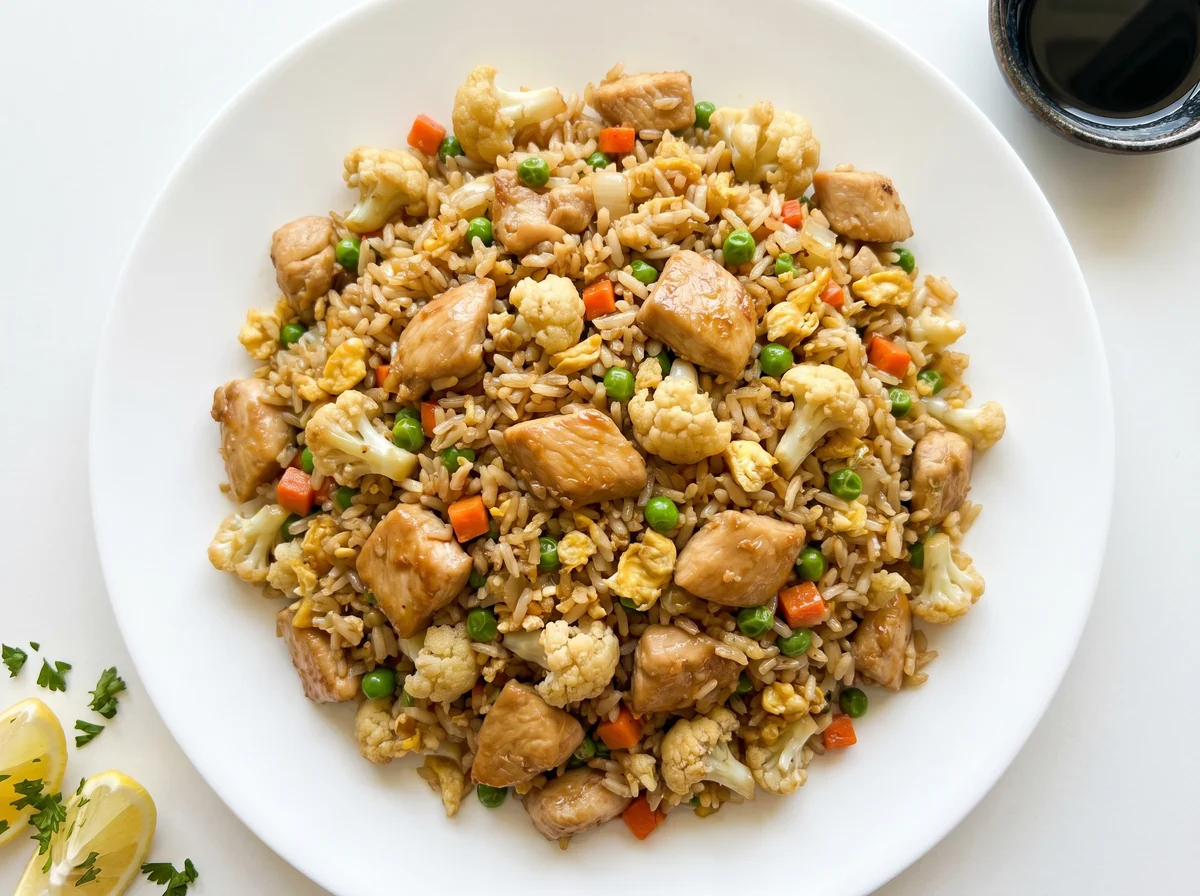
In Asian restaurants, fried rice gets its dark colour and salty flavour from soy sauce — which is precisely what makes it unsuitable for those watching sodium and potassium. The goal was a dish that keeps the spirit of quick fried rice — separate grains, crunchy vegetables and golden chicken pieces — but by the rules of kidney-friendly cooking.
The solution was simple and clever: boil the cauliflower first in a generous amount of water, then discard it to remove part of its potassium, and replace the soy sauce with garlic and lemon juice, which give depth and acidity without appreciable sodium. The result is a light dish that brings together enjoyment and discipline on a single plate — a practical lunch for those following a renal diet or simply looking for a lower-sodium meal.
Preparation Steps
Boil the cauliflower to leach potassium
Submerge the cauliflower florets in 2 litres of boiling water over high heat and leave them for 8 minutes until a fork pierces the floret easily while the texture stays firm. The large volume of water and pre-boiling dissolve a portion of the potassium into the cooking water — this is the primary purpose of this step for a kidney-friendly dish.
Drain the cauliflower and discard the boiling water
Pour the cauliflower into a colander and discard all the boiling water — do not use it for cooking, as the leached potassium has dissolved in it. Leave the florets to drain for two minutes until the outsides are dry so they do not splatter oil later.
Cook the chicken cubes
Heat half the oil (15 ml) in a wide pan over high heat, then add the chicken cubes in a single layer and fry for 6 to 7 minutes, stirring occasionally, until fully white on the inside and the internal temperature reaches 74°C when measured with a thermometer — the safe indicator that the chicken is done. Set aside.
Fry the garlic and vegetables
In the same pan add the remaining oil (15 ml), then the minced garlic, and stir for 30 seconds only over medium heat until fragrant without letting it brown and burn — burnt garlic turns bitter. Add the red bell pepper and drained cauliflower and stir for 3 minutes until the bell pepper softens slightly while the cauliflower stays firm.
Add the chilled rice and stir-fry
Push the vegetables to the side of the pan and add the chilled white rice, then raise the heat to high and stir-fry for 3 minutes until the rice is heated through and the grains are separate. Pre-chilled rice does not clump or stick, which is why day-old rice is preferred.
Return the chicken and season with lemon instead of soy
Return the chicken cubes to the pan, drizzle over the lemon juice, black pepper and cumin, and stir for one minute. The lemon and garlic provide the acidity and flavour depth that replace the soy sauce, eliminating a major source of sodium in this kidney-friendly dish. Add salt sparingly, to taste only.
Garnish and serve
Turn off the heat, scatter the spring onions over the dish and serve warm immediately. Avoid adding salt at the table to keep sodium low.
Blood Sugar Impact
The glycemic index (GI) measures how quickly a food raises blood sugar, while the glycemic load (GL) measures how much a full serving raises it. Together they give the complete picture.
Glycemic Index
GI
54Low
Low0–55Medium56–69High70+
A low value (≤55) means a gradual rise in blood sugar — the most suitable range for diabetes and insulin resistance.
Glycemic Load
GL
11Medium
Low0–10Medium11–19High20+
Glycemic load reflects the impact of the full serving. To lower it: take half a serving, or pair the recipe with a source of protein and fiber.
Nutritional Information
Per ServingMakes 4 servings · one serving is about 795 g of raw ingredients
Calories289 kcal14%of Daily Value*
Protein26 g52%of Daily Value*
Carbohydrates23 g8%of Daily Value*
Fat10 g13%of Daily Value*
Fiber3 g11%of Daily Value*
Sodium269 mg12%of Daily Value*
Potassium689 mg15%of Daily Value*
Phosphorus283 mg23%of Daily Value*
* Percent Daily Values are based on a 2,000-calorie diet per FDA food-label reference values — your daily needs may be higher or lower. Values are derived from the recipe's ingredients via the USDA database.
Troubleshooting
The most common problems when preparing White Fried Rice with Chicken and Pre-Boiled Cauliflower (Kidney-Friendly), and how to fix them:
Rice clumps and sticks to the base of the pan
Use cooked rice that was chilled the day before, not freshly hot rice — chilling dries the surface of each grain and prevents sticking. Also use high heat and a wide pan so the rice does not pile up.
Cauliflower breaks apart and goes too soft
Do not exceed 8 minutes of boiling — the fork should meet slight resistance, not slide through with no resistance at all. Remember it will be stir-fried for a further 3 minutes and will finish cooking then.
Bland flavour without the soy sauce
Double the garlic and add an extra splash of lemon juice at the end. Add a little cumin and black pepper. Acidity and garlic replace the depth of soy without its sodium.
Chicken dry and tough
Cut the chicken into small, evenly-sized cubes and fry over high heat for a short time just until it reaches 74°C, then remove immediately. Prolonged frying dries out chicken breast because of its low fat content.
Vegetables release water and the dish turns wet
Drain the cauliflower thoroughly and leave it for two minutes to dry before frying. Cook over high heat in batches — do not crowd the pan so the water evaporates rather than pooling.
Storage and Make-Ahead
Refrigerator
Keep the dish in an airtight container in the refrigerator at 4°C or below for two days, and chill it within two hours of cooking per food-safety danger-zone guidance.
Freezer
Freeze for one month in an airtight container; portioning into individual servings before freezing is recommended. The cauliflower may soften slightly after thawing but remains perfectly edible.
Reheating
Reheat in a pan over medium heat with a splash of water until fully hot and steaming, or in the microwave stirring halfway through. Do not reheat more than once.
Tested Ingredient Substitutions
Original Ingredient
Tested Substitute
Ratio
Flavor Difference
Chicken breast
Skinless turkey breast
1:1
A white-meat, low-saturated-fat alternative also suitable for a renal diet; cook to 74°C.
Cauliflower
Zucchini, diced
1:1
Zucchini is relatively lower in potassium and needs no lengthy pre-boiling — stir-fry directly for 3 to 4 minutes.
Red bell pepper
Coarsely grated carrot
1:1
Adds colour and natural sweetness. Stir-fry with the cauliflower from the start until softened.
Lemon juice
Diluted white vinegar
1 tablespoon vinegar per 2 tablespoons lemon
Provides the same acidity that replaces soy sauce; add gradually and taste.
Long-grain white rice
White basmati rice
1:1
White basmati remains relatively low in phosphorus and its grains stay separate; avoid brown rice due to its higher phosphorus and potassium content.
How Much Does It Make? Scaling Guide
Ingredient
4 servings
8 servings
12 servings
Cooked chilled white rice
600 g
1200 g
1800 g
Chicken breast, cubed
400 g
800 g
1200 g
Cauliflower florets
350 g
700 g
1050 g
Red bell pepper
120 g
240 g
360 g
Vegetable oil
30 ml
60 ml
90 ml
Lemon juice
30 ml
60 ml
90 ml
Water for boiling
2 L
4 L
6 L
EEINA Nutrition Tip
Boil the cauliflower in the largest volume of water the pot allows — the higher the water-to-vegetable ratio, the more potassium leaches into the boiling water. Discard all the water and never use it as a stock. Hold the salt until the last step and taste before adding it; usually the garlic, lemon and pepper are enough to satisfy the palate with far less sodium.
Add This Recipe to Your Plan
The EEINA app saves your favorite recipes, calculates them from their real ingredients, and shows your daily numbers toward your goal. Try it free now.
Does boiling the cauliflower remove all the potassium?
No — boiling in a generous amount of water leaches only a portion of the water-soluble potassium; it does not remove it entirely. It is a step that reduces the content and helps maintain the diet, but it does not make the vegetable potassium-free. Follow the portion limits set by your renal dietitian.
Why white rice and not brown in a kidney-friendly dish?
White rice is lower in phosphorus and potassium than brown rice because milling removes much of these minerals in the bran layer. That is why many people with kidney disease prefer it, even though brown rice is richer in fibre in other health contexts.
What is a safe kidney-friendly substitute for soy sauce?
Garlic and lemon juice are the main substitutes in this recipe — they provide depth and acidity without appreciable sodium. A splash of vinegar or fresh herbs can also work. Avoid reduced-sodium soy sauce alternatives if they are high in potassium from their ingredients.
Is this dish suitable for people with diabetes?
Use caution — white rice has a high glycaemic index and can raise blood sugar quickly. Diabetes is not listed as a condition tag for this dish for this reason. Those following a diabetic diet should reduce the rice portion, double the vegetables, and consult their dietitian.
How long does the dish keep in the refrigerator?
Two days in an airtight container at 4°C or below, provided it is chilled within two hours of cooking. Reheat until steaming once only.