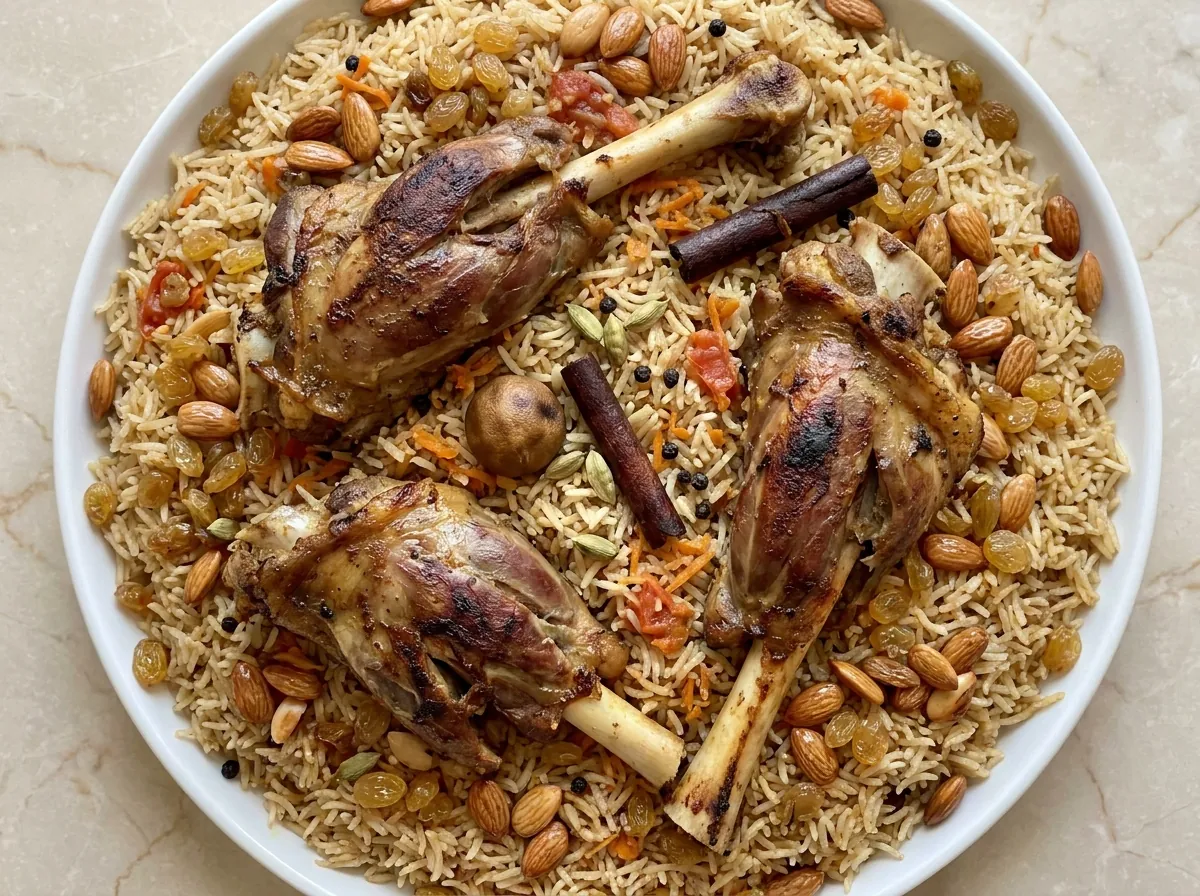
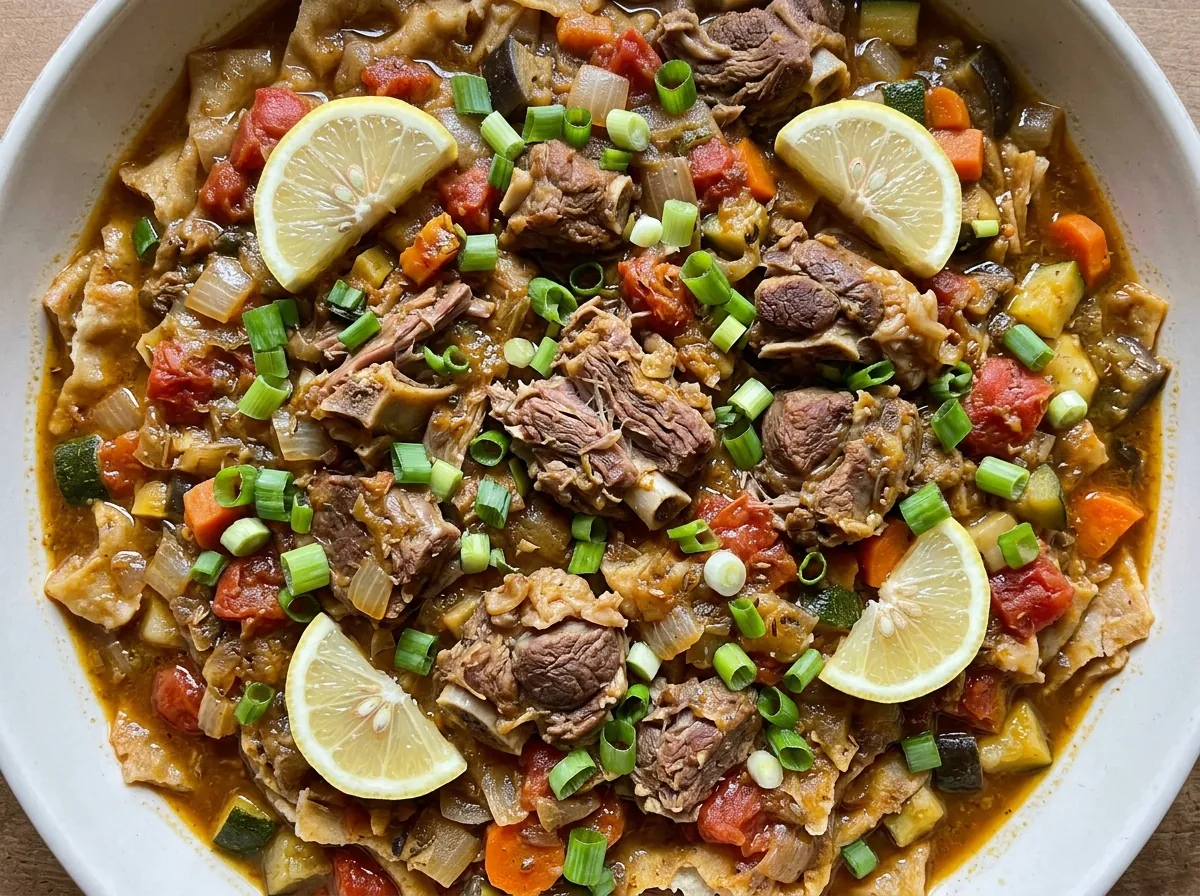
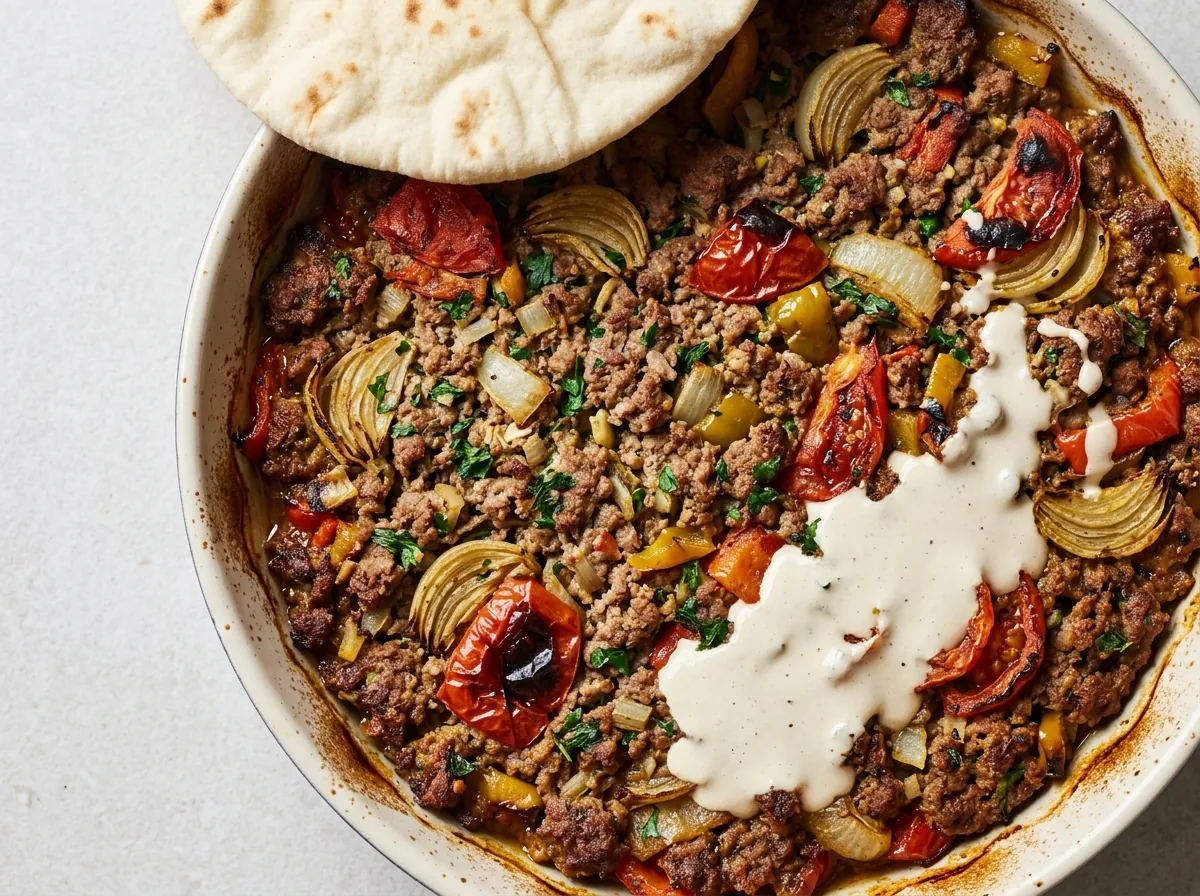
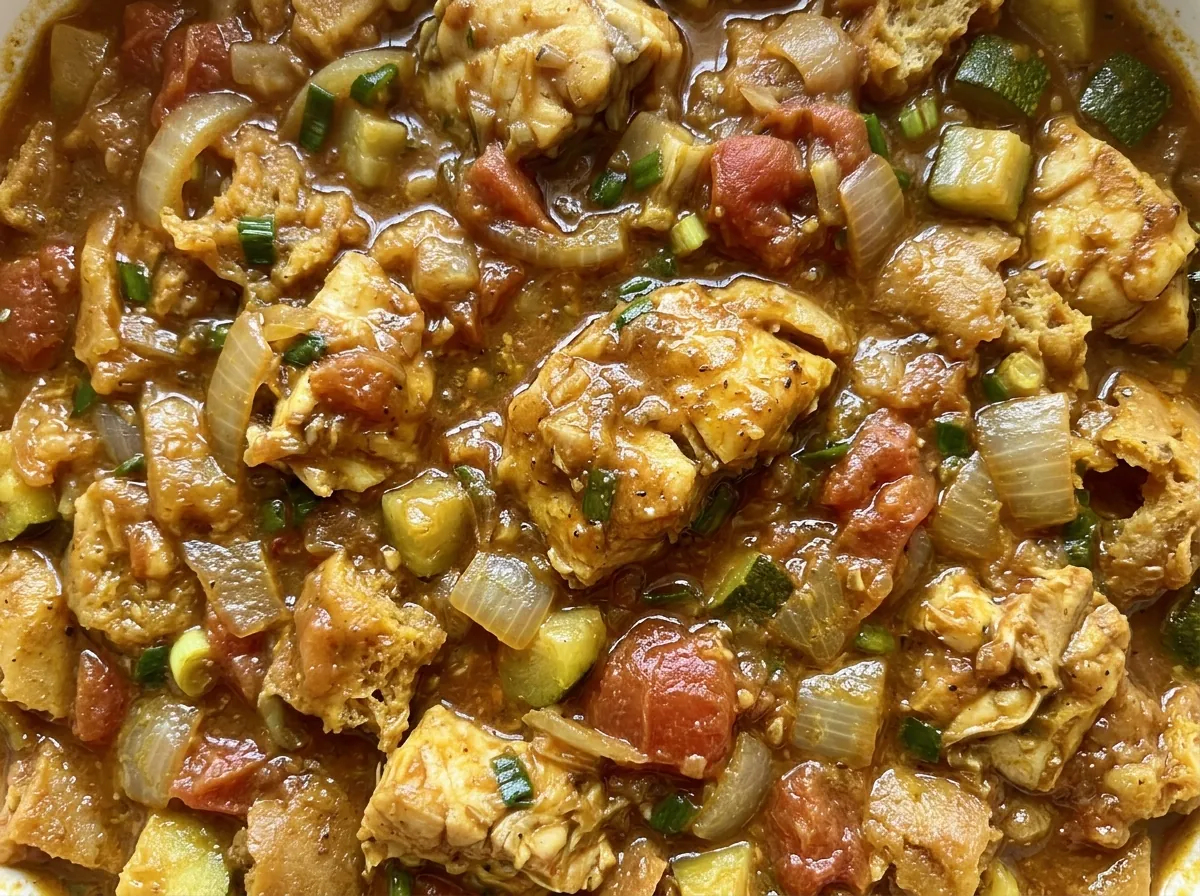
Hashi meat is one of the time-honored specialties of the Saudi table: a deep red, lean meat for which the country's butcheries and restaurants are famous, and its Kabsa with a two-hour simmer is among the most premium and least fatty of Kabsas.
Preparation Steps
Brown the camel meat
Heat the ghee in a large pot and brown the Hashi pieces on all sides until they form a brown crust. Good browning is the foundation of the Kabsa's flavor.
Build the Kabsa broth
Add the chopped onion until it browns, then the garlic, ginger, and spices for half a minute until fragrant, then the grated tomato, the paste, and the pierced Loomi, then cover with hot water and season with salt.
Simmer the meat for two full hours
Let the pot come to a boil, then lower the heat and cover for two full hours until the Hashi meat becomes tender and separates from its bone easily. Camel meat cooks more slowly than lamb, and one hour is not enough for it.
Cook the rice in the broth
Lift out the meat, strain the broth, return twice the volume of the rice from it, and adjust its salt, then add the washed, soaked rice and the grated carrot, which gives the Kabsa its color and a light sweetness, and bring to a boil, then lower the heat and cover for twenty minutes until the rice is fluffy and has absorbed the broth.
Brown the top and assemble the dish
Brush the meat pieces with a little ghee and spices and put them in a hot oven for ten minutes until they brown, then spread out the rice, place the meat on top, and scatter the raisins and toasted almonds.
Blood Sugar Impact
The glycemic index (GI) measures how quickly a food raises blood sugar, while the glycemic load (GL) measures how much a full serving raises it. Together they give the complete picture.
Glycemic Index
GI
69Medium
Low0–55Medium56–69High70+
A low value (≤55) means a gradual rise in blood sugar — the most suitable range for diabetes and insulin resistance.
Glycemic Load
GL
61High
Low0–10Medium11–19High20+
Glycemic load reflects the impact of the full serving. To lower it: take half a serving, or pair the recipe with a source of protein and fiber.
Nutritional Information
Per ServingMakes 8 servings · one serving is about 390 g of raw ingredients
Calories641 kcal32%of Daily Value*
Protein40 g80%of Daily Value*
Carbohydrates92 g33%of Daily Value*
Fat12 g15%of Daily Value*
Fiber3 g11%of Daily Value*
Sodium457 mg20%of Daily Value*
* Percent Daily Values are based on a 2,000-calorie diet per FDA food-label reference values — your daily needs may be higher or lower. Values are derived from the recipe's ingredients via the USDA database.
Troubleshooting
The most common problems when preparing Camel Meat Kabsa, and how to fix them:
The Hashi meat came out tough
The simmering time was too short, and this is the most common mistake with it. Two hours is the minimum and three for an older animal, and a pressure cooker shortens it to fifty minutes.
The rice came out doughy
The broth exceeded twice the volume of the rice or the heat was not lowered. Stick to twice the volume and to twenty covered minutes on the lowest heat.
The broth is pale in color
The paste is too little or the browning is insufficient. Good browning of the meat and frying the paste at the start of the broth are the source of the color.
The Hashi flavor is unfamiliar to some guests
Its flavor is stronger than lamb and this is its nature. The Loomi and spices balance it, and it can be served without mentioning the type of meat beforehand so it is judged on taste alone.
Storage and Make-Ahead
Immediately
Served hot in the middle of the table.
In the refrigerator
Three days, meat and rice, in containers, reheated by steam or covered.
In the freezer
The meat with its broth for two months, with fresh rice cooked in it on the day of need.
Tested Ingredient Substitutions
Original Ingredient
Tested Substitute
Ratio
Flavor Difference
Hashi meat
Lamb
1:1
Returns to the usual meat Kabsa with one hour of simmering
The large bone-in pieces
Small Hashi cubes
1:1
Cook in an hour and a quarter, with the loss of the bone's appearance
The ghee
Oil
1:1
Lighter, though ghee is the foundation of Kabsa flavor
The raisins and almonds
Caramelized onion (kishna)
same amount
A savory topping in the Qassim style instead of the sweet one
How Much Does It Make? Scaling Guide
Ingredient
8 servings
4 servings
16 servings
The Hashi
1.5 kg
750 g
3 kg
The rice
800 g
400 g
1.6 kg
The Loomi
3
2
6
EEINA Nutrition Tip
Give the Hashi meat two full hours over low heat and do not treat it like lamb. It is leaner and slower to cook, and needs longer for its tissue to tenderize, and whoever rushes it eats tough meat.
Add This Recipe to Your Plan
The EEINA app saves your favorite recipes, calculates them from their real ingredients, and shows your daily numbers toward your goal. Try it free now.
Clearly lower in saturated fat than lamb and richer in iron, and it is a good red meat for whoever cooks it well with slow cooking.
Where do I find it and what do I ask for?
In the specialized Hashi butcheries in most cities, and it is requested from a young animal (hiwar) because the meat of an older one needs longer simmering.
How does its Kabsa differ from the usual meat Kabsa?
The difference is in the meat itself: two hours of simmering instead of one, a deeper browning crust, and a stronger flavor. The Kabsa method is the same.
Is it suitable for someone cutting back on fat?
Yes, it is among the most suitable red meats for its low fat, with a measured ladle of rice and a salad before the plate.