Baked White Fish Fillet with Lemon Rice (Renal-Friendly)
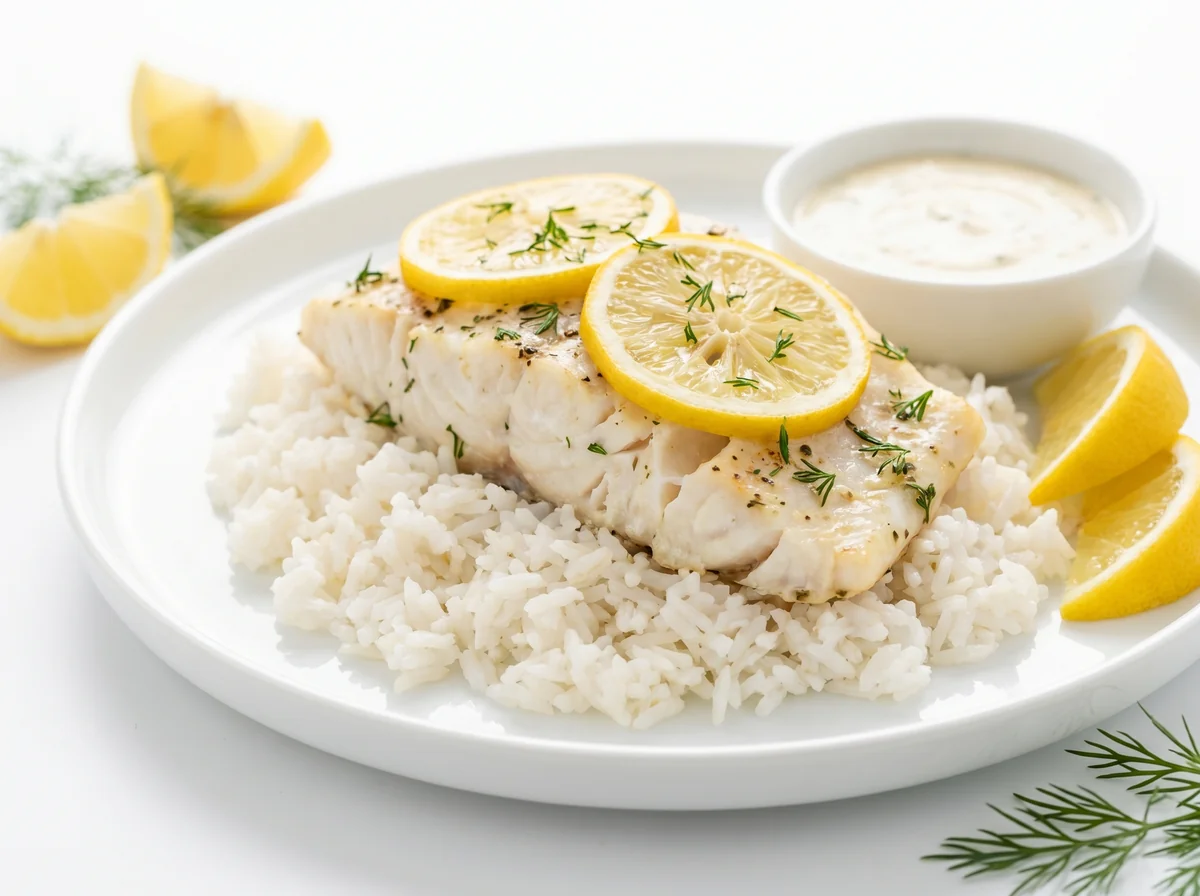
Baked white fish fillet with lemon rice. Gulf and Mediterranean flavours. Naturally low in sodium, potassium, and phosphorus. A kidney-friendly dinner with complete protein from white fish over fragrant lemon-herb rice.
In coastal Gulf homes, fresh white fish was traditionally cooked simply with lemon and herbs, without heavy sauces or salt.
This recipe draws on that simplicity and adapts it for a kidney diet: a light fillet emerges from the oven tender and flaky, served over fragrant white rice with lemon and garlic — a warm, familiar flavour with a gentle mineral load on the kidneys.
Preparation Steps
Soak the rice
Rinse the white rice under cold running water until the water runs clear, then soak for 10 minutes and drain. Rinsing and soaking leach some of the starch and dissolved potassium, making the rice gentler on a kidney diet.
Season the fish
Pat the fish fillets completely dry with kitchen paper, then brush with half the olive oil and rub the surface with lemon juice, lemon zest, thyme, black pepper, and a light pinch of salt. Drying before coating ensures a clean lemon flavour with no dilution.
Saute the aromatics
Heat the remaining olive oil in a pot over medium heat for two minutes, add the chopped onion and stir for five minutes until softened and translucent without browning, then add the garlic and stir for one minute until fragrant. Sauteing the onion first builds a flavour base that reduces the need for extra salt.
Cook the rice
Add the drained rice and stir for two minutes until coated in the oil, then pour in the water with a third of the lemon juice and a pinch of salt. Bring to the boil, then reduce the heat, cover the pot tightly, and leave for 18 minutes until the water is absorbed and steam holes appear on the surface. A tight lid traps steam so the grains cook evenly.
Bake the fish
Arrange the fillets on a baking tray lined with parchment paper and place in a preheated oven at 200 degrees C for 12 to 15 minutes until the internal temperature reaches 63 degrees C and the fish flakes easily with a fork. 63 degrees C is the recognised safe temperature for fish.
Finish and serve
Scatter the parsley and dill over the rice and fluff gently with a fork to separate the grains, then sprinkle the paprika and remaining lemon juice over the fish. Serve the fillet over the rice immediately while everything is hot so the rice stays fluffy and the fish stays tender.
Blood Sugar Impact
The glycemic index (GI) measures how quickly a food raises blood sugar, while the glycemic load (GL) measures how much a full serving raises it. Together they give the complete picture.
Glycemic Index
GI
68Medium
Low0–55Medium56–69High70+
A low value (≤55) means a gradual rise in blood sugar — the most suitable range for diabetes and insulin resistance.
Glycemic Load
GL
35High
Low0–10Medium11–19High20+
Glycemic load reflects the impact of the full serving. To lower it: take half a serving, or pair the recipe with a source of protein and fiber.
Nutritional Information
Per ServingMakes 4 servings · one serving is about 395 g of raw ingredients
Calories445 kcal22%of Daily Value*
Protein33 g66%of Daily Value*
Carbohydrates53 g19%of Daily Value*
Fat10 g13%of Daily Value*
Fiber2 g7%of Daily Value*
Sodium294 mg13%of Daily Value*
Potassium932 mg20%of Daily Value*
Phosphorus332 mg27%of Daily Value*
* Percent Daily Values are based on a 2,000-calorie diet per FDA food-label reference values — your daily needs may be higher or lower. Values are derived from the recipe's ingredients via the USDA database.
Troubleshooting
The most common problems when preparing Baked White Fish Fillet with Lemon Rice (Renal-Friendly), and how to fix them:
The fish came out dry and crumbly
The baking time or temperature was exceeded. Remove the fillet as soon as it reaches 63 degrees C at its thickest point and do not leave it in the turned-off oven. White fish fillets are thin and cook quickly.
The rice is sticky and clumped
Excess starch. Rinse the rice until the water runs clear before cooking, maintain the correct water ratio, and do not lift the lid during cooking. After cooking, leave covered for five minutes then fluff with a fork.
The flavour is bland and seems to need salt
Before reaching for salt, increase the lemon juice, zest, and fresh herbs. Acidity and aromatics trick the palate into perceiving flavour without raising sodium. Salt remains the last option and should be used in the smallest amount possible.
Strong fishy smell
Pat the fillet completely dry then rub with lemon juice and leave for 10 minutes before baking. The acidity of the lemon softens the smell, and drying prevents the water vapour that carries it from evaporating.
The rice is cooked but the water has not been absorbed
Remove the lid and raise the heat for a minute or two to evaporate the excess, or drain it off. Next time, reduce the water slightly as rice absorption varies by variety.
Storage and Make-Ahead
Refrigerator (4 degrees C)
Store the fish and rice in two separate airtight containers for up to three days. Keep them separate so each retains its own texture.
Freezer (-18 degrees C)
Cooked rice freezes well for up to one month in an airtight container. Freezing cooked fish is possible for up to one month, though the texture changes slightly on thawing.
Reheating
Reheat the rice with a splash of water to restore moisture. Reheat the fish gently to 74 degrees C to avoid drying it out.
Two-hour rule
Do not leave cooked food at room temperature for more than two hours (or one hour in hot weather). Refrigerate promptly to prevent bacterial growth.
Tested Ingredient Substitutions
Original Ingredient
Tested Substitute
Ratio
Flavor Difference
Cod or catfish
Tilapia or light grouper (hammour)
1:1
Choose a light white fish that is relatively low in phosphorus. Avoid oily fish which are higher in phosphorus if your restrictions are strict.
White rice
White pasta or refined couscous
As per packet instructions
Both are refined starches low in phosphorus and potassium. Avoid brown rice and bulgur wheat which are higher in these minerals.
White onion
Leek (white part only) or chives
1:1
Gentle flavour alternatives that add depth without raising the mineral load.
Dill and parsley
Fresh coriander or basil
1:1
Any fresh herbs work well here. Use them generously as they are a low-sodium flavour source.
Lemon juice
Diluted apple cider vinegar
Half the quantity
Provides an alternative acidity. Dilute it as it is sharper than lemon — start with a small amount.
How Much Does It Make? Scaling Guide
Ingredient
4 servings
6 servings
8 servings
White fish fillet (g)
600
900
1200
White rice (g)
240
360
480
Water (ml)
600
900
1200
Lemon juice (ml)
60
90
120
Olive oil (ml)
30
45
60
Garlic (cloves)
3
4
6
EEINA Nutrition Tip
On a kidney diet, the cooking method matters as much as the choice of ingredients. Build flavour from lemon juice, lemon zest, and fresh herbs rather than salt and ready-made spice blends which hide high sodium. Rinse and soak the rice before cooking — a simple step that reduces some dissolved potassium. And work with your renal dietitian to confirm the right fish portion size for your stage of kidney disease.
Add This Recipe to Your Plan
The EEINA app saves your favorite recipes, calculates them from their real ingredients, and shows your daily numbers toward your goal. Try it free now.
Is this recipe suitable for kidney patients on dialysis?
Its ingredients are low in sodium, potassium, and phosphorus, but dialysis patients typically need higher protein and have individual restrictions on fluid, potassium, and other minerals. Adjust the fish portion size with your nephrologist and renal dietitian before adopting it.
Why white rice here rather than brown?
Refined white rice is lower in phosphorus and potassium than brown rice because refining removes the outer bran layer that is rich in both minerals — making it a gentler choice on a kidney diet according to National Kidney Foundation guidelines.
How do I know when the fish is cooked without drying it out?
Use an instant-read thermometer. Fish is cooked when it reaches 63 degrees C at its thickest point and flakes easily with a fork. Remove it immediately at this point as excess heat dries it out.
Can I reduce the potassium in the rice further?
Yes. Rinse the rice until the water runs clear and soak before cooking, then drain — this step dissolves some potassium. Cooking it in a generous amount of water then draining reduces it further.
Can I add tomatoes or spinach to the rice?
It is better to avoid both on a kidney diet as they are high in potassium. Keep the flavour base to lemon, herbs, onion, and garlic, and consult your dietitian if you wish to add vegetables.