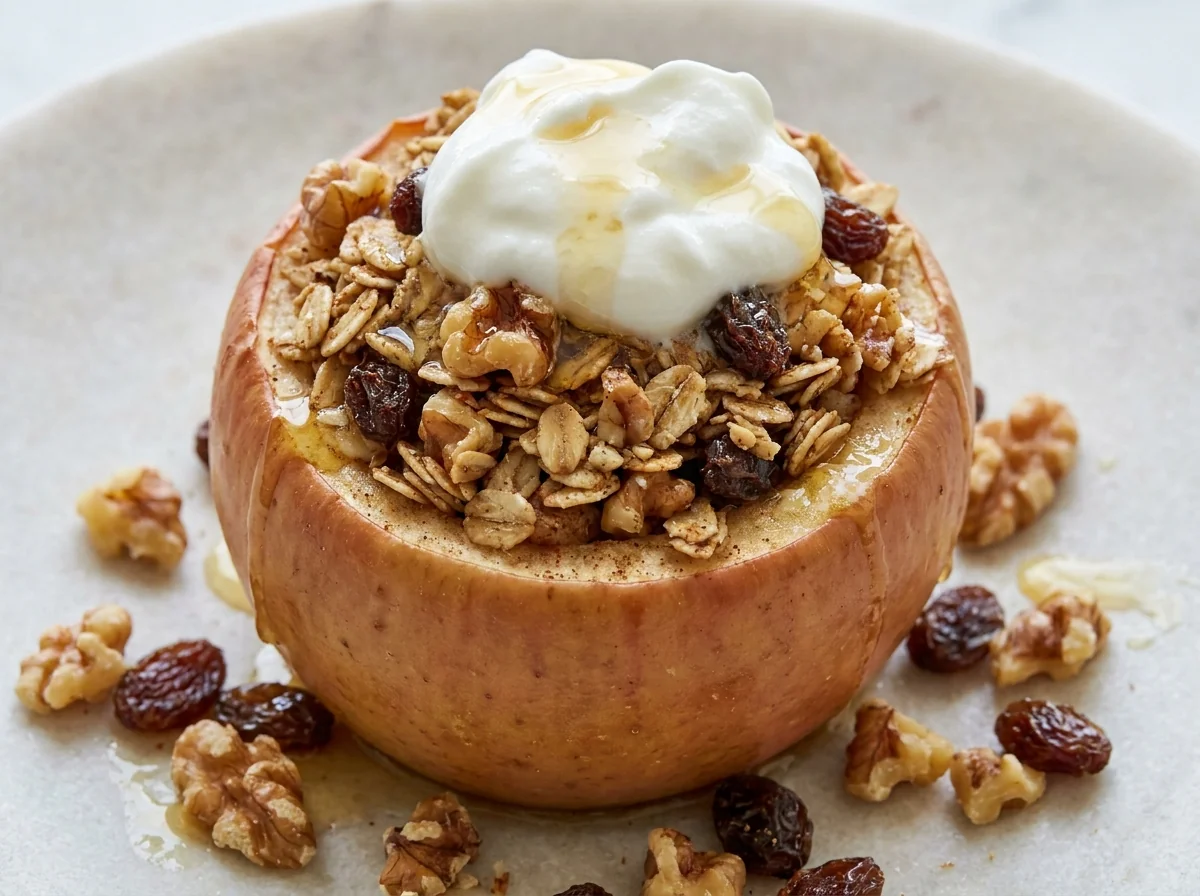
Baked apples are an old European dessert from before cheap sugar spread: the apple itself is the mold and the source of sweetness, the oat-walnut filling crisps in its core while baking, and the smell of cinnamon fills the house.
Preparation Steps
Wash the apples and core them, keeping the bottom intact
Wash the apples, then cut off the top of each one and carve out a stuffing cavity with a teaspoon, leaving the bottom intact and the wall about one centimeter thick. A pierced bottom leaks the juices, and a thin wall collapses in the oven.
Mix the oat and walnut filling
Rub the oats, chopped walnuts, raisins, cinnamon, and nutmeg with the honey and softened butter until the mixture holds together. This filling crisps up over the tender apple core after baking.
Fill the cavities
Fill the cavities with a light press and leave a small mound of filling on top of each apple, as it sinks during baking and its top browns.
Bake with hot water in the bottom of the pan
Place the apples in a baking pan and pour the hot water into its bottom, then bake at 180 degrees for thirty-five minutes until the apple is tender to a fork without collapsing. The water evaporates during baking, cooking the apples from below and preventing them from sticking and their bottoms from burning.
Serve warm with yogurt
Serve each apple warm, topped with a spoonful of cold Greek yogurt. A complete winter dessert from a single fruit and its filling.
Blood Sugar Impact
The glycemic index (GI) measures how quickly a food raises blood sugar, while the glycemic load (GL) measures how much a full serving raises it. Together they give the complete picture.
Glycemic Index
GI
44Low
Low0–55Medium56–69High70+
A low value (≤55) means a gradual rise in blood sugar — the most suitable range for diabetes and insulin resistance.
Glycemic Load
GL
20High
Low0–10Medium11–19High20+
Glycemic load reflects the impact of the full serving. To lower it: take half a serving, or pair the recipe with a source of protein and fiber.
Nutritional Information
Per ServingMakes 4 servings · one serving is about 300 g of raw ingredients
Calories340 kcal17%of Daily Value*
Protein7 g14%of Daily Value*
Carbohydrates53 g19%of Daily Value*
Fat13 g17%of Daily Value*
Fiber7 g25%of Daily Value*
Sodium15 mg1%of Daily Value*
Potassium410 mg9%of Daily Value*
Phosphorus186 mg15%of Daily Value*
* Percent Daily Values are based on a 2,000-calorie diet per FDA food-label reference values — your daily needs may be higher or lower. Values are derived from the recipe's ingredients via the USDA database.
Troubleshooting
The most common problems when preparing Baked Apples Stuffed with Oats and Cinnamon, and how to fix them:
The apple collapsed and fell apart
The variety is soft or the baking time was too long. Choose a firm variety (Gala, Fuji, or Granny Smith) and stick to thirty-five minutes; the standard is that it becomes tender only to a fork.
It stayed hard and undercooked
The apples are too large or the oven heat is low. Add ten minutes and cover the pan with aluminum foil to trap the steam.
The filling burned before the apple cooked
The oven is above 180 degrees or the rack is too high. Use the middle rack and the stated temperature, and cover the top with foil if it browns early.
The bottom stuck to the pan
Hot water was not placed in the bottom of the pan. The 100 ml is essential: it provides steam and protects the bottom at the same time.
Storage and Make-Ahead
Immediately, warm
Best while warm with cold yogurt.
In the fridge
Keep for two days, and reheat in a warm oven or eat cold like stewed fruit dessert.
Not suitable for freezing
The structure of a baked apple collapses when thawed.
Tested Ingredient Substitutions
Original Ingredient
Tested Substitute
Ratio
Flavor Difference
Walnuts
Crushed almonds or omit
1:1
A filling suitable for those with a walnut allergy
Honey
Date molasses
1:1
A deeper local sweetness
Raisins
Chopped dates or dried berries
1:1
Any available dried fruit will do
Greek yogurt
Light vanilla custard
same amount
A serving closer to the English style
How Much Does It Make? Scaling Guide
Ingredient
4
2
8
Apple
800 g
400 g
1.6 kg
Oats
60 g
30 g
120 g
Honey
30 g
15 g
60 g
EEINA Nutrition Tip
When coring the apple, leave its bottom intact and its wall about one centimeter thick. A pierced bottom leaks the sweetened juices into the pan, so the apple comes out hollow and dry, whereas a closed cavity traps the steam and juices inside, cooking the apple in its own juices.
Add This Recipe to Your Plan
The EEINA app saves your favorite recipes, calculates them from their real ingredients, and shows your daily numbers toward your goal. Try it free now.
Firm, sweet-tart varieties: Gala, Fuji, and Granny Smith. Soft varieties like Red Delicious collapse and turn to mush.
How is this dessert counted?
An apple with its filling is about 340 calories, with the fiber of the whole fruit and the oats, so it is a dessert that actually satisfies, unlike a slice of cake.
Why is its smell so strong in the house?
Cinnamon and apple in the oven are among the most famous winter baking aromas, and this is part of the dish's appeal when served.
Does it work as breakfast?
Yes, with a larger amount of yogurt: oats, fruit, and yogurt in one dish.