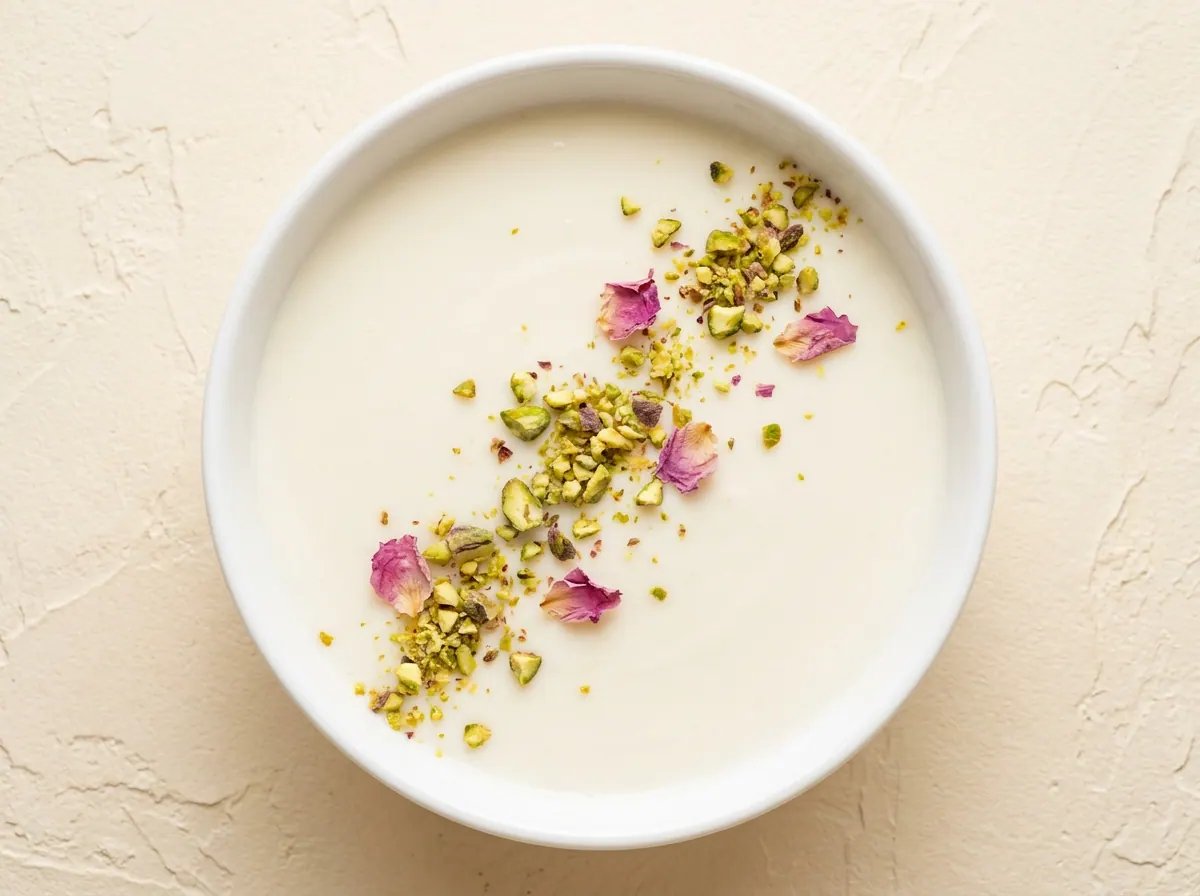
The classic Levantine mahalabia made with four authentic ingredients, using reduced sugar and low-fat milk. A smooth, fragrant dessert perfumed with rose water, low estimated GI, and rich in calcium.
Mahalabia is the Levantine kitchen's most beloved homemade dessert, requiring just four ingredients: milk, cornstarch, sugar, and drops of rose water. Its name traces back to al-Muhallab ibn Abi Sufra, and Arab culinary writers of antiquity described it as the smooth milk dessert served cold in glasses.
EEINA's adaptation does not touch the spirit of the dish — it only lightens its heavy hand: low-fat milk instead of full-fat, and less than half the usual sugar. Milk is an inherently low-glycemic-index base, as its natural lactose slows the rise in blood sugar compared with starchy desserts [1].
Preparation Steps
Dissolve the cornstarch
In a small bowl, dissolve the cornstarch in one cup of cold milk until the mixture is completely smooth with no lumps.
Heat the milk
In a medium pot over low heat, warm the remaining milk with the sugar, stirring until the sugar dissolves without bringing it to a boil.
Add the cornstarch
Add the cornstarch mixture gradually with continuous whisking until the mixture begins to thicken (5 to 7 minutes).
Perfume
Remove the pot from the heat, add the rose water and orange blossom water, and stir. Adding the fragrance after turning off the heat preserves the aroma.
Pour and chill
Pour the mahalabia into six serving glasses, allow to cool, then cover and refrigerate for two hours. Garnish with crushed pistachios before serving.
Blood Sugar Impact
The glycemic index (GI) measures how quickly a food raises blood sugar, while the glycemic load (GL) measures how much a full serving raises it. Together they give the complete picture.
Glycemic Index
GI
62Medium
Low0–55Medium56–69High70+
A low value (≤55) means a gradual rise in blood sugar — the most suitable range for diabetes and insulin resistance.
Glycemic Load
GL
18Medium
Low0–10Medium11–19High20+
Glycemic load reflects the impact of the full serving. To lower it: take half a serving, or pair the recipe with a source of protein and fiber.
Nutritional Information
Per ServingMakes 6 servings · one serving is about 195 g of raw ingredients
Calories220 kcal11%of Daily Value*
Protein6 g12%of Daily Value*
Carbohydrates30 g11%of Daily Value*
Fat8 g10%of Daily Value*
Fiber1 g4%of Daily Value*
Sodium71 mg3%of Daily Value*
Potassium292 mg6%of Daily Value*
Phosphorus175 mg14%of Daily Value*
* Percent Daily Values are based on a 2,000-calorie diet per FDA food-label reference values — your daily needs may be higher or lower. Values are derived from the recipe's ingredients via the USDA database.
Troubleshooting
The most common problems when preparing Light Mahalabia with Rose Water, and how to fix them:
The mahalabia stayed liquid and did not set
Too little cornstarch, or the pot was removed from the heat before the mixture actually thickened. The cornstarch needs sufficient heat to complete setting — keep stirring over low heat until the mixture coats the back of a spoon. If it is still liquid after seven minutes, dissolve an extra tablespoon of cornstarch in a quarter cup of cold milk and add it while stirring. Remember that mahalabia firms up further after chilling.
Lumps appeared in the mixture
The cornstarch was added directly to the hot milk, or was not fully dissolved in cold milk first. Cornstarch clumps the moment it touches heat while dry. For an immediate fix, strain the mixture through a fine sieve or whisk it vigorously. Next time, dissolve the cornstarch completely in cold milk until clear before adding it to the hot pot gradually.
A burnt layer formed on the bottom of the pot
The heat was too high, or stirring stopped for a few seconds. Milk and cornstarch stick to the bottom quickly at high temperatures. Use low heat and a heavy-bottomed pot, and stir without stopping — especially during the thickening stage. If you smell burning, immediately transfer the mixture to a clean pot without scraping the bottom, as the burnt part will ruin the entire flavor.
A dry skin formed on the surface after chilling
The mahalabia was left uncovered in the refrigerator, causing the surface to dry out. Cover the glasses with cling film pressed directly onto the surface while still warm to prevent a skin from forming. If the skin has already appeared, gently remove it before garnishing, or stir the surface with a spoon to smooth it.
The rose water flavor is overpowering and slightly bitter
Too much rose water was added, or it was added before turning off the heat. Rose water is concentrated — one tablespoon is enough per litre of milk. Always add it after removing the pot from the heat, as boiling evaporates its pleasant fragrance and leaves a faint bitterness. If the flavor is too strong, add half a cup of cold milk and stir to dilute it.
The mahalabia is not sweet enough after reducing the sugar
This is expected — the light version uses less than half the usual sugar. The solution is not to add more sugar, but to add natural sweetness: stir in an extra teaspoon of orange blossom water or a pinch of cinnamon, or garnish with small date pieces over the pistachios. The World Health Organization recommends reducing free sugars to below 10% of daily energy [3], and adjusting to a lighter sweetness happens gradually.
Storage and Make-Ahead
Refrigerator (4°C)
Chilled mahalabia: up to three days maximum in glasses covered with cling film pressed onto the surface. Add the pistachios at serving time only so they stay crunchy. Always keep refrigerated — it is a dairy product that should not be left outside the refrigerator for more than two hours.
Freezer (-18°C)
Not suitable. The cornstarch and milk separate when thawed, resulting in a watery, grainy texture. Mahalabia is a fresh dessert to be prepared and consumed within a few days.
Advance preparation
For guests: cook and pour into glasses the day before serving, refrigerate covered. Pistachios: crush and store separately, adding them at the last moment of serving. Finishing touches: extra cinnamon or rose water can be added just before serving.
Serving
Serve cold, straight from the refrigerator. Do not heat. Leave on the table for five minutes before serving to take the edge off the cold, then garnish with pistachios.
Tested Ingredient Substitutions
Original Ingredient
Tested Substitute
Ratio
Flavor Difference
Low-fat milk
Full-fat milk
Same quantity
Richer and creamier, but higher in calories and fat
Cow's milk
Unsweetened almond or coconut milk
Same quantity
A vegan, dairy-free option with a lighter texture and nutty flavor
White sugar
Honey or date molasses
Three-quarters of the quantity
Deeper sweetness and darker color — add after removing the pot from heat
Cornstarch
Rice starch
Same quantity
Silkier texture — a corn-free option
Pistachios
Crushed almonds or desiccated coconut
Same quantity
More affordable, different flavor, and a pistachio-free option
How Much Does It Make? Scaling Guide
Number of servings
Milk
Cornstarch
Sugar
Rose Water
2 (light)
1.5 cups
2 tbsp
1.5 tbsp
0.5 tbsp
6 (base)
4 cups
5 tbsp
4 tbsp
1 tbsp
10 (large family)
6.5 cups
8 tbsp
6 tbsp
1.5 tbsp
16 (entertaining)
10 cups
12 tbsp
9 tbsp
2 tbsp
EEINA Nutrition Tip
Milk is the hero of this dessert: mahalabia has a low glycemic index because its base is milk, not starch, and milk's lactose and protein slow sugar absorption [1]. Reducing the added sugar does not diminish its pleasure — it actually brings out the original milk and rose water flavor, and aligns with the recommendation to keep added sugars below 10% of daily energy [3].
Add This Recipe to Your Plan
The EEINA app saves your favorite recipes, calculates them from their real ingredients, and shows your daily numbers toward your goal. Try it free now.
In its light version and with a moderate portion, yes. Its base is low-glycemic milk and the sugar is reduced. For further control: replace the sugar with a suitable sweetener and consult your specialist.
What is the difference between mahalabia, muhallabia, and mahallabiya?
Different names for the same dish: milk pudding thickened with starch. The name simply varies across the Levant, Egypt, and the Gulf.
Why low-fat milk?
It reduces saturated fat and calories without compromising the texture of the dish, because the set comes from the starch, not the fat. Full-fat milk is available for those who prefer a richer texture.
Can it be made vegan and dairy-free?
Yes, with almond or unsweetened coconut milk (see the substitutions table). The texture will be slightly lighter and the flavor will take on a nutty note.