Warm Aroma & Chemical Potency

Nutmeg

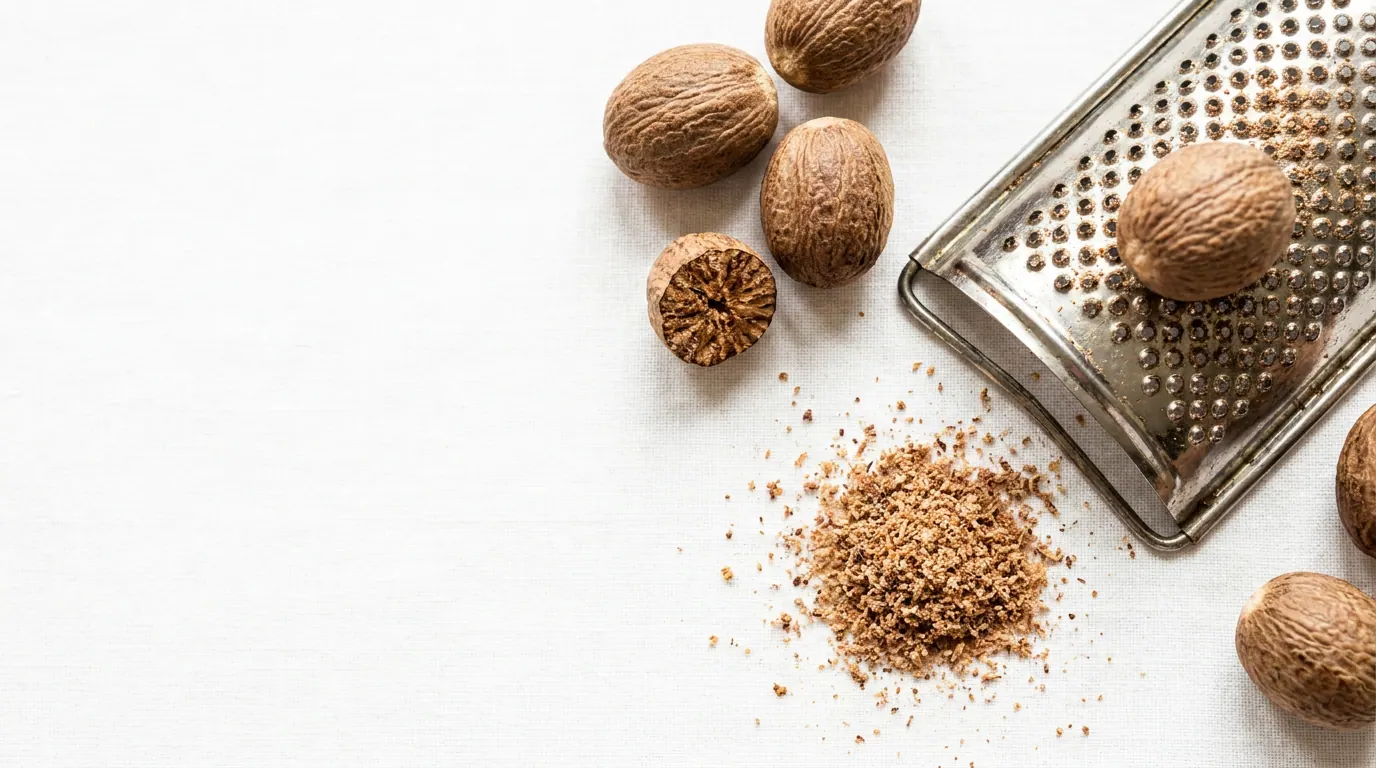
Nutmeg is the seed of the Myristica fragrans tree, a spice so rare it was once found only on the Banda Islands of Indonesia. Today, a single grating of this hard, brown seed provides the deep, earthy warmth characteristic of Saudi spice blends and festive desserts.

Nutmeg
MyristicinActive compound
8 min read Updated 2026-05-28 Reviewed SFDA
MH
Dr. Mona Al-Harbi
SFDA-licensed Clinical Dietitian — medically reviewed this content.
SFDA Licensed12 years experience
Medical Disclaimer: The following content is a general educational reference based on peer-reviewed studies and classical medical heritage. It does not substitute professional medical advice. If you have a health condition, take chronic medications, or are pregnant or breastfeeding, consult your doctor before following any dietary recommendation.

Ingredient Profile

Scientific name
Myristica fragrans
Active compound
Myristicin (phenylpropene)
Origin
Banda Islands, Indonesia
Mace vs Nutmeg
Mace is the red web-like covering of the seed
Culinary use
Kabsa bzar, Béchamel, Maamoul, spiced tea
Key benefit
Antioxidant and digestive support
Critical safety
Toxic in large doses (approx. 1–2 teaspoons)

What Is Nutmeg?

Nutmeg is the inner kernel of the fruit from the nutmeg tree. When the fruit is harvested, it reveals a hard seed wrapped in a bright red, lacy membrane known as Mace. Both are used as spices, but nutmeg is sweeter and more common in Saudi kitchens. It is rarely eaten whole; instead, it is grated fresh into dishes using a fine microplane or a traditional metal grater.

In the Gulf region, nutmeg is a vital component of the "Nine Spice" Bzar blend. It adds a sophisticated background note that anchors the sharper flavors of black pepper and cloves.

Nutmeg Science — Chemistry & Safety

Antioxidants
Phenolic richness

Nutmeg contains powerful plant compounds including cyanidins and phenolic acids. These antioxidants help neutralize free radicals and protect cells from oxidative stress associated with aging.

Digestive Health
Traditional use

Nutmeg has been used for centuries to treat indigestion and intestinal gas. Small amounts stimulate the secretion of digestive enzymes, which can help cut through the heaviness of lamb and rice dishes.

Brain & Mood
Emerging data

Laboratory studies suggest that nutmeg extracts may have modest mood-boosting properties. However, these effects are strictly dose-dependent and only apply to normal culinary amounts.

Toxicity Caution
Critical threshold

High doses of nutmeg (over 5g or 1–2 teaspoons) can cause nutmeg poisoning. Symptoms include palpitations, nausea, and hallucinations. Culinary amounts (a pinch) are entirely safe.

The Grating Rule

Always choose whole nutmeg over pre-ground powder. The aromatic oils dissipate within weeks of grinding. A whole seed kept in a cool, dry place will retain its potency for over two years. One seed can season dozens of meals.
Kitchen Uses in Saudi & Gulf Cooking

Kabsa Bzar Blend1/4 tsp
A tiny grating of nutmeg in the Saudi spice mix adds a nutty, mysterious depth to the rice and meat, distinguishing home-made Kabsa from commercial versions.
Maamoul & Sweets1 pinch
Added to date paste or cookie dough. Nutmeg works in perfect harmony with cinnamon and cloves to create the traditional "Eid" flavor profile.
White Sauce (Béchamel)1 pinch
Nutmeg is the "secret" ingredient in Béchamel sauce. It cuts through the creaminess of the milk and flour, providing a savory counterpoint.
Spiced Milk/Coffee1 tiny pinch
A fresh grating over warm milk or Saudi coffee. It acts as a digestive aid and provides a comforting, aromatic steam.

Frequently Asked Questions

Is nutmeg safe during pregnancy?
Small culinary amounts (a pinch in food) are safe. However, medicinal doses or supplements should be avoided as high concentrations can be toxic and may interfere with uterine activity.
What is the difference between Nutmeg and Mace?
They come from the same fruit. Mace is the red outer lace; it is more delicate, citrusy, and expensive. Nutmeg is the inner seed; it is sweeter, hardier, and more common in everyday cooking.
How much is too much?
Consuming 1 to 2 whole nutmeg seeds (about 5 grams or more) can lead to serious toxicity. Never use nutmeg in large quantities. Use it strictly as a spice, measured in pinches.