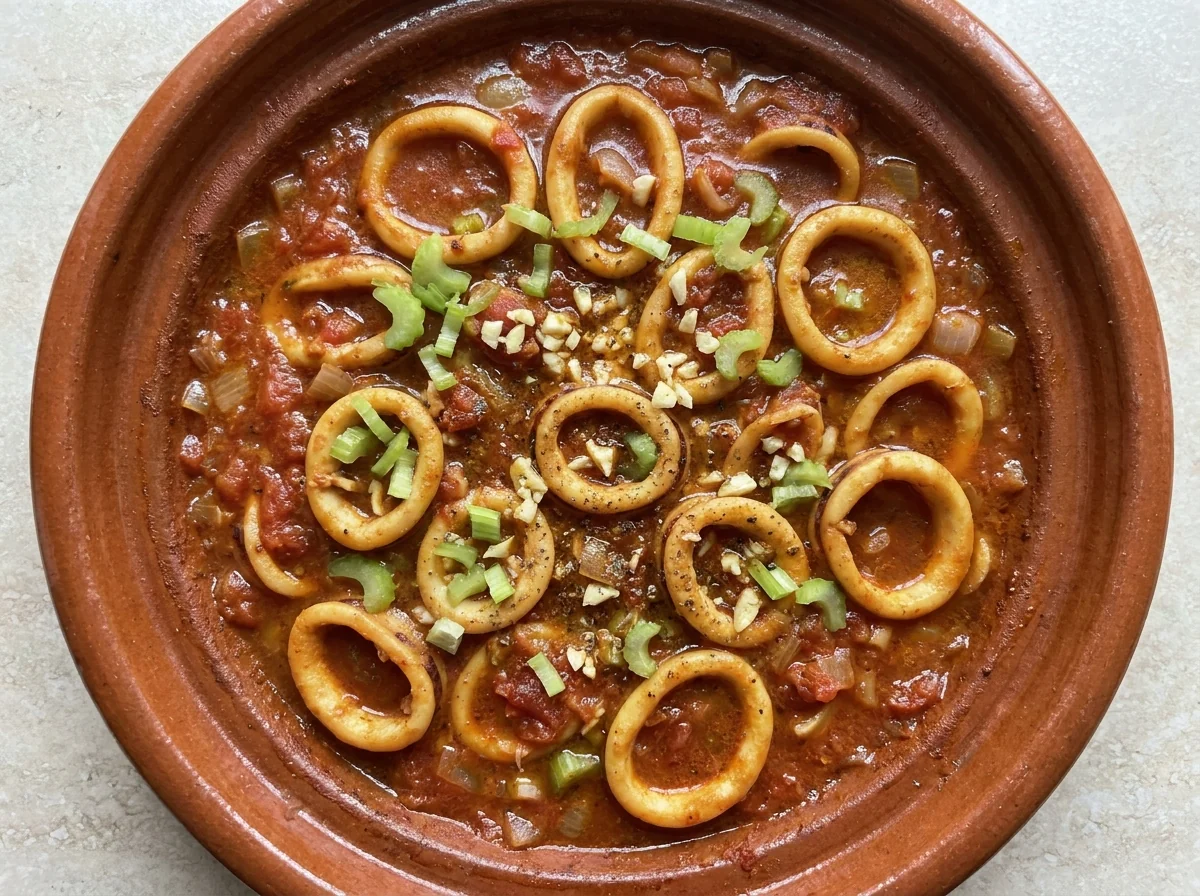
We cook calamari tagine the way it is made in the fish restaurants of Alexandria, where the calamari is left to settle in a tomato sauce seasoned with celery and cumin over low heat until it turns tender.
The clay tagine traps the heat and moisture so the rings cook through without toughening, and this balance between slow cooking and a rich sauce is what makes it a beloved coastal dish.
Preparation Steps
Preparing the calamari
We clean the calamari, cut it into even rings, and dry it, for calamari releases a lot of water and drying it helps the sauce stay thick.
The sauce base
We heat the olive oil in the tagine or a heavy pot and saute the onion and celery until they wilt, then add the garlic and tomato paste and stir for a minute until fragrant.
Tomatoes and spices
We add the grated tomatoes, cumin, coriander, paprika, hot red pepper, salt, and black pepper, and let it come to a boil then simmer for about ten minutes until the sauce thickens slightly.
Slow cooking
We slide the calamari rings into the sauce, cover the pot, and cook over low heat for about twenty minutes until the calamari turns tender and the sauce thickens around it, for gentle heat is the secret to its tenderness.
The finishing touch
We sprinkle the chopped parsley before serving and present it hot in the tagine itself so the sauce stays warm at the table.
Blood Sugar Impact
The glycemic index (GI) measures how quickly a food raises blood sugar, while the glycemic load (GL) measures how much a full serving raises it. Together they give the complete picture.
Glycemic Index
GI
9Low
Low0–55Medium56–69High70+
A low value (≤55) means a gradual rise in blood sugar — the most suitable range for diabetes and insulin resistance.
Glycemic Load
GL
1Low
Low0–10Medium11–19High20+
Glycemic load reflects the impact of the full serving. To lower it: take half a serving, or pair the recipe with a source of protein and fiber.
Nutritional Information
Per ServingMakes 4 servings · one serving is about 315 g of raw ingredients
Calories274 kcal14%of Daily Value*
Protein23 g46%of Daily Value*
Carbohydrates18 g7%of Daily Value*
Fat13 g17%of Daily Value*
Fiber4 g14%of Daily Value*
Sodium391 mg17%of Daily Value*
* Percent Daily Values are based on a 2,000-calorie diet per FDA food-label reference values — your daily needs may be higher or lower. Values are derived from the recipe's ingredients via the USDA database.
Troubleshooting
The most common problems when preparing Alexandrian Calamari Tagine (Tagen El Kalamari), and how to fix them:
The calamari is tough and rubbery
We extend the gentle cooking until it turns tender again, for calamari toughens in the middle of cooking then softens over time.
The sauce is watery
We uncover the lid at the end of cooking and raise the heat a little until the excess water evaporates and it thickens.
The taste is too acidic
We add a small pinch of sugar to balance the acidity of the tomatoes without sweetening the sauce.
Storage and Make-Ahead
Refrigerator
Keep it in an airtight container for up to two days, and reheat it gently over low heat so the calamari does not toughen.
Freezing
Freeze it in an airtight container for up to a month, then thaw it in the refrigerator and reheat it gently.
Tested Ingredient Substitutions
Original Ingredient
Tested Substitute
Ratio
Flavor Difference
calamari
a mix of calamari and shrimp
same weight, 500 g
It becomes a mixed seafood tagine with a richer flavor
grated tomatoes
canned peeled tomatoes
same weight, 400 g
We mash them a little and reduce the salt because canned is higher in sodium
celery
leek
same weight, 80 g
The flavor becomes closer to green onion with a lighter aroma
hot red pepper
extra paprika
same weight
The dish becomes non-spicy while keeping the red color
How Much Does It Make? Scaling Guide
Ingredient
Half the quantity
The quantity (base)
Double
Squid, cut into rings
250 g
500 g
1000 g
chopped onion
75 g
150 g
300 g
grated tomatoes
200 g
400 g
800 g
tomato paste
22 g
45 g
90 g
chopped celery
40 g
80 g
160 g
olive oil
22 ml
45 ml
90 ml
EEINA Nutrition Tip
Cook calamari either quickly over high heat or slowly over low heat; the middle ground between the two turns it rubbery and tough.
Add This Recipe to Your Plan
The EEINA app saves your favorite recipes, calculates them from their real ingredients, and shows your daily numbers toward your goal. Try it free now.