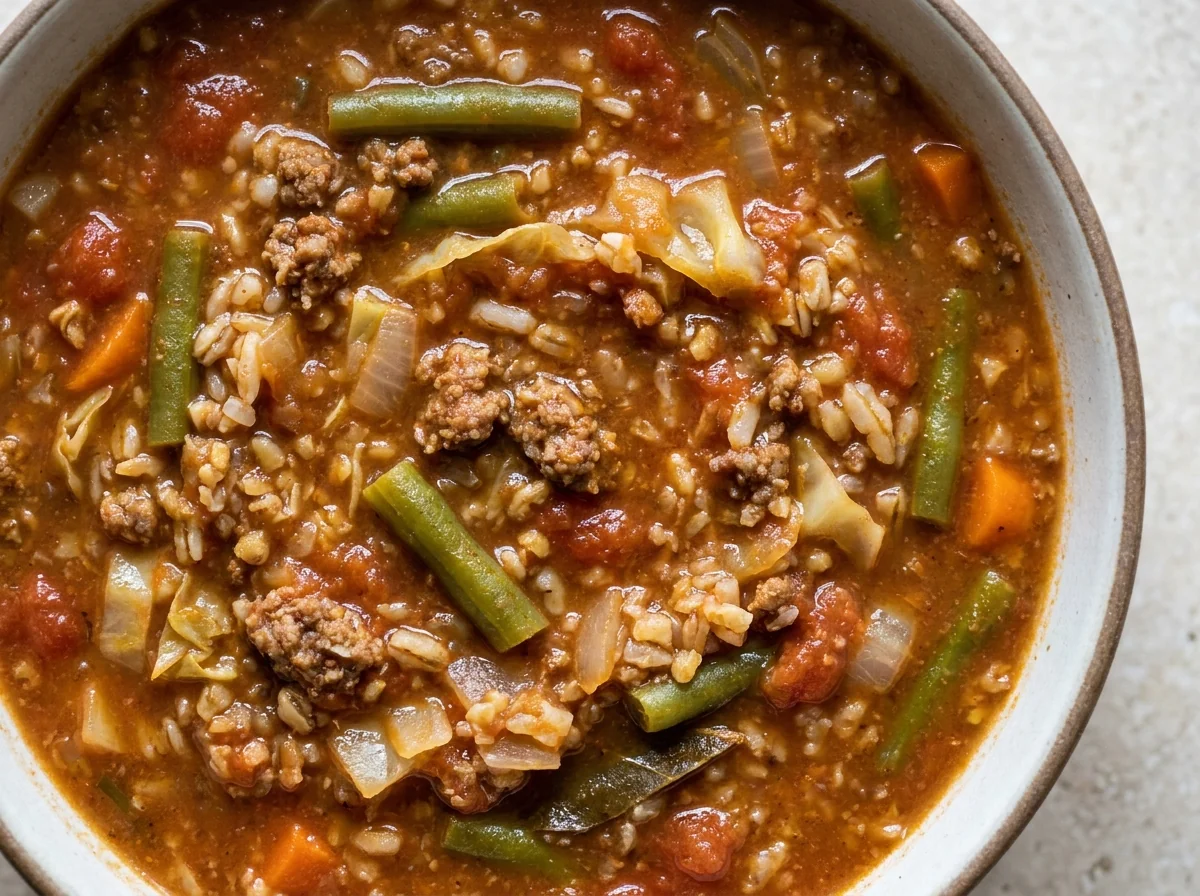
Mixed-grains soup is a warm Yemeni winter dish that brings together beans, lentils, chickpeas, and barley with cracked wheat, rice, vegetables, and lamb in a single pot.
It is often cooked in a pressure cooker to soften the many grains, and it expresses the generosity and richness of the Yemeni table.
Preparation Steps
Soak the grains and cracked wheat
Soak the mixed grains overnight and the cracked wheat for two hours, because soaking softens the hard grains and shortens the cooking time along with the pressure cooker.
Brown the onion and spices
Heat the oil in the pressure cooker and stir the onion and garlic until they wilt, then add the turmeric, curry, cumin, and pepper and stir them for a moment so their flavor opens up.
Add the grains
Add the drained mixed grains, cracked wheat, and carrot and stir them with the spices, then pour in the water, grated tomatoes, and salt.
Cook in the pressure cooker
Close the pressure cooker and cook the mixture for about 30 minutes after pressure builds until the grains soften, as the pressure cooker cuts hours of boiling down to minutes.
Add the rice and vegetables
Open the cooker safely after releasing the steam and add the rice, green beans, and cabbage, and cook for 20 minutes over medium heat until the rice is cooked and the vegetables soften.
Cook the meat and serve
Season the ground meat with salt and a pinch of turmeric and add it to the soup, and cook until the meat reaches 71 degrees Celsius measured with a thermometer, which is the safe temperature, then serve the soup hot.
Blood Sugar Impact
The glycemic index (GI) measures how quickly a food raises blood sugar, while the glycemic load (GL) measures how much a full serving raises it. Together they give the complete picture.
Glycemic Index
GI
32Low
Low0–55Medium56–69High70+
A low value (≤55) means a gradual rise in blood sugar — the most suitable range for diabetes and insulin resistance.
Glycemic Load
GL
9Low
Low0–10Medium11–19High20+
Glycemic load reflects the impact of the full serving. To lower it: take half a serving, or pair the recipe with a source of protein and fiber.
Nutritional Information
Per ServingMakes 6 servings · one serving is about 630 g of raw ingredients
Calories479 kcal24%of Daily Value*
Protein22 g44%of Daily Value*
Carbohydrates37 g13%of Daily Value*
Fat27 g35%of Daily Value*
Fiber8 g29%of Daily Value*
Sodium379 mg16%of Daily Value*
* Percent Daily Values are based on a 2,000-calorie diet per FDA food-label reference values — your daily needs may be higher or lower. Values are derived from the recipe's ingredients via the USDA database.
Troubleshooting
The most common problems when preparing Yemeni Mixed-Grains Soup, and how to fix them:
The grains did not soften despite the pressure
Usually because of old grains or a short soak, so cook again under pressure for an extra 10 minutes with hot water.
The consistency is too heavy
Add hot water gradually until you reach the desired consistency, as the cracked wheat and rice absorb a lot of the liquid.
The meat turned tough
Let it cook with the soup over gentle heat for a slightly longer time, as vigorous boiling tightens ground meat.
Storage and Make-Ahead
Refrigerator
Keep it in an airtight container for up to 3 days, and reheat it with added hot water to adjust the consistency.
Freezing
It is best to freeze it for up to two months before adding the rice, and thaw it in the refrigerator, then reheat over gentle heat.
Tested Ingredient Substitutions
Original Ingredient
Tested Substitute
Ratio
Flavor Difference
ground lamb
ground beef
500 g
An available halal substitute, cooked to the same 71 degrees Celsius
cracked wheat
coarse bulgur
60 g
A close substitute in texture when cracked wheat is absent
pressure cooker
regular pot
—
A substitute when a pressure cooker is absent, extending the boiling time to about two hours
cabbage
chard (Swiss chard)
180 g
A leafy substitute for those who prefer it, with a shorter cooking time
How Much Does It Make? Scaling Guide
Ingredient
2 servings
4 servings (base)
8 servings
Soaked mixed grains
100 g
300 g
600 g
Soaked cracked wheat
20 g
60 g
120 g
Rice
20 g
60 g
120 g
Ground lamb
165 g
500 g
1000 g
Chopped cabbage
60 g
180 g
360 g
Chopped onion
50 g
150 g
300 g
Water
670 ml
2000 ml
4000 ml
EEINA Nutrition Tip
Opening up the spices in the oil before adding the liquid deepens the soup's flavor. And measure the meat's temperature with a thermometer rather than by guessing, as the safe temperature for ground lamb is 71 degrees Celsius.
Add This Recipe to Your Plan
The EEINA app saves your favorite recipes, calculates them from their real ingredients, and shows your daily numbers toward your goal. Try it free now.