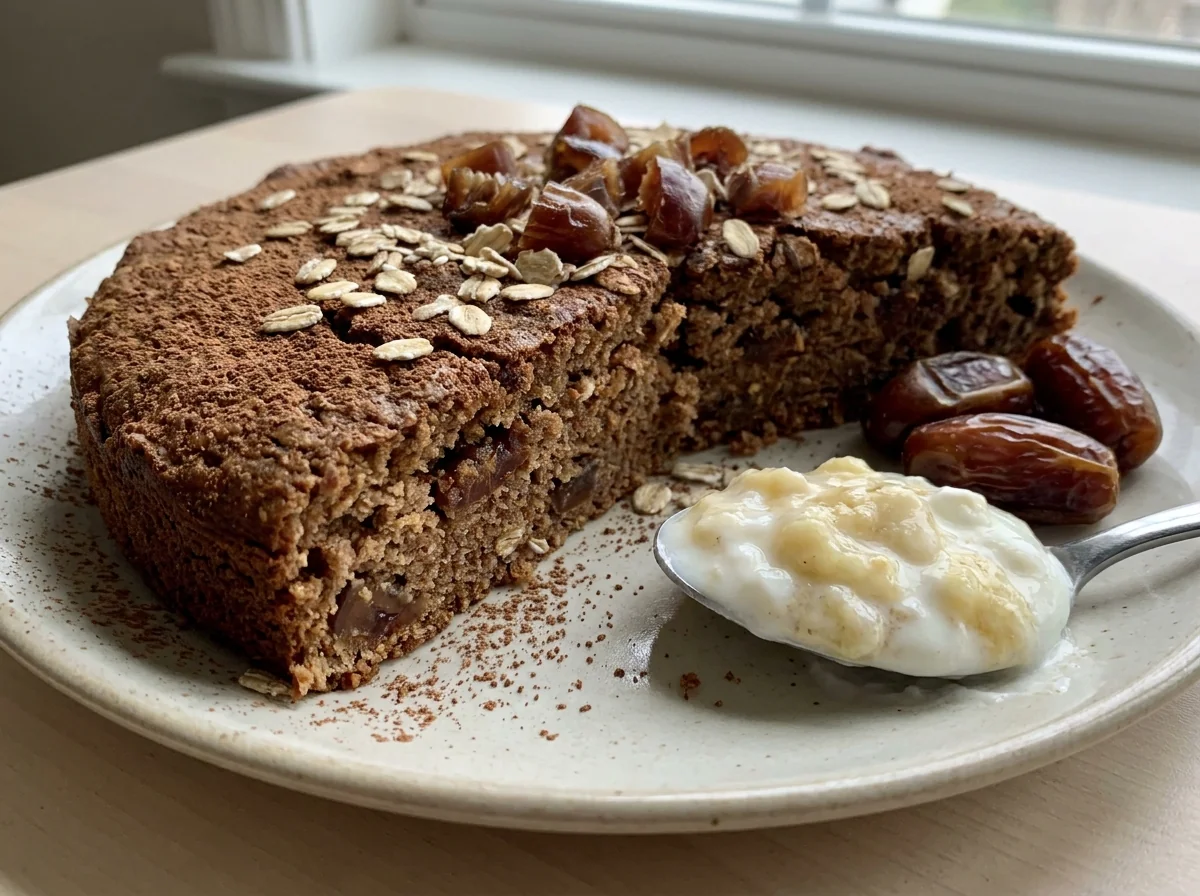
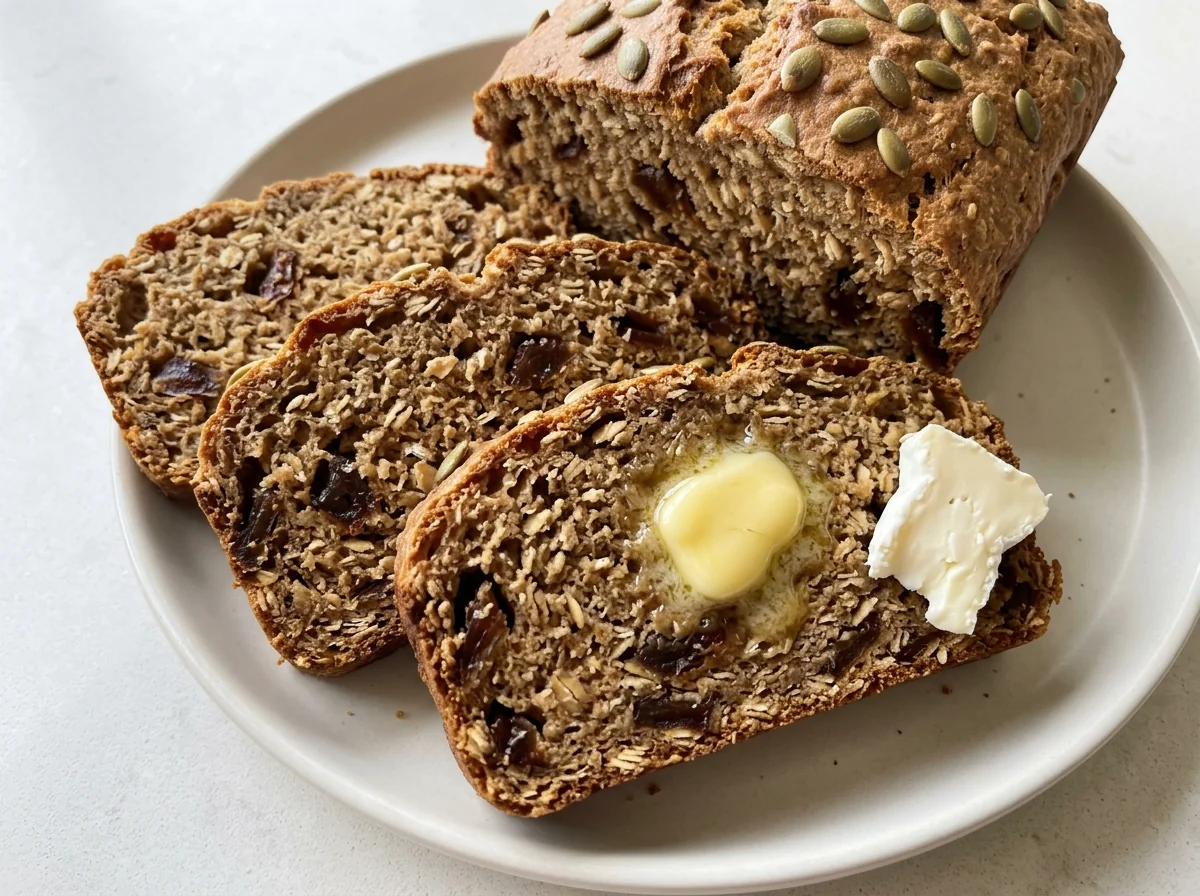
We take the beloved chocolate cake and rebuild it on an Arabic foundation: dates and banana carry the sweetness, whole-wheat flour and oats add the fiber, and raw cacao gives depth without white sugar.
The result is a moist, rich cake worthy of an Arabic coffee table.
Preparation Steps
Soaking the dates
Soak the pitted dates in the warm water for fifteen minutes so they soften and become easy to mash into a smooth paste.
The wet base
Blend the soaked dates with the banana until smooth, as this mixture is the source of sweetness instead of sugar.
The eggs
Whisk the eggs with the yogurt and olive oil until combined, then add the date and banana paste and stir.
The dry ingredients
Sift the whole-wheat flour with the ground oats, cacao, baking powder, cinnamon, and salt in a separate bowl so the leavening is evenly distributed.
Combining
Pour the dry mixture over the wet one and fold gently just until the flour disappears, as overmixing makes the cake tough.
Activating
Dissolve the baking soda in the apple cider vinegar and add it last along with the chopped walnuts, to give a good rise.
Baking
Pour the batter into a greased twenty-four-centimeter pan and bake at one hundred eighty degrees Celsius for about thirty minutes until a toothpick comes out clean.
Cooling
Let the cake cool for ten minutes in the pan, then turn it out onto a rack, because cutting it hot crumbles it.
Blood Sugar Impact
The glycemic index (GI) measures how quickly a food raises blood sugar, while the glycemic load (GL) measures how much a full serving raises it. Together they give the complete picture.
Glycemic Index
GI
49Low
Low0–55Medium56–69High70+
A low value (≤55) means a gradual rise in blood sugar — the most suitable range for diabetes and insulin resistance.
Glycemic Load
GL
17Medium
Low0–10Medium11–19High20+
Glycemic load reflects the impact of the full serving. To lower it: take half a serving, or pair the recipe with a source of protein and fiber.
Nutritional Information
Per ServingMakes 10 servings · one serving is about 120 g of raw ingredients
Calories285 kcal14%of Daily Value*
Protein9 g18%of Daily Value*
Carbohydrates40 g15%of Daily Value*
Fat12 g15%of Daily Value*
Fiber6 g21%of Daily Value*
Sodium413 mg18%of Daily Value*
Potassium401 mg9%of Daily Value*
Phosphorus283 mg23%of Daily Value*
* Percent Daily Values are based on a 2,000-calorie diet per FDA food-label reference values — your daily needs may be higher or lower. Values are derived from the recipe's ingredients via the USDA database.
Troubleshooting
The most common problems when preparing Whole-Wheat Cocoa Date Cake, and how to fix them:
The cake is dense and heavy
This is usually from overmixing after adding the flour; fold just until it disappears.
The bottom is wet and sticky
The banana or dates added too much moisture; reduce the water a little and extend the baking by five minutes.
A slightly bitter taste
Too much cacao; stick to the listed amount and balance it with riper dates.
The cake does not rise
The apple cider vinegar and baking soda met too late; mix them at the moment of adding and bake right away.
Storage and Make-Ahead
Room temperature
Keeps in an airtight container for two days, away from sunlight.
Refrigerator
Keep it wrapped for up to five days, and take it out before serving so it softens again.
Freezer
Freeze the slices wrapped for up to two months, and thaw them in the refrigerator.
Tested Ingredient Substitutions
Original Ingredient
Tested Substitute
Ratio
Flavor Difference
whole-wheat flour
whole oat flour
same weight, 200 g
The texture becomes a little softer.
Greek yogurt
plant-based coconut yogurt
same weight, 150 g
The moisture stays good.
walnuts
sunflower seeds
same weight, 40 g
The same crunch without the allergen.
banana
cooked grated apple
same weight, 150 g
The flavor becomes a little less intense.
How Much Does It Make? Scaling Guide
Ingredient
2 servings
4 servings (base)
8 servings
Whole wheat flour
100 g
200 g
400 g
Pitted dates
100 g
200 g
400 g
Eggs
75 g
150 g
300 g
Raw cacao powder
15 g
30 g
60 g
EEINA Nutrition Tip
Choose soft dates like Khalas or Sukkari for a smoother mash and clearer sweetness, as the quality of the dates makes all the difference.
Add This Recipe to Your Plan
The EEINA app saves your favorite recipes, calculates them from their real ingredients, and shows your daily numbers toward your goal. Try it free now.