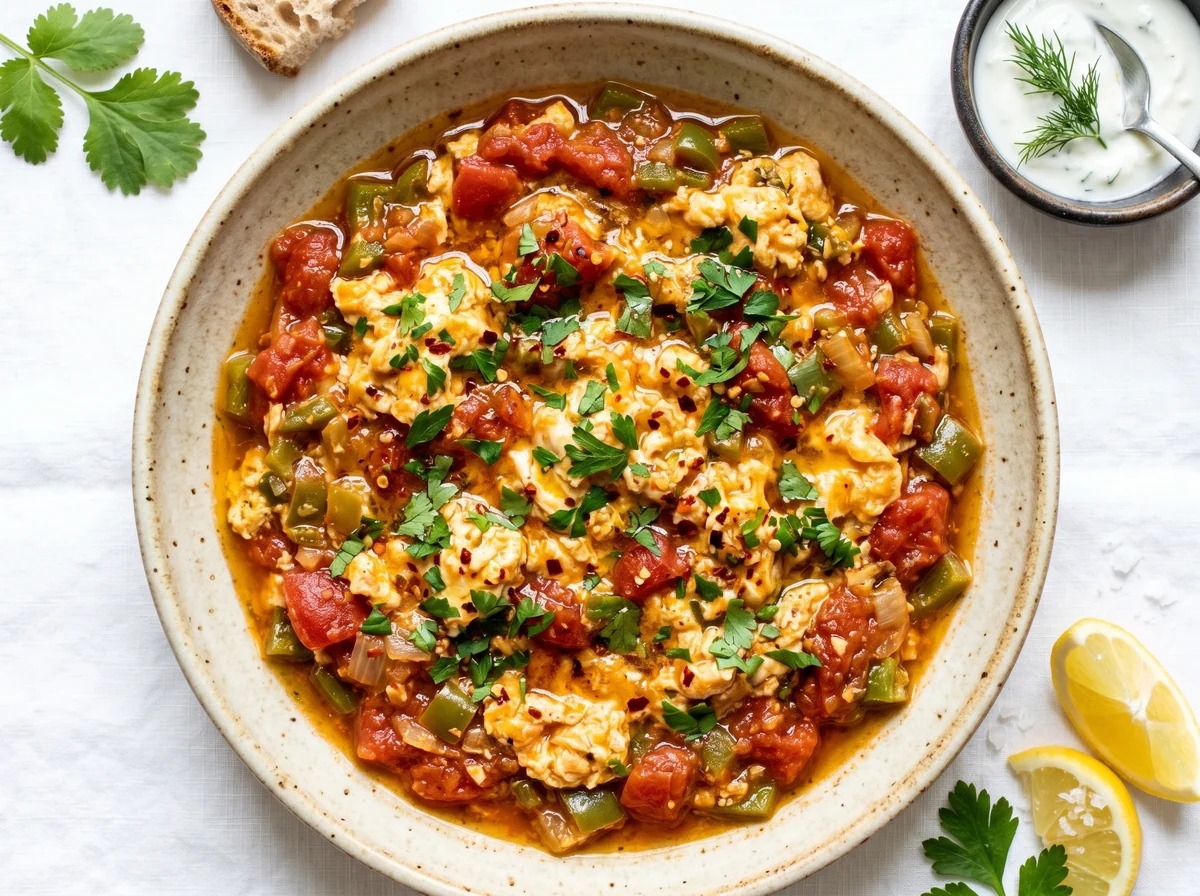
A warm, popular Saudi breakfast · ripe tomatoes slow-cooked with onion and garlic until thickened, then eggs cracked on top. A light, protein-rich dish that is very gentle on blood sugar, prepared in a single pan.
Hameess is a time-honoured breakfast from the homes of the Arabian Peninsula: tomatoes cooked slowly until they become a warm sauce, then eggs cracked on top to make a complete meal in a single pan.
It resembles Shakshuka (eggs poached in spiced tomato) but is simpler and closer to the flavours of a Saudi home kitchen, served with warm tamees bread. EEINA's version uses olive oil in a moderate amount, keeping the dish light and gentle on blood sugar.
Preparation Steps
Sauté the onion and garlic
Heat the olive oil in a wide pan over medium heat, add the chopped onion and stir until it wilts and turns translucent, then add the crushed garlic and green chilli and stir for one minute until fragrant.
Cook the tomatoes
Add the chopped tomatoes, tomato paste, a pinch of cumin and coriander, and salt. Lower the heat and cover the pan, leaving the tomatoes to cook slowly for 10 to 12 minutes until they dissolve, the sauce thickens, and deepens in colour. Slow cooking is the secret to Hameess flavour.
Make the egg wells
Once the tomatoes form a firm sauce, use the back of a spoon to make four small, evenly spaced wells in the sauce. These wells hold the eggs in place and prevent them from spreading.
Add the eggs
Crack one egg into each well and sprinkle a light pinch of salt over the eggs. Keep the heat gentle so the white does not clump before it is cooked.
Cook the eggs covered
Cover the pan and leave the eggs for 4 to 6 minutes until the whites set and the yolk remains soft as desired (or slightly longer for a set yolk). Covering cooks the surface of the eggs by steam without flipping.
Serve
Serve the Hameess hot in the same pan alongside warm tamees bread or wholemeal bread. Garnish with chopped fresh cilantro if desired. Scoop directly with the bread in the traditional way.
Blood Sugar Impact
The glycemic index (GI) measures how quickly a food raises blood sugar, while the glycemic load (GL) measures how much a full serving raises it. Together they give the complete picture.
Glycemic Index
GI
12Low
Low0–55Medium56–69High70+
A low value (≤55) means a gradual rise in blood sugar — the most suitable range for diabetes and insulin resistance.
Glycemic Load
GL
1Low
Low0–10Medium11–19High20+
Glycemic load reflects the impact of the full serving. To lower it: take half a serving, or pair the recipe with a source of protein and fiber.
Nutritional Information
Per ServingMakes 3 servings · one serving is about 315 g of raw ingredients
Calories197 kcal10%of Daily Value*
Protein12 g24%of Daily Value*
Carbohydrates14 g5%of Daily Value*
Fat11 g14%of Daily Value*
Fiber3 g11%of Daily Value*
Sodium409 mg18%of Daily Value*
Potassium611 mg13%of Daily Value*
Phosphorus211 mg17%of Daily Value*
* Percent Daily Values are based on a 2,000-calorie diet per FDA food-label reference values — your daily needs may be higher or lower. Values are derived from the recipe's ingredients via the USDA database.
Troubleshooting
The most common problems when preparing Tomato Hameess with Eggs, and how to fix them:
Sauce is watery and did not thicken
Cooked uncovered for too short a time. Leave the tomatoes to cook uncovered for a few extra minutes to let the water evaporate before adding the eggs, and tomato paste helps with thickening.
Whites not cooked and yolk set hard
Heat too high. Lower it and cover the pan so the steam gently cooks the surface of the egg until the white sets while leaving the yolk as desired.
Eggs spread into the sauce
No wells were made. Make a well with the back of a spoon for each egg before cracking it to hold it in place.
Taste too sour
Unripe tomatoes or too much paste. Choose ripe red tomatoes, reduce the paste, and a small amount of sautéed mashed onion softens the acidity.
Base stuck and burned
Too little oil or strong heat. Use a good pan over gentle heat, and stir the tomatoes at the start of cooking before making the wells.
Storage and Make-Ahead
Refrigerator (4°C)
The tomato sauce alone keeps for two days in an airtight container. It is best to cook the eggs fresh at serving time, as cooked eggs change in texture when stored.
Freezer (-18°C)
The tomato sauce freezes for one month without the eggs. Thaw and heat it then add fresh eggs.
Meal prep
Prepare the tomato sauce in advance and store it; at breakfast time, heat it and crack the eggs on top in just a few minutes.
Reheating
Over gentle heat until hot. Do not leave the dish out of the refrigerator for more than two hours [2].
Tested Ingredient Substitutions
Original Ingredient
Tested Substitute
Ratio
Flavor Difference
Eggs
Firm tofu, crumbled and seasoned with turmeric
150 g
A plant-based, egg-free version with a similar colour and flavour
Fresh tomatoes
Canned peeled tomatoes
One medium tin
A practical substitute out of tomato season — drain any excess liquid
Olive oil
ghee
Same quantity
Authentic Gulf flavour, but its fat is higher in saturates
Green chilli pepper
Chopped sweet pepper
A quarter piece
Mild flavour with no heat for those who do not like spice
Tamees bread
Wholemeal bread
As needed
Higher fibre and lower glycaemic load
How Much Does It Make? Scaling Guide
Servings
Tomatoes
Eggs
Onion
Pan
1 (single)
2 pieces
2 eggs
1/3 piece
small pan
3 (base)
5 pieces
4 eggs
1 piece
medium pan
6 (family)
10 pieces
8 eggs
2 pieces
large pan
8 (hosting)
13 pieces
10 eggs
2 1/2 pieces
2 pans
EEINA Nutrition Tip
This is one of the best breakfast choices for people with diabetes and those watching their weight: rich in egg protein that provides lasting fullness, low in carbohydrates, and with a very low glycaemic index. To make it even more filling without raising calories much, serve it with wholemeal bread instead of white tamees and add a side vegetable dish.
Add This Recipe to Your Plan
The EEINA app saves your favorite recipes, calculates them from their real ingredients, and shows your daily numbers toward your goal. Try it free now.
What is the difference between Hameess and Shakshuka?
Both use tomatoes and eggs, but Hameess is Saudi/Gulf in origin with a simpler flavour built on tomatoes, onion, and cumin, while Shakshuka is North African and typically more heavily spiced with peppers. Both are light, protein-rich breakfasts.
Is Hameess suitable for people with diabetes?
Yes, it is one of the best breakfast choices for them: high protein from the eggs, few carbohydrates, and a very low glycaemic index. Just pay attention to the type of bread served alongside and choose wholemeal.
Can I make it without eggs?
Yes, replace the eggs with crumbled tofu seasoned with turmeric for a similar colour and flavour — it becomes a fully plant-based version. Or serve the tomato sauce on its own with the bread.
How do I keep the yolk runny?
Keep the heat gentle and cover the pan, monitoring the eggs from 4 minutes in. Remove from the heat as soon as the whites set and the yolk is still shiny and soft.
What is Hameess traditionally served with?
Served hot with warm tamees bread in the traditional style, or with wholemeal bread for a lighter option, scooped directly from the pan with the bread.
Sources: USDA · University of Sydney · Gulf GSO · Our methodology · Updated on