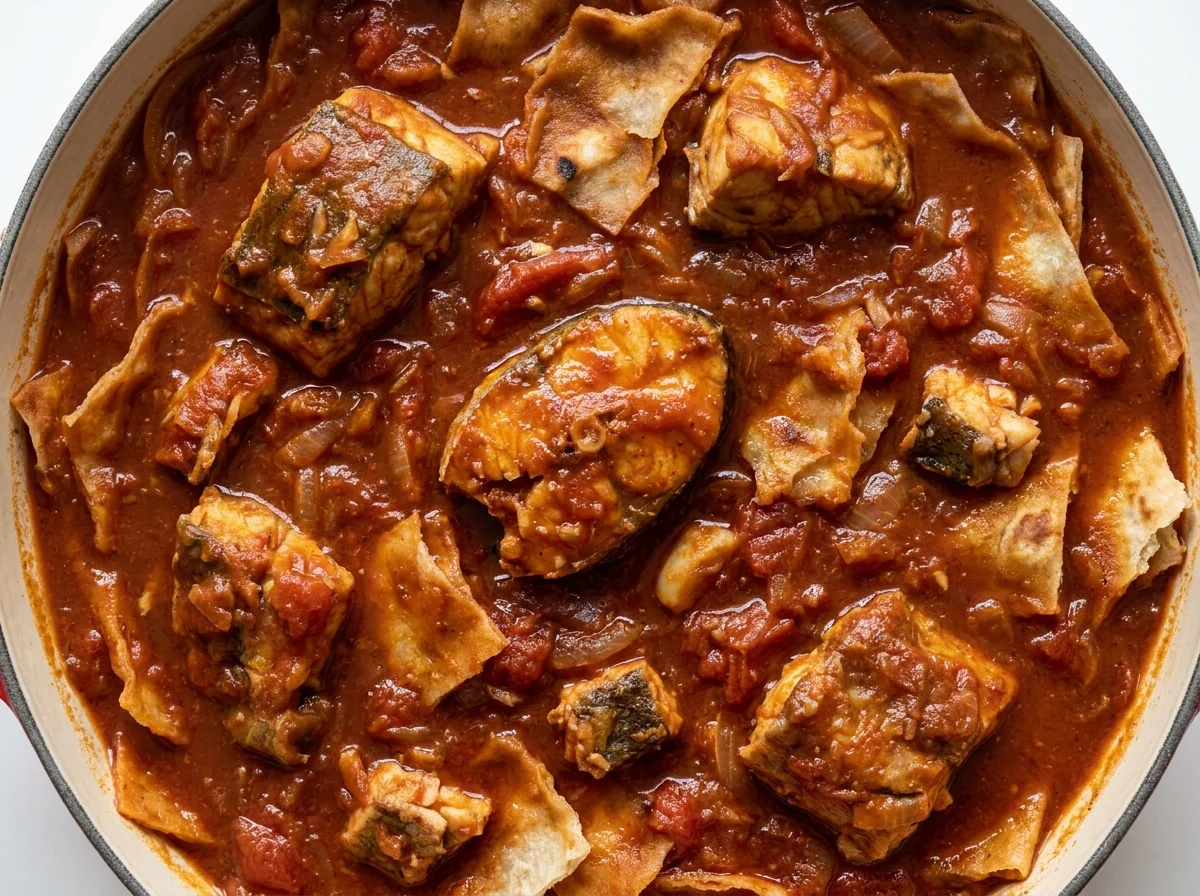
We make fish thareed the way it is made in Emirati homes, where the fish is cooked in a broth of tomatoes and Emirati bzar, then the broth is poured over thin raqaq bread until it is soaked and softens.
Thareed is one of the oldest dishes of the Arabian Peninsula, and when it is fish instead of meat it carries the flavor of the coast; it is one of the Ramadan-table dishes that bring together warmth and simplicity.
Preparation Steps
Seasoning the fish
Season the fish pieces with half the bzar, the turmeric, and a little salt and leave them for a quarter of an hour, for this seasoning gives the fish its flavor before it enters the broth.
The base of the broth
Heat the absorbed oil and sauté the chopped onion until it takes on color, then add the garlic, ginger, and grated tomatoes and cook them until they soften.
The broth spices
Add the tomato paste, the rest of the bzar and turmeric, the tamarind, the whole dried limes, the water, and the salt, and let the broth simmer over low heat for about ten minutes until the flavors meld.
Cooking the fish in the broth
Lower the fish pieces into the broth and cook them gently until they are done and their flesh firms up without falling apart, then add the fresh cilantro in the last two minutes.
Assembling the thareed
Break the raqaq bread into a deep dish and pour the broth over it gradually until the bread is soaked and softens, then arrange the fish pieces on top and serve it hot.
Blood Sugar Impact
The glycemic index (GI) measures how quickly a food raises blood sugar, while the glycemic load (GL) measures how much a full serving raises it. Together they give the complete picture.
Glycemic Index
GI
51Low
Low0–55Medium56–69High70+
A low value (≤55) means a gradual rise in blood sugar — the most suitable range for diabetes and insulin resistance.
Glycemic Load
GL
16Medium
Low0–10Medium11–19High20+
Glycemic load reflects the impact of the full serving. To lower it: take half a serving, or pair the recipe with a source of protein and fiber.
Nutritional Information
Per ServingMakes 5 servings · one serving is about 490 g of raw ingredients
Calories354 kcal18%of Daily Value*
Protein32 g64%of Daily Value*
Carbohydrates35 g13%of Daily Value*
Fat9 g12%of Daily Value*
Fiber4 g14%of Daily Value*
Sodium666 mg29%of Daily Value*
* Percent Daily Values are based on a 2,000-calorie diet per FDA food-label reference values — your daily needs may be higher or lower. Values are derived from the recipe's ingredients via the USDA database.
Troubleshooting
The most common problems when preparing Emirati Fish and Bread Stew (Thareed Samak), and how to fix them:
The fish fell apart in the broth
Lower it into a broth at a gentle simmer and stir it as little as possible, for too much stirring breaks up its flesh.
The broth is thin
Let it simmer uncovered for a few extra minutes or add a little more tomato paste until its consistency thickens.
The bread turned to mush
Pour the broth gradually and serve the dish right away, for the bread absorbs the broth and softens more the longer it waits.
Storage and Make-Ahead
Refrigerator
Keep the broth and fish in an airtight container for up to two days, and add the bread fresh only at serving.
Freezing
Freeze the broth with the fish for up to a month, thaw and reheat it, then arrange it over fresh bread.
Tested Ingredient Substitutions
Original Ingredient
Tested Substitute
Ratio
Flavor Difference
grouper
emperor fish or any firm white fish
same weight, 700 g
Any firm-fleshed white fish that stands up to cooking in the broth gives the same result
raqaq bread
thin Arabic bread
same weight, 200 g
It absorbs the broth as well but is a little thicker
tamarind
lemon juice
half the weight, 10 g
A milder acidity without the depth of tamarind
frying oil
ghee
same weight, 25 g
Ghee is closer to the traditional flavor
How Much Does It Make? Scaling Guide
Ingredient
Half amount
Amount (base)
Double
Grouper or emperor fish
350 g
700 g
1400 g
Raqaq bread
100 g
200 g
400 g
Onion
150 g
300 g
600 g
Tomatoes
200 g
400 g
800 g
Emirati bzar spice mix
4 g
8 g
16 g
Tamarind
10 g
20 g
40 g
EEINA Nutrition Tip
Pour the broth over the raqaq bread gradually rather than all at once, for pouring in stages lets the bread soften without turning to mush, and this is the proper balance of thareed.
Add This Recipe to Your Plan
The EEINA app saves your favorite recipes, calculates them from their real ingredients, and shows your daily numbers toward your goal. Try it free now.
What is the difference between fish thareed and meat thareed?
In fish thareed, ginger is added to the bzar blend and the fenugreek and fennel are eased back, and the fish is cooked for a shorter time than meat because it is done sooner.
Why do we pour the broth gradually?
So the bread is soaked and softens without turning to mush, for pouring in stages is what preserves the proper texture of thareed.
What is the best fish for thareed?
Grouper, for the firmness of its flesh, and emperor fish and any firm white fish that stands up to cooking in the broth will do.