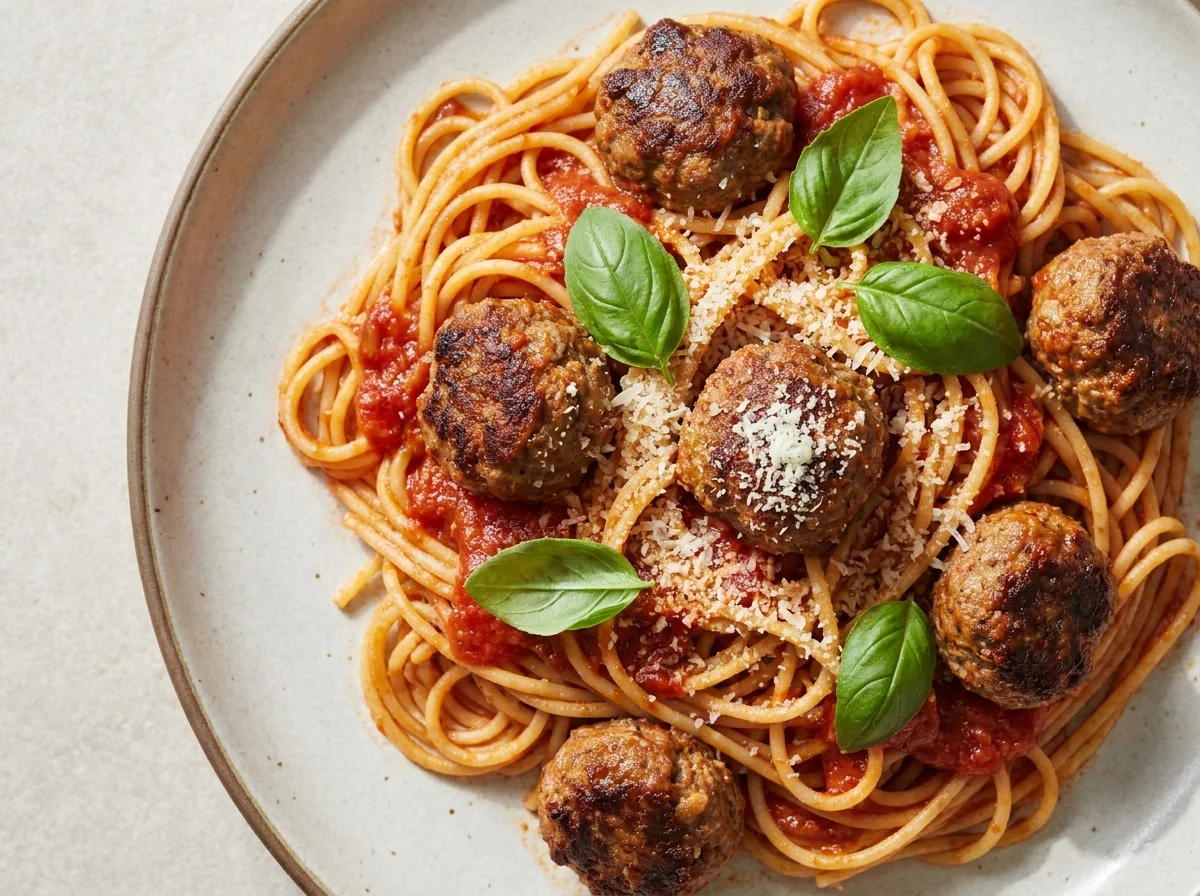
Spaghetti and meatballs is the icon of Italian-American cooking that became the world's family dinner.
Tender meatballs with the secret of the panade nestle in a tomato sauce and marry the strands of spaghetti. The dish that gathers all ages around a single plate.
Preparation Steps
Soak the breadcrumbs in milk. The secret to tenderness
Moisten the breadcrumbs with milk for a few minutes until absorbed. This Italian 'panade' is the difference between a tender meatball that breaks with a fork and a firm kofta ball: a small soak with a great difference.
Mix light-handed meatballs
Mix the meat with the soaked breadcrumbs, egg, squeezed onion, half the garlic, parsley, salt, pepper, and oregano with a light mix using your fingertips. Heavy mixing builds rubbery meatballs, and shape walnut-sized balls with a wet hand.
Brown the meatballs and lift them out
In a wide pan with olive oil, brown the meatballs on their sides for three minutes without cooking them through. A brown crust seals and flavors, and the cooking will finish in the sauce.
Build the sauce in its pan
In the same meatball oil, fry the rest of the garlic for seconds then the paste for a minute, pour in the crushed tomatoes and salt, and return the meatballs to nestle in, and cook covered for fifteen minutes gently. The meatballs cook and exchange flavor with their sauce.
Boil, marry, and scatter
Boil the spaghetti a minute short and toss it in the sauce with a ladle of its boiling water for a final minute, and serve it with its meatballs, parmesan, and basil. The dish that became the symbol of family dinner across the whole planet.
Blood Sugar Impact
The glycemic index (GI) measures how quickly a food raises blood sugar, while the glycemic load (GL) measures how much a full serving raises it. Together they give the complete picture.
Glycemic Index
GI
48Low
Low0–55Medium56–69High70+
A low value (≤55) means a gradual rise in blood sugar — the most suitable range for diabetes and insulin resistance.
Glycemic Load
GL
37High
Low0–10Medium11–19High20+
Glycemic load reflects the impact of the full serving. To lower it: take half a serving, or pair the recipe with a source of protein and fiber.
Nutritional Information
Per ServingMakes 4 servings · one serving is about 440 g of raw ingredients
Calories769 kcal38%of Daily Value*
Protein35 g70%of Daily Value*
Carbohydrates84 g31%of Daily Value*
Fat33 g42%of Daily Value*
Fiber6 g21%of Daily Value*
Sodium1012 mg44%of Daily Value*
* Percent Daily Values are based on a 2,000-calorie diet per FDA food-label reference values — your daily needs may be higher or lower. Values are derived from the recipe's ingredients via the USDA database.
Troubleshooting
The most common problems when preparing Spaghetti and Meatballs in Tomato Sauce, and how to fix them:
The meatballs fell apart in the sauce
An egg was missing or browning was forgotten. The egg binder and the browning crust. The two shields of the nestle.
They came out hard and rubbery
Enthusiastic mixing or a forgotten panade. Fingertips and the soak. All their tenderness is there.
The sauce is sour
Sharp canned tomatoes. A small pinch of sugar or a grated carrot cooked in it. The usual tomato reconciliations.
The spaghetti clumped waiting for the sauce
It was boiled early and waited. Boil it in the last fifteen minutes, and the pasta waits for the sauce, never the reverse.
Storage and Make-Ahead
Right away
With its strands wrapped around its meatballs.
In the fridge
The meatballs in their sauce for three days, growing deeper, and fresh spaghetti each time.
In the freezer
The meatballs in their sauce for two months. A ready dinner stash thawed with only the strands boiled for it.
Tested Ingredient Substitutions
Original Ingredient
Tested Substitute
Ratio
Flavor Difference
Beef
A beef-and-lamb mix or ground chicken
1:1
Each blend has its character
Spaghetti
Whole-wheat pasta or boiled vegetables
~
The base changes and the meatballs stay fixed
Breadcrumbs
Ground oats
1:1
A whole-grain panade
The oven version
Meatballs baked at 200 degrees for fifteen minutes instead of browning
~
Less fat and a freer hand
How Much Does It Make? Scaling Guide
Ingredient
4 servings
2 servings
8 servings
Spaghetti
350 g
175 g
700 g
Meat
400 g
200 g
800 g
Tomato
700 g
350 g
1.4 kg
EEINA Nutrition Tip
Soak the breadcrumbs in milk and mix with your fingertips. The two secrets of the tender Italian meatball: the panade moistens from within and the light mixing does not wake the protein's cohesion; anyone who mixes with the fist of kofta reaps balls that roll hard in their sauce.
Add This Recipe to Your Plan
The EEINA app saves your favorite recipes, calculates them from their real ingredients, and shows your daily numbers toward your goal. Try it free now.
Bolognese is ground meat that melts into its sauce as one fabric; this one is standalone meatballs nestled in it. Two textures and two rituals from the very same meat and tomato.
How many meatballs is a child's and an adult's serving?
Three for a child and four to five for an adult with their strands, and the uniform walnut size makes the count fair.
Can I prep the meatballs as a stash?
They are among the most reliable freezer foods: raw or in their sauce for two months, and the exhausting Tuesday dinner becomes a simmer and a boil of strands.
How does its plate get lighter?
Oven meatballs instead of browning, whole-wheat strands, and a ladle of generous sauce. The same joy with a leaner notebook.