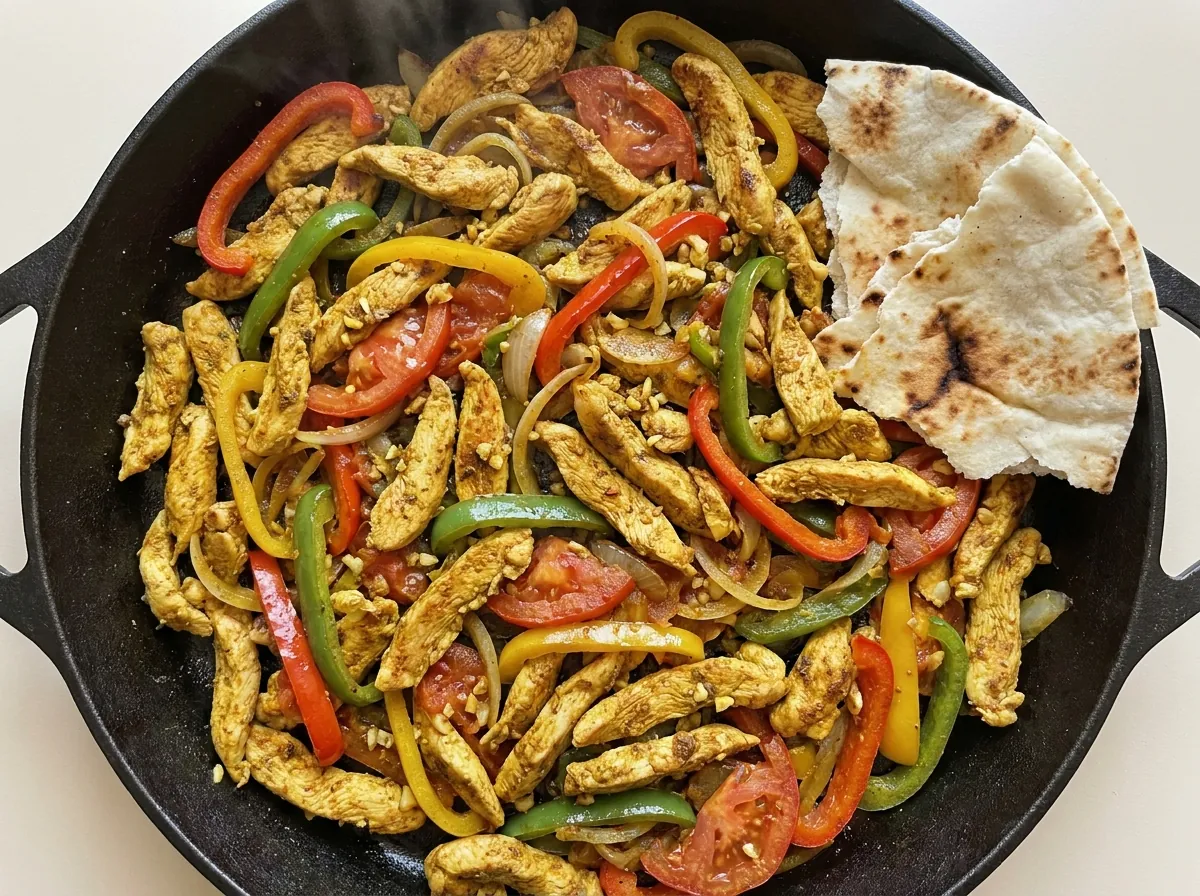
Musahhab chicken is one of the stars of Saudi popular eateries and their rest-houses.
Thin 'sliced' chicken strips quickly fried with vegetables on a hot saj and wrapped in bread. The cousin of fajita with a Saudi passport and the spices of our country.
Preparation Steps
Slice the chicken thin and marinate it quickly
Cut the breasts into long thin slices. The slicing that gave the dish its name, and toss them with the garlic, spices, lemon, and salt for just ten minutes: the thin slices drink up the marinade at their hasty speed.
Sear the chicken on a hot saj
On a saj or wide pan over high heat with half the oil, spread out the slices and leave them a minute to sear, then stir for three minutes until cooked with browned edges, and lift them aside.
Stir the vegetables on the hungry saj
With the remaining oil, throw in the onion and colored peppers for two minutes over the same high heat, then the tomatoes and hot pepper for a minute. Vegetables that soften with grilled edges and stay standing.
Return the chicken and bring it all together
Return the slices and toss everything for a final minute with a finishing squeeze of lemon. The grilled embraces the grilled and an appetite-opening steam rises from the door.
Serve it in the way of the popular eateries
Hot from its saj with bread to wrap or dip. The musahhab of Saudi popular eateries that the family rest-houses know, from your kitchen in a third of an hour.
Blood Sugar Impact
The glycemic index (GI) measures how quickly a food raises blood sugar, while the glycemic load (GL) measures how much a full serving raises it. Together they give the complete picture.
Glycemic Index
GI
45Low
Low0–55Medium56–69High70+
A low value (≤55) means a gradual rise in blood sugar — the most suitable range for diabetes and insulin resistance.
Glycemic Load
GL
8Low
Low0–10Medium11–19High20+
Glycemic load reflects the impact of the full serving. To lower it: take half a serving, or pair the recipe with a source of protein and fiber.
Nutritional Information
Per ServingMakes 3 servings · one serving is about 350 g of raw ingredients
Calories370 kcal18%of Daily Value*
Protein41 g82%of Daily Value*
Carbohydrates21 g8%of Daily Value*
Fat13 g17%of Daily Value*
Fiber3 g11%of Daily Value*
Sodium440 mg19%of Daily Value*
Potassium858 mg18%of Daily Value*
Phosphorus420 mg34%of Daily Value*
* Percent Daily Values are based on a 2,000-calorie diet per FDA food-label reference values — your daily needs may be higher or lower. Values are derived from the recipe's ingredients via the USDA database.
Troubleshooting
The most common problems when preparing Musahhab Chicken with Vegetables on the Saj, and how to fix them:
The chicken dried out
Thick slices or medium heat dragged on. Thin and a quick high heat. Four minutes is the ceiling.
The vegetables wilted dead
They went in with the chicken from the start or a gentle heat. Order the batches and a bold heat. Their standing texture is their honor.
It came out watery, swimming
Too much tomato or a crowded pan. Moderate tomato slices that go in last, and a wide pan steams, it does not boil.
Its flavor is paler than the eateries'
Mild spices or missing lemon. The full spoon of the blend and the finishing squeeze, and hot pepper for anyone who wants the rest-house kick.
Storage and Make-Ahead
Right away
From the saj to the bread. A child of the moment.
In the fridge
Two days in containers. A meal-prep for work wraps, reheated in a quick pan.
Not suited to freezing
Fried vegetables lose their standing.
Tested Ingredient Substitutions
Original Ingredient
Tested Substitute
Ratio
Flavor Difference
Chicken breasts
Thinly sliced beef
1:1
Beef musahhab. Its grander brother with an extra minute
Saj bread
Our tortilla or white rice
~
A wrap or a plate. Both are the way
Hot pepper
Omit it and a side of chili sauce
~
The home serves both crowds
A popular addition
A thread of melted cheese over the wrap
~
The full rest-house musahhab. For indulgent occasions
How Much Does It Make? Scaling Guide
Ingredient
3 servings
1.5 servings
6 servings
Chicken
500 g
250 g
1 kg
Vegetables
420 g
210 g
840 g
Oil
25 ml
13 ml
50 ml
EEINA Nutrition Tip
Slice the strips thin, the width of a little finger, and against the direction of the breast's fibers. Lifting cooks them in minutes before they dry out, and cutting against the grain shortens them so the bite turns tender: a correct slicing is half the dish.
Add This Recipe to Your Plan
The EEINA app saves your favorite recipes, calculates them from their real ingredients, and shows your daily numbers toward your goal. Try it free now.
All three are slices and high heat: fajita is Mexican with cumin and lime, stir-fry is Asian with soy, and musahhab is Saudi with turmeric and mixed spices. Three passports for one technique.
Why do rest-house regulars love it?
It cooks in front of you in minutes, is wrapped hot, and eaten by hand. The dish of group gatherings that combines the speed of fast meals with the spirit of grills.
Is it really a healthy choice?
Lean protein, live vegetables, and two spoons of oil. One of the healthiest fast chicken dishes once its wraps are moderate: two wraps with a balanced side salad.
How do I make it meal-prep?
A double batch divided into containers with rice or bread kept separate. It holds two days and reheats in a flash.