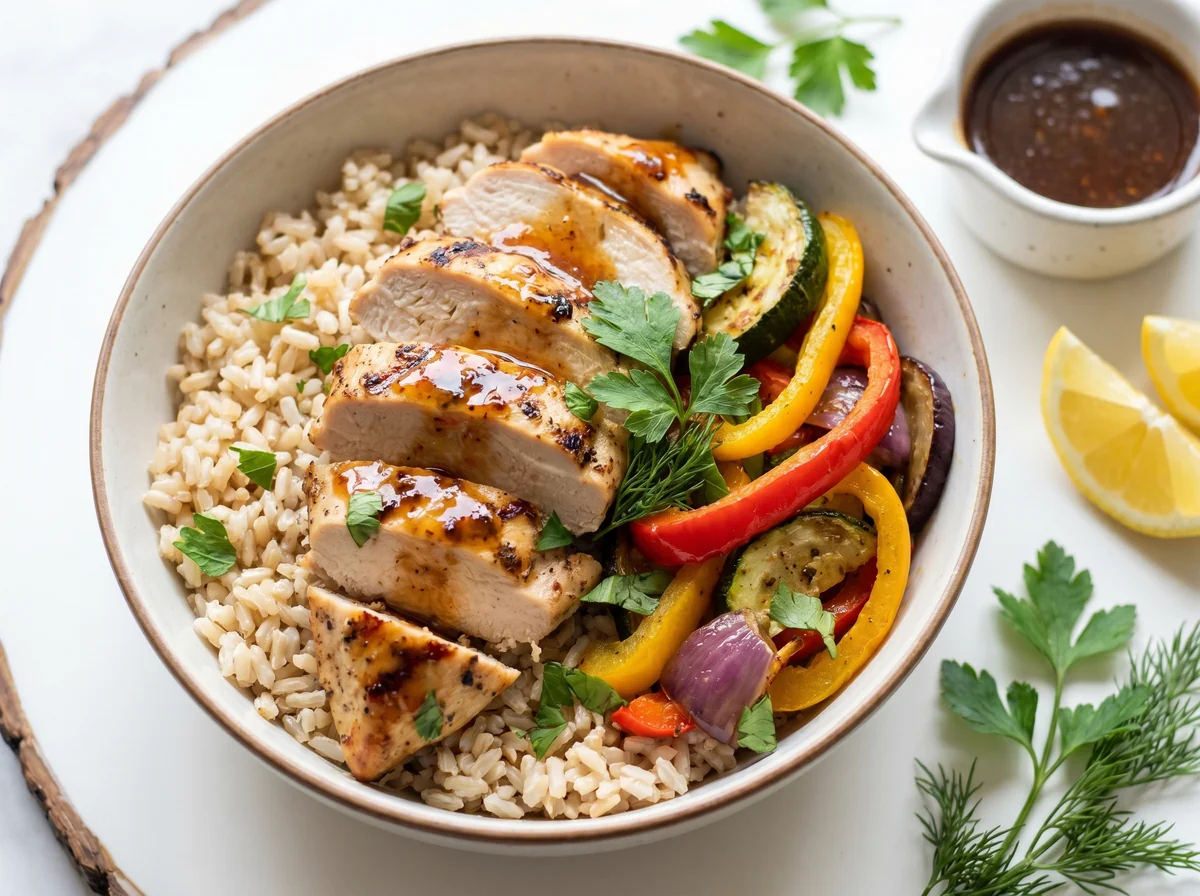
In the renal kitchen, simplicity becomes an art. This dish was born from a practical need: a warm, satisfying meal that respects sodium, potassium, and phosphorus limits without sacrificing flavour.
Chicken breast is a quiet protein, the boiled and drained white rice is light on the kidneys, and the zucchini and sweet red pepper add colour and crunch without overloading. We deliberately avoided concentrated tomatoes and legumes, and leaned on lemon, cumin, and parsley to lift the flavour instead of salt. The result is a bowl with a Gulf-Mediterranean character — familiar to the palate, gentle on the body.
Preparation Steps
Soak and rinse the rice
Soak the white rice in lukewarm water for ten minutes, then drain and rinse it until the water runs clear. Soaking and rinsing remove some of the surface starch and dissolved potassium, which is beneficial in a renal diet. Set aside drained.
Boil the rice in plenty of water
Bring 1.5 litres of water to a boil in a wide pot, add the drained rice, and let it boil over medium heat for ten to twelve minutes until the grain is cooked through. Boiling in plenty of water and then draining reduces potassium more than the absorption method where all the liquid stays in the grain. Drain the rice in a sieve and leave it to breathe.
Cut the chicken and vegetables
Cut the chicken breast into bite-sized cubes of equal size so they cook evenly. Cut the zucchini, sweet red pepper, and onion into medium pieces, and mince the garlic finely. Uniform size prevents small pieces from drying out before larger ones are done.
Sear the chicken
Heat the olive oil in a wide pan over medium-high heat, add the chicken cubes spread out without crowding, and sear for four to five minutes until the outside colour is gone. Crowding releases moisture and the chicken steams instead of searing. Set aside.
Sweat the vegetables
In the same pan, add the onion and garlic and stir for one minute until fragrant, then add the zucchini and sweet red pepper and stir for three to four minutes until the edges soften while the vegetables keep their texture. Light cooking preserves the crunch and prevents them from going mushy.
Cook together
Return the chicken to the pan, add the cumin, black pepper, and 250 ml of water or salt-free broth, cover, and simmer over low heat for six to eight minutes until the chicken reaches an internal temperature of 74°C. Use a thermometer to confirm — this is the safety threshold for poultry.
Combine and serve
Add the boiled rice to the pan and fold gently for two minutes until it is homogenous and has absorbed the flavour, then turn off the heat and add the lemon juice and parsley. Adjust salt sparingly — use as little as possible. Acidity lifts the flavour and reduces the need for salt. Serve warm.
Blood Sugar Impact
The glycemic index (GI) measures how quickly a food raises blood sugar, while the glycemic load (GL) measures how much a full serving raises it. Together they give the complete picture.
Glycemic Index
GI
65Medium
Low0–55Medium56–69High70+
A low value (≤55) means a gradual rise in blood sugar — the most suitable range for diabetes and insulin resistance.
Glycemic Load
GL
29High
Low0–10Medium11–19High20+
Glycemic load reflects the impact of the full serving. To lower it: take half a serving, or pair the recipe with a source of protein and fiber.
Nutritional Information
Per ServingMakes 3 servings · one serving is about 860 g of raw ingredients
Calories360 kcal18%of Daily Value*
Protein24 g48%of Daily Value*
Carbohydrates47 g17%of Daily Value*
Fat7 g9%of Daily Value*
Fiber3 g11%of Daily Value*
Sodium308 mg13%of Daily Value*
Potassium610 mg13%of Daily Value*
Phosphorus277 mg22%of Daily Value*
* Percent Daily Values are based on a 2,000-calorie diet per FDA food-label reference values — your daily needs may be higher or lower. Values are derived from the recipe's ingredients via the USDA database.
Troubleshooting
The most common problems when preparing Chicken and White Rice Bowl with Light Vegetables — Low Sodium, and how to fix them:
The rice is sticky and clumpy
It was not rinsed properly before boiling, or was cooked in too little water. Rinse it until the water runs clear, boil in plenty of water, and drain immediately once cooked without leaving it in the cooking water.
The chicken is dry and tough
It was cooked beyond 74°C. Sear the cubes quickly then finish covered over low heat, and pull them as soon as the thermometer reads 74°C.
The vegetables went mushy and lost their texture
They were cooked too long. Add the zucchini and pepper late in the process and stir for only three to four minutes until the edges soften while the centre stays firm.
The flavour is bland despite reducing salt
Expected when lowering sodium. Compensate by increasing lemon juice, cumin, parsley, and garlic — acidity and aroma raise the perception of flavour.
The pan base is burning
The heat is too high or there is too little liquid. Lower the heat during covered cooking, ensure there is 250 ml of liquid present, and stir the base occasionally.
Storage and Make-Ahead
Refrigerator (4°C)
Store in an airtight container after cooling within two hours — keeps for three days in the refrigerator at 4°C or below.
Freezer
Freeze in an airtight container for up to one month. Thaw overnight in the refrigerator before reheating. The zucchini texture may soften slightly after freezing.
Reheating
Reheat over low heat with a splash of water until it steams through, or in the microwave covered and stirred halfway, until it is heated through and the centre exceeds 74°C.
Food safety
Do not leave out of refrigeration for more than two hours (or one hour in hot weather above 32°C) to avoid bacterial growth — danger zone rule.
Tested Ingredient Substitutions
Original Ingredient
Tested Substitute
Ratio
Flavor Difference
Chicken breast
Skinless turkey breast
1:1 by weight
An equivalent lean protein alternative. Maintain an internal temperature of 74°C when cooking.
White rice
White basmati rice, boiled and drained
1:1 by weight
Remains within the same dietary logic. Avoid brown rice here as it is higher in phosphorus and potassium.
Zucchini
White zucchini or lightly cooked cucumber
1:1 by weight
Relatively low-potassium vegetables that suit the renal diet.
Sweet red pepper
Sweet green pepper
1:1 by weight
A renally acceptable option. Use whichever colour fits your allowed portion.
Lemon juice
Mild apple cider vinegar
Approximately half the quantity
Provides the same acidity that lifts flavour without salt. Start with a small amount and adjust to taste.
How Much Does It Make? Scaling Guide
Ingredient
2 servings
4 servings
6 servings
Chicken breast
250 g
500 g
750 g
White rice
150 g
300 g
450 g
Zucchini
200 g
400 g
600 g
Red pepper
120 g
240 g
360 g
Olive oil
15 ml
30 ml
45 ml
EEINA Nutrition Tip
On a renal diet, boiling vegetables and rice in plenty of water then draining before finishing the dish is a simple step that effectively lowers potassium. Make lemon juice and fresh herbs your weapon instead of salt — acidity and aroma trick the palate into perceiving full flavour with less sodium. Remember that your allowed potassium amounts are individual, so adjust the portion according to your tests and your doctor's guidance.
Add This Recipe to Your Plan
The EEINA app saves your favorite recipes, calculates them from their real ingredients, and shows your daily numbers toward your goal. Try it free now.
Why boil the rice in plenty of water then drain it?
Because this method dissolves some of the potassium in the cooking water and then discards it by draining, making the rice lighter on the kidneys compared to the absorption method where all the liquid stays in the grain. This is a well-established mechanism in renal diet practice.
Is this dish also suitable for someone with diabetes?
It supports a more balanced pattern as it combines light protein and vegetables with a measured portion of rice. White rice is starchy, so adjust the portion according to your plan. The actual effect on blood sugar is individual — the decision rests with your doctor or dietitian.
Why did you avoid tomatoes and legumes?
Concentrated tomatoes are high in potassium, and legumes are high in phosphorus and potassium — both are typically restricted on an advanced renal diet. We replaced them with lemon juice and fresh herbs to lift the flavour without raising these minerals.
How do I control sodium without the dish losing its flavour?
Rely on lemon juice, cumin, garlic, and parsley — acidity and aroma enhance the perception of flavour. Add salt at the end in the smallest possible amount, and let your palate guide it rather than the spoon.
Can I use ready-made chicken broth?
Avoid ready-made broth and broth cubes as they are high in sodium and added phosphate. Use plain water or a homemade salt-free broth if available.