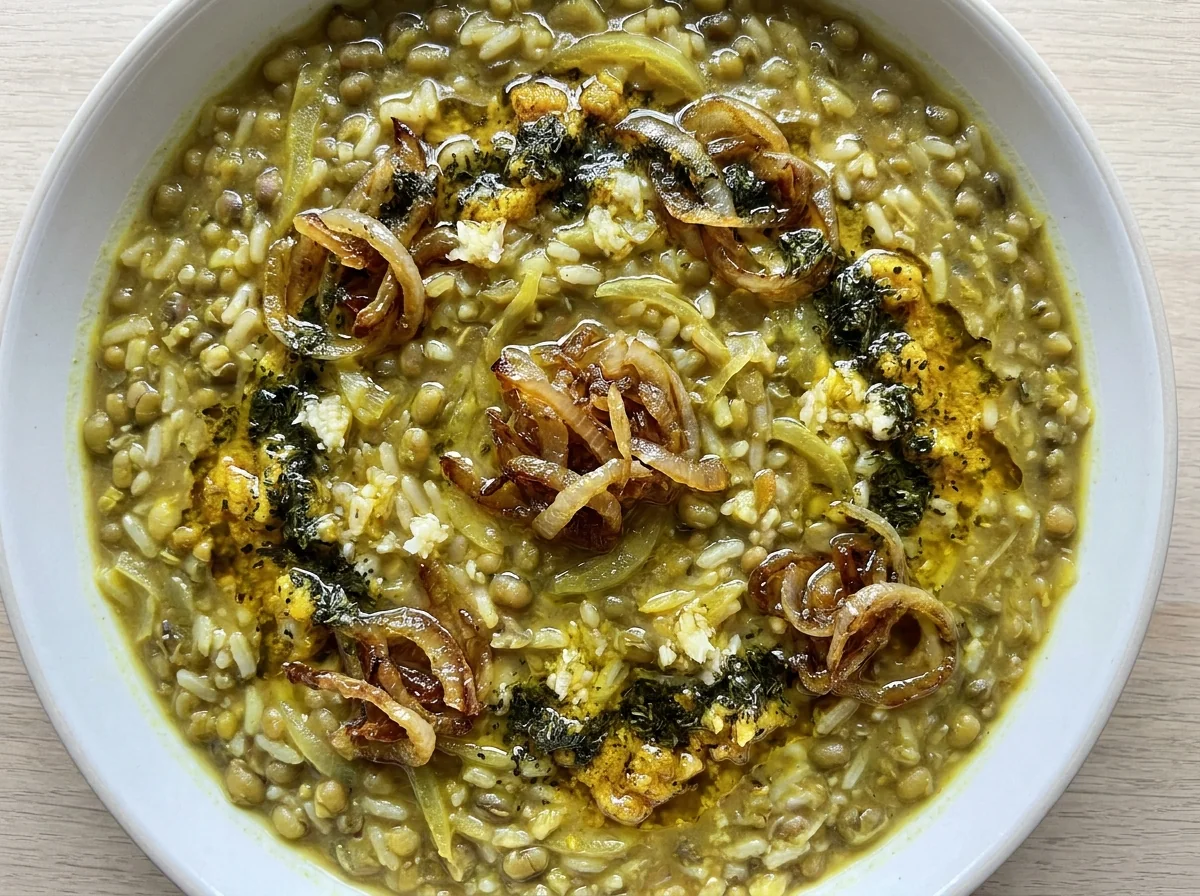
The ash is one of the most venerable soups of Persian cuisine, and Ash-e Mash is its mung-bean-based version, a rich legume soup absent from our Arab table.
We present it at EEINA as it is cooked in Iranian homes, a hearty soup that brings together mung beans, rice, fresh green herbs, and pumpkin, crowned with onion browned in mint that gives it its distinctive character.
Preparation Steps
Fry the onion and garlic
Heat the olive oil in a wide pot over medium heat and fry the onion slices until golden brown, about twenty to twenty-five minutes, then add the grated garlic in the last five minutes (well-browned onion is the foundation of the Persian ash's flavor).
Prepare the onion garnish
Turn off the heat and stir the dried mint into the onion, then lift a third of the mixture with a little oil aside for garnish, return the pot to the heat, add the turmeric and black pepper, and stir.
Add the mung beans and rice
Add the soaked mung beans, rice, stock, and salt, bring the mixture to a boil and skim off the foam whenever it forms, then lower the heat, cover, and let the mixture simmer gently for forty-five minutes until the mung beans soften.
Add the pumpkin and herbs
Add the cubed pumpkin, coriander, parsley, green onion, and dill and stir, then cover the pot and let it simmer gently for another thirty minutes, stirring from time to time, until the rice and vegetables are cooked.
Thicken the consistency
For a smoother consistency, lift out a ladle of the soup, mash it, and return it to the pot; and if you want more thickness, dissolve the cornstarch in a little of the lukewarm soup broth, then add it and stir until it sets.
Finish with acidity
Add the lemon juice and adjust the salt to taste, and stir a third of the onion and mint mixture into the pot, keeping the rest for garnish.
Serve
Ladle the ash into deep bowls and garnish them with the rest of the browned onion and mint, and serve lemon wedges on the side for those who like more acidity.
Blood Sugar Impact
The glycemic index (GI) measures how quickly a food raises blood sugar, while the glycemic load (GL) measures how much a full serving raises it. Together they give the complete picture.
Glycemic Index
GI
42Low
Low0–55Medium56–69High70+
A low value (≤55) means a gradual rise in blood sugar — the most suitable range for diabetes and insulin resistance.
Glycemic Load
GL
12Medium
Low0–10Medium11–19High20+
Glycemic load reflects the impact of the full serving. To lower it: take half a serving, or pair the recipe with a source of protein and fiber.
Nutritional Information
Per ServingMakes 10 servings · one serving is about 445 g of raw ingredients
Calories236 kcal12%of Daily Value*
Protein8 g16%of Daily Value*
Carbohydrates33 g12%of Daily Value*
Fat9 g12%of Daily Value*
Fiber5 g18%of Daily Value*
Sodium1140 mg50%of Daily Value*
Potassium643 mg14%of Daily Value*
Phosphorus138 mg11%of Daily Value*
* Percent Daily Values are based on a 2,000-calorie diet per FDA food-label reference values — your daily needs may be higher or lower. Values are derived from the recipe's ingredients via the USDA database.
Troubleshooting
The most common problems when preparing Persian Mung Bean Soup (Ash-e Mash), and how to fix them:
The ash is more watery than needed
The herbs released their water; let it boil uncovered for a few minutes, or dissolve a little cornstarch in lukewarm broth and add it.
The mung beans stayed firm
They were not soaked or were old; extend the gentle boil and add boiling water until they fully soften before adding the rice and vegetables.
Storage and Make-Ahead
Refrigerator
Keep it in a sealed container for up to four days; it thickens greatly after chilling, so thin it with stock or boiling water when reheating.
Freezing
Freeze it for up to two months, and it is best to freeze it before adding the lemon juice and garnish, which are added fresh at serving.
Tested Ingredient Substitutions
Original Ingredient
Tested Substitute
Ratio
Flavor Difference
mung beans
brown lentils
200 g
An available legume substitute with a shorter cooking time and a slightly deeper flavor.
pumpkin (squash)
cubed sweet potato
280 g
Gives a similar sweetness and creamy texture when available instead of pumpkin.
short-grain rice
gluten-free short-grain rice for thickening
100 g
Rice is already gluten-free and works as a substitute for wheat starch for thickening.
fresh lemon juice
white vinegar
20 ml
The traditional Persian acidity substitute when lemon is absent.
How Much Does It Make? Scaling Guide
Ingredient
2 servings
5 servings
10 servings (base)
Dried soaked mung beans
40 g
100 g
200 g
Sliced yellow onion
80 g
200 g
400 g
Vegetable stock
600 ml
1500 ml
3000 ml
Short-grain rice
20 g
50 g
100 g
Cubed pumpkin
56 g
140 g
280 g
Mixed chopped green herbs
68 g
170 g
340 g
Fresh lemon juice
6 ml
15 ml
30 ml
EEINA Nutrition Tip
Soaking the mung beans for two hours before cooking shortens the cooking time and improves their digestibility; drain the soaking water before use.
Add This Recipe to Your Plan
The EEINA app saves your favorite recipes, calculates them from their real ingredients, and shows your daily numbers toward your goal. Try it free now.
Mung beans are small green legumes sold dried in legume shops and large stores, and they are the foundation of this soup's flavor and texture.
Is the ash vegetarian?
With vegetable stock it becomes fully vegetarian, and it can be made strictly vegan by replacing the kashk with vinegar in the original dish and relying on lemon for acidity.