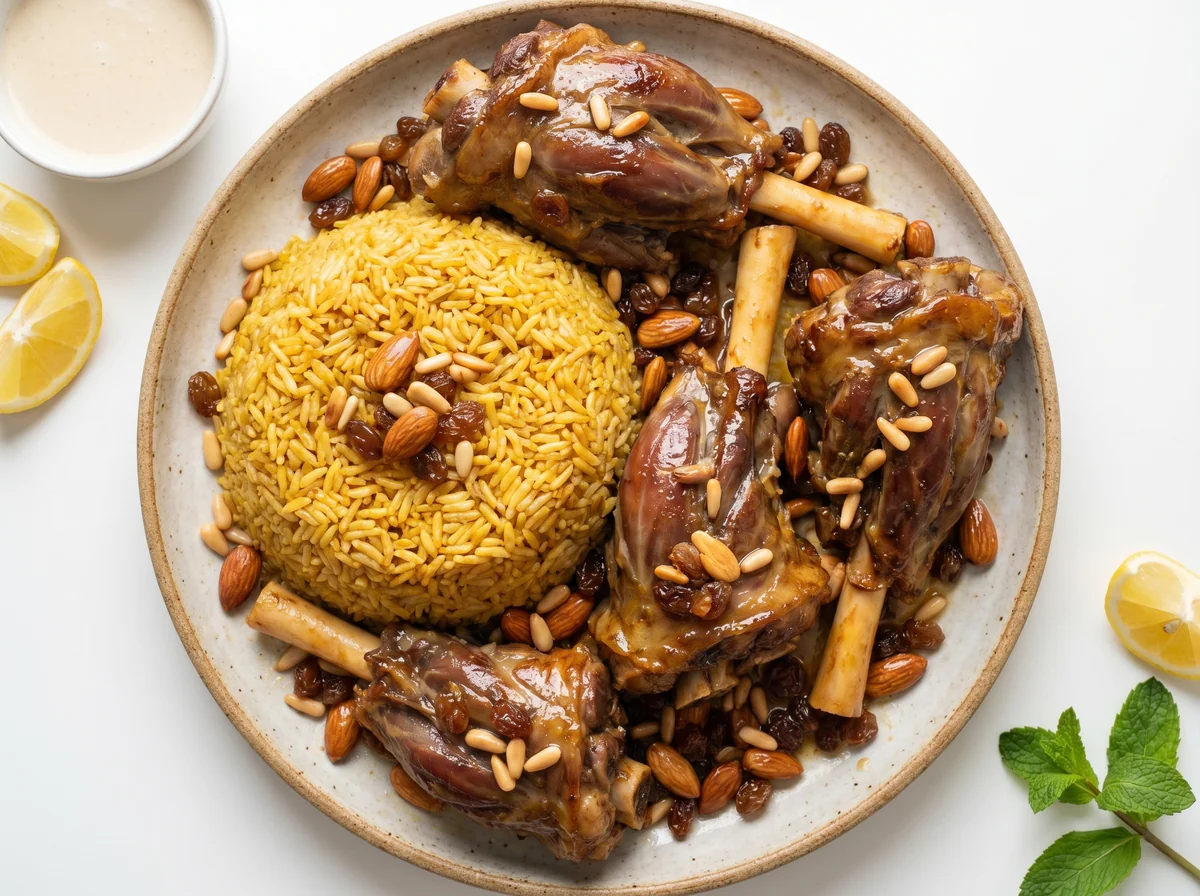
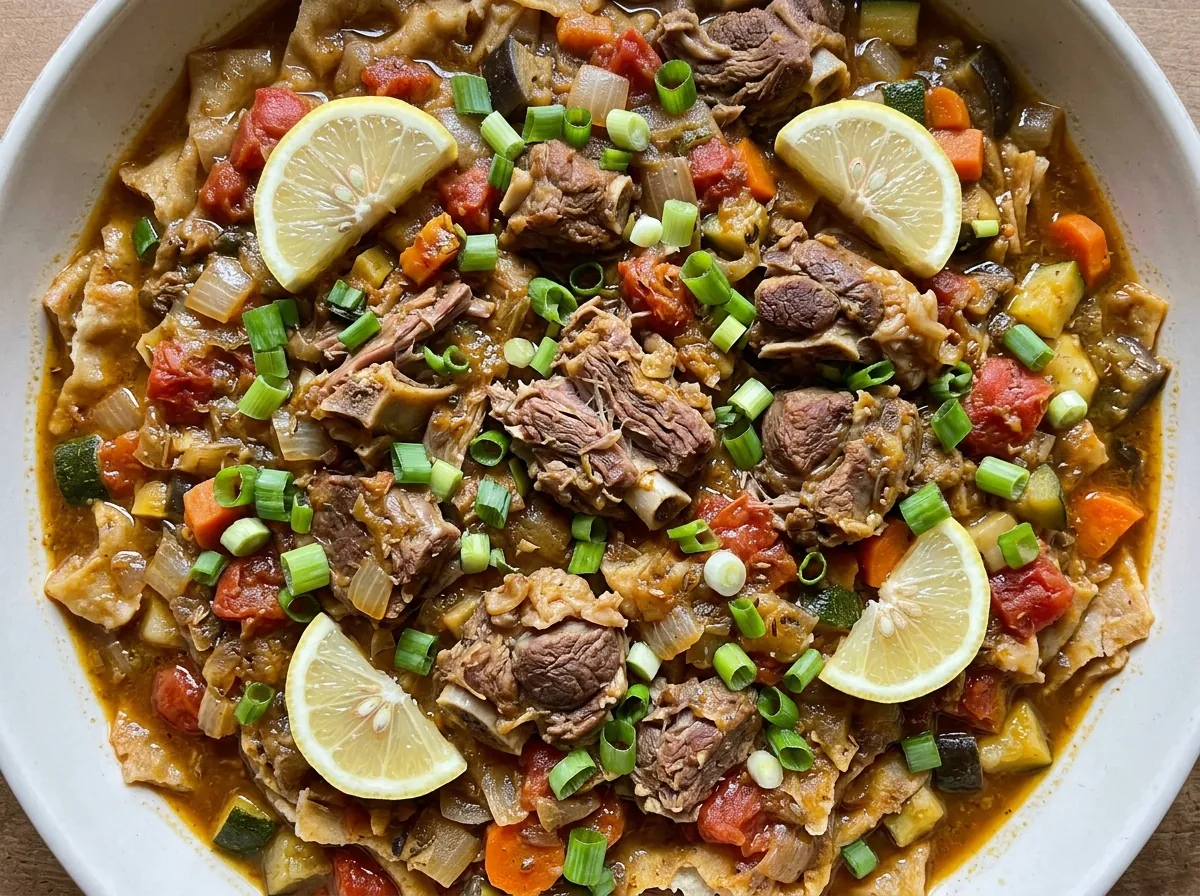
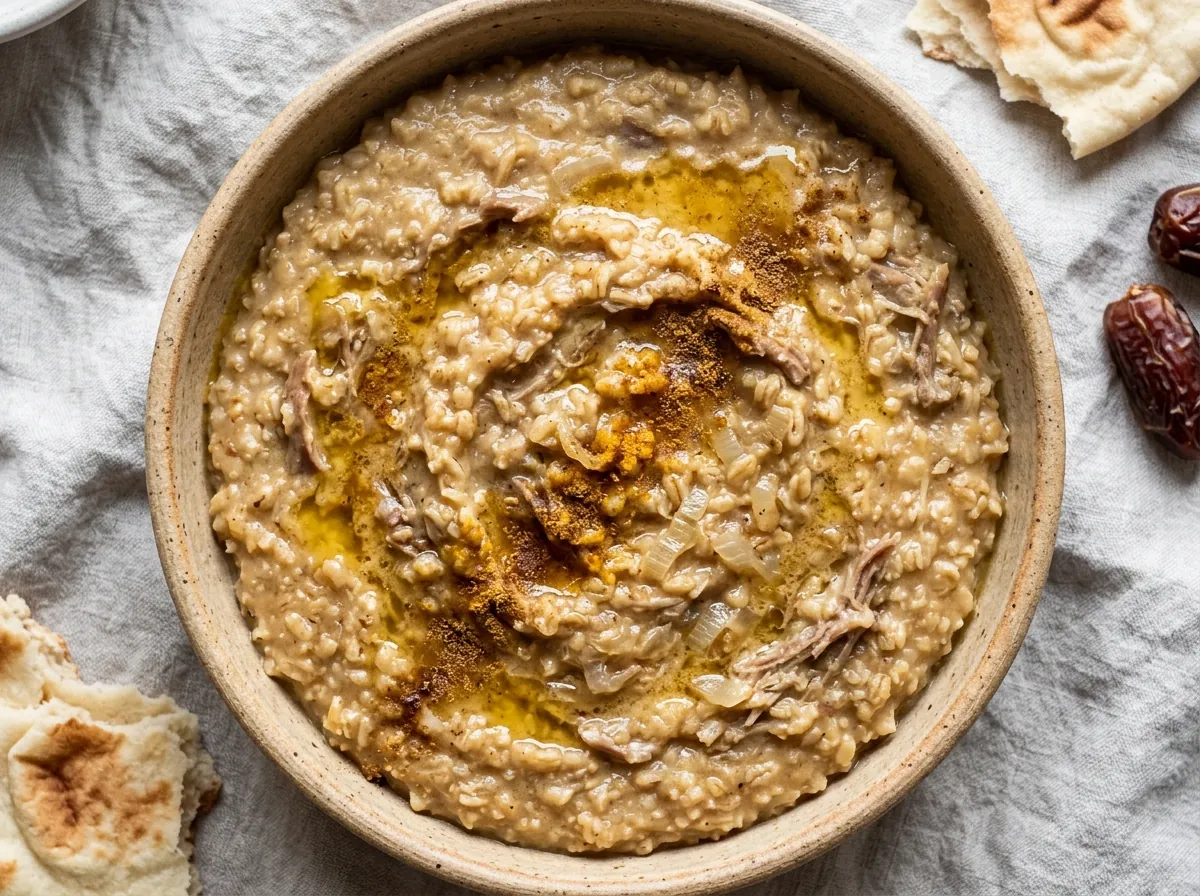
The revered Saudi feast dish -- lamb slow-cooked until melt-in-the-mouth, laid over thin bread soaked with broth then spiced rice. Eeina's version with a controlled portion and moderate ghee preserves mufattah's prestige and flavour.
Mufattah is the pinnacle of generosity and hospitality in Najd and the Arabian Peninsula, a dish for feasts and great occasions. Its name comes from fattaha, meaning to spread and flatten the bread and soak it with broth so it becomes a bed for the rice and lamb.
Its secret is the long, slow cooking that melts the lamb to tenderness, setting it apart from kabsa and mandi with its layer of broth-soaked bread and its longer cooking time. Eeina's version controls the portion and the amount of ghee, so mufattah retains its prestige and flavour with a lighter load.
Preparation Steps
Brown the lamb
Heat the ghee in a large heavy pot and brown the large lamb pieces on all sides until deeply browned. This browning is the foundation of mufattah's rich flavour.
Build the broth
Add the chopped onion and stir until wilted, then add the garlic, spices, and pierced loomi (dried black lime), followed by the grated tomatoes and tomato paste. Stir until the tomatoes dissolve and the spices bloom before adding the water.
Slow-cook
Pour in the hot water and salt to cover the lamb, cover the pot over very low heat, and cook for 90 minutes to 2 hours until the lamb is very tender and almost falling off the bone. The long, slow cooking is the secret of mufattah; do not rush it.
Cook the rice in the broth
Remove the lamb and keep it warm. Strain the broth and skim off the floating fat, then rinse the soaked rice and add it to double its volume in hot broth. Cook covered over low heat for 15 minutes until the rice is done and has absorbed the broth's flavour.
Lay the bread and soak it
Lay the flatbread in the base of a large serving dish and ladle hot broth over it until it softens and soaks through (this is the fattiha step from which the dish takes its name). The broth-soaked bread is the essential base layer of mufattah.
Assemble and serve
Spread the cooked rice over the bread layer, then place the tender lamb pieces in the centre. Drizzle a little broth over everything and serve hot with daqoos (spiced tomato sauce) and salad at the hospitality table.
Blood Sugar Impact
The glycemic index (GI) measures how quickly a food raises blood sugar, while the glycemic load (GL) measures how much a full serving raises it. Together they give the complete picture.
Glycemic Index
GI
64Medium
Low0–55Medium56–69High70+
A low value (≤55) means a gradual rise in blood sugar — the most suitable range for diabetes and insulin resistance.
Glycemic Load
GL
35High
Low0–10Medium11–19High20+
Glycemic load reflects the impact of the full serving. To lower it: take half a serving, or pair the recipe with a source of protein and fiber.
Nutritional Information
Per ServingMakes 6 servings · one serving is about 465 g of raw ingredients
Calories594 kcal30%of Daily Value*
Protein34 g68%of Daily Value*
Carbohydrates57 g21%of Daily Value*
Fat25 g32%of Daily Value*
Fiber2 g7%of Daily Value*
Sodium527 mg23%of Daily Value*
Potassium724 mg15%of Daily Value*
Phosphorus370 mg30%of Daily Value*
* Percent Daily Values are based on a 2,000-calorie diet per FDA food-label reference values — your daily needs may be higher or lower. Values are derived from the recipe's ingredients via the USDA database.
Troubleshooting
The most common problems when preparing Saudi Mufattah with Lamb, Bread, and Rice, and how to fix them:
Lamb is still tough
Not cooked long enough or the heat was too high. Mufattah needs very slow cooking for one and a half to two hours until the lamb is soft and almost falling off the bone.
Bread turned into a sticky paste
Soaked with too much broth or left too long. Pour just enough broth to soften the bread and immediately spread the rice over it; the bread absorbs gradually.
Broth is greasy and heavy
Fat from the lamb accumulated. Skim the floating fat layer with a spoon before cooking the rice in the broth, and choose lean lamb from the start.
Rice has no flavour
Cooked in water instead of broth. Always cook the rice in the strained meat broth, not water; the broth is the source of mufattah's flavour.
Dish is cold when served
Mufattah is a large dish that cools quickly. Warm the serving dish, assemble the layers just before serving, and drizzle hot broth over at the end.
Storage and Make-Ahead
Refrigerator (4 degrees C)
The lamb and rice keep for two to three days in separate airtight containers. The bread should be prepared fresh at serving time and not stored soaked.
Freezer (-18 degrees C)
The lamb with its broth freezes for one month. The rice freezes separately. The bread should not be frozen when soaked.
Advance preparation
Cook the lamb and broth the day before and refrigerate them; on the day of hosting, cook the rice and assemble the layers fresh.
Reheating
Reheat the lamb in its broth and the rice separately until hot, then assemble the dish. Do not leave cooked food out of the refrigerator for more than two hours.
Tested Ingredient Substitutions
Original Ingredient
Tested Substitute
Ratio
Flavor Difference
Lamb
Lean beef
Same weight
A leaner alternative; requires similarly slow cooking until tender
Thin Arabic flatbread
Thin wholegrain flatbread
Same number
Higher in fibre and slightly lower glycemic load
White basmati rice
Brown basmati rice
Same weight
Lowers the glycemic load and increases fibre; needs more broth and more time
Ghee
Olive oil
Same amount
A healthier unsaturated fat; flavour is lighter than ghee
Ready-made mufattah spices
Home blend: cardamom, cinnamon, cloves, and black pepper
Same amount
Fresher and free from additives
How Much Does It Make? Scaling Guide
Servings
Meat
Rice
Bread
Pot
3 (small)
450 g
150 g
1 loaf
medium pot
6 (base)
900 g
300 g
2 loaves
large pot
10 (large family)
1.5 kg
500 g
3 loaves
large pot
15 (banquets)
2.3 kg
750 g
5 loaves
banquet-size pot
EEINA Nutrition Tip
Mufattah is a naturally rich dish combining lamb, rice, and bread, so it is for occasions, not everyday eating. Choose lean lamb and skim the fat floating on the broth; use just one tablespoon of ghee. Serve a moderate portion with a generous salad; the glycemic load is high from the combined rice and bread.
Add This Recipe to Your Plan
The EEINA app saves your favorite recipes, calculates them from their real ingredients, and shows your daily numbers toward your goal. Try it free now.
From fattaha, meaning to spread and flatten the bread in the base of the dish and soak it with broth so it becomes a bed for the rice and lamb. The layer of soaked bread is what distinguishes mufattah from other rice and meat dishes.
What is the difference between mufattah, kabsa, and mandi?
In kabsa, all the ingredients are cooked together; mandi is steamed with smoking; mufattah is distinguished by the layer of broth-soaked bread under the rice and lamb, and by a long, slow cooking that melts the lamb to tenderness. It is the dish of great feasts.
Is mufattah suitable for people with diabetes?
Its glycemic load is high from the combined rice and bread, so it is an occasion dish, not a daily one. Keep to a moderate portion, replace the rice and bread with wholegrain versions, and add plenty of salad to balance the meal.
Why is the slow cooking important?
Lamb cooked slowly for a long time over very low heat has its connective tissue broken down, so it becomes melt-in-the-mouth. Fast cooking over high heat toughens it. Mufattah rewards patience.
Can I use a pressure cooker?
Yes; a pressure cooker reduces the lamb cooking time to about 45 minutes with a tender result. Afterwards, strain the broth, cook the rice in it, and assemble the layers in the same way.
Sources: USDA · University of Sydney · Gulf GSO · Our methodology · Updated on