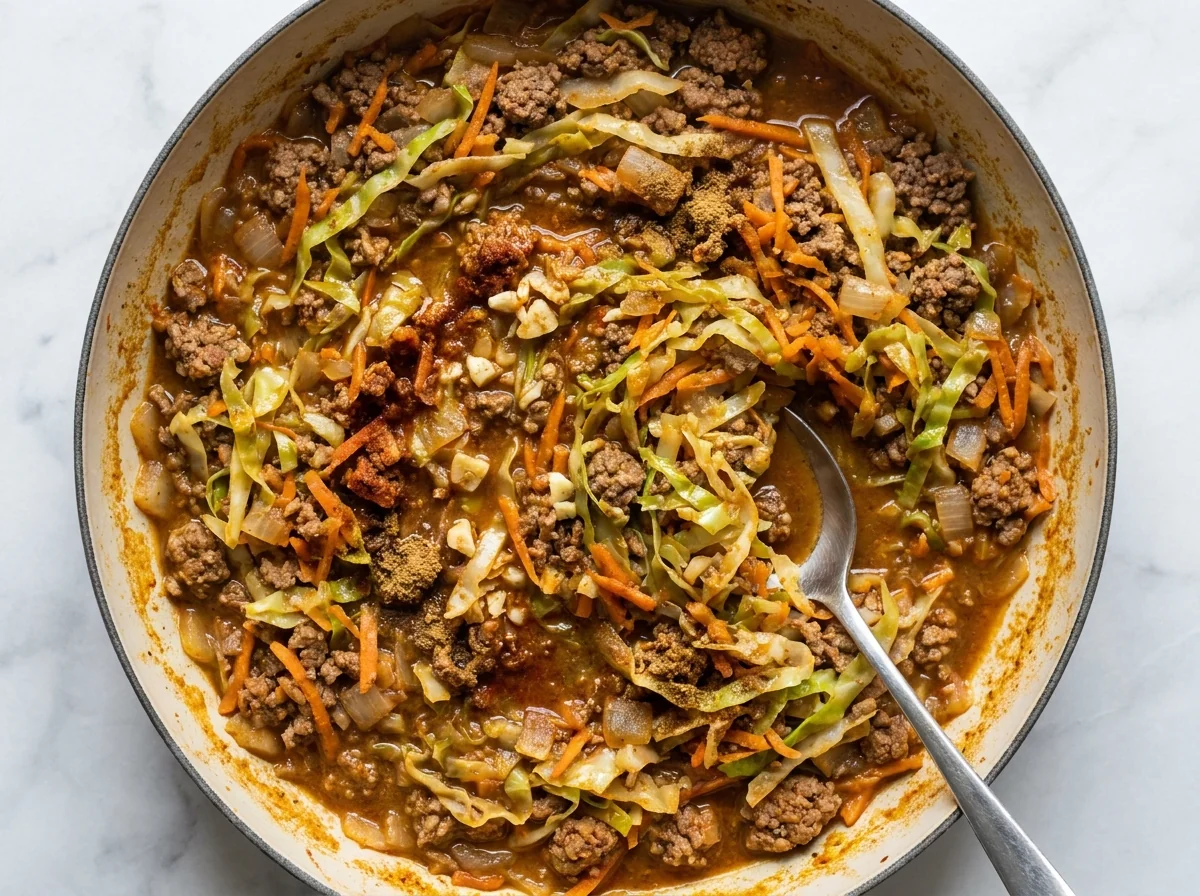
A single skillet bringing together ground beef, cabbage and carrot with Arabic kitchen spices: cumin, mixed spices and coriander.
A quick, warm dish with a local identity that makes a complete lunch without many pots.
Preparation Steps
Brown onion and garlic
Heat half the olive oil in a wide skillet over medium-high heat, and stir the onion until it softens, then add the garlic for a few seconds, since this aromatic base will carry the spice flavor later.
Brown the beef
Add the ground beef and break it up until it browns and reaches 71°C, the safe temperature for ground beef per FSIS, then drain off the excess fat.
Spice it
Stir half the cumin, mixed spices, coriander and paprika with the salt and pepper over the beef, since toasting the spices in the hot fat opens up their aromatic oils.
Vegetables
Push the beef aside and add the remaining oil, then stir in the cabbage and carrot with the rest of the cumin, since starting the vegetables in the seasoned fat unifies the flavor.
Wilt the cabbage
Cover the skillet for a few minutes so the cabbage releases its water, then uncover and cook while stirring until the cabbage softens and its edges caramelize, since caramelization gives it a sweetness that balances the spices.
Combine
Return the beef to the skillet and stir everything until heated and evenly combined, since combining at the end preserves the texture of the vegetables.
Finishing touch
Add the vinegar and stir, then scatter the parsley and serve, since a splash of acidity at the end brightens the whole dish.
Blood Sugar Impact
The glycemic index (GI) measures how quickly a food raises blood sugar, while the glycemic load (GL) measures how much a full serving raises it. Together they give the complete picture.
Glycemic Index
GI
13Low
Low0–55Medium56–69High70+
A low value (≤55) means a gradual rise in blood sugar — the most suitable range for diabetes and insulin resistance.
Glycemic Load
GL
2Low
Low0–10Medium11–19High20+
Glycemic load reflects the impact of the full serving. To lower it: take half a serving, or pair the recipe with a source of protein and fiber.
Nutritional Information
Per ServingMakes 4 servings · one serving is about 315 g of raw ingredients
Calories410 kcal20%of Daily Value*
Protein23 g46%of Daily Value*
Carbohydrates17 g6%of Daily Value*
Fat28 g36%of Daily Value*
Fiber5 g18%of Daily Value*
Sodium433 mg19%of Daily Value*
* Percent Daily Values are based on a 2,000-calorie diet per FDA food-label reference values — your daily needs may be higher or lower. Values are derived from the recipe's ingredients via the USDA database.
Troubleshooting
The most common problems when preparing Mediterranean Spiced Beef and Cabbage Skillet, and how to fix them:
The dish is watery
The cabbage released its water; raise the heat and cook uncovered until the liquid evaporates and the edges caramelize.
The spices are bland
Add a pinch of extra cumin and mixed spices and toast them briefly at the edge of the skillet before mixing.
The beef is dry
It was overcooked; brown it just until it loses its pink color and reaches 71°C without going longer.
The cabbage is firm
Extend the covered time by a few extra minutes so it softens with the steam before you uncover the skillet.
Storage and Make-Ahead
Refrigerator
Keep it in an airtight container for up to 4 days, and reheat in a skillet over medium heat until heated through.
Freezer
Freeze it well sealed for up to two months, and thaw it in the refrigerator before reheating.
Tested Ingredient Substitutions
Original Ingredient
Tested Substitute
Ratio
Flavor Difference
Ground beef
Ground lamb
450 g
For a richer flavor familiar in Gulf cooking
Mixed spices
Extra cumin with a little cinnamon
3 g
If ready-made mixed spices aren't available
Carrot
Chopped bell pepper
120 g
To reduce carbs with a vivid color
White vinegar
Lemon juice
5 ml
For a softer, more aromatic acidity
How Much Does It Make? Scaling Guide
Ingredient
2 servings
4 servings (base)
8 servings
Ground beef
225 g
450 g
900 g
Shredded cabbage
250 g
500 g
1000 g
Grated carrot
60 g
120 g
240 g
Chopped onion
55 g
110 g
220 g
Ground cumin
1.5 g
3 g
6 g
EEINA Nutrition Tip
Toast the spices in the hot fat for a few moments before adding the vegetables, since this opens up their flavor and deepens the dish.
Add This Recipe to Your Plan
The EEINA app saves your favorite recipes, calculates them from their real ingredients, and shows your daily numbers toward your goal. Try it free now.