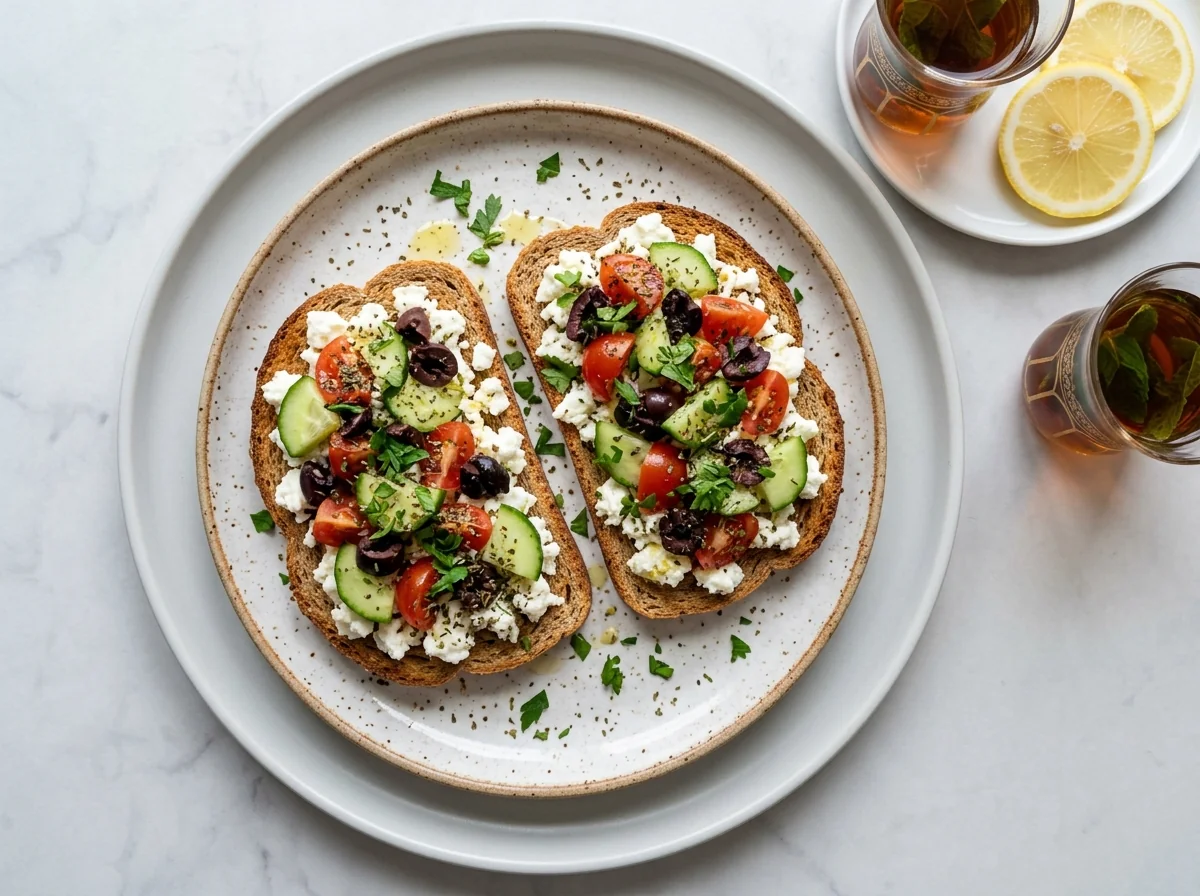
Toast with white cheese and olives is one of the easiest breakfast dishes in the Mediterranean and Levantine kitchen.
It combines the salty richness of the cheese, the strong flavor of the olives, and the freshness of the vegetables. At suhoor, it delivers quickly absorbed protein and healthy fat from olive oil, ready in less than ten minutes.
Preparation Steps
Toast the bread
Toast the slices of bread in a toaster until they turn golden. Take them out and let them cool for a minute.
Prepare the cheese
Mash the white cheese with the tines of a fork in a small bowl. Add the thyme, mint, and a pinch of salt and stir. Add a spoon of olive oil and mix.
Assemble the dish
Spread the toast slices with the cheese mixture. Arrange the cucumber slices, cherry tomatoes, and olives on top. Sprinkle the remaining herbs and garnish with parsley.
Serve
Serve immediately with lemon slices and mint tea. The dish works as a quick suhoor opener or as a snack between meals.
Blood Sugar Impact
The glycemic index (GI) measures how quickly a food raises blood sugar, while the glycemic load (GL) measures how much a full serving raises it. Together they give the complete picture.
Glycemic Index
GI
46Low
Low0–55Medium56–69High70+
A low value (≤55) means a gradual rise in blood sugar — the most suitable range for diabetes and insulin resistance.
Glycemic Load
GL
15Medium
Low0–10Medium11–19High20+
Glycemic load reflects the impact of the full serving. To lower it: take half a serving, or pair the recipe with a source of protein and fiber.
Nutritional Information
Per ServingMakes 2 servings · one serving is about 225 g of raw ingredients
Calories453 kcal23%of Daily Value*
Protein20 g40%of Daily Value*
Carbohydrates39 g14%of Daily Value*
Fat24 g31%of Daily Value*
Fiber7 g25%of Daily Value*
Sodium1350 mg59%of Daily Value*
* Percent Daily Values are based on a 2,000-calorie diet per FDA food-label reference values — your daily needs may be higher or lower. Values are derived from the recipe's ingredients via the USDA database.
Troubleshooting
The most common problems when preparing Toast with White Cheese and Olives, and how to fix them:
The cheese is too salty
Mix it with a spoon of yogurt and reduce the salt in the recipe. Greek feta has a firmer texture than halloumi.
The bread is dry
Toast it right before spreading. Old toast needs a sprinkle of water before toasting.
The olives are bitter
Soak them in cold water for 10 minutes before chopping. Canned olives preserved in vinegar are less bitter.
The freshness is lost
Arrange the vegetables right before serving. Tomatoes and cucumber release water that softens the bread.
Storage and Make-Ahead
Refrigerator
One hour after preparation. Cover the dish with plastic and serve cold.
Not suitable for freezing
The toasted bread loses its crispness and the vegetables wilt.
Tested Ingredient Substitutions
Original Ingredient
Tested Substitute
Ratio
Flavor Difference
White cheese
Cottage cheese
1:1
Lighter and less salty version.
Toast bread
Toasted Arabic bread
1:1
Authentic Levantine flavor.
Black olives
Green olives
1:1
Lighter flavor.
How Much Does It Make? Scaling Guide
Ingredient
2 people
4 people
6 people
Toast
4 slices
8 slices
12 slices
Cheese
120 g
240 g
360 g
Olives
40 g
80 g
120 g
Olive oil
15 ml
30 ml
45 ml
EEINA Nutrition Tip
Choose thick toast bread because it holds the weight of the cheese. Spread the cheese with the tip of the spoon while it is cold so it stays thick on the bread.
Add This Recipe to Your Plan
The EEINA app saves your favorite recipes, calculates them from their real ingredients, and shows your daily numbers toward your goal. Try it free now.