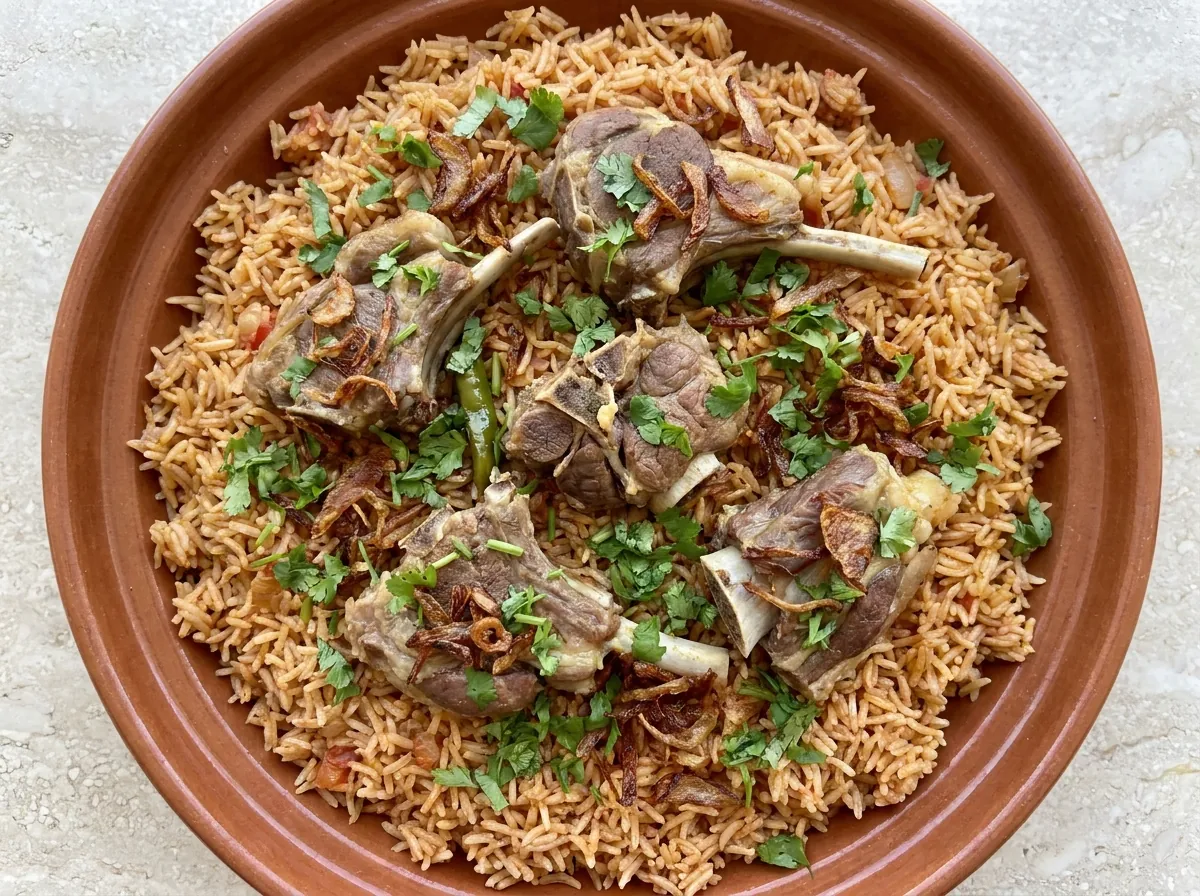
Red rice is the most famous dish of Al-Ahsa, cooked with Hasawi red rice, a whole-bran grain grown in the oases of Al-Ahsa, cooked with meat and tomato broth until its red color deepens.
A traditional whole grain that Al-Ahsa knew before the term "whole grains" became widespread.
Preparation Steps
Brown the meat and build the red sauce
In a heavy pot, heat the ghee and brown the meat pieces until they take on a brown crust, then add the chopped onion until golden, then the crushed garlic and the Baharat, then the grated tomato, the tomato paste, and the hot pepper, and stir until the sauce deepens. The redness of this dish comes from the tomato, not from any dye.
Simmer the meat in the red broth
Cover the meat with hot water, salt it, and cook covered over low heat for one hour until the meat softens and the broth takes on its color and taste.
Add the soaked Hasawi rice
Drain the Hasawi rice soaked for one hour and add it to the broth, let it come to a boil, then lower the heat and cover for forty minutes. The whole grain with its bran needs about double the time of white rice, and in return it gives a different texture and flavor.
Check the rice and moisten it if needed
Halfway through, check the pot gently without stirring vigorously, and if the rice dries out before it cooks, add a little hot water. Hasawi rice drinks more water than white, and the amount varies with the harvest.
Serve it with its traditional top
Fluff the rice and spread it in the serving dish, arrange the meat over it, and scatter the fresh coriander and the fried onion. It is among the most famous dishes of the Eastern Province.
Blood Sugar Impact
The glycemic index (GI) measures how quickly a food raises blood sugar, while the glycemic load (GL) measures how much a full serving raises it. Together they give the complete picture.
Glycemic Index
GI
69Medium
Low0–55Medium56–69High70+
A low value (≤55) means a gradual rise in blood sugar — the most suitable range for diabetes and insulin resistance.
Glycemic Load
GL
58High
Low0–10Medium11–19High20+
Glycemic load reflects the impact of the full serving. To lower it: take half a serving, or pair the recipe with a source of protein and fiber.
Nutritional Information
Per ServingMakes 6 servings · one serving is about 530 g of raw ingredients
Calories665 kcal33%of Daily Value*
Protein28 g56%of Daily Value*
Carbohydrates86 g31%of Daily Value*
Fat23 g29%of Daily Value*
Fiber2 g7%of Daily Value*
Sodium527 mg23%of Daily Value*
Potassium671 mg14%of Daily Value*
Phosphorus332 mg27%of Daily Value*
* Percent Daily Values are based on a 2,000-calorie diet per FDA food-label reference values — your daily needs may be higher or lower. Values are derived from the recipe's ingredients via the USDA database.
Troubleshooting
The most common problems when preparing Hasawi Red Rice with Lamb, and how to fix them:
The rice stayed tough
The soaking is short or the cooking time is insufficient. An hour soaking and forty minutes cooking, and if it stays tough give it ten extra minutes with a little hot water.
The broth dried out before the rice cooked
Hasawi rice drinks a lot of water. One liter and two hundred milliliters is a suitable start, and small amounts of hot water are added as needed, not cold water because it stops the boil.
The red color is pale
The tomato isn't ripe or the paste is too little. Fry the paste with the sauce and use ripe tomatoes, for the red color is the dish's essential trait.
Where do I find Hasawi rice?
In Al-Ahsa shops, Eastern Province stores, and some large markets, and if it's unavailable, brown basmati takes its place because it is a whole grain like it.
Storage and Make-Ahead
Immediately
Served hot.
In the refrigerator
Three days, and its whole grain tolerates reheating better than white rice.
In the freezer
One month in airtight containers, reheated with steam so it regains its texture.
Tested Ingredient Substitutions
Original Ingredient
Tested Substitute
Ratio
Flavor Difference
Hasawi rice
Brown basmati
1:1
The closest whole-bran substitute outside Al-Ahsa
Lamb
Bone-in chicken
1:1
Lighter, and cooks half an hour faster
Hot pepper
Omitting it
~
A version without heat that suits everyone
The fried onion topping
Raisins and almonds
~
A sweet topping for those who like it
How Much Does It Make? Scaling Guide
Ingredient
6 servings
3 servings
12 servings
Hasawi rice
600 g
300 g
1.2 kg
Meat
800 g
400 g
1.6 kg
Water
1.2 L
600 ml
2.4 L
EEINA Nutrition Tip
Soak the Hasawi rice a full hour before cooking and give it forty minutes on the heat. It is a whole-bran grain that needs more time than white rice: short soaking and rushed cooking make it come out tough, while the full time makes it tender with a firm grain.
Add This Recipe to Your Plan
The EEINA app saves your favorite recipes, calculates them from their real ingredients, and shows your daily numbers toward your goal. Try it free now.
That it is a whole grain with its bran: higher fiber, a gentler glycemic index, and more minerals than white rice. The whole grains that modern guidelines recommend were the traditional rice of Al-Ahsa since long ago.
How does it differ from Bahraini muhammar?
Bahraini muhammar is sweet rice with dates served with fish, while the Hasawi one is savory, cooked with meat and tomato broth. The names are similar and the dishes are different.
Is it more suitable for people with diabetes than white?
Its whole grain is slower to absorb and higher in fiber than white, but it remains a rice whose quantity is counted by the scoop, and the final reference is follow-up with a doctor and a dietitian.
Why is it tied to Al-Ahsa specifically?
Because this variety is grown specifically in the oases of Al-Ahsa in limited quantities, so it became part of the region's identity and its cuisine.