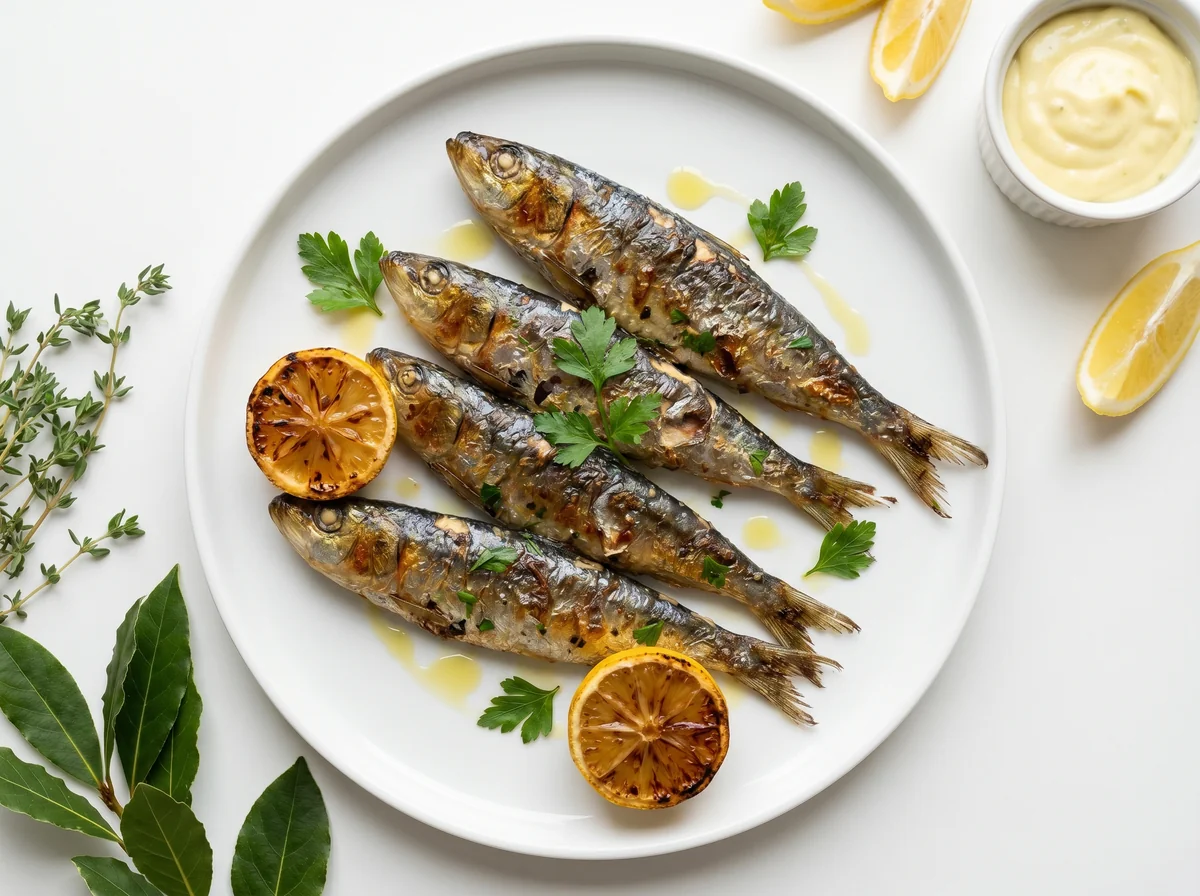
Sardines are a humble yet nutritional treasure on Arab coastal tables, grilled whole over charcoal while the scent of lemon and herbs drifts around them.
This recipe celebrates their simplicity: no stuffing, no heavy sauces — just fresh fish, the brightness of lemon, and the greenness of parsley. We chose them because our library is rich in salmon and tuna but was missing this small, omega-3-packed gem.
Preparation Steps
Prepare the fish
Gut, scale, and wash the sardines thoroughly under cold water, then pat them completely dry with kitchen paper. A completely dry surface is essential for a crispy skin and for preventing them sticking to the grill.
Make the herb mixture
Mix the lemon juice, olive oil, crushed garlic, parsley, coriander, za'atar, cumin, and black pepper in a bowl until combined and fragrant with herbs.
Marinate
Rub the sardines inside and out with the herb mixture and leave to marinate for ten minutes only in the refrigerator. Do not exceed fifteen minutes — lemon acid begins to break down the delicate flesh with time.
Heat the grill
Heat a grill or ridged pan over high heat until very hot, then brush it with a light coat of oil. High heat gives the fish grill marks and prevents sticking.
Grill
Place the sardines on the hot grill and cook for about three to four minutes per side without moving them early. The fish is done when the flesh turns from translucent to white and flakes easily when pressed with a fork.
Serve
Transfer the fish to a serving plate and scatter the remaining herbs and fresh lemon slices over them. Serve hot — sardines are at their best the moment they come off the heat.
Blood Sugar Impact
The glycemic index (GI) measures how quickly a food raises blood sugar, while the glycemic load (GL) measures how much a full serving raises it. Together they give the complete picture.
Glycemic Index
GI
12Low
Low0–55Medium56–69High70+
A low value (≤55) means a gradual rise in blood sugar — the most suitable range for diabetes and insulin resistance.
Glycemic Load
GL
1Low
Low0–10Medium11–19High20+
Glycemic load reflects the impact of the full serving. To lower it: take half a serving, or pair the recipe with a source of protein and fiber.
Nutritional Information
Per ServingMakes 2 servings · one serving is about 110 g of raw ingredients
Calories222 kcal11%of Daily Value*
Protein10 g20%of Daily Value*
Carbohydrates6 g2%of Daily Value*
Fat18 g23%of Daily Value*
Fiber1 g4%of Daily Value*
Sodium307 mg13%of Daily Value*
Potassium244 mg5%of Daily Value*
Phosphorus194 mg16%of Daily Value*
* Percent Daily Values are based on a 2,000-calorie diet per FDA food-label reference values — your daily needs may be higher or lower. Values are derived from the recipe's ingredients via the USDA database.
Troubleshooting
The most common problems when preparing Grilled Sardines with Herbs and Lemon, and how to fix them:
The fish sticks to the grill and tears
Make sure the surface is completely dry and that the grill is very hot and brushed with oil before placing the fish — do not move them until a grill crust forms that allows them to release easily.
The flesh is crumbling and mushy before cooking
This is the effect of a long lemon soak — stick to ten minutes only. Lemon acid chemically 'cooks' the delicate flesh over time, as in ceviche.
The sardines came out dry
Reduce the grilling time — sardines are delicate and cook in just three to four minutes per side. Exceeding that dries out the flesh quickly.
Strong fish smell in the kitchen
Rub the sardines with lemon juice before cooking and turn on the extractor fan. Lemon acidity mellows the smell, and grilling over high heat for a short time produces less vapour than frying.
The skin did not brown
Raise the grill temperature and wait until it is thoroughly hot, and make sure the fish surface is completely dry — moisture prevents browning and causes steaming instead of grilling.
Storage and Make-Ahead
Refrigerator (raw)
Store fresh raw sardines in the coldest part of the refrigerator on crushed ice and use within one day to preserve freshness.
Refrigerator (cooked)
Grilled sardines keep in an airtight container in the refrigerator for two days. Do not leave them out of the refrigerator for more than two hours to prevent bacterial growth.
Freezing
Fresh raw sardines can be frozen tightly wrapped for up to three months. Thaw in the refrigerator, not at room temperature.
Reheating
Reheat gently in a warm oven or a pan for a few minutes until the centre is warm. Avoid prolonged reheating to prevent drying out.
Tested Ingredient Substitutions
Original Ingredient
Tested Substitute
Ratio
Flavor Difference
Fresh sardines
Fresh mackerel
1:1 by weight
An excellent substitute as mackerel is also an oily fish rich in omega-3 that holds up well to grilling, with a slightly longer cooking time due to its larger size.
Lemon juice
Apple cider vinegar or lime juice
1:1
Provides the same acidity that mellows the fish flavour and perfumes the flesh.
Fresh coriander
Fresh dill or basil
1:1
For those who dislike coriander — dill pairs particularly well with fish.
Extra-virgin olive oil
Avocado oil
1:1
Higher smoke point, suitable for high-heat grilling, with healthy fats.
Whole sardines
Boneless sardine fillets
1:1 by weight
For those who prefer to avoid bones — grill for a shorter time due to their thinness, so watch carefully to avoid drying out.
How Much Does It Make? Scaling Guide
Ingredient
2 servings
4 servings
6 servings
Fresh sardines
6 fish
12 fish
18 fish
Lemon juice
4 tbsp
8 tbsp
12 tbsp
Olive oil
2 tbsp
4 tbsp
6 tbsp
Crushed garlic
3 cloves
6 cloves
9 cloves
Chopped parsley
3 tbsp
6 tbsp
9 tbsp
EEINA Nutrition Tip
Choose sardines with clear eyes, bright red gills, and a clean sea smell — no ammonia. Freshness is half the success. To get the most from the omega-3, avoid deep-frying and stick to grilling, since prolonged high heat in oil breaks down some of these beneficial fatty acids.
Add This Recipe to Your Plan
The EEINA app saves your favorite recipes, calculates them from their real ingredients, and shows your daily numbers toward your goal. Try it free now.
Can sardines be grilled in the oven instead of on a grill?
Yes — arrange them on a tray lined with baking paper and grill under the oven's top broiler on high heat for about five to seven minutes per side until browned and the flesh flakes easily.
Do I remove the sardine bones before eating?
Small sardines are usually eaten with their fine bones, which soften during grilling and are a good source of calcium. For larger sardines, the central backbone can easily be removed after cooking.
Why is this recipe made with no added salt?
We relied on lemon, garlic, and herbs for flavour to keep the dish low in sodium and more suitable for heart health and blood pressure. You can add a light pinch of salt to taste if you have no medical restriction.
How often is sardine consumption recommended?
The American Heart Association recommends eating oily fish approximately twice a week. Sardines are an excellent choice because they are low in mercury compared to larger fish.
Does tinned sardine offer the same benefit?
Tinned sardines retain most of the omega-3 and calcium, but are generally higher in sodium. Choose those preserved in water or olive oil and rinse if you want to reduce salt.