Creamy Cauliflower Soup — Low Dairy, No Roasting (Renal-Friendly)
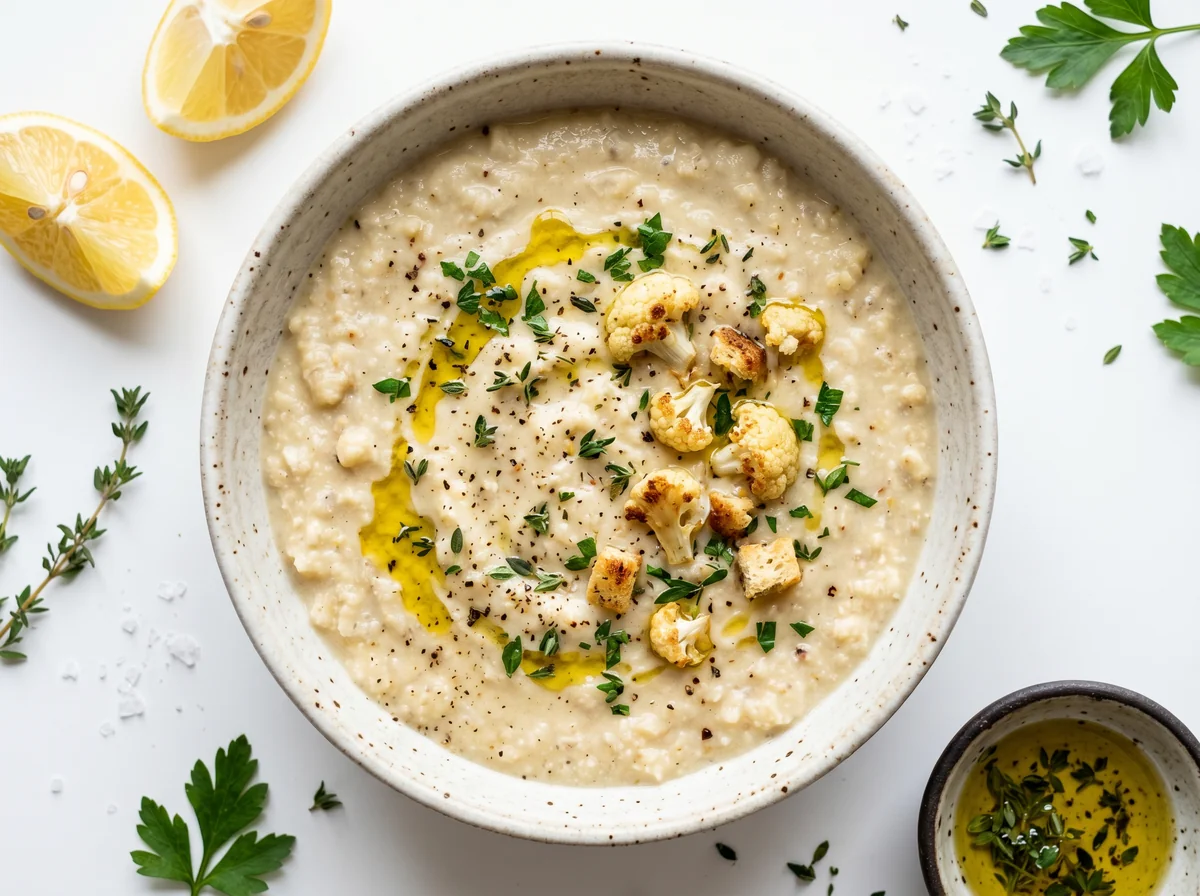
A velvety creamy cauliflower soup with minimal dairy and no roasting — creaminess achieved entirely by blending the poached cauliflower, with just a splash of low-fat milk, seasoned with lemon, thyme, and parsley.
In a renal kitchen, a creamy soup becomes a real challenge — most creamy recipes build their texture on cream, cheese, and salted broth, which is precisely what a kidney patient is asked to avoid. This soup solves the equation with a simple, old-fashioned method: cauliflower simmered until completely soft then blended until smooth, transforming by blending alone into a velvety texture that resembles cream without a drop of it.
It differs from roasted creamy cauliflower soup in that there is no roasting at all — the onion and garlic are sweated gently until only translucent, keeping the flavor clean and light and the color pale and inviting. A splash of low-fat milk adds a touch of smoothness without raising phosphorus, and all the flavor is built on lemon, thyme, and parsley instead of salt. It is a warm bowl that suits a light lunch or a cold evening, and proves that following a renal diet does not mean giving up a comforting creamy dish.
Preparation Steps
Heat the oil
Heat the olive oil in a pot over medium heat for one minute until it is shimmering and fluid without smoking — moderate heat preserves the oil's flavor without browning.
Sweat the onion and garlic
Add the onion and garlic and stir over low heat for three minutes until the onion is soft and translucent without taking on color — keeping them pale maintains the light, no-roast character of the soup.
Add the cauliflower and water
Add the cauliflower florets and the boiling water until it covers the cauliflower, then raise the heat until it comes to a boil in about two minutes. Using boiling water cuts the cooking time and helps the cauliflower keep its color.
Simmer until tender
Reduce the heat, cover the pot, and let it simmer for fifteen minutes until a fork slides effortlessly into the florets — complete tenderness is the requirement for a creamy texture when blended.
Blend until smooth
Turn off the heat and blend the soup with an immersion blender for two minutes until completely smooth and velvety with no lumps — blending the cooked vegetable is what delivers the creamy texture without any cream or cheese.
Add the milk
Return the pot to very low heat and stir in the low-fat milk for two minutes until hot but not boiling — avoiding a boil after adding the milk prevents curdling and keeps the texture smooth.
Season and serve
Add the lemon juice, thyme, black pepper, and just a small pinch of salt as needed, stir for thirty seconds, then ladle into bowls and garnish with parsley — lemon and herbs compensate for the flavor with a minimum of salt.
Blood Sugar Impact
The glycemic index (GI) measures how quickly a food raises blood sugar, while the glycemic load (GL) measures how much a full serving raises it. Together they give the complete picture.
Glycemic Index
GI
18Low
Low0–55Medium56–69High70+
A low value (≤55) means a gradual rise in blood sugar — the most suitable range for diabetes and insulin resistance.
Glycemic Load
GL
1Low
Low0–10Medium11–19High20+
Glycemic load reflects the impact of the full serving. To lower it: take half a serving, or pair the recipe with a source of protein and fiber.
Nutritional Information
Per ServingMakes 4 servings · one serving is about 385 g of raw ingredients
Calories99 kcal5%of Daily Value*
Protein4 g8%of Daily Value*
Carbohydrates12 g4%of Daily Value*
Fat4 g5%of Daily Value*
Fiber4 g14%of Daily Value*
Sodium253 mg11%of Daily Value*
Potassium498 mg11%of Daily Value*
Phosphorus94 mg8%of Daily Value*
* Percent Daily Values are based on a 2,000-calorie diet per FDA food-label reference values — your daily needs may be higher or lower. Values are derived from the recipe's ingredients via the USDA database.
Troubleshooting
The most common problems when preparing Creamy Cauliflower Soup — Low Dairy, No Roasting (Renal-Friendly), and how to fix them:
The texture is watery and does not resemble cream
You added more water than needed. Return the pot to low heat uncovered and let it evaporate for a few minutes to thicken, or start with less water that barely covers the cauliflower and add more gradually.
The milk curdled after adding it
The soup boiled after the milk was added, or it was too acidic. Add the milk over very low heat without boiling, and add the lemon at the end after the milk rather than before.
The flavor is flat without salt
Increase the lemon juice, garlic, and thyme, and add a pinch of black pepper — acidity and herbs compensate for the lack of salt and bring out the natural sweetness of the cauliflower.
Small lumps remain after blending
The cauliflower was not soft enough before blending. Return it to simmering for an extra 5 minutes until a fork glides in effortlessly, then blend for a full minute longer.
The soup color is dark and unappetizing
The onion or garlic browned from too high a heat. Sweat them gently without browning — the light character requires keeping them pale.
Storage and Make-Ahead
Refrigerator
Store in an airtight container in the refrigerator for up to 3 days. Avoid leaving it outside refrigeration for more than 2 hours per the danger-zone rule.
Reheating
Reheat over low heat with continuous stirring and a splash of hot water if it has thickened, without bringing it to a boil to protect the texture.
Freezer
Freeze for up to 1 month in a freezer-safe container. The texture may break down slightly after thawing — re-blend quickly after reheating.
Milk note
If you plan to freeze it, freeze before adding the milk and add it fresh at reheating to avoid texture changes.
Tested Ingredient Substitutions
Original Ingredient
Tested Substitute
Ratio
Flavor Difference
Cauliflower
Peeled zucchini
1:1 by weight
Zucchini is relatively low in potassium and gives a smooth texture, with a lighter flavor that needs a little more lemon and thyme.
Low-fat milk
Additional hot water
Same amount
Removing the milk lowers phosphorus further and makes it completely dairy-free, with a slightly thinner consistency compensated by extra simmering.
Olive oil
Canola oil
1:1
A flavor-neutral substitute for those who prefer a milder taste, with no effect on mineral load.
Fresh thyme
Dried thyme
One-third the amount
Dried herbs are more concentrated — use one-third the weight of fresh and add them slightly earlier so their flavor opens up.
Onion
Green onion (scallion)
Half the amount
A gentler option on digestion with a milder bite, adding a light onion flavor without long sweating.
How Much Does It Make? Scaling Guide
Ingredient
4 servings
8 servings
12 servings
Cauliflower
600 g
1200 g
1800 g
Chopped onion
80 g
160 g
240 g
Garlic
2 cloves
4 cloves
6 cloves
Boiling water
700 ml
1400 ml
2100 ml
Low-fat milk
120 ml
240 ml
360 ml
Lemon juice
15 ml
30 ml
45 ml
EEINA Nutrition Tip
If you want to reduce the mineral load further, simmer the cauliflower in plenty of water then discard part of the cooking water and replace it with fresh hot water before blending — this technique known as leaching reduces dissolved potassium. And remember that individual quantities of fluids and minerals are determined with your nephrologist and renal dietitian based on your test results.
Add This Recipe to Your Plan
The EEINA app saves your favorite recipes, calculates them from their real ingredients, and shows your daily numbers toward your goal. Try it free now.
It was designed to be low in sodium, potassium, and phosphorus through its ingredient selection and cooking method, but final safety depends on your disease stage, lab results, and permitted serving size — consult your nephrologist and renal dietitian before adopting it.
How does the texture become creamy without cream or cheese?
The texture comes from blending the simmered cauliflower until smooth — breaking down the fibers creates a thick emulsion that mimics cream. This is a purely physical mechanism unrelated to fat, which is why the soup stays low in phosphorus.
Why no roasting?
Roasting develops deep flavor but requires high heat and a dark color. This version sweats the onion and garlic gently until only translucent, keeping the flavor clean and the color pale — which distinguishes it from roasted creamy cauliflower soup.
Can I add salt?
We recommend as little as possible or none at all, relying on lemon, thyme, garlic, and pepper to build flavor. The allowable amount of sodium is individual and determined with your nephrologist and dietitian.
Can I lower the potassium further?
Yes, by simmering the cauliflower in plenty of water then replacing part of the cooking water with fresh hot water before blending. This leaching method reduces dissolved potassium — follow the quantities permitted in your nutrition plan.