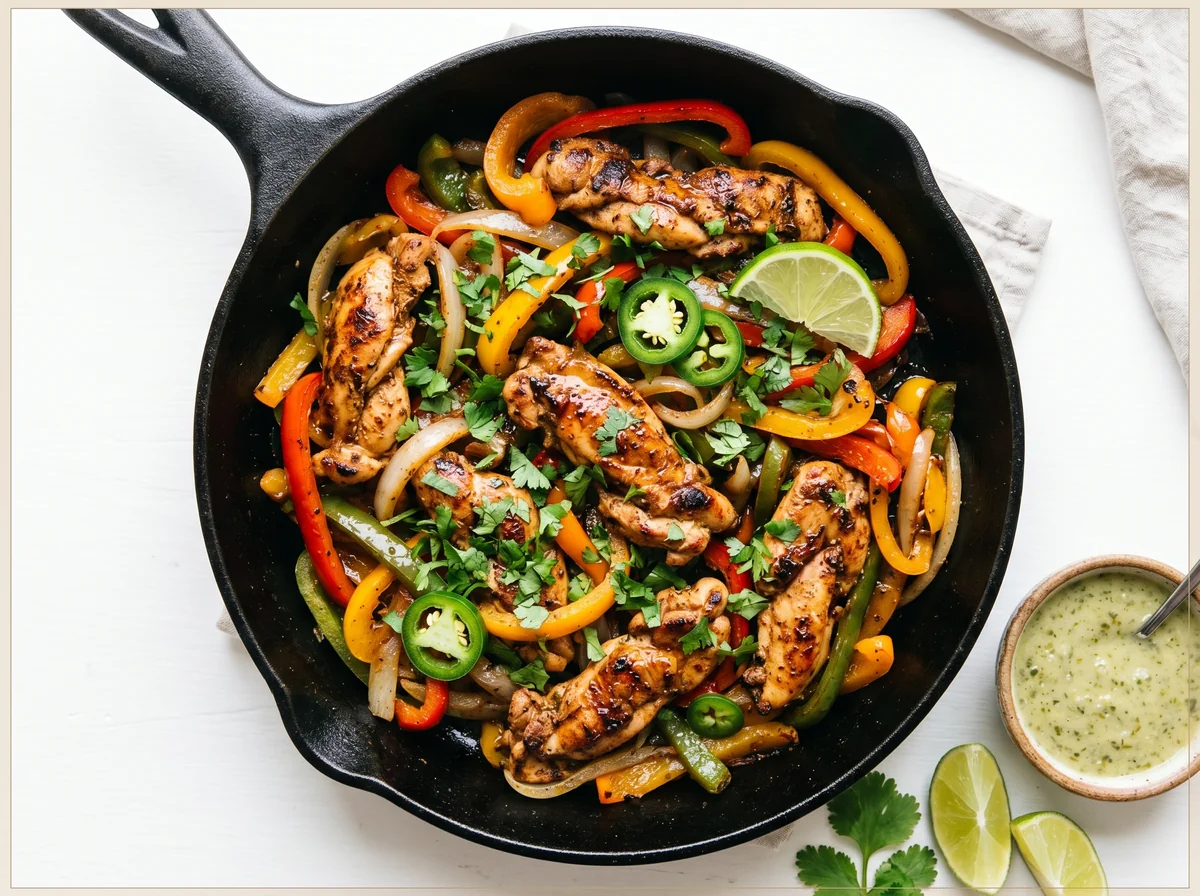
Mexican fajita of seasoned chicken slices, colorful bell peppers, and onion · low in carbs and low GI when served without white bread. A popular fast, protein-rich lunch.
The fajita is one of the most famous and best-loved dishes of Mexican cuisine on our tables: seasoned chicken slices grilled on a hot griddle with colorful peppers and onion until their edges char.
EEINA's version serves it without the usual white bread, so it stays high in protein and low in carbs without losing its smoky flavor.
Preparation Steps
Season the chicken
Mix the chicken slices with half the oil, the cumin, paprika, chili, oregano, garlic, the juice of half a lime, salt, and pepper. Leave it for at least 15 minutes (or an hour in the fridge) to soak up the marinade.
Sear the chicken
Heat a skillet or griddle over high heat until very hot, add a tablespoon of oil, then the chicken slices spread out without crowding. Leave them for two minutes without stirring until a brown crust forms, then toss them for 3 to 4 minutes until cooked through (74°C [1]). Set them aside.
Sauté the peppers and onion
In the same hot skillet, add the colorful peppers and onion and toss for 4 to 5 minutes over high heat until they soften while keeping a light crunch and slightly charred edges (this light charring gives the fajita its distinctive flavor).
Combine
Return the chicken to the skillet with the peppers, squeeze the rest of the lime, and toss for a minute until everything is combined and heated through. Taste and adjust the salt.
Serve
Serve it hot right away. To keep the carbs low: wrap it in large lettuce leaves or a small brown bread, with yogurt or mashed avocado instead of ready-made sauces.
Blood Sugar Impact
The glycemic index (GI) measures how quickly a food raises blood sugar, while the glycemic load (GL) measures how much a full serving raises it. Together they give the complete picture.
Glycemic Index
GI
11Low
Low0–55Medium56–69High70+
A low value (≤55) means a gradual rise in blood sugar — the most suitable range for diabetes and insulin resistance.
Glycemic Load
GL
1Low
Low0–10Medium11–19High20+
Glycemic load reflects the impact of the full serving. To lower it: take half a serving, or pair the recipe with a source of protein and fiber.
Nutritional Information
Per ServingMakes 4 servings · one serving is about 260 g of raw ingredients
Calories234 kcal12%of Daily Value*
Protein30 g60%of Daily Value*
Carbohydrates11 g4%of Daily Value*
Fat7 g9%of Daily Value*
Fiber3 g11%of Daily Value*
Sodium364 mg16%of Daily Value*
Potassium668 mg14%of Daily Value*
Phosphorus304 mg24%of Daily Value*
* Percent Daily Values are based on a 2,000-calorie diet per FDA food-label reference values — your daily needs may be higher or lower. Values are derived from the recipe's ingredients via the USDA database.
Troubleshooting
The most common problems when preparing Chicken Fajita with Colorful Bell Peppers, and how to fix them:
The chicken boiled and did not char
The skillet was not hot enough or was crowded with slices, so their water evaporated and boiled them. Heat the skillet well, cook in two batches if needed, and leave the slices for two minutes without stirring to form the brown crust.
The peppers wilted and turned soft and watery
They were cooked on low heat for too long. The fajita needs high heat and a short time (4 to 5 minutes) until the peppers soften while keeping their crunch and charred edges.
The taste is flat with no acidity
Not enough lime juice. Lime is an essential element in fajita; half is added in the marinade and half at the end. A sprinkle of fresh cilantro lifts the flavor too.
The chicken is dry
It was overcooked. Thin slices cook in 5 to 6 minutes total. Use a thermometer (74°C) and remove them immediately, and do not return them to the heat for more than a minute at the end.
The marinade did not stick to the chicken
Too little time or the chicken was wet. Pat the slices dry with a paper towel before seasoning, and leave them at least 15 minutes (or an hour in the fridge) so the meat soaks up the spices.
Storage and Make-Ahead
Fridge (4°)
Three days in an airtight container after cooling. Excellent for work meals: keep it without bread and add the lettuce or bread at eating time.
Freezer (-18°)
Two months. Freeze the seasoned chicken raw for a quick later cook, or the cooked chicken with peppers in individual portions.
Make ahead
Season the chicken and cut the peppers and onion the night before in the fridge. Cooking takes only 15 minutes over high heat at serving time.
Reheating
In a skillet over high heat for two minutes to restore the crunch, or in the microwave for a minute and a half. Do not leave it out of the fridge for more than two hours [2].
Tested Ingredient Substitutions
Original Ingredient
Tested Substitute
Ratio
Flavor Difference
Chicken breast
Lean beef or shrimp
same weight
Beef is the traditional fajita choice; shrimp cooks in 3 minutes
White tortilla bread
Large lettuce leaves or brown bread
as needed
Greatly lowers the carbs, an ideal choice for people with diabetes
Ready-made fajita spices
Cumin, paprika, chili, and oregano at home
a teaspoon of each
A homemade blend with no preservatives and less salt
Sweet pepper
Zucchini or sliced mushrooms
same weight
An alternative vegetable for those who do not like peppers, cooks at a similar speed
Hot chili powder
Omit it or an extra pinch of paprika
—
For children and sensitive stomachs, the flavor stays smoky without heat
How Much Does It Make? Scaling Guide
Servings
Chicken
Peppers
Onion
Pan
2 (single × 2)
250 g
1½ pieces
half an onion
medium pan
4 (base)
500 g
3 pieces
1 onion
large pan
6 (family)
750 g
4½ pieces
1½ onions
large pan or 2 batches
8 (hosting)
1 kg
6 pieces
2 onions
large griddle or 2 batches
EEINA Nutrition Tip
The fajita itself (chicken and peppers) is low in carbs and excellent for people with diabetes; the carbs come from the bread. We serve it in lettuce leaves or on a plate with salad, or with a single small brown bread instead of two white breads. Avocado instead of creamy sauces adds healthy fats and satiety.
Add This Recipe to Your Plan
The EEINA app saves your favorite recipes, calculates them from their real ingredients, and shows your daily numbers toward your goal. Try it free now.
Yes, very much so when served without white bread. The chicken and peppers are low in carbs and low GI. We serve it in lettuce leaves or with a small brown bread so the meal stays low in glycemic load.
How do I get the restaurant fajita flavor?
The secret is very high heat and a hot skillet (cast iron is preferred), without crowding the slices so they char rather than boil. The marinade of cumin, paprika, and lime plus the light charring is the distinctive flavor.
What is the healthy alternative to ready-made sauces?
Mashed avocado with lime and salt (a simple guacamole), or Greek yogurt with garlic and cilantro. Both add creaminess and healthy fats instead of high-calorie sauces.
Can beef be used instead of chicken?
Yes, lean beef slices are the traditional fajita. We cook them over high heat for a slightly shorter time so they do not toughen.
Is it good for weekly meals?
Excellent. Keep it without bread for 3 days in the fridge, and add the lettuce or bread when eating so it does not go soft. Or freeze the seasoned chicken raw for a quick later cook.
Sources: USDA · University of Sydney · Our methodology · Updated on