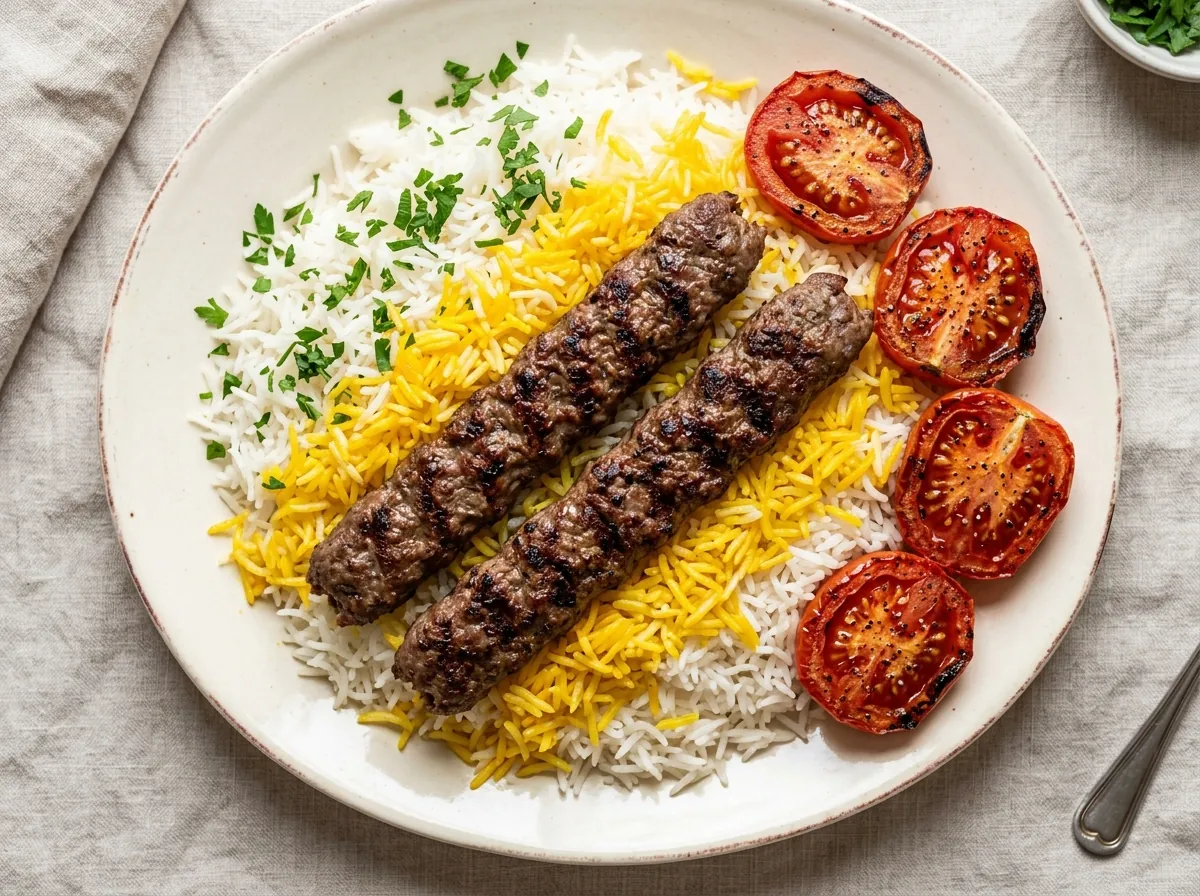
Chelo kebab, basmati rice served with saffron-seasoned lamb skewers. A luxurious Persian meal that combines complex carbohydrates with high protein, perfect for a filling suhoor that keeps the faster going strong for hours.
Chelo kebab is one of the most famous dishes of Persian cuisine, meaning 'rice and kebab' in Persian.
It is associated with family Friday gatherings and special occasions. For suhoor, it works as a luxurious meal that keeps the faster satiated for 7 hours thanks to the mix of carbohydrates and protein.
Preparation Steps
Season the kebab
Mix the ground meat with the squeezed onion, garlic, saffron, salt, and cumin. Knead by hand for five minutes and shape into long fingers on wooden skewers. Chill for half an hour.
Parboil the rice
Bring water to a boil and parboil the rice with salt for five minutes, then drain and rinse. The initial parboiling gives the grain an outer shell that preserves its shape.
Steam the rice
In a special pot (dampokht), heat the oil and butter and place a layer of lavash bread (or potato slices) at the bottom. Add the rice and sprinkle the saffron. Cover and cook on low heat for 30 minutes.
Grill the kebab
Over charcoal or an electric grill, grill the skewers for five minutes per side while brushing them with olive oil. Strong heat gives the characteristic browned crust.
Grill the tomatoes
Grill the tomatoes on the flame or in the oven for five minutes until the skin softens and the sweetness emerges.
Serving
Arrange the rice on a platter, place the kebab on top, and garnish with grilled tomatoes and parsley. The dish works for suhoor because it combines complex carbohydrates with high protein.
Blood Sugar Impact
The glycemic index (GI) measures how quickly a food raises blood sugar, while the glycemic load (GL) measures how much a full serving raises it. Together they give the complete picture.
Glycemic Index
GI
69Medium
Low0–55Medium56–69High70+
A low value (≤55) means a gradual rise in blood sugar — the most suitable range for diabetes and insulin resistance.
Glycemic Load
GL
58High
Low0–10Medium11–19High20+
Glycemic load reflects the impact of the full serving. To lower it: take half a serving, or pair the recipe with a source of protein and fiber.
Nutritional Information
Per ServingMakes 4 servings · one serving is about 390 g of raw ingredients
Calories905 kcal45%of Daily Value*
Protein29 g58%of Daily Value*
Carbohydrates87 g32%of Daily Value*
Fat48 g62%of Daily Value*
Fiber3 g11%of Daily Value*
Sodium1367 mg59%of Daily Value*
* Percent Daily Values are based on a 2,000-calorie diet per FDA food-label reference values — your daily needs may be higher or lower. Values are derived from the recipe's ingredients via the USDA database.
Troubleshooting
The most common problems when preparing Chelo Kebab with Saffron Rice, and how to fix them:
The kebab falls apart
Double the squeezed onion and chill the kebab longer. Knead with a wet hand.
The rice sticks
Place potato slices or bread at the bottom. A poorly sealed pot sticks the rice.
The meat is dry
Lower the heat and brush the skewers with melted butter halfway through. The fat prevents drying.
The saffron is pale
Soak it in warm water with sugar. Soaking gives a strong golden color.
Storage and Make-Ahead
Refrigerator
Two days. Reheat in a 170°C (340°F) oven for 10 minutes.
Freezer
Two months before or after grilling. Grill directly from the freezer.
Tested Ingredient Substitutions
Original Ingredient
Tested Substitute
Ratio
Flavor Difference
Lamb
Ground beef
Same weight
Different flavor.
Basmati rice
Egyptian rice
Same weight
Shorter grain and firmer texture.
Saffron
Turmeric + Indian saffron
1 g turmeric
Different flavor.
How Much Does It Make? Scaling Guide
Ingredient
4 people
8 people
12 people
Meat
500 g
1000 g
1500 g
Onion
70 g
140 g
210 g
Rice
400 g
800 g
1200 g
Butter
40 g
80 g
120 g
EEINA Nutrition Tip
Grate the onion and squeeze it well before mixing with the meat. Wet onion makes the kebab fall apart. Chill the kebab on the skewers before grilling to prevent it from falling apart.
Add This Recipe to Your Plan
The EEINA app saves your favorite recipes, calculates them from their real ingredients, and shows your daily numbers toward your goal. Try it free now.