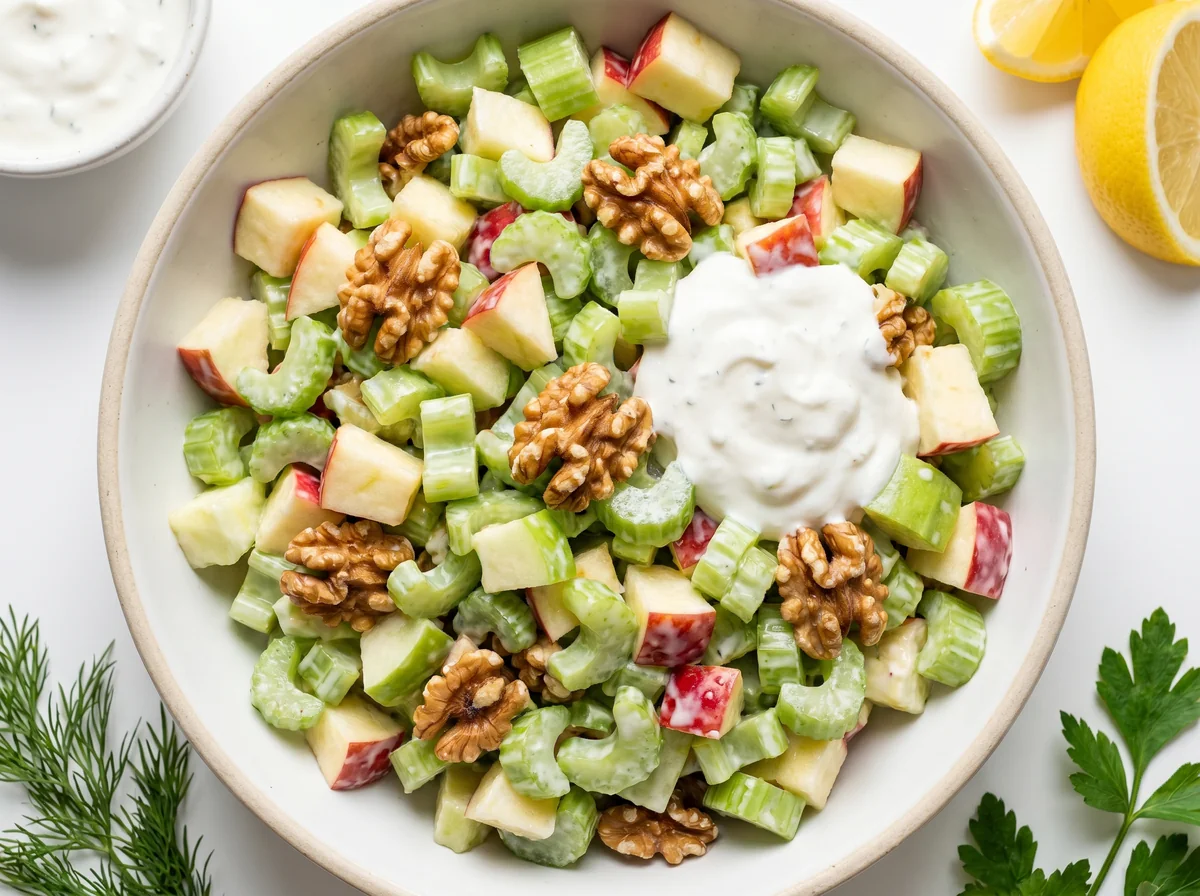
This salad brings together the crunch of celery, the tart sweetness of green apple, and the richness of walnuts, bound by a light yogurt dressing instead of heavy mayonnaise.
It is a lighter version of the classic Waldorf salad, recalibrated for those watching their kidney and heart health: measured amounts, soaked vegetables, and reduced salt. It works as a refreshing side dish on a hot day, or as a between-meal snack that combines softness and crunch in a single cold bite.
Preparation Steps
Soak the apple in cold water
Peel the apple and dice it into small cubes, then immediately submerge it in cold water with half the lemon juice for 5 minutes. This step leaches some potassium into the water and prevents the apple from browning, keeping its color light and fresh. Drain it well before using.
Soak and drain the celery
Slice the celery stalks into thin rounds about half a centimeter thick and submerge them in fresh cold water for 5 minutes, then drain. Celery is among the higher-potassium and sodium vegetables, so soaking and keeping to the stated amount (100 g divided among four servings) keeps it within a moderate portion. Do not exceed the stated amount.
Prepare the yogurt dressing
In a bowl, whisk the yogurt with the olive oil, the remaining lemon juice, the cinnamon, and a pinch of black pepper until smooth and creamy. Taste, then add salt a little at a time only if needed — use the minimum needed to balance the flavor, as this dish is designed to reduce sodium.
Toast the walnuts (optional)
Toast the chopped walnuts in a dry pan over medium heat for 2 minutes, stirring constantly, until fragrant and lightly golden, then remove immediately. Toasting deepens the flavor so a small amount (30 g) is sufficient without excess fat or phosphorus.
Combine the ingredients
In a large bowl, combine the drained apple, the celery, and the parsley, then add the yogurt dressing and toss gently until the pieces are fully coated. Add the walnuts at the very end and fold once lightly so they stay crunchy and do not absorb moisture.
Chill and serve
Cover the bowl and refrigerate the salad for 20 minutes before serving so the flavors come together and it becomes more refreshing. Serve cold immediately — it is best in the first two hours before the celery softens and loses its crunch.
Blood Sugar Impact
The glycemic index (GI) measures how quickly a food raises blood sugar, while the glycemic load (GL) measures how much a full serving raises it. Together they give the complete picture.
Glycemic Index
GI
34Low
Low0–55Medium56–69High70+
A low value (≤55) means a gradual rise in blood sugar — the most suitable range for diabetes and insulin resistance.
Glycemic Load
GL
3Low
Low0–10Medium11–19High20+
Glycemic load reflects the impact of the full serving. To lower it: take half a serving, or pair the recipe with a source of protein and fiber.
Nutritional Information
Per ServingMakes 4 servings · one serving is about 130 g of raw ingredients
Calories114 kcal6%of Daily Value*
Protein3 g6%of Daily Value*
Carbohydrates11 g4%of Daily Value*
Fat7 g9%of Daily Value*
Fiber2 g7%of Daily Value*
Sodium232 mg10%of Daily Value*
Potassium221 mg5%of Daily Value*
Phosphorus74 mg6%of Daily Value*
* Percent Daily Values are based on a 2,000-calorie diet per FDA food-label reference values — your daily needs may be higher or lower. Values are derived from the recipe's ingredients via the USDA database.
Troubleshooting
The most common problems when preparing Celery, Apple, and Walnut Yogurt Salad, and how to fix them:
The apple browned and lost its light color
It was not soaked in lemon water immediately after cutting. Submerge the cubes in cold water with lemon juice within a minute of cutting — the acidity of the lemon slows the oxidation that causes browning.
The salad became watery and the dressing dissolved
The vegetables were not drained well after soaking, or it was left too long. Drain the apple and celery through a strainer and press gently with a paper towel, and add the dressing just before serving rather than hours ahead.
The walnuts lost their crunch and turned soft
They were added too early and absorbed moisture from the dressing. Add the walnuts in the very last step and fold once lightly, or scatter them over the salad right at serving time.
The flavor is bland despite the ingredients
Lacking acidity, not salt. Add a splash of extra lemon juice and a little more black pepper and cinnamon — these lift the flavor without raising sodium.
The celery remained tough and fibrous
Not sliced thinly enough, or the tough outer stalks were used. Choose the pale inner stalks and slice them half a centimeter thick crosswise to break the fibers.
Storage and Make-Ahead
Refrigerator (dressed)
In an airtight container in the refrigerator at 4°C or below, it keeps well for up to one day. After that, the celery softens and it becomes watery — it is best fresh in the first two hours.
Advance preparation (separated)
Store the drained vegetables and the dressing in two separate containers in the refrigerator for up to two days, and combine just before serving to preserve the crunch.
Out of the refrigerator
Do not leave it out for more than 2 hours at room temperature (or 1 hour above 32°C) because it contains yogurt, to avoid bacterial growth. Return any leftovers to the refrigerator immediately.
Freezing
Not suitable for freezing at all. The yogurt separates and the apple and celery turn into a soft, watery texture upon thawing.
Tested Ingredient Substitutions
Original Ingredient
Tested Substitute
Ratio
Flavor Difference
Low-fat yogurt
Strained Greek yogurt
1:1
Gives a thicker texture and higher protein, but may contain slightly more phosphorus — keep that in mind on a kidney diet.
Walnuts
Unsalted sunflower seeds
1:1
A tree-nut-free alternative for those with nut allergies, while retaining the crunch. Unsalted only to control sodium.
Green apple
Firm pear
1:1
A relatively lower-potassium alternative with a sweeter flavor. Choose a firm, not soft, piece so it does not crumble.
Lemon juice
Apple cider vinegar
1:1
Provides similar acidity. Start with half the amount and add more by taste, as its sharpness differs from lemon.
Cinnamon
Freshly grated nutmeg
Replace with a quarter of the amount
An alternative warm flavor that suits yogurt and apple well. A little goes a long way as it is strong.
How Much Does It Make? Scaling Guide
Ingredient
4 servings (original)
8 servings
12 servings
Green apple
200 g
400 g
600 g
Celery
100 g
200 g
300 g
Chopped walnuts
30 g
60 g
90 g
Low-fat yogurt
150 g
300 g
450 g
Lemon juice
15 ml
30 ml
45 ml
EEINA Nutrition Tip
If you are on a kidney diet restricting potassium, portion size is your key, not just the ingredient type alone. Stick to one serving (one quarter of the recipe), and do not double the celery or walnuts thinking they are always healthy. Soak in plenty of water and change the water once — this dissolves more potassium. Check your limits against your lab results.
Add This Recipe to Your Plan
The EEINA app saves your favorite recipes, calculates them from their real ingredients, and shows your daily numbers toward your goal. Try it free now.
Is this salad truly safe for people with kidney disease?
It is gentler than most salads because it relies on relatively lower-potassium ingredients with soaking and portion control, but it is not free of potassium or phosphorus (walnuts and yogurt contain both). Safety depends on your disease stage and your lab limits, so confirm the portion with your doctor or registered dietitian.
Why do we soak the apple and celery in water?
Soaking cut vegetables in cold water dissolves a portion of the water-soluble potassium — a technique (leaching) recommended in kidney diet guidelines. It partially reduces potassium without eliminating it, and also helps keep the apple's color light.
Can I use mayonnaise instead of yogurt?
We recommend yogurt because it is lighter in fat and sodium and aligns with the heart and kidney focus. Mayonnaise raises fat and sodium and moves away from the dish's purpose, so it is better to stick with low-fat yogurt.
How long does the salad keep after preparation?
It is best in the first two hours after mixing. It remains acceptable for up to one day in a sealed container in the refrigerator, but the celery softens and it becomes watery after that. For advance preparation, keep the vegetables and dressing separated.
Is it suitable for people with diabetes?
Yes, as a moderate option — the fiber from the apple and celery and the protein from the yogurt slow sugar absorption. Apple contains natural sugar, so keeping to the stated portion keeps it balanced within a meal.