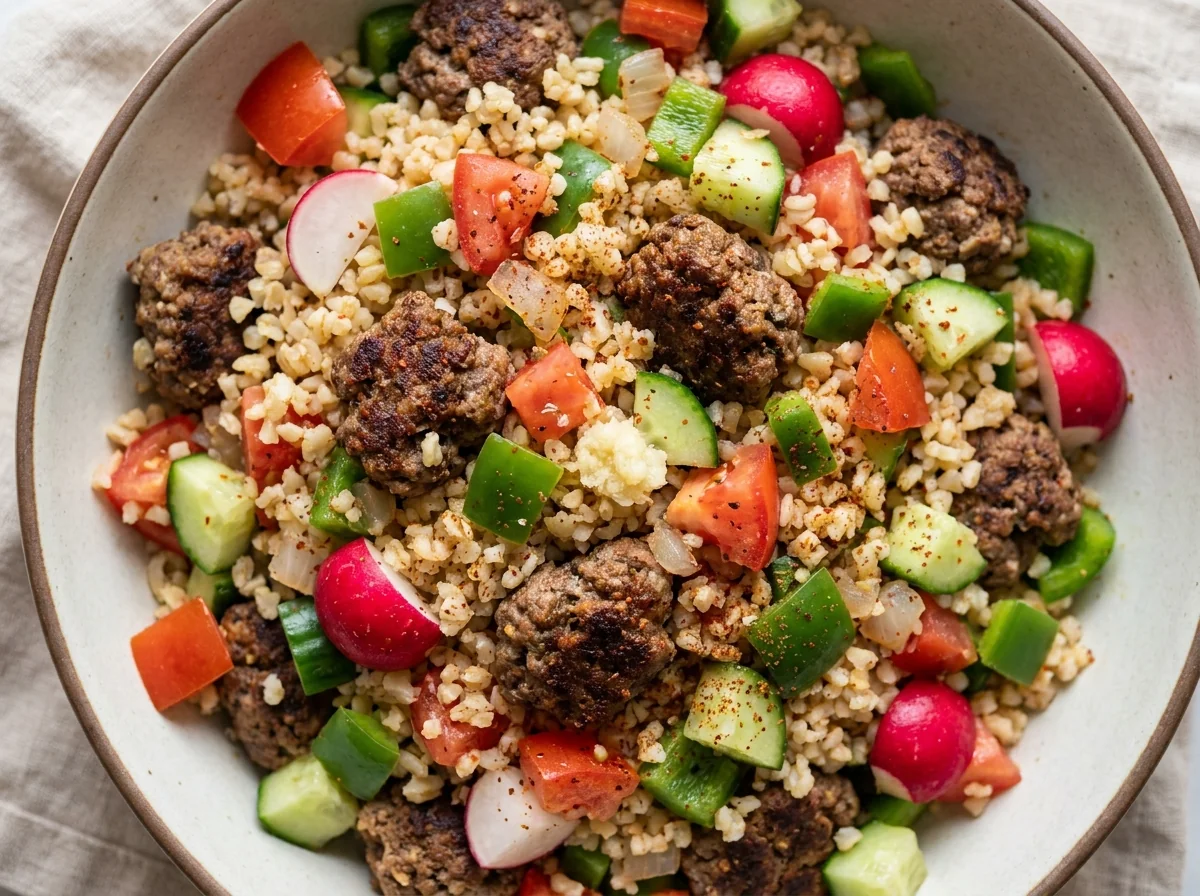
We balance this bowl on the plate model: half of it raw vegetables (tomato, cucumber, radish, and pepper), a quarter a whole-grain starch from fiber-rich bulgur, and a quarter protein from the lean meat.
We Arabized its seasoning with the seven-spice blend familiar in our kitchen instead of other mixes, making it a warm, balanced weight-maintenance plate inspired by a tested Mediterranean meat bowl.
Preparation Steps
Season the meat
Combine the ground meat with the onion, garlic, seven-spice blend, paprika, and salt, and let it sit for a few minutes so the flavors penetrate before cooking.
Cook the kofta
Heat a non-stick pan and cook the meat over medium-high heat for five to seven minutes while breaking it up, until it browns completely and no pink color remains, observing cooking safety.
Prepare the bulgur and vegetables
Spread the cooked bulgur in the bowl, and distribute the tomato, cucumber, radish, and pepper around it because the raw vegetables give a crunch that complements the warmth of the meat.
Assemble and serve
Place the kofta over the bulgur, drizzle the olive oil and parsley, and serve right away so the meat stays moist and the vegetables crisp.
Blood Sugar Impact
The glycemic index (GI) measures how quickly a food raises blood sugar, while the glycemic load (GL) measures how much a full serving raises it. Together they give the complete picture.
Glycemic Index
GI
36Low
Low0–55Medium56–69High70+
A low value (≤55) means a gradual rise in blood sugar — the most suitable range for diabetes and insulin resistance.
Glycemic Load
GL
10Low
Low0–10Medium11–19High20+
Glycemic load reflects the impact of the full serving. To lower it: take half a serving, or pair the recipe with a source of protein and fiber.
Nutritional Information
Per ServingMakes 1 servings · one serving is about 395 g of raw ingredients
Calories397 kcal20%of Daily Value*
Protein23 g46%of Daily Value*
Carbohydrates36 g13%of Daily Value*
Fat19 g24%of Daily Value*
Fiber9 g32%of Daily Value*
Sodium470 mg20%of Daily Value*
Potassium776 mg17%of Daily Value*
Phosphorus307 mg25%of Daily Value*
* Percent Daily Values are based on a 2,000-calorie diet per FDA food-label reference values — your daily needs may be higher or lower. Values are derived from the recipe's ingredients via the USDA database.
Troubleshooting
The most common problems when preparing Beef Kofta, Bulgur & Vegetable Bowl, and how to fix them:
The meat is dry
Cook it over medium-high heat for a short time without prolonging it, as overcooking dries out ground meat.
The flavor is bland
Add a quarter gram of seven-spice and a pinch of salt after tasting, and add a squeeze of lemon when serving.
Storage and Make-Ahead
Meat and bulgur
Keep them together in an airtight container in the refrigerator for up to three days, and reheat them until fully hot.
Fresh vegetables
Chop them only at serving time to preserve their crunch.
Tested Ingredient Substitutions
Original Ingredient
Tested Substitute
Ratio
Flavor Difference
ground beef
lean ground lamb
same amount, 90 g
A richer flavor with slightly higher fat
coarse bulgur
cooked brown rice
same amount, 90 g
A whole-grain starch with a softer texture
seven-spice blend
cumin, coriander, and cinnamon
1.5 g mixture
An available substitute with a close, warm flavor
radish
grated carrot
25 g
Crunch and light sweetness instead of the sharpness
How Much Does It Make? Scaling Guide
Ingredient
1/2 serving
1 serving (base)
2 servings
Lean ground beef
45 g
90 g
180 g
Cooked bulgur
45 g
90 g
180 g
Seven-spice blend
0.75 g
1.5 g
3 g
Mixed vegetables
80 g
165 g
330 g
EEINA Nutrition Tip
Choose lean meat and drain any excess fat after cooking to keep the plate light, and cook the bulgur in salted water that is then drained so only what it absorbs remains.
Add This Recipe to Your Plan
The EEINA app saves your favorite recipes, calculates them from their real ingredients, and shows your daily numbers toward your goal. Try it free now.