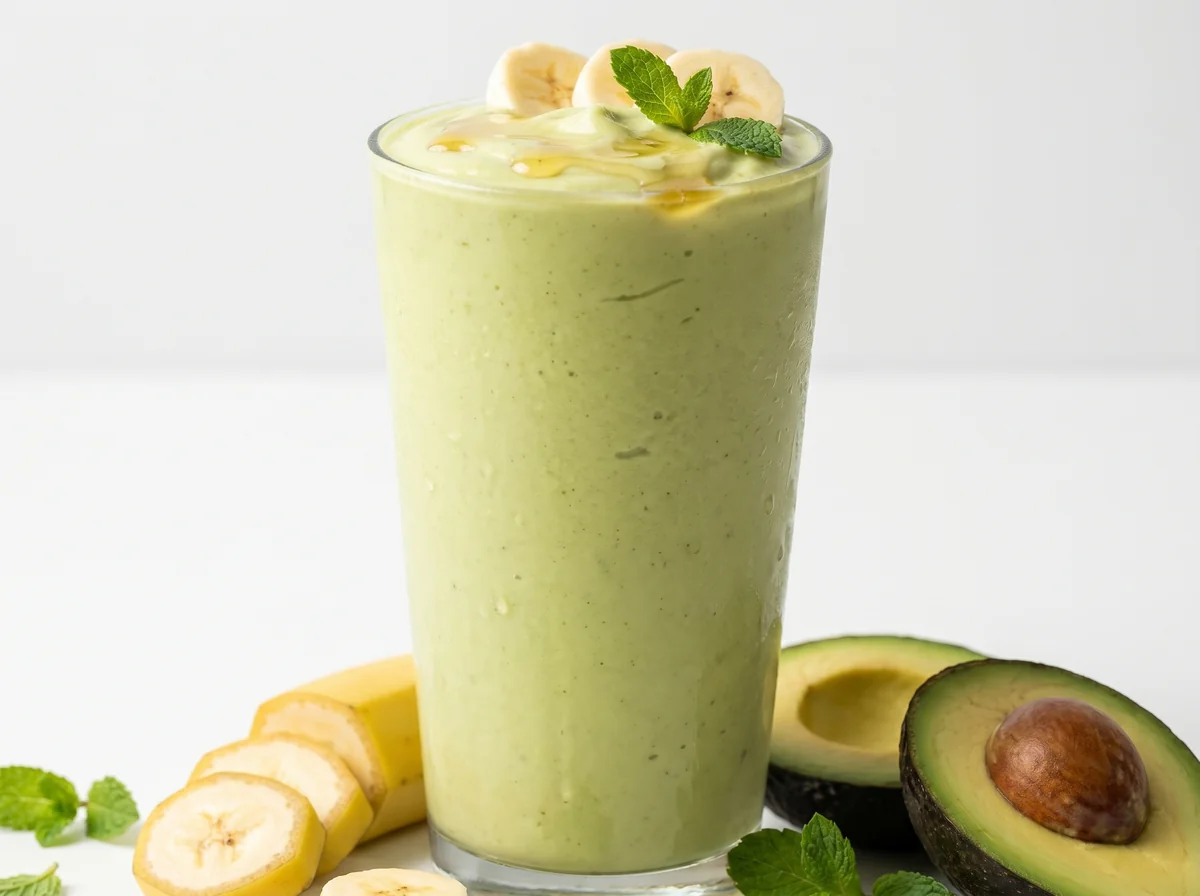
A question recurs in our kitchens about a way to turn a ripe avocado into a drink that satisfies rather than just a sweet juice. What is common in the markets is avocado juice with milk and sugar, sweet in taste and light in value.
This smoothie takes a different direction: it combines the avocado with banana and Greek yogurt so it becomes richer in protein and probiotics and less reliant on added sugar, as most of its sweetness comes from the ripe banana and a single drizzle of honey. The texture is thick and creamy, enough for a quick breakfast or a snack that curbs hunger, and it suits the busy Saudi morning rhythm.
Preparation Steps
Prepare the avocado
Open the ripe avocado and scoop out the flesh with a spoon, then discard the pit. Choose a fruit that softens slightly under finger pressure without being too soft, as balanced ripeness gives the creamy texture without a bitter taste.
Prepare the ingredients in the blender
Put the avocado flesh, the peeled banana, and the Greek yogurt into the blender jar. Arrange the dense ingredients at the bottom near the blades so the mixture spins smoothly and air pockets are reduced.
Add the liquids and flavorings
Add the cold milk, honey, lemon juice, and a small pinch of salt. The lemon juice keeps the avocado's green color and balances the sweetness, and the salt brings out the banana flavor.
Blend until creamy
Run the blender on medium then high speed for 40 to 60 seconds until the mixture becomes smooth and uniform with no lumps. The sign of success is that the texture flows off the spoon with a creamy heaviness and no grains.
Add the ice and thicken
Add the ice cubes and run the blender for an extra 20 to 30 seconds until the mixture cools and its texture thickens. The ice gives a refreshing cold and enough density for the smoothie to stay firm in the cup.
Taste and serve
Taste and adjust the sweetness with drops of honey if needed, then pour the smoothie immediately into two cups. Serve right away to preserve the texture and color before the avocado oxidizes.
Blood Sugar Impact
The glycemic index (GI) measures how quickly a food raises blood sugar, while the glycemic load (GL) measures how much a full serving raises it. Together they give the complete picture.
Glycemic Index
GI
40Low
Low0–55Medium56–69High70+
A low value (≤55) means a gradual rise in blood sugar — the most suitable range for diabetes and insulin resistance.
Glycemic Load
GL
10Low
Low0–10Medium11–19High20+
Glycemic load reflects the impact of the full serving. To lower it: take half a serving, or pair the recipe with a source of protein and fiber.
Nutritional Information
Per ServingMakes 2 servings · one serving is about 355 g of raw ingredients
Calories327 kcal16%of Daily Value*
Protein13 g26%of Daily Value*
Carbohydrates31 g11%of Daily Value*
Fat18 g23%of Daily Value*
Fiber7 g25%of Daily Value*
Sodium73 mg3%of Daily Value*
Potassium839 mg18%of Daily Value*
Phosphorus252 mg20%of Daily Value*
* Percent Daily Values are based on a 2,000-calorie diet per FDA food-label reference values — your daily needs may be higher or lower. Values are derived from the recipe's ingredients via the USDA database.
Troubleshooting
The most common problems when preparing Avocado Banana Yogurt Smoothie, and how to fix them:
A slight bitter taste in the smoothie
It is usually caused by an underripe avocado or the part near the dark skin. Use an avocado that softens under pressure, remove any dark green part stuck to the skin, and add a drop of honey to balance the bitterness.
The texture is more liquid than it should be
Reduce the milk or add more Greek yogurt and ice cubes. The ripe banana and avocado thicken the mixture, so start with less liquid and add it gradually.
The texture is heavy and hard to drink
Add cold milk one tablespoon at a time while blending until it flows smoothly, without overdoing it so it loses its creamy density.
The color turns brown quickly
Oxidation is normal in avocado. Lemon juice slows it, and the best solution is to serve the smoothie immediately after blending instead of leaving it in the fridge.
More sweetness than wanted
Omit the honey and rely on the banana alone, or use a smaller banana. A pinch of cinnamon can be added for a sense of sweetness without sugar.
Storage and Make-Ahead
Immediate serving
It is best to drink it right after blending to preserve the texture and the green color before the avocado oxidizes.
Refrigerator
Keep it in a tightly sealed container in the fridge for up to 24 hours at most. Its color may darken slightly, so stir it well before drinking.
Freezing
It can be poured into cube molds and frozen for up to two weeks, then re-blended with a splash of cold milk when serving.
Safety note
Because it contains dairy, do not leave it out of the fridge for more than two hours, and less in hot weather.
Tested Ingredient Substitutions
Original Ingredient
Tested Substitute
Ratio
Flavor Difference
Full-fat Greek yogurt
Low-fat Greek yogurt
1:1
Reduces fat and calories while keeping the protein and probiotics.
Cow's milk
Unsweetened almond or oat milk
1:1
A lactose-free option. Make sure it is free of added sugar, and watch for nut allergies with almond milk.
Honey
A pitted date
A spoon of honey equals one date
Natural sweetness with extra fiber. Blend it well so it dissolves completely.
Fresh banana
Frozen banana
1:1
Gives more cold and density, and the ice can then be reduced.
Fresh avocado
Frozen avocado flesh
150 g of flesh
A practical substitute out of season. Thaw it slightly before blending for a smoother texture.
How Much Does It Make? Scaling Guide
Ingredient
2 servings
4 servings
6 servings
Ripe avocado
Piece (150 g)
2 (300 g)
3 (450 g)
Ripe banana
Piece (120 g)
2 (240 g)
3 (360 g)
Greek yogurt
200 g
400 g
600 g
Cold milk
150 ml
300 ml
450 ml
Honey
1 tsp
2 tsp
3 tsp
EEINA Nutrition Tip
To raise the satiety value without raising the sugar, choose plain unflavored Greek yogurt and let the banana be the main source of sweetness. If you want a thicker texture with fewer calories than full-fat milk, swap it for low-fat milk and add an extra ice cube.
Add This Recipe to Your Plan
The EEINA app saves your favorite recipes, calculates them from their real ingredients, and shows your daily numbers toward your goal. Try it free now.
It contains carbohydrates from the banana and honey, but the protein, fat, and fiber may help slow the rise in sugar. It is preferable to reduce or omit the honey and watch the portion, and to consult a doctor or dietitian to fit it within your plan.
Can it replace a full meal?
It works as a light breakfast or a filling snack thanks to the protein and healthy fats. For a complete meal, a source of fiber or whole grains can be added alongside it.
Why avocado, yogurt, and banana instead of the usual avocado juice with milk?
Adding the Greek yogurt and banana raises the protein and probiotics and reduces reliance on added sugar, so you get a more satisfying drink with less excessive sweetness.
Can it be made fully plant-based?
Yes, replace the yogurt with plant-based yogurt, the milk with unsweetened plant milk, and the honey with dates or maple syrup. The protein content will change according to the substitute.
How do I prevent the smoothie's color from changing?
Lemon juice slows oxidation, and most importantly serve it immediately after blending. When storing it, cover it tightly and stir it before drinking.