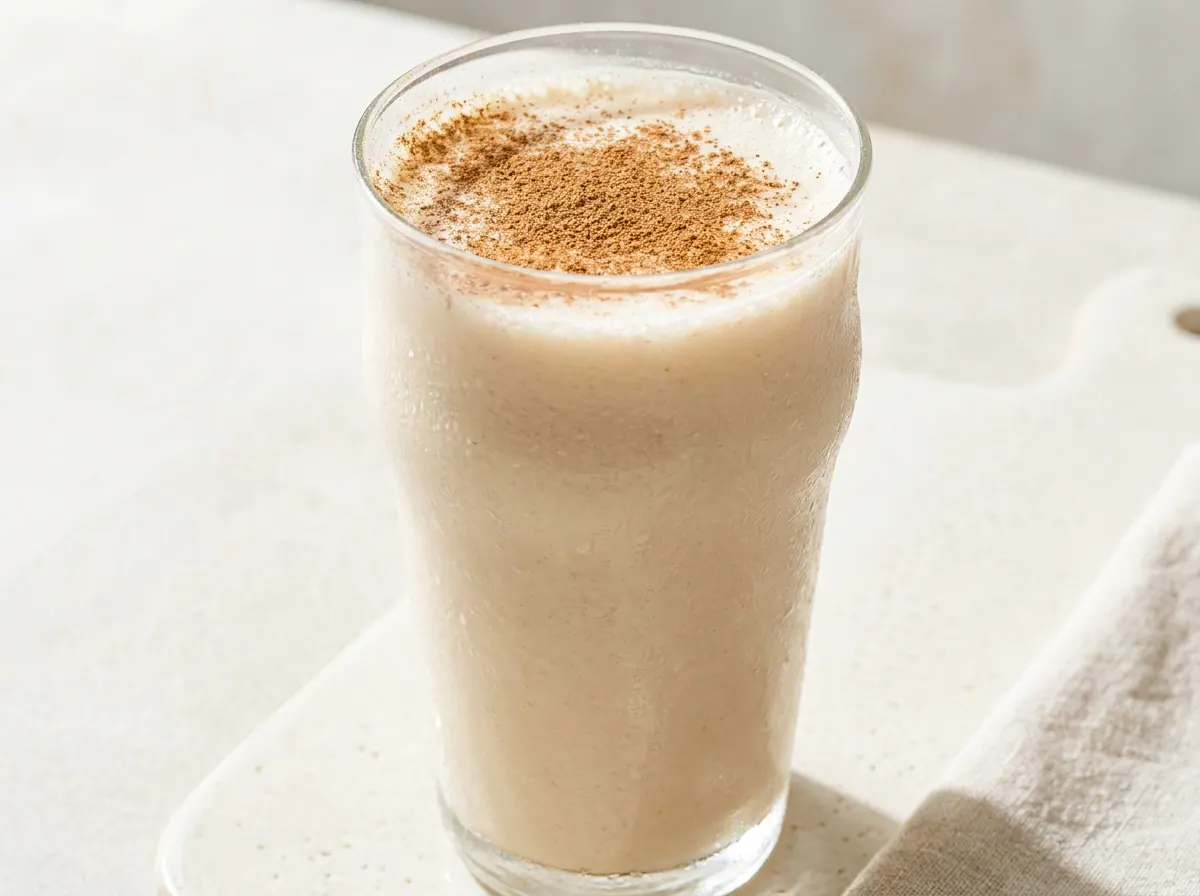
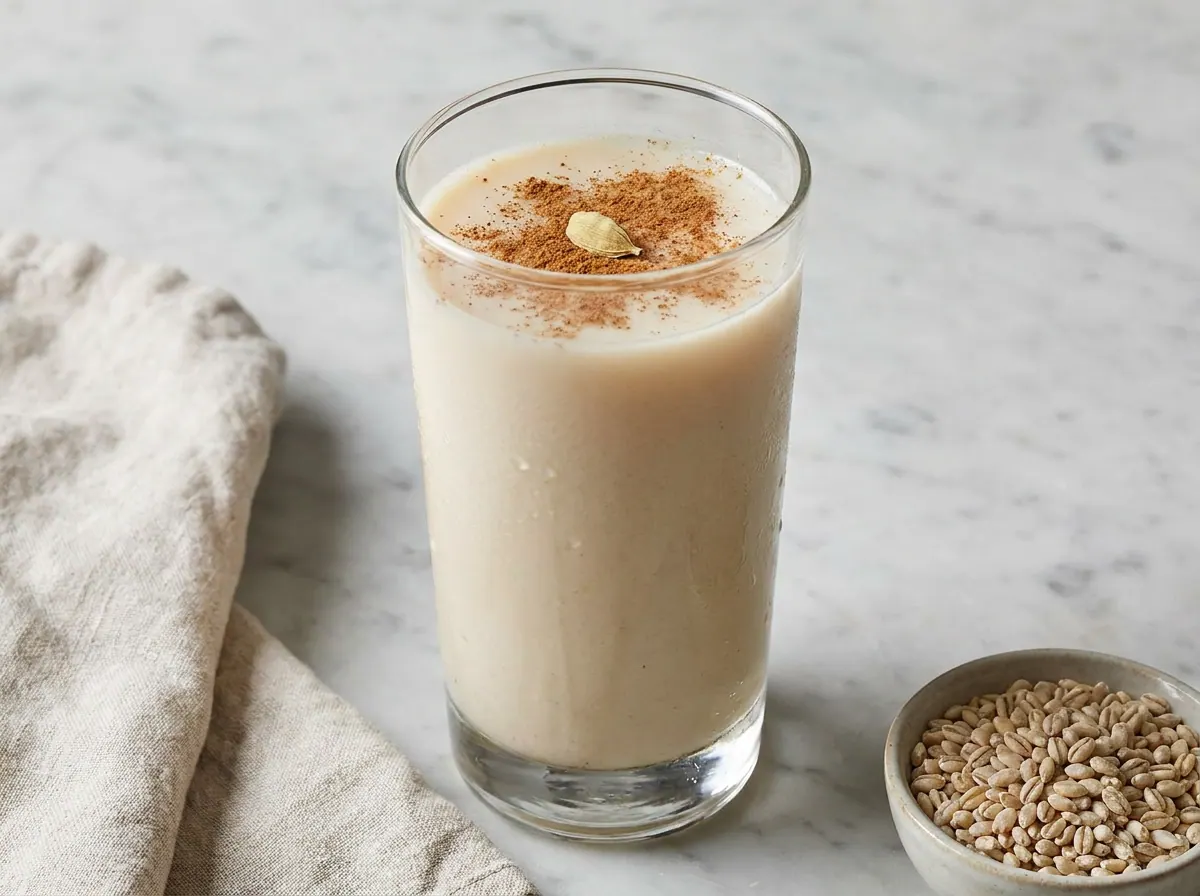
The traditional Hijazi sobia — Ramadan's refreshing drink made from soaked rice, dates, cinnamon, and cardamom. A lighter version using low-fat milk and dates instead of sugar, GI 65.
Sobia is the authentic Ramadan drink of the Hijaz in western Saudi Arabia, known in Mecca, Jeddah, and Medina for centuries. Sources record that Egyptian pilgrims' caravans brought it to the Hijaz, and it became part of the iftar table while vendors called out to sell it in the alleyways before the Maghrib prayer. Its oldest form is made from barley or stale dry bread soaked with cinnamon and cardamom; when Egyptian pilgrims were asked about its ingredients they mentioned barley, dry bread, and cardamom — from which white and red sobia were made.
Then homemade versions using rice or wheat spread because they were easier, and that is the method in this recipe. The famous pink colour comes from some vendors adding a natural colouring, while the white or light-brown version remains the original home version. This lighter version substitutes sugar with pitted dates and uses low-fat milk, preserving the traditional sobia flavour with fewer calories. Important note: sobia may naturally acquire a very small trace of alcohol from fermentation if left for days, and the SFDA has confirmed that freshly made sobia kept cold is safe and within permitted limits [3].
Preparation Steps
Soak the rice
Soak the rice in cold water for at least 2 hours (or overnight as in the traditional Hijazi method), then drain.
Cook the rice
Cook the soaked rice in 1 litre of water until completely soft and broken down (about 20 minutes), then leave to cool slightly.
Blend the rice and dates
Blend the cooked rice with its cooking water and the pitted dates in a blender until the mixture is completely smooth.
Add the milk and spices
Add the milk, cinnamon, and cardamom and blend again until the flavours are evenly distributed.
Strain
Strain the mixture through a fine-mesh sieve or cheesecloth to achieve the smooth, flowing consistency of a drink.
Adjust the sweetness
Taste and adjust sweetness with a little stevia if needed, then add the shredded coconut if desired.
Chill and serve
Chill the sobia in the fridge for at least 3 to 4 hours, then serve very cold at iftar.
Blood Sugar Impact
The glycemic index (GI) measures how quickly a food raises blood sugar, while the glycemic load (GL) measures how much a full serving raises it. Together they give the complete picture.
Glycemic Index
GI
60Medium
Low0–55Medium56–69High70+
A low value (≤55) means a gradual rise in blood sugar — the most suitable range for diabetes and insulin resistance.
Glycemic Load
GL
20High
Low0–10Medium11–19High20+
Glycemic load reflects the impact of the full serving. To lower it: take half a serving, or pair the recipe with a source of protein and fiber.
Nutritional Information
Per ServingMakes 4 servings · one serving is about 420 g of raw ingredients
Calories251 kcal13%of Daily Value*
Protein6 g12%of Daily Value*
Carbohydrates37 g13%of Daily Value*
Fat9 g12%of Daily Value*
Fiber3 g11%of Daily Value*
Sodium58 mg3%of Daily Value*
* Percent Daily Values are based on a 2,000-calorie diet per FDA food-label reference values — your daily needs may be higher or lower. Values are derived from the recipe's ingredients via the USDA database.
Troubleshooting
The most common problems when preparing Light Hijazi Sobia, and how to fix them:
The texture is too thick like porridge, not a drink.
Too much rice or too little water. Sobia is a flowing drink — you drink it, not eat it with a spoon. Immediate fix: add cold water or milk gradually and blend until the desired consistency is reached. For the next batch: stick to 100 g raw rice per litre of water, and increase liquid rather than rice for a thinner consistency.
The drink has coarse grains after blending.
The rice was not fully cooked, or the mixture was not strained. Cook the rice until it breaks apart easily between your fingers before blending, then pass the mixture through a fine-mesh sieve or cheesecloth once or twice. Extended blending before straining also helps achieve the usual smooth texture.
The flavour is light without enough sweetness.
Not enough dates. Dates are this version's sweetener instead of sugar — start with 6 pitted dates per 4 servings and taste after blending. If still too mild: add one or two more dates and blend, or a pinch of stevia to boost sweetness without extra calories.
The sobia separated into layers in the fridge.
This is natural in starchy drinks — rice tends to settle to the bottom. Shake well or stir with a long spoon before each serving. Keeping it in a sealed pitcher and shaking before pouring redistributes the texture and colour evenly.
A slightly sour taste appeared after two days.
Natural starch fermentation has started. Sobia is a fresh drink to be consumed within 1 to 2 days and kept cold always. A sour taste signals the start of fermentation, so it is best to make only enough for one day. The SFDA has clarified that freshly made sobia kept cold is within safe limits [3].
The cardamom or cinnamon flavour is overpowering.
The spices were added in too large a quantity. Cardamom and cinnamon are an aromatic touch, not a dominant flavour. Stick to 1 teaspoon cinnamon and half a teaspoon cardamom per 4 servings. If the flavour has taken over: add an extra cup of cold milk to restore balance without spoiling the texture.
Storage and Make-Ahead
Fridge (4 °C)
Ready sobia: 2 days maximum in a sealed pitcher. Shake before each serving. A sour taste signals the start of fermentation — discard at that point. Best to make only enough for one day to preserve freshness and flavour.
Freezer (-18 °C)
Not suitable. The milk-and-starch drink separates and becomes granular after thawing. Sobia is for the same day only.
Prep ahead
Rice soak: overnight in the fridge saves morning time. Cooked rice: store chilled for up to 1 day, then blend with the dates and milk at serving time. Blending and straining: a few hours before iftar to chill properly.
Serving
Serve very cold at iftar in tall glasses. Shake before pouring to redistribute the texture. Do not leave outside the fridge for long, especially in hot weather.
Tested Ingredient Substitutions
Original Ingredient
Tested Substitute
Ratio
Flavor Difference
Low-fat milk
Plant-based milk (oat or almond)
same amount
Lactose-free; lighter flavour; suitable for milk sensitivity.
White rice
Cooked barley (the traditional method)
same amount
Deeper, more traditional flavour; contains gluten.
Pitted dates
Stevia only
to taste
Sweetness without calories; loses the depth of date flavour.
Cinnamon and cardamom
Cinnamon alone
1 teaspoon
Simpler, warmer flavour without the cardamom's floral note.
Shredded coconut
Omit entirely
—
The simpler home version; suitable for coconut sensitivity.
How Much Does It Make? Scaling Guide
Number of servings
Raw rice
Water
Milk
Dates
2 (individual × 2)
50 g
0.5 liter
0.25 liter
3
4 (base)
100 g
1 liter
0.5 liter
6
8 (large family)
200 g
2 liters
1 liter
12
12 (Ramadan hospitality)
300 g
3 liters
1.5 liters
18
EEINA Nutrition Tip
Sobia is a drink — not water for iftar: despite being lighter with dates instead of sugar, it remains a starchy drink that raises blood sugar in the moderate range. Drink a moderate cup with a balanced meal that includes protein and vegetables — not as a water substitute — especially for those monitoring blood sugar.
Add This Recipe to Your Plan
The EEINA app saves your favorite recipes, calculates them from their real ingredients, and shows your daily numbers toward your goal. Try it free now.
Freshly made sobia kept cold is safe and within permitted limits according to the SFDA. It may naturally acquire a very small trace from fermentation if left for days, so drink it fresh and keep it cold always.
Is it suitable for people with diabetes?
With caution. Sobia is a sweet starchy drink with a medium glycemic index even with dates and stevia. A small cup with a balanced meal is best, and monitor blood sugar afterwards.
What is the difference between rice sobia and barley sobia?
Rice sobia is lighter in flavour and gluten-free, while barley sobia has a deeper flavour and is closer to the traditional method but contains gluten. Both are authentic in the Hijazi kitchen.
Why is sobia sometimes pink?
Some vendors add a natural colouring to distinguish their drink; the homemade version stays white or light brown from the colour of the rice, dates, and spices.
Sources: USDA · University of Sydney · Gulf GSO · SFDA · Our methodology · Updated on