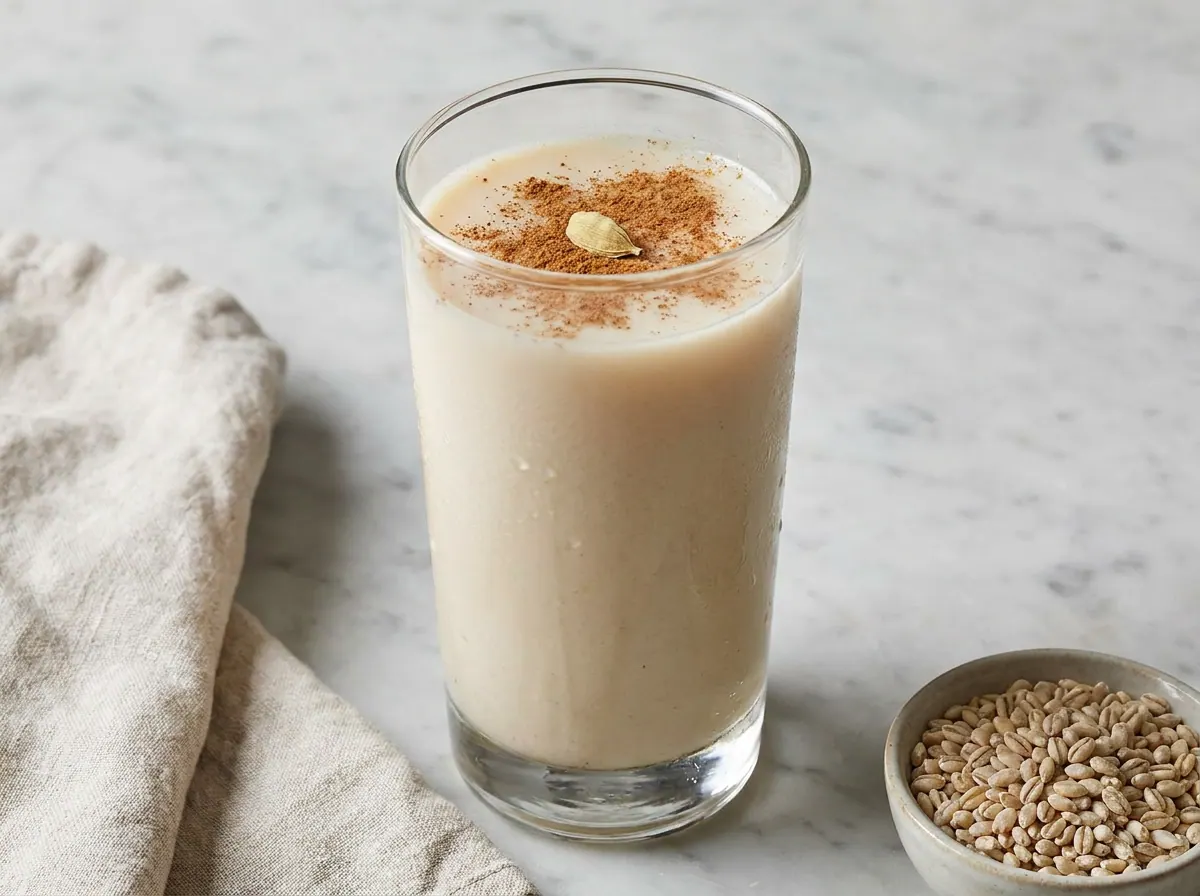
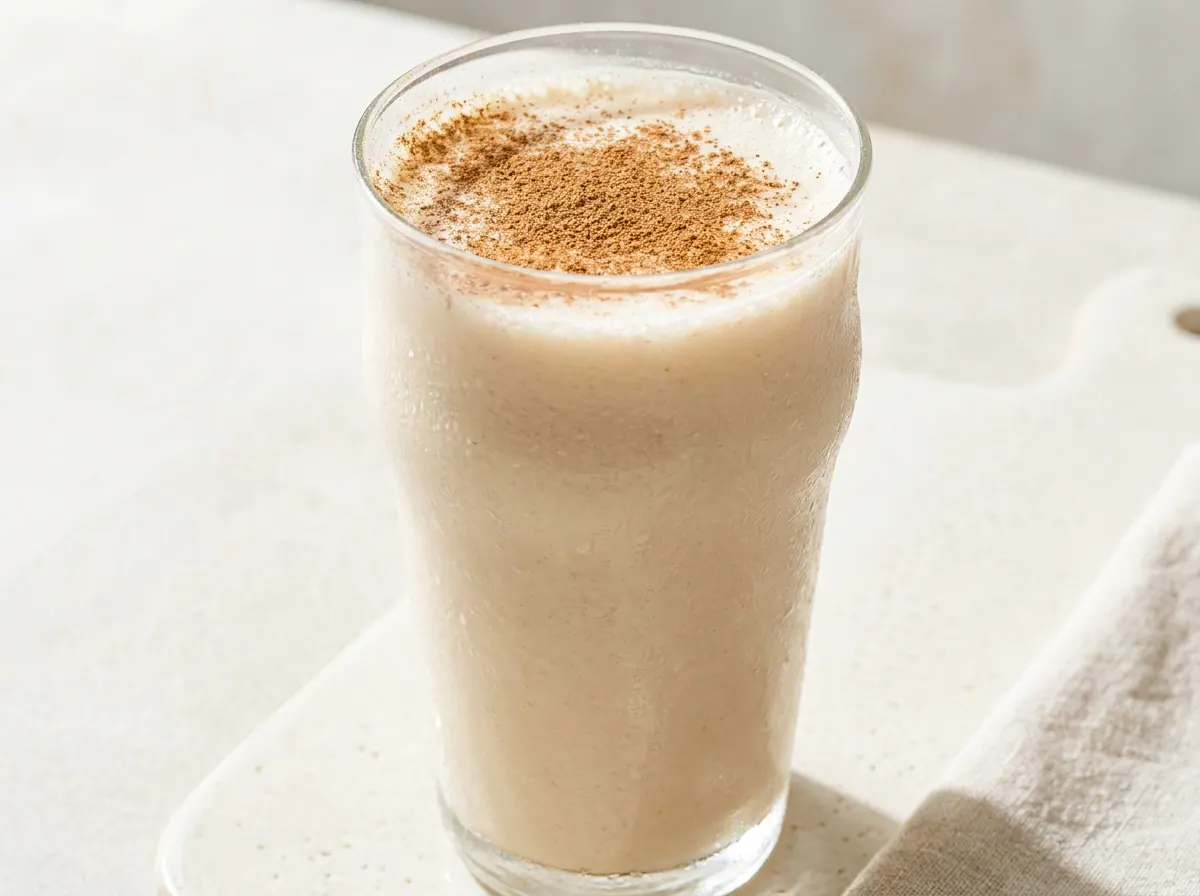
A traditional Hijazi Ramadan drink made from barley and soaked wheat bread, strained and sweetened with dates, flavoured with cinnamon and cardamom. A naturally sweet, starchy drink with an estimated GI of 42.
Sobia is a popular Ramadan drink in the Hijaz, made from soaked barley and wheat bread that is then strained, sweetened, and spiced with cinnamon and cardamom. It entered the Hijaz through the caravans of Egyptian pilgrims centuries ago and became a fixture on the iftar table in Mecca, Jeddah, and Medina.
The idea is simple but patient: grains and starches are soaked for a long time to release a gentle malty flavour, then strained to yield a smooth, silky liquid. Be honest with yourself: sobia is naturally a sweetened drink, and its pleasure lies in its coldness and sweetness — not in being a "low-sugar" drink.
Preparation Steps
First soak
Combine the ground barley and stale bread (torn into small pieces) in a large pot, cover well with water, then refrigerate for a full day to draw out the malty flavour.
Simmer with spices
Place the pot over low heat and gently bring to a simmer while stirring, then add the cinnamon sticks and cardamom and let it bubble gently for a few minutes to infuse.
Second soak
Turn off the heat, let the mixture cool, then return it to the fridge for another day or a full night for the gentle malty flavour to develop.
Prepare and sweeten with dates
Soak the pitted dates in a cup of warm water until soft, then mash or blend them into a smooth paste to sweeten the drink instead of sugar.
Strain
Pour the mixture through a clean piece of cheesecloth and squeeze well to separate the liquid from the barley and bread. Most of the barley fiber remains in the cloth; the result is a light, starchy liquid.
Mix and sweeten
Combine the strained liquid with the date paste and stir until the sweetener dissolves evenly, then adjust consistency by adding cold water as desired.
Serve
Add rose water if desired, then serve the sobia very cold with ice. Drink fresh — extended fermentation increases acidity and natural fizz.
Blood Sugar Impact
The glycemic index (GI) measures how quickly a food raises blood sugar, while the glycemic load (GL) measures how much a full serving raises it. Together they give the complete picture.
Glycemic Index
GI
42Low
Low0–55Medium56–69High70+
A low value (≤55) means a gradual rise in blood sugar — the most suitable range for diabetes and insulin resistance.
Glycemic Load
GL
24High
Low0–10Medium11–19High20+
Glycemic load reflects the impact of the full serving. To lower it: take half a serving, or pair the recipe with a source of protein and fiber.
Nutritional Information
Per ServingMakes 6 servings · one serving is about 455 g of raw ingredients
Calories320 kcal16%of Daily Value*
Protein8 g16%of Daily Value*
Carbohydrates72 g26%of Daily Value*
Fat1 g1%of Daily Value*
Fiber14 g50%of Daily Value*
Sodium137 mg6%of Daily Value*
Potassium471 mg10%of Daily Value*
Phosphorus162 mg13%of Daily Value*
* Percent Daily Values are based on a 2,000-calorie diet per FDA food-label reference values — your daily needs may be higher or lower. Values are derived from the recipe's ingredients via the USDA database.
Troubleshooting
The most common problems when preparing Hijazi Barley Sobia, and how to fix them:
The sobia is sour or fizzy.
It was left too long outside the fridge or soaked for extra days, triggering natural fermentation. Sobia is a drink for the same day: consume it fresh on the day it is made and keep it very cold. Fix: do not consume once clear sourness appears. For the next batch: stick to the stated soaking time and keep the pot refrigerated throughout.
The texture is too thick or starchy.
Too much barley and bread relative to the water, or cold water was not added after straining to adjust consistency. Traditional sobia has a smooth, flowing texture — not thick. Fix: add cold water gradually while stirring until the desired consistency is reached, dissolving a little date sweetener in it to compensate for the dilution.
The drink is bland with no malty flavour.
The soaking time was too short and the barley and bread have not released their flavour yet. The subtle malty flavour develops over a long cold soak in two stages. Fix: extend the second soak to a full night, and make sure the cinnamon sticks and cardamom are added during simmering — not after — as heat draws out their aroma into the liquid.
The drink is gritty or has particles.
Straining was not fine enough, or the cheesecloth had large pores. Sobia is strained through a tightly woven clean cloth (cheesecloth). Fix: strain a second time through two layers of cheesecloth, squeezing well to extract all the liquid and trap the grain and bread pieces.
The sweetening is uneven with date lumps at the bottom.
The dates were not mashed smoothly enough before mixing, or were added firm. The date sweetener is prepared as a smooth paste after soaking in warm water. Fix: blend some of the liquid with the dates in a blender until fully dissolved, then return it to the rest of the drink and stir.
Storage and Make-Ahead
Fridge (4 °C)
Ready sobia: 1 to 2 days maximum in a tightly sealed pitcher. Best drunk fresh on the same day for optimal flavour — it is a drink for the day. Sourness and natural fizz increase the longer it is stored, signalling the start of fermentation.
Freezer (-18 °C)
Not recommended. Texture changes after thawing and the liquid separates from the starch. If necessary, store briefly and shake well after thawing, but fresh is far better.
Prep ahead
Strained liquid: prepare and strain chilled; store for a day in a pitcher before sweetening. Date paste: prepare and store in a sealed container in the fridge; add at serving time. Ice and rose water: add just before serving.
Serving
A cold drink — do not heat. Serve very cold with ice at iftar. Shake the pitcher before pouring, as the starch settles to the bottom.
Tested Ingredient Substitutions
Original Ingredient
Tested Substitute
Ratio
Flavor Difference
Date sweetener
White sugar (the other traditional sweetener)
to taste
Cleaner sweetness with less depth; loses the brown colour and flavour of dates.
Whole-wheat bread
Stale white bread
same weight
Smoother texture and lighter colour; less malty flavour.
Cinnamon and cardamom
Cinnamon alone or cardamom alone
to taste
A simpler flavour — still traditional but less aromatic.
Rose water
Orange blossom water
same amount
A lighter citrus aroma instead of the floral rose scent.
How Much Does It Make? Scaling Guide
Number of cups
Ground barley
Dry bread
Water
Dates
3 (small pitcher)
0.5 cup
2 small flatbreads
1 liter
6–7 dates
6 (base)
1 cup
3–4 flatbreads
2 liters
12–14 dates
12 (large family)
2 cups
6–8 flatbreads
4 liters
24–28 dates
18 (entertaining)
3 cups
9–12 flatbreads
6 liters
36–42 dates
EEINA Nutrition Tip
Sobia is a sweetened drink, not a 'healthy drink because of the barley': the beneficial barley fiber stays in the cheesecloth when strained, and the cup carries the sugars from the dates and sweetener. Enjoy it as a delicious, moderate Ramadan drink and count it within your daily sugar allowance — especially if you are monitoring blood sugar.
Add This Recipe to Your Plan
The EEINA app saves your favorite recipes, calculates them from their real ingredients, and shows your daily numbers toward your goal. Try it free now.
No. Sobia is naturally sweetened and a cup carries the sugars from dates or sugar along with dissolved starch. The beneficial barley fiber stays in the cheesecloth when strained, so it cannot be presented as a low-sugar drink.
Is it suitable for people with diabetes?
It counts as a sweet, starchy drink that raises blood sugar, despite its barley origin. Those monitoring blood sugar should count it within their daily sugar allowance, preferably a small amount with a protein-and-fiber-rich food, or reduce the sweetener.
Why is the glycemic index here an estimate?
There is no direct measurement of sobia as a drink in the University of Sydney Glycemic Index database. The value of 42 is an honest estimate based on dates and sucrose, because sobia is a strained drink — the barley fiber is removed — so it does not inherit the low GI of whole barley.
Why drink it on the same day?
Sobia is a drink for the same day. Natural fermentation starts quickly over time, increasing sourness and fizz. Keep it very cold and consume fresh within 1 to 2 days.
Sources: USDA · University of Sydney · Gulf GSO · Our methodology · Updated on