What are ultra-processed foods? Four levels, not two
The NOVA classification sorts food into four groups by degree of processing, not by nutrients: unprocessed or minimally processed foods such as vegetables, eggs, rice and milk; culinary ingredients such as oil, salt and sugar; processed foods made by adding those ingredients to whole food, such as cheese, simple bread and canned pulses; and finally ultra-processed foods.[1]
Only the last group is the subject here. These are industrial products built mostly from substances extracted from food, plus additions rarely used in home cooking. Think soft drinks, flavoured crisps, sausages, coloured cereals, packaged cake and instant noodles.
How to spot them in the ingredient list
You don't need to memorise products. The rule set out by the classification's authors is simple: a product is ultra-processed if its ingredient list contains at least one item from two groups.[1]
- Substances rarely used in kitchens: high-fructose corn syrup, hydrogenated or interesterified oils, hydrolysed proteins.
- Cosmetic additives: flavours, flavour enhancers, colours, emulsifiers, emulsifying salts, sweeteners, thickeners.
- Turn the pack over and read the ingredient list, not the calorie table.
- Look for words like "flavouring", "emulsifier", "flavour enhancer", "glucose syrup" or "hydrogenated oil".
- If you find one, the product is group four, whatever the front says about "natural" or "healthy".
The trial that measured the difference: 500 calories a day
In 2019, twenty adults stayed four weeks at a US National Institutes of Health research centre: two weeks on ultra-processed food and two on unprocessed food, eating as much as they liked. The two diets offered were matched for calories, energy density, sugar, salt, fibre, protein, fat and carbohydrate.[3]
The result: on the ultra-processed diet people ate about 508 more calories a day and gained about 0.9 kg in two weeks, while losing about the same on the unprocessed diet.[3] The extra came from carbohydrate and fat; protein intake didn't change.[3]
The practical lesson: equal numbers on a label don't mean equal effects. Something in how these foods are made leads us to eat more without noticing. The trial was small and short, so on its own it can't prove long-term effects, but it's the clearest evidence we have that processing itself is an independent factor.
What do the large studies say?
A 2024 umbrella review in the BMJ pooled 45 meta-analyses covering nearly ten million participants. It found direct associations between ultra-processed food intake and 32 of the 45 health outcomes studied.[2]
The strongest evidence was for cardiovascular death, type 2 diabetes risk, anxiety and common mental disorders.[2] In November 2025 The Lancet published a three-paper series arguing that ultra-processed foods displacing traditional diets is a key driver of chronic disease.[4]
In fairness: most of this evidence is observational. It shows association, not cause, and confidence in some findings is low. But it points one way, and the 500-calorie trial gives it a plausible mechanism.
What do we know about Saudi Arabia?
There is no national figure yet for the share of ultra-processed food in the Saudi diet. The closest indicator is a study of 190 students at King Abdulaziz University in Jeddah, which found these foods made up about 49% of participants' daily energy, and that the highest-intake quarter had greater odds of overweight and abdominal obesity.[5]
The sample is small and doesn't represent the whole Kingdom, but it says something familiar: when time is short, ready-made food becomes half the day. The good news is that our kitchen is full of simple alternatives.
What you don't need to avoid
Confusing "processed" with "ultra-processed" leads some people to avoid useful foods. These are all processed, but not group four as long as their ingredients are simple:[1]
- Canned pulses (chickpeas, fava beans, lentils) in water and salt: an excellent ready meal once rinsed.
- Frozen vegetables and fruit without sauces: close to fresh, and they save time.
- Laban, plain yogurt and simple cheese: read the list and skip the flavoured, sweetened versions.
- Simple bread, oats and bulgur: flour, water, salt and yeast don't make bread ultra-processed.
Swaps from our kitchen
You don't need a clean break. Start with what you eat most, and swap one product a week:
| Instead of | Try | Why |
|---|---|---|
| Coloured breakfast cereal | Oats in milk with a date and cinnamon | Sweetness from the date, no flavourings or colours |
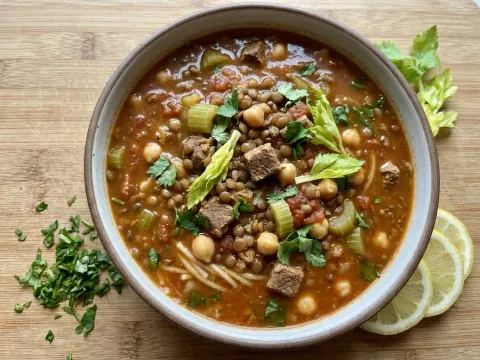
| Instant noodles | Lentil soup in twenty minutes | Protein and fibre instead of flavour enhancers |
| Sausages and mortadella | Spiced grilled chicken sliced for sandwiches | Meat whose every ingredient you know |
| Flavoured crisps | Oven-roasted chickpeas with cumin | Crunch without hydrogenated oils or flavourings |
| Flavoured yogurt | Plain yogurt with chopped fruit | You decide how sweet it is |
Every one of these swaps is in the EEINA recipe library with its numbers calculated.
Frequently asked questions
What is the difference between processed and ultra-processed food?
How do I know a product is ultra-processed?
Do ultra-processed foods cause weight gain?
Are canned pulses and frozen vegetables ultra-processed?
Do I have to stop eating these foods completely?
Your next step with EEINA
The EEINA app
Log what you eat, see its calories and macros instantly, with calculated recipes from our kitchen that serve your goal.
Start free →Hidden sugar guide
Where added sugar hides in sauces, dairy and bread, and its names on the label.
Read →Calorie calculator
Find your daily calorie needs for your goal.
Calculate →