How much fibre do you need?
The World Health Organization updated its guidance in 2023: adults should get at least 25 grams a day of fibre occurring naturally in food, alongside 400 grams of vegetables and fruit.[1] Children need less: 15 grams at ages 2 to 5, 21 grams at 6 to 9, and 25 grams from age 10.[1]
In Saudi Arabia, the SFDA's National Nutrition Committee built the Saudi Healthy Plate 2024 on at least 28 grams of fibre, preferring whole fruit over juice to get there.[2]
Why does fibre matter? What the largest review found
A 2019 analysis in The Lancet pooled 185 long-term studies and 58 clinical trials. The highest fibre eaters had a 15 to 30% lower risk of death from any cause, heart disease, stroke, type 2 diabetes and colorectal cancer than the lowest.[3]
The largest risk reduction came at 25 to 29 grams a day, with signs of further benefit above that.[3] In trials, higher fibre intake was linked to lower body weight, systolic blood pressure and total cholesterol.[3] These are associations in the general population, not treatment for an existing disease.
Where do we stand today?
There is no recent national dietary survey measuring fibre in the Saudi diet directly. The closest figure is a 2026 estimate built from food-supply data and statistical modelling, which puts median adult intake at about 14.6 grams a day, with only about 79 grams of fruit and 62 grams of vegetables.[4]
If that estimate holds, the gap is about ten grams a day. One bowl of pulses closes it; you don't need to overhaul your diet.
Fibre in our kitchen, in numbers
These figures come from the US Department of Agriculture (USDA) database, per 100 grams and per familiar portion:[5]
| Food | Fibre per 100 g | Portion | Fibre per portion |
|---|---|---|---|
| Lentils, boiled | 7.9 g | 1 cup (198 g) | about 15.6 g |
| Chickpeas, boiled | 7.6 g | 1 cup (164 g) | about 12.5 g |
| Fava beans, boiled | 5.4 g | 100 g | 5.4 g |
| Bulgur, cooked | 4.5 g | 100 g | 4.5 g |
| Oats, dry | 10.1 g | ⅓ cup (27 g) | about 2.7 g |
| Medjool date | 6.7 g | 1 date (24 g) | about 1.6 g |
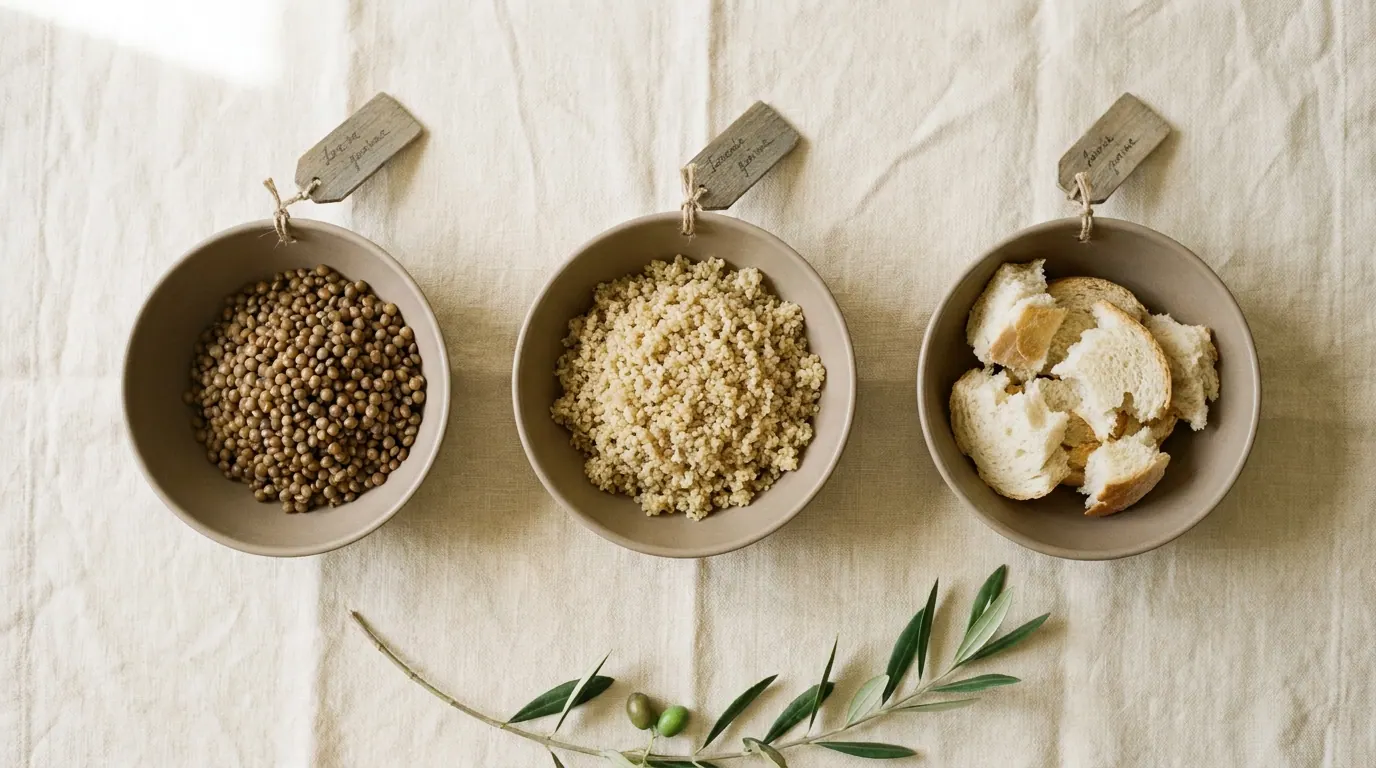
Notice the gap between pulses and everything else: one cup of lentils equals six portions of oats. That's why pulses remain the fastest route to your daily number.
A day that reaches 25 grams without noticing
- Breakfast: 40 g of oats with two Medjool dates: about 7.3 g.
- Lunch: a cup of lentil soup: about 15.6 g.
- Dinner: half a cup of chickpeas (82 g) in a salad: about 6.2 g.
- Total: about 29 grams, before counting vegetables and fruit.
You don't need all of that in one day. A pulse dish a day, whole grains at breakfast, and whole fruit instead of juice usually close the gap.
Raise it gradually, with water
Jumping from 14 to 30 grams overnight can cause bloating and wind. Add one portion every few days and drink enough water, because fibre needs fluid to do its job. Soaking pulses and changing the water before cooking eases bloating for many people.
Two common myths
- "Supplements replace food." The World Health Organization's recommendation is specifically for fibre naturally present in food.[1] Whole food brings protein and minerals a tub can't.
- "Natural juice is as good as fruit." Juicing drops most of the fibre and keeps the sugar, which is why the Saudi Healthy Plate prefers whole fruit to juice.[2]
Frequently asked questions
How many grams of fibre do I need a day?
Which foods in our kitchen are richest in fibre?
Can fibre supplements replace food?
Why do I feel bloated when I add fibre?
Is natural juice a good source of fibre?
Your next step with EEINA
The EEINA app
Log what you eat, see its fibre, calories and macros instantly, with calculated recipes from our kitchen.
Start free →Satiety foods
How to eat more on fewer calories, and why fibre and protein keep you full.
Read →Glycemic index calculator
See how your meals affect blood sugar, and adjust them to gentler versions.
Try it →