Calorie Deficit: The Single Proven Rule
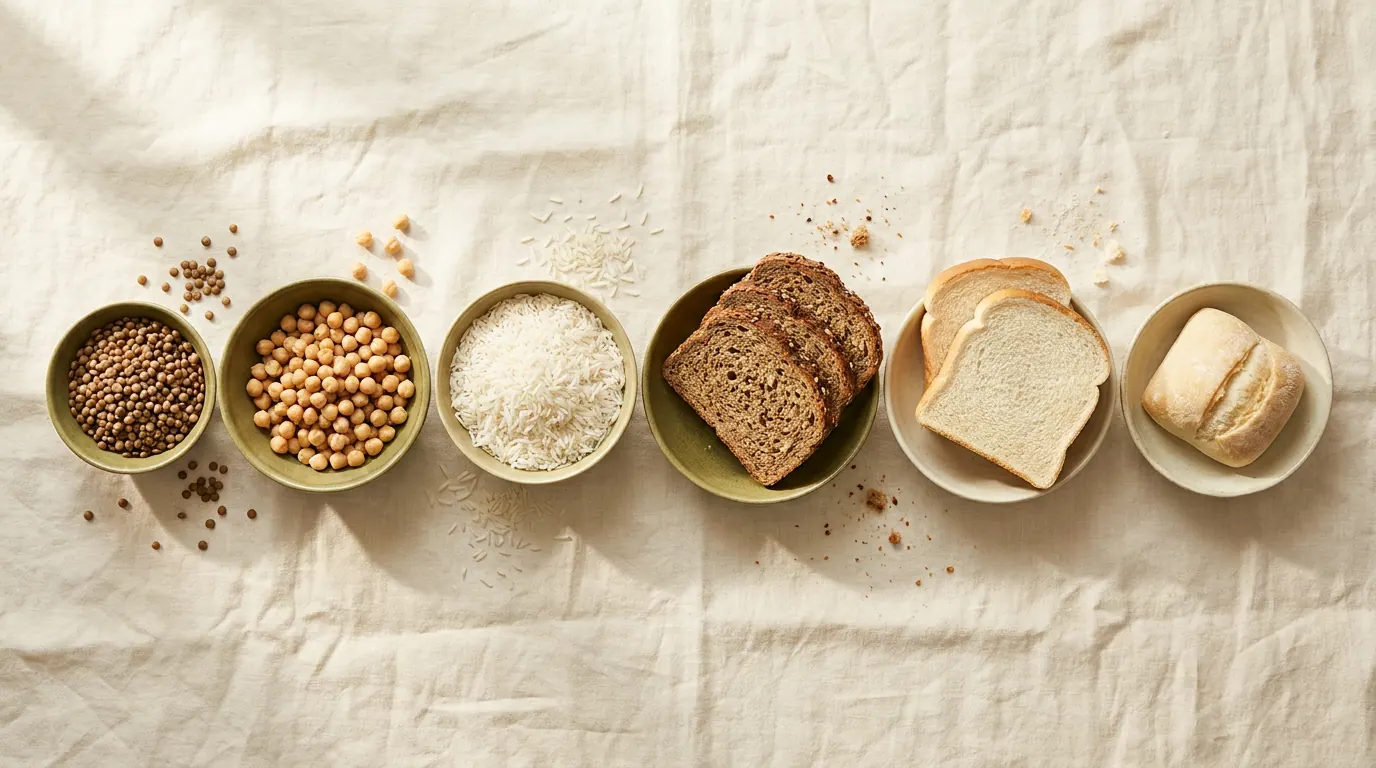
Your weight is a simple energy equation: if you consume more energy than you burn, you gain weight; if you consume less, you lose. This is what scientists call energy balance, and it's the foundation of every successful diet, regardless of its commercial name. There's no magic food that melts fat, nor a specific time that performs miracles; the real difference between gaining and losing weight is the signal from this equation.
Practically, this means your first task isn't to eliminate a specific food group, but to create a small, sustainable gap between what you eat and what you expend. When you understand that all successful diets share this rule, you are freed from worrying about which system is best and can focus on what truly works: a deficit you can stick to.
Calculate Your Needs: From Basal Metabolic Rate to Total Daily Energy Expenditure
Your daily calorie needs are built on two layers. The first is the Basal Metabolic Rate (BMR), which is what your body burns while completely at rest for breathing, heartbeats, and organ function. The second is the Total Daily Energy Expenditure (TDEE), which is your BMR multiplied by an activity factor.
Practically, you calculate BMR using the accepted Mifflin-St Jeor equation, then multiply it by your approximate activity factor: around 1.2 for a sedentary lifestyle, 1.375 for light activity, 1.55 for moderate activity, and 1.725 for high activity. For example: a woman weighing 70 kg has a BMR close to 1400 calories. With light activity, her TDEE becomes about 1925 calories. This number is your balance point: eat it, and your weight stabilizes; reduce it slightly, and it drops.
The Number is an Estimate, Not Absolute Truth
The Mifflin-St Jeor equation is the most accurate among common formulas, but its margin of error remains around 5% for most people, widening for those with high muscle mass, significant obesity, or the elderly, as it doesn't distinguish between muscle and fat. Practically, treat your calculated number as a starting point, not an absolute law.
Try it for two weeks and monitor your scale and waist measurements: if nothing drops, your needs are likely lower than calculated. If it drops alarmingly fast, it's higher. This adjustment based on real observation is more accurate than any calculator because it measures *your* body, not the average person. Don't chase decimal points; the trend over weeks is what matters.
Is Your Deficit Safe? — A Self-Check
This is a guiding self-assessment to help you estimate if your weight loss approach is moderate and sustainable. It does not replace professional assessment. Choose what applies to you:
The Safe Deficit: 500 to 750 Calories Daily
Clinical guidelines recommend a daily deficit of 500 to 750 calories, or setting a final range around 1200 to 1500 calories for women and 1500 to 1800 for men. Practically, subtract this deficit from your daily needs. If your needs are 2000 calories, aim for 1300 to 1500 calories.
This range creates significant loss without causing excessive hunger or breaking your commitment. The idea is that a larger deficit doesn't necessarily mean faster results, but often leads to a faster collapse. Choose the lower end (500) if you're a beginner or have limited activity, and the higher end (750) if you are significantly overweight and active. Maintain the deficit and let time work.
The Realistic Rate: 0.5 to 1 kg Per Week
A 500-calorie daily deficit roughly corresponds to a loss of 0.5 to 1 kg per week, which is the rate described by specialists as sustainable. Remember that the rule of '3500 calories equals half a kilo of fat' is an oversimplification; detailed studies show the body adapts and slows down weight loss over time, and that those who lose more weight often lose muscle and water, not just fat.
Practically, don't be discouraged if the scale slows down after a few weeks; this is expected, not a failure. Weight fluctuates daily due to water, salt, and food in the digestive tract, so weigh yourself once a week under the same conditions and judge the overall trend, not a single reading.
Why Crash Diets Fail
The temptation to 'eat as little as possible to lose faster' is the most common reason for failure. When your intake drops drastically for an extended period, the body adapts: it slows down your metabolic rate, reduces your spontaneous movements without you noticing, and becomes more efficient at burning less for the same effort. Worse, severely restrictive diets cause you to lose muscle, not just fat, and muscle is what keeps your metabolism high.
Add to this the rise in hunger hormones, making adherence almost impossible and rebound highly predictable. Practically, a moderate deficit you can sustain for three months defeats a crash deficit you collapse from in ten days. Patience here is not a moral virtue but a physiological strategy.
Protein: Your Ally in a Comfortable Deficit
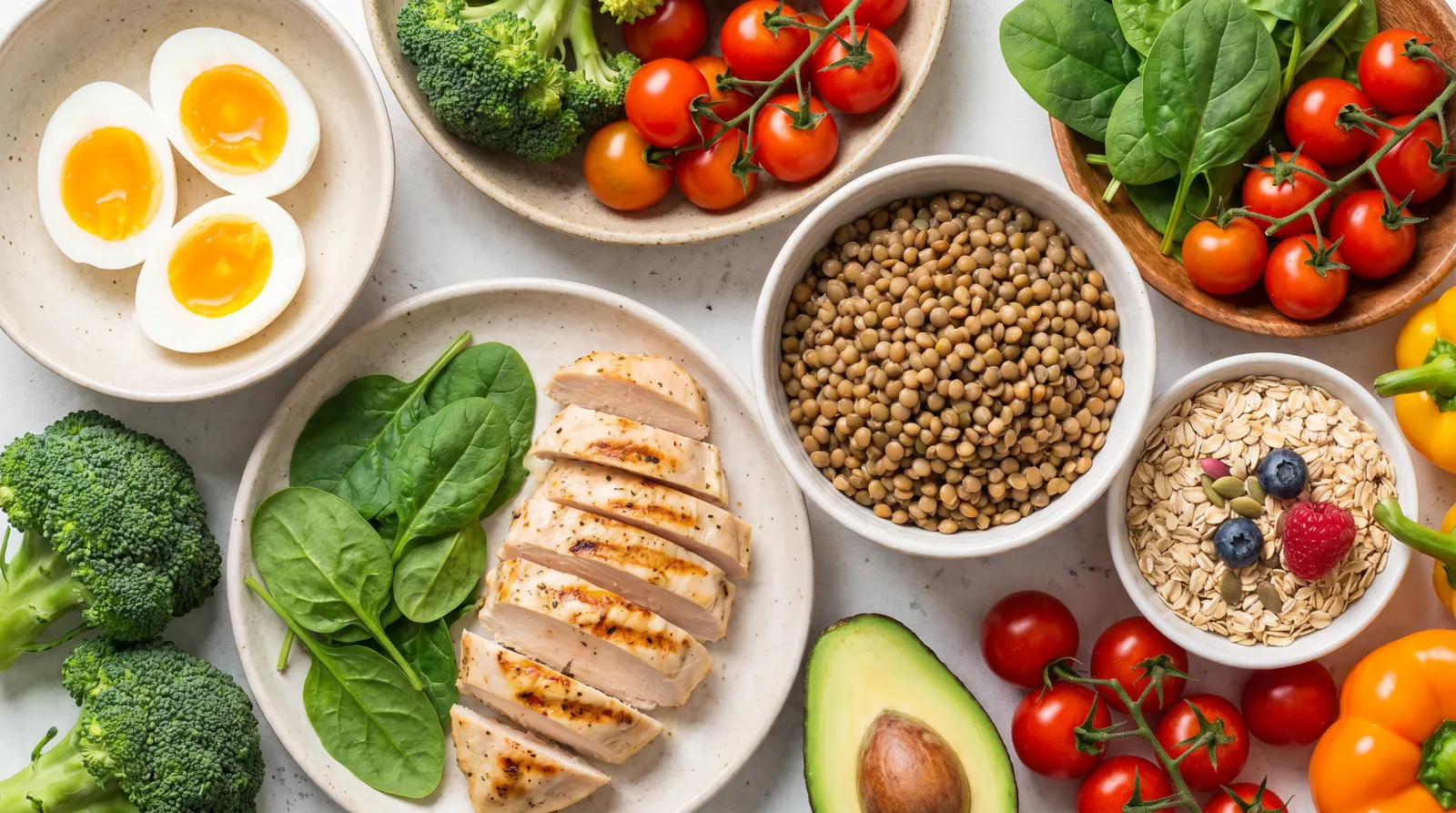
Protein is the smartest investment in any calorie deficit for two reasons. First, it's the most satiating macronutrient, reducing your hunger and curbing cravings later. Second, it protects your muscle mass during weight loss, ensuring you lose fat, not muscle, and keep your metabolism active.
Studies suggest increasing protein intake to about 1.2 to 1.6 grams per kilogram of body weight daily helps preserve muscle and improves satiety compared to lower amounts. Practically, distribute protein across meals, aiming for 25 to 30 grams per meal: eggs or beans for breakfast, chicken or fish for lunch, and yogurt or lentils for dinner. This makes the deficit manageable rather than agonizing.
Fiber: Fills You Up with Fewer Calories
Fiber is your second weapon against hunger. Soluble types, like those in oats, legumes, and vegetables, absorb water and expand in the stomach, slowing gastric emptying and prolonging the feeling of fullness without adding significant calories. Practically, this means a large salad or a bowl of lentil soup before a meal will make you feel full, leading you to eat less of calorie-dense items automatically.
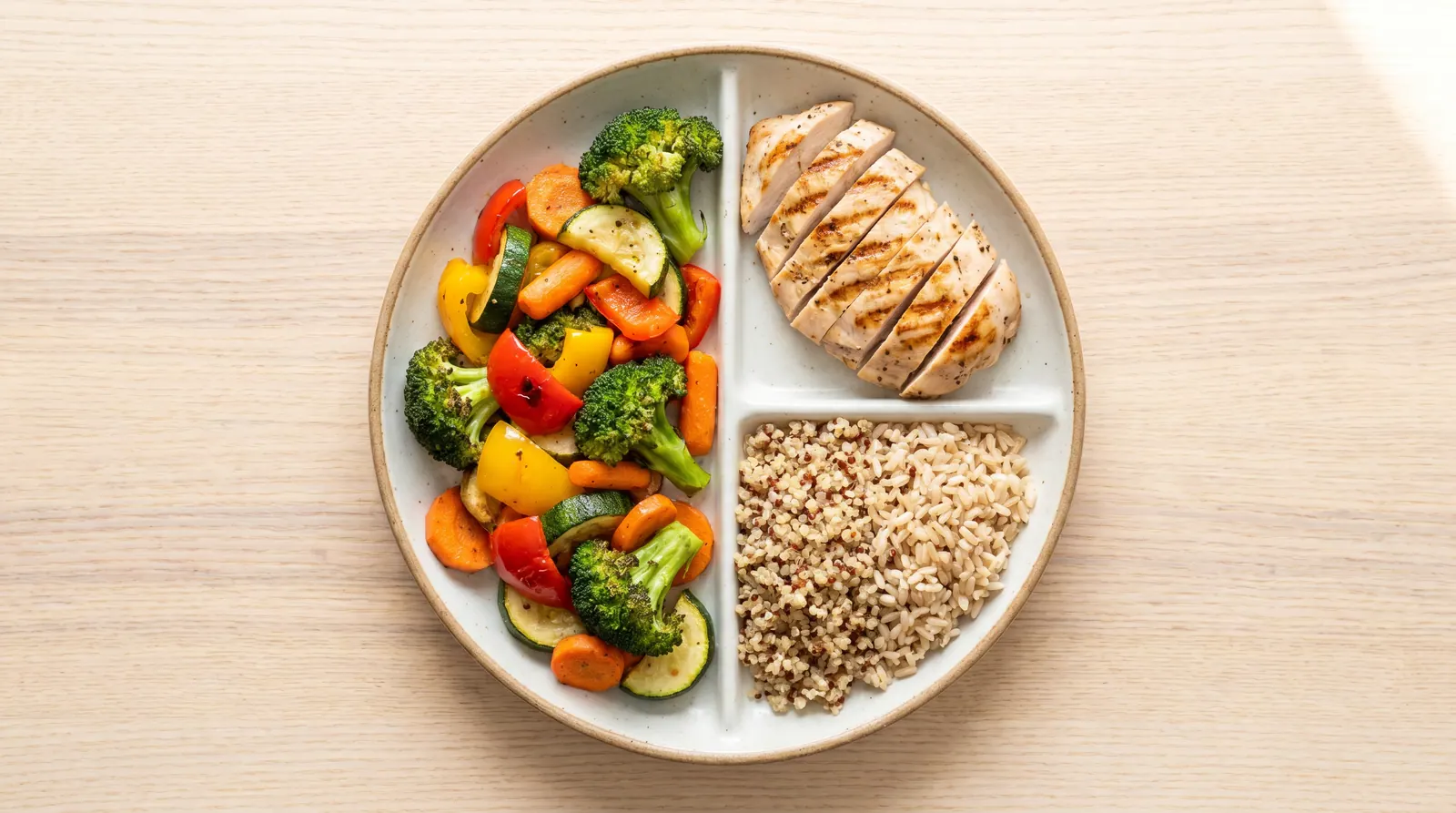
Make half your plate vegetables, choose whole grains over refined ones, and add legumes to your dishes. Combining protein and fiber in a single meal creates the most powerful satiety combination known in nutrition, turning a deficit from a willpower battle into an easy habit.
Smart Deficit Kabsa: A Saudi Example
There's no need to abandon our table to lose weight; you just need to intelligently reduce the dish's calories. Kabsa is a perfect example. Practically: reduce the oil used for frying onions and the sauce, as each tablespoon of oil is about 120 calories, and Kabsa often contains several tablespoons. Choose skinless chicken breast instead of fatty cuts, increase the amount of vegetables in the rice, and reduce the rice portion itself in favor of a larger piece of protein.
Replace part of the white rice with brown rice or add lentils to increase fiber. These four adjustments significantly reduce the dish's calories while maintaining its taste and identity. The message: a deficit doesn't eliminate Kabsa, it redesigns it.
| Item | Most Calorie-Dense | Lighter Alternative |
|---|---|---|
| Oil | Free pouring for frying and sauce (several tablespoons) | Measured by tablespoon, non-stick pan |
| Protein | Fatty chicken pieces with skin | Skinless chicken breast |
| Carbohydrates | Large portion of white rice | Smaller portion + brown rice or lentils |
| Vegetables | Few or absent | Abundant in the rice and on the side |

Hidden Pitfalls: Drinks and Oils
The biggest saboteurs of a calorie deficit are not the obvious foods but hidden calories. Drinks are first: juice, soft drinks, and coffee sweetened with milk and syrup can contain hundreds of calories without providing any satiety, as the body doesn't register liquid calories the same way it does solid food. Oils are second: a tablespoon of oil or ghee in cooking is about 120 calories, and three tablespoons in a dish can equal a full meal.
Practically, honestly log your drinks and oils for a week, and you'll be surprised by their volume. The solution for drinks is simple: water, tea, and coffee without sugar are your primary beverages. The solution for oils is to measure quantities with a spoon instead of free pouring, and to use a non-stick pan.

Deficit in Ramadan: An Opportunity and a Trap
Ramadan presents both an opportunity and a challenge for calorie deficit. The opportunity lies in the long fasting hours naturally reducing eating windows, making portion control easier. The trap is that the Iftar table, laden with fried foods, sweets, and sugary drinks, can consume the entire day's deficit in one sitting.
Practically: break your fast with dates, water, and light soup, pray, then return for a balanced meal with protein and vegetables, and postpone or reduce fried foods and sweets. Make Suhoor protein-rich and fibrous, like eggs, oats, and yogurt, to prolong satiety during fasting. Beware of the calories in Ramadan juices and drinks; they are among the biggest hidden traps. This way, the month becomes a window for weight loss, not gain.
Five Common Weight Loss Myths
Half-truths abound regarding weight loss, leading to wasted effort or increased frustration. Here are the most common ones, and what the guide says:
"There's a food or drink that directly burns fat."
"The less I eat, the faster I'll lose weight."
"3500 calories always equals exactly half a kilo of fat."
"Liquid calories don't count."
"Avoiding carbohydrates alone leads to weight loss."
Practical Tips to Implement Today
Before diving into the full protocol, here are small guidelines derived from the above, designed to reduce calories in your daily life without turning it upside down:
- Calculate Once and Start. Calculate your daily needs once and subtract 500 calories as a starting point, then adjust after two weeks based on scale and waist results, not just the calculator.
- Protein at Every Meal. Ensure protein is present in every meal, around 25 to 30 grams: eggs or beans for breakfast, chicken or fish for lunch, yogurt or lentils for dinner.
- Start with Vegetables. Begin every main meal with a large portion of vegetables or a low-calorie soup to fill your stomach before calorie-dense items.
- Measure Oil with a Spoon. Measure oil with a spoon, not by free pouring, as each tablespoon is about 120 calories. Use a non-stick pan to reduce its use.
- Make Water Your Primary Drink. Make water, tea, and coffee without sugar your main beverages. Count any sweetened drink within your daily calorie intake.
- Weigh Once a Week. Weigh yourself once a week under the same conditions (morning, after using the restroom) and judge the trend over weeks, not a single day's reading.
- Re-engineer Kabsa. When eating Kabsa, reduce oil, choose skinless chicken, increase vegetables, and decrease the rice portion.
- Be Moderate, Not Extreme. Do not go below the recommended deficit for faster results; a moderate, sustainable deficit wins over a crash diet that leads to collapse.
EEINA's Protocol for Sustainable Calorie Deficit
A practical plan combining the above into three progressive layers. Start layer by layer, and record your weight weekly to know what works for you.
The protocol is based on clinical obesity guidelines, metabolism and protein research, and fiber studies.
Set the Number
A clear starting point.
Create Satiety
Habits that make the deficit comfortable.
Adjust and Sustain
Results that last, not collapse.
Golden Rule: The goal is not the shortest duration or the harshest diet, but a moderate deficit you can stick to for months. Maintain the deficit and let time work.
When to Stop and Consult a Specialist — Red Flags
A moderate deficit is safe for most healthy individuals, but certain signs indicate that the diet has gone beyond reasonable limits and requires immediate consultation with a specialist:
- Weight loss exceeding 1 kg per week consistently, as it may indicate loss of muscle and water, not just fat.
- Dizziness, extreme fatigue, hair loss, or menstrual irregularities in women, which are signs of a too-restrictive diet.
- Calorie intake below 1200 for women or 1500 for men without medical supervision.
- Unbearable excessive hunger, indicating an excessive deficit or lack of protein and fiber.
- Presence of diabetes, hypertension, pregnancy, or breastfeeding, or taking medication affecting blood sugar, without adjusting numbers with a doctor.
Frequently Asked Questions
How many calories do I need daily to lose weight?
How many kilograms is it healthy to lose per week?
Do I need to count every calorie precisely?
Why has my weight loss stalled despite my commitment?
How can I lose weight during Ramadan without feeling hungry?
Start Your Next Step with EEINA
Calorie-Deficit Meal Plans
Saudi recipes with a moderate deficit, high in protein and fiber, starting from your needs and progressing with you.
Get Your Plan →Transform Your Favorite Recipes
Modify your favorite Saudi dishes like Kabsa into lighter versions while keeping the taste and identity.
Try It →EEINA App
Calculates your needs, tracks your calories, protein, and weekly weight, and reminds you to drink water and eat meals.
Download →