What changed on 1 January 2026
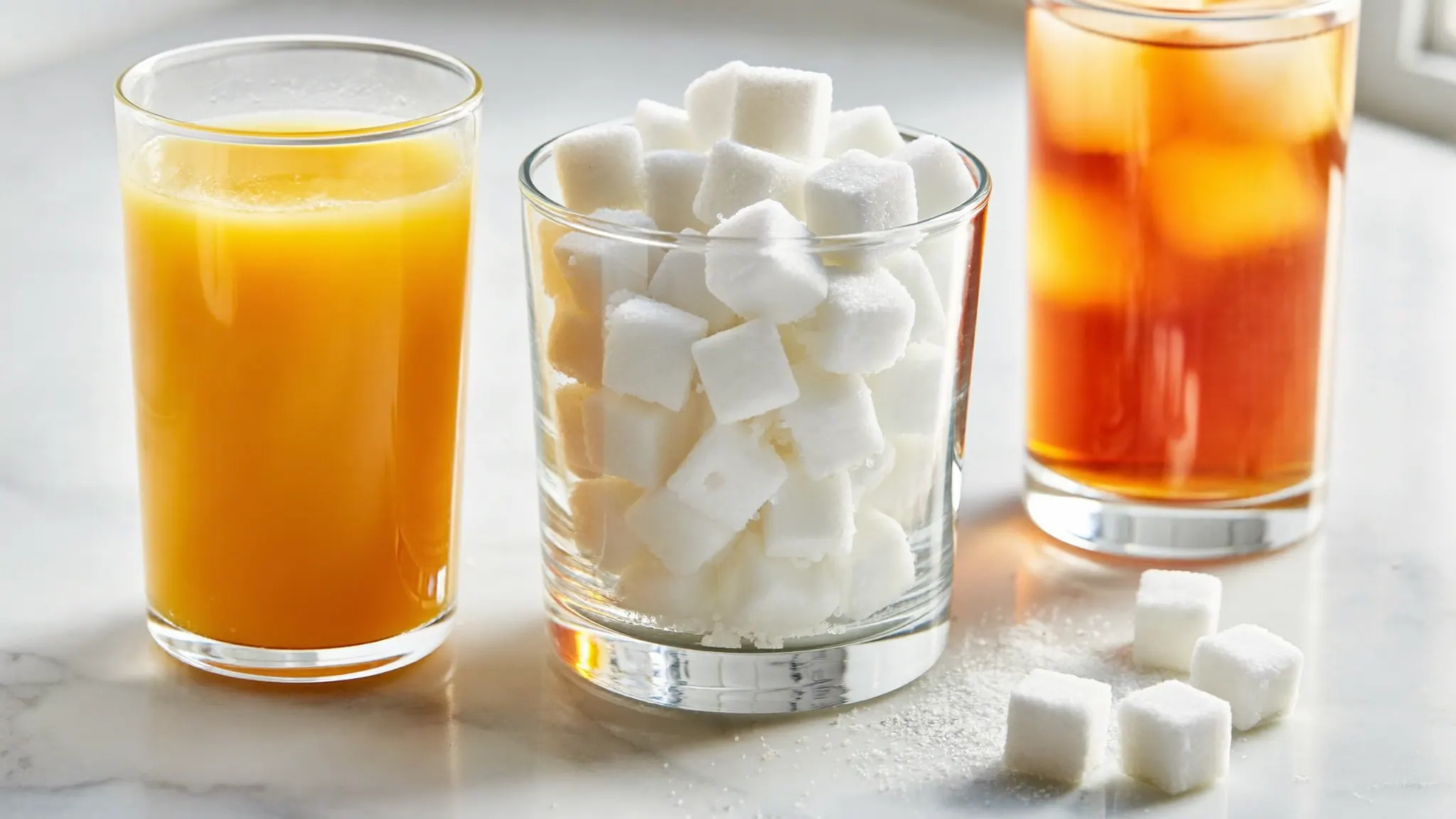
Saudi Arabia has taxed soft drinks since 2017, later extending a 50% excise to sweetened beverages generally. From 1 January 2026 the method changed: the tax is no longer a share of the price but an amount per litre set by the total sugar in each 100 ml.[1]
The system covers every form of sweetened beverage: ready-to-drink, concentrates, powders, gels and the extracts drinks are made from.[2] In other words, a sweetened juice carton and the powder sachet you stir into water follow the same logic.
The four tiers in numbers
These are the tiers as published by the Zakat, Tax and Customs Authority and reported by EY.[1] We added an "in a 330 ml can" column, because that's what you actually hold, and a comparison with the daily ceiling the World Health Organization recommends.[4]
| Tier | Sugar per 100 ml | In a 330 ml can | Tax per litre | Share of your 25 g day |
|---|---|---|---|---|
| 1. Artificial sweeteners only | No added sugar | 0 g added sugar | SAR 0 | None from sugar |
| 2. Low sugar | Under 5 g | Under 16.5 g | SAR 0 | Up to about two thirds |
| 3. Medium sugar | 5 to 7.99 g | 16.5 to 26.4 g | SAR 0.79 | Two thirds to the full ceiling |
| 4. High sugar | 8 g or more | 26.4 g or more | SAR 1.09 | The full ceiling or more |
The fifth column matters most. One can from tier four uses up your whole day's sugar ceiling before you've eaten anything. The tax itself is small per can (about SAR 0.36 for a 330 ml can in the top tier), so don't wait for the price to decide for you. The number your body cares about is grams, not halalas.
How to read your can in ten seconds
Turn the can over and find the "sugars" line in the "per 100 ml" column of the nutrition table. That number alone tells you the tier. Then work out the whole pack in one step:
- Hypothetical example: a drink labelled 10 g per 100 ml, in a 330 ml can.
- 10 × 330 ÷ 100 = 33 grams in the can.
- 33 ÷ 4 ≈ eight teaspoons, more than the 25 g daily ceiling in one can.
Watch the pack size, not just the number. A 500 ml bottle of a "medium sugar" drink (7 g per 100 ml) holds 35 grams, more than a 330 ml can of a sweeter one. The tier describes sugar concentration; your body deals with the amount you actually drink.
"Zero" drinks: tax-free, but are they the answer?
A drink sweetened only with artificial sweeteners falls into tier one with no tax.[1] That doesn't make it a healthy everyday choice. In 2023 the World Health Organization recommended against relying on non-sugar sweeteners to control body weight or reduce the risk of chronic disease; the recommendation does not cover people with existing diabetes.[5]
In practice: a "zero" drink beats a high-sugar one if that's the only alternative, but it isn't a substitute for water. The longer goal is a palate used to less sweetness, not sweetness moved from sugar to a sweetener. More in our guide to artificial sweeteners and stevia.
Juices and flavoured milk: the tax isn't the only judge
The World Health Organization counts the sugar naturally present in fruit juices as "free sugars" within the daily ceiling, even with nothing added.[4] So don't judge a drink by whether it's taxed or exempt; judge it by the grams of sugar on the label. A "100% natural" juice can carry nearly as much sugar as a soft drink.
The same rule applies to flavoured milk, canned coffee and iced-tea drinks: read the sugars line per 100 ml, multiply by the pack size, and compare with 25 grams.
Did the tax change what we drink?
Saudi Arabia's first tax in 2017 has been studied. An analysis of purchase data found annual purchases of soft drinks fell about 41%, and of energy drinks about 58%, in 2018 compared with 2016.[3] Even so, sweetened drinks remain part of most adults' week: a national survey found about 71% of participants drank a sweetened beverage at least once a week.[6]
The new tiers add an incentive for manufacturers: bring sugar under 5 grams per 100 ml and the tax disappears. So in the coming months you may notice "less sugar" recipes of drinks you know. Read the new number rather than trusting the word "new" on the front.
The five-gram rule: your everyday choice
- Water first. Zero sugar, zero tax, zero thinking. Sparkling water with a squeeze of lemon handles the fizz craving.
- If you choose a sweetened drink, keep it under 5 g per 100 ml. That's the exempt tier's own limit, and it keeps a 330 ml can under two thirds of your daily ceiling.
- Tier four is for occasions, not every day. 8 g or more means one can uses your whole day's ceiling.
- The small pack is a smart choice. 250 ml instead of 500 ml halves the sugar without feeling deprived.
- Cut sweetness gradually. Your palate adapts to less sweetness within weeks; details in our hidden sugar guide.
Frequently asked questions
When did Saudi Arabia's new sugar tax start?
What are the four tiers?
How do I know my drink's tier?
Are "zero" drinks healthy because they're exempt?
How many grams of sugar suit my day?
Your next step with EEINA
The EEINA app
Log what you eat and drink, see its calories and macros instantly, with calculated recipes that serve your goal.
Start free →Hidden sugar guide
Where added sugar hides in sauces, dairy and bread, and its names on the label.
Read →Glycemic index calculator
See how your meals affect blood sugar, and adjust them to gentler versions.
Try it →