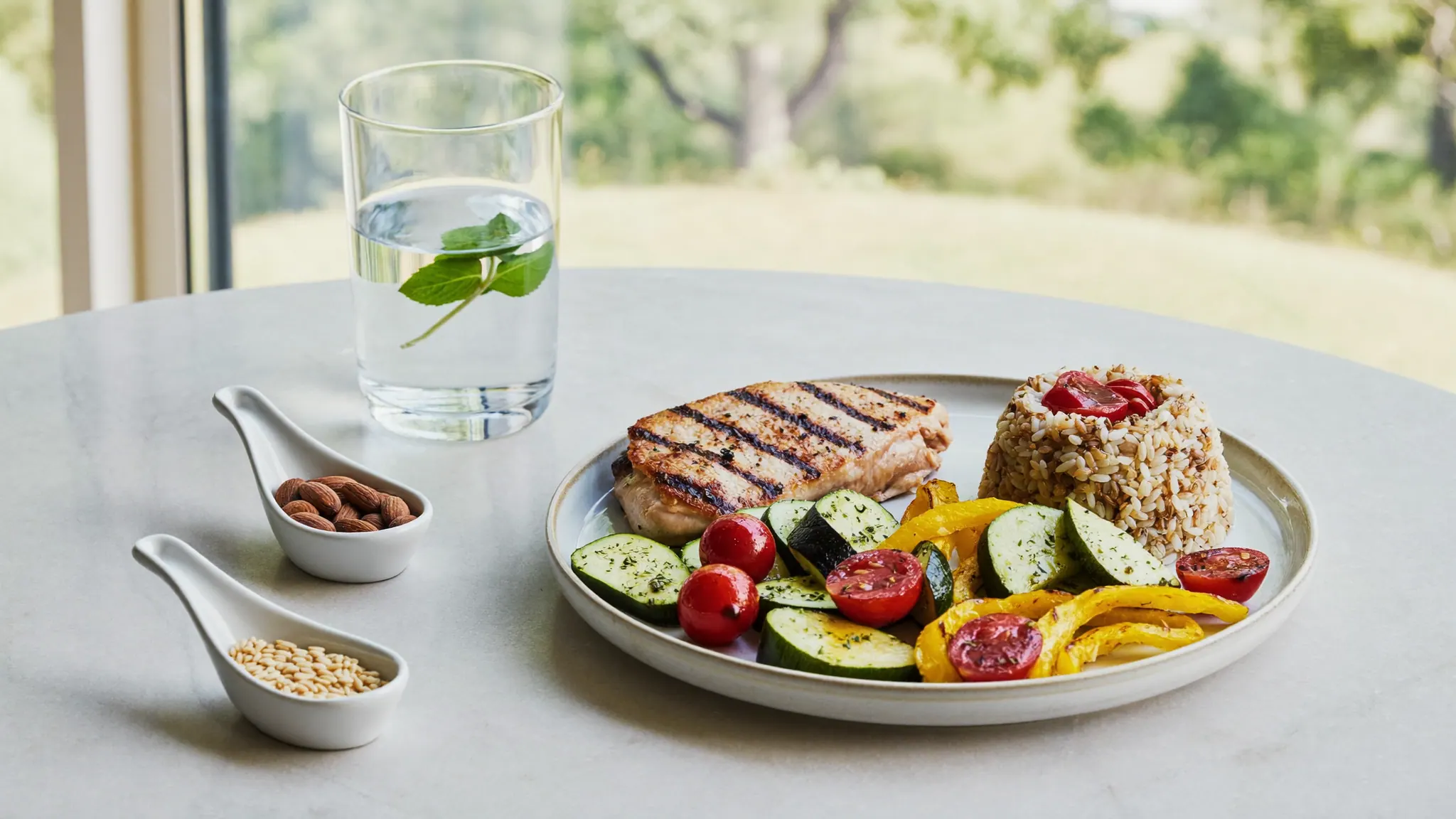
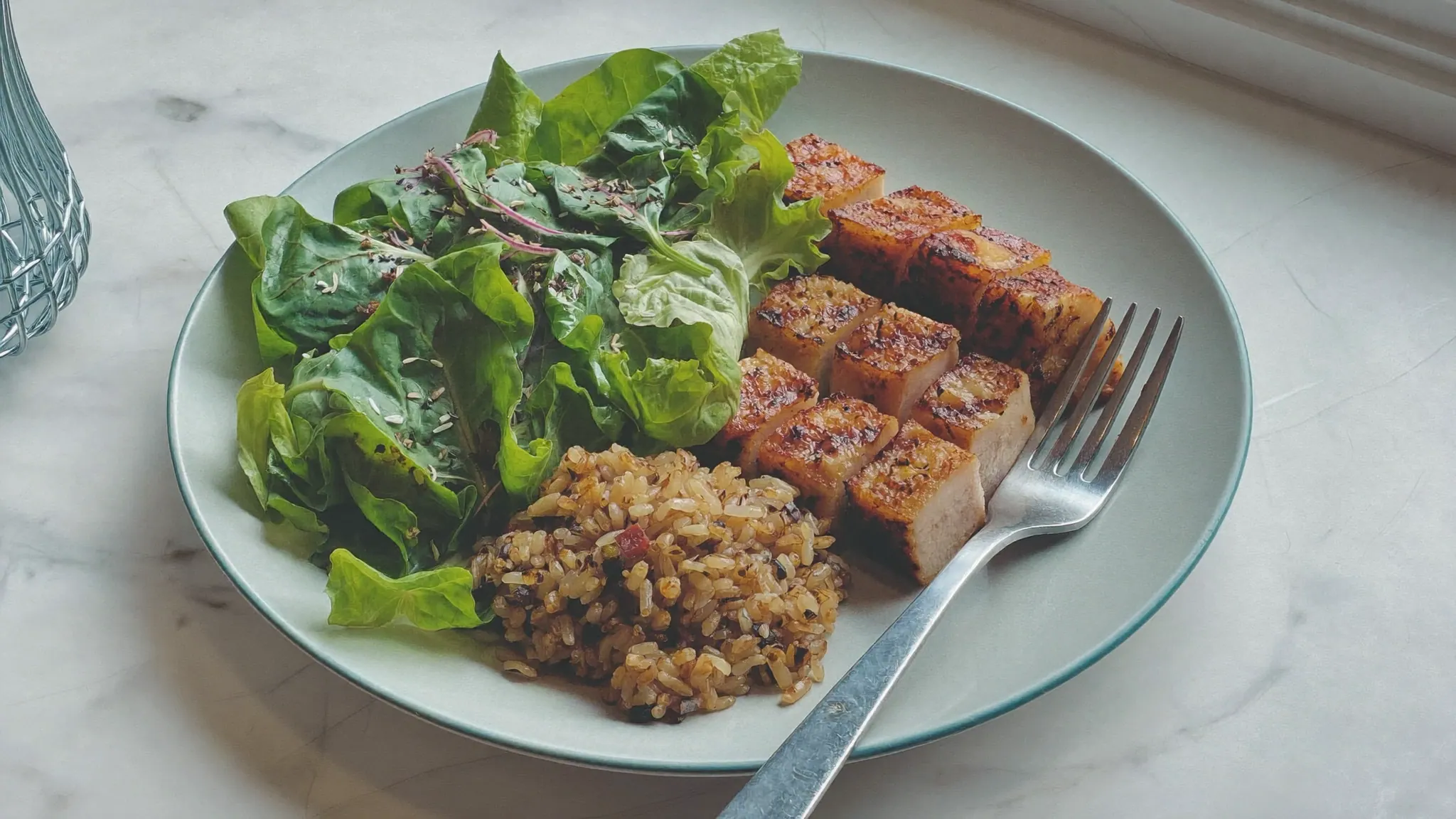
What is Energy Density and Why It Matters for Your Weight
Energy density is the number of calories per gram of food. Leafy greens might provide less than half a calorie per gram, while nuts or chocolate provide five to six calories per gram. The primary factors determining energy density are water, which has zero calories per gram, and fat, which has nine calories per gram. The more water or fiber in a food, the lower its density; the more fat, the higher it becomes.
The practical benefit is that you can fill your plate with a larger volume of low-density food, feeling full visually and physically on fewer calories. This is the core of the 'Volumetrics' approach developed by researcher Barbara Rolls: don't reduce food quantity, but change its type towards lower density. Start by asking one question with every meal: how much water and fiber does it contain relative to fat?
Satiety Comes from Volume, Not Calories
Rolls' research shows that people tend to eat a relatively constant weight or volume of food daily, regardless of its calorie content. This means your stomach responds more to volume and weight than to the number of calories. This explains why a small, high-calorie meal leaves you hungry, while a large, low-density meal satisfies you on fewer calories.
The Mayo Clinic explicitly states that your feeling of fullness is determined by the volume and weight of food, not its calorie count. The practical takeaway: don't fight the desire for a full plate; fill it with foods that satisfy you on fewer calories. Replace half your rice with cooked vegetables, or double your salad and reduce the main course portion, getting the same volume for fewer calories without feeling deprived.
Are Your Habits Serving Your Satiety? — A Self-Check
This is a guiding self-assessment to measure how your current habits support the energy density principle, not a medical diagnosis. Choose what applies to you:
The Satiety Index: Not All Calories Are Equal in Satiety
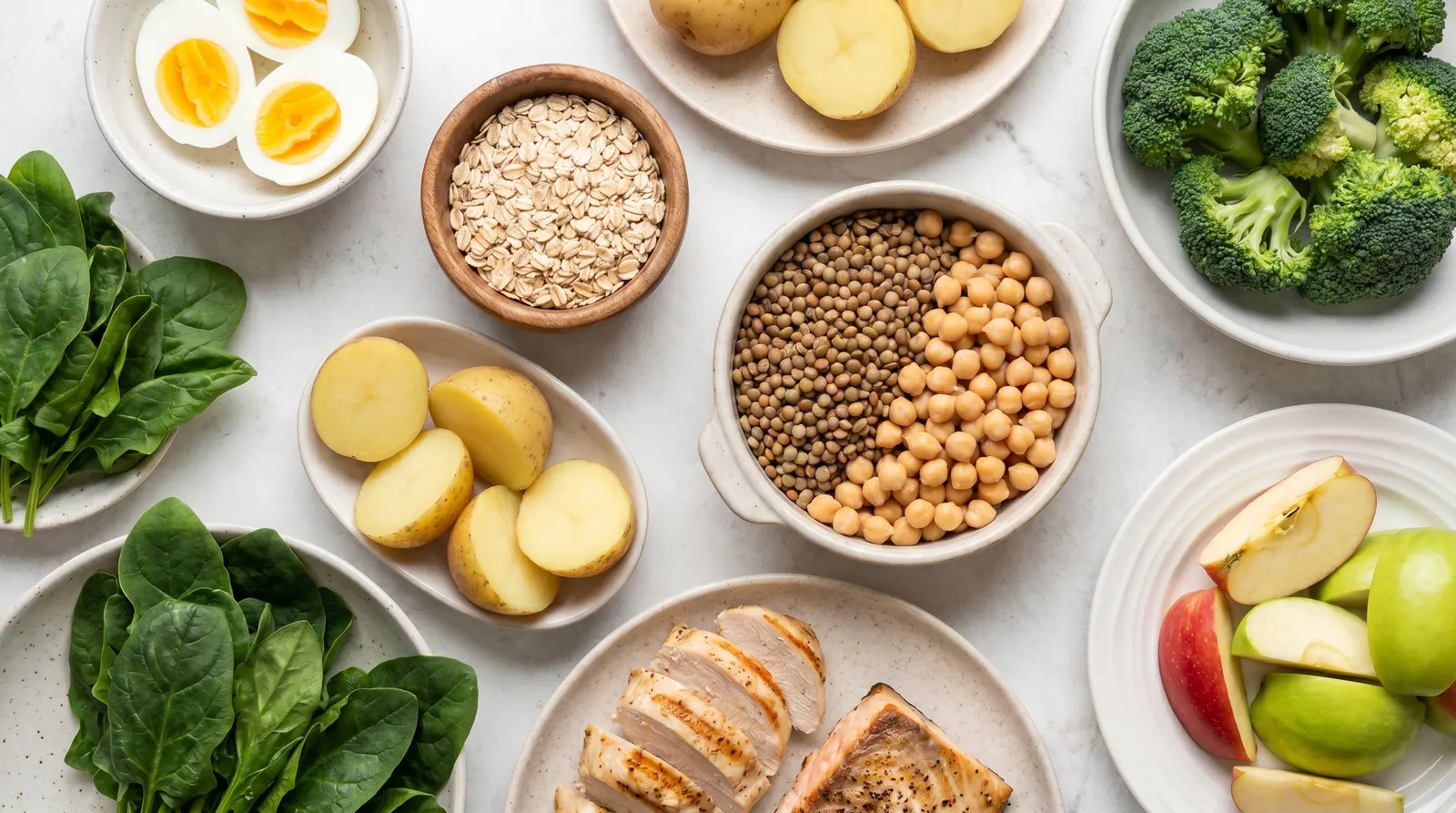
In the famous 1995 University of Sydney study by Holt et al., researchers provided equal-calorie portions of 38 foods (240 calories each) and measured satiety every 15 minutes for two hours, then developed the 'Satiety Index,' setting white bread at 100. The surprising result: boiled potatoes scored 323, meaning they were three times more satiating than bread and about seven times more satiating than croissants, which scored 47.
This means one calorie is vastly different in its satiating power depending on its source. Foods rich in protein, fiber, and water, such as boiled potatoes, fish, eggs, fruits, and oats, topped the list, while fatty baked goods were at the bottom. The practical lesson: when choosing a meal, think about 'satiety per calorie,' not just calories alone, and favor foods that combine protein, fiber, and water.
Relative Satiety Scale for Common Foods
This is a relative, illustrative ranking based on the Satiety Index, showing how satiating 240 calories of these foods are compared to white bread:
Illustrative relative ranking from the Satiety Index, not an exact absolute value for every individual. Short-term measurement on a small sample.
The Role of Water Within Food, Not Just Alongside It
Water lowers energy density without adding calories. However, the surprise is that water incorporated into food is more effective at inducing satiety than a glass of water drunk alongside the meal. In Rolls' studies, calorie intake decreased when water was integrated into food as soup, whereas water drunk separately with food had little effect on satiety.
The likely explanation is that water mixed with food increases its volume and weight, activating hunger and fullness mechanisms. Water drunk separately is processed by separate thirst mechanisms and passes through the stomach quickly. Practically: soups, water-cooked vegetables, and watery fruits like watermelon, cucumber, and oranges are stronger satiety tools than just drinking water. This doesn't mean foregoing drinking water, but rather incorporating water into your food as well.
Protein: The Most Powerful Satiety Element
Protein is the most satiating macronutrient for three combined reasons: it slows gastric emptying, stimulates gut satiety hormones, and has a higher 'thermic effect,' meaning your body expends more energy digesting it. Harvard University indicates that consuming a daily portion of legumes may increase satiety and aid in weight management.
The recommended minimum is approximately 1 gram per kilogram of body weight (the precise figure is 0.8 grams per kilogram), and many active individuals or those over 40 require more. Practically on the Saudi table: start every meal with a clear protein source like grilled chicken, fish, eggs, lentils, fava beans, or low-fat yogurt before starches. Distributing protein across three meals helps maintain stable satiety and reduces snacking between meals.
Fiber: Volume Without Calories and Slower Digestion
Fiber adds bulk to food with negligible calories and slows digestion, prolonging satiety. Two types are beneficial: insoluble fiber in vegetables and whole grains adds bulk, while soluble viscous fiber in oats, legumes, and chia seeds forms a gel in the stomach, slowing gastric emptying and increasing feelings of fullness.
The Mayo Clinic recommends that high fiber content in vegetables, fruits, and whole grains adds bulk, leading to faster and longer-lasting satiety. Practically: replace white bread with whole wheat, brown rice with bulgur or brown rice occasionally, and add lentils, fava beans, and chickpeas to your plate. Increase fiber gradually with adequate water intake to avoid bloating. These substitutions increase satiety and reduce energy density simultaneously.
The Soup or Salad Preload Trick
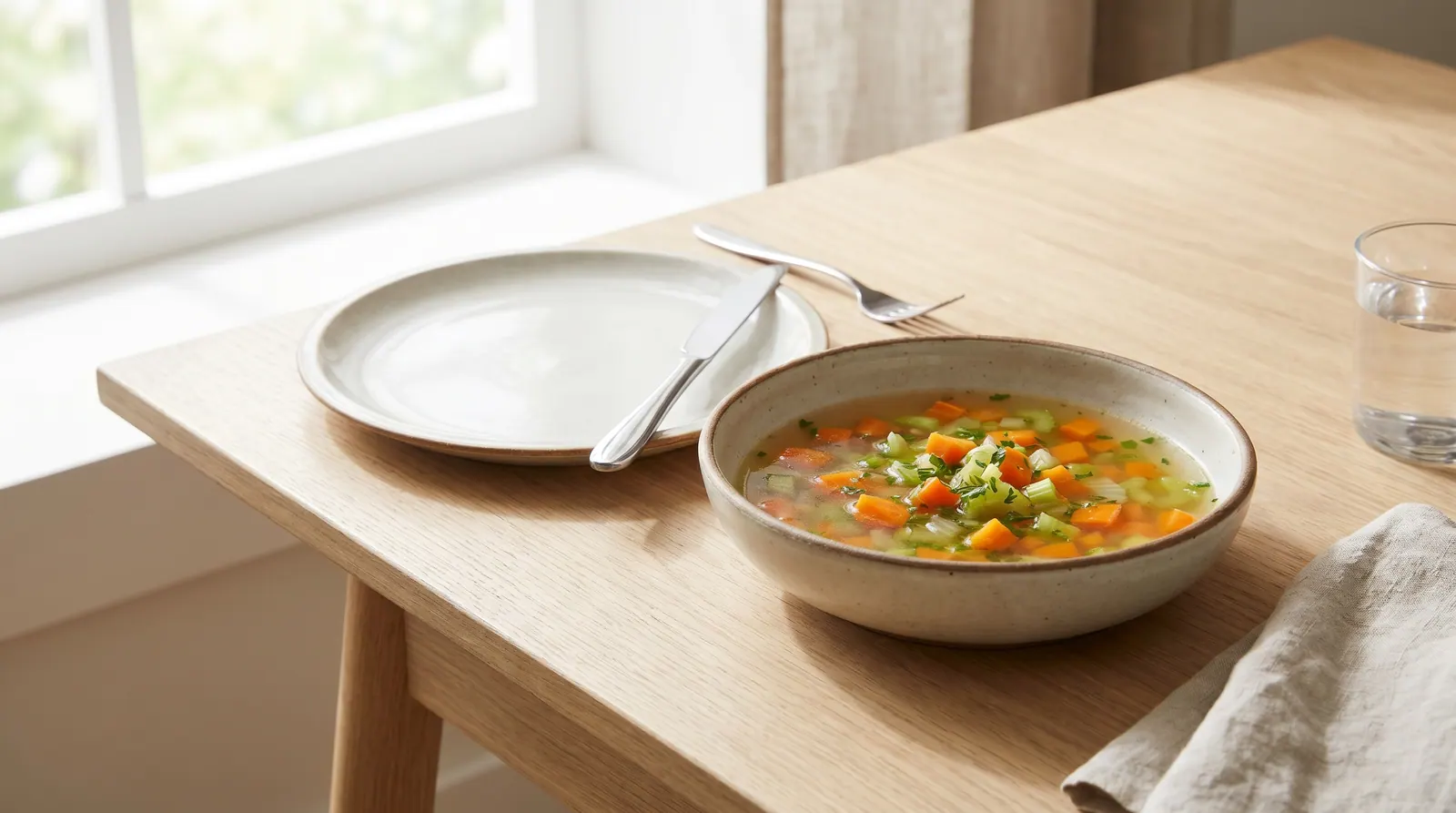
One of the simplest research-backed tricks is to start a meal with low-density food before the main course. In Rolls' studies, vegetable soup before a meal reduced total calorie intake by about 20%, and a large, low-density salad reduced calories by about 12%. The reason is that soup and salad fill a portion of the stomach with few calories, reducing your appetite for the higher-density main course.
Practically: start your lunch with a bowl of lentil or vegetable broth-based soup (not creamy and rich) or a large salad with a light dressing, then move to the main course. This practice aligns perfectly with the Saudi table, which often begins meals with soup, especially during Ramadan when many tables start with soup after dates.
The Food Map: Low vs. High Density
Mentally divide your food into three categories. Note that some healthy foods like avocados and nuts are high in density; the key is quantity, not just healthiness:
| Category | Examples | Guidance on Your Plate |
|---|---|---|
| Low Density | Non-starchy vegetables, salads, fresh fruits, broth-based soups, low-fat dairy | Fill your plate with these |
| Medium Density | Whole grains, legumes, potatoes, starchy fruits like bananas, lean proteins | Moderate portions |
| High Density | Breads and pastries, fatty meats, full-fat cheeses, fried foods, sweets, nuts | Small, calculated amounts |
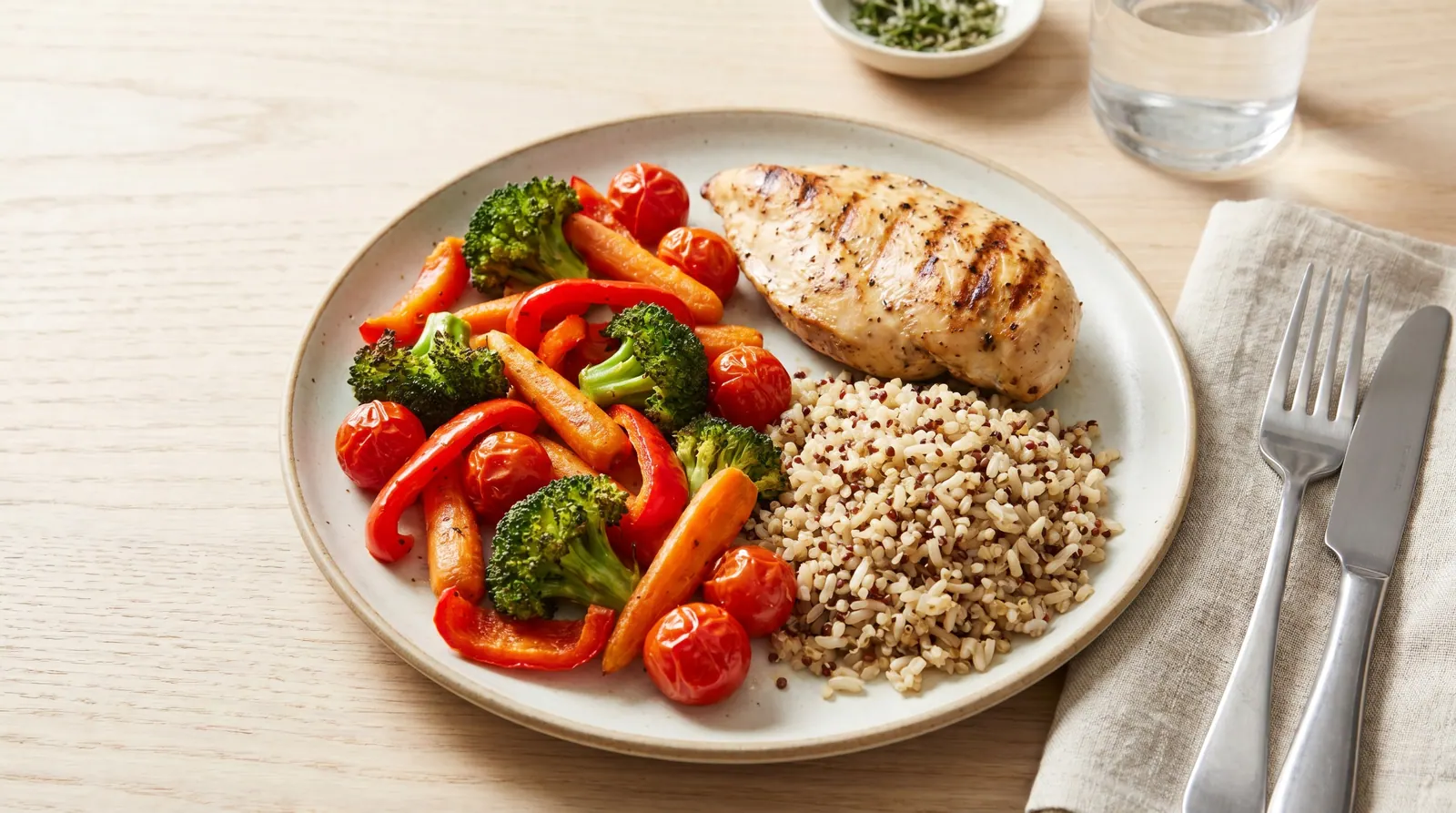
The practical rule for your plate: half vegetables, a quarter lean protein, and a quarter whole grains. This distribution automatically lowers energy density without calorie counting. Remember that 'healthy' doesn't mean 'free calories'.
Eating Slowly Enhances Satiety
Eating speed affects how much you consume, as the brain needs time to register fullness signals. Studies have shown that eating slowly reduced calorie intake and increased post-meal satiety in many individuals. Practical tips: take smaller bites, put your utensil down between bites, chew thoroughly, and sit down to eat without a screen.
Foods that require more chewing, like raw vegetables and whole fruits instead of juice, naturally slow down eating and increase satiety. This is a cost-free habit that aligns with Saudi dining etiquette of unhurried eating and communal sharing, which naturally extends mealtime.
The Saudi Context: A Great Opportunity on the Table
Obesity rates among Saudi adults are around 20%, with overweight affecting about 38%, according to the National Health Information Survey by the Ministry of Health, placing it among the highest regionally. Simultaneously, a national survey revealed that approximately 97% of adults consume fewer than five servings of fruits and vegetables daily.
This gap signifies a significant opportunity to reduce calories without deprivation by increasing fruits and vegetables and integrating the energy density principle into meals. Saudi tables offer this possibility: the opening soup, salads like Fattoush and Tabbouleh, and cooked vegetables. The Ministry of Health explicitly recommends eating high-fiber foods and reducing high-energy foods. Practically: increase vegetables in Kabsa, serve salad before the main course, and favor grilled over fried options.
The Bigger Picture: Satiety Doesn't Negate Calorie Balance
Satiety foods are a powerful tool but not magic. Weight loss ultimately requires a calorie deficit, and the benefit of energy density is that it makes this deficit easier and less hunger-inducing. Notably, a large systematic review found that simply increasing fruits and vegetables without reducing other foods does not lead to significant weight loss on its own; the key is substitution, not addition.
Connect this guide with three pillars: the calorie deficit as the quantitative framework, protein after 40 to maintain muscle mass with age, and the blood sugar balance plate to arrange meals and stabilize energy. Smart satiety makes all these goals sustainable.
Five Common Myths About Satiety and Weight
Misconceptions and half-truths about satiety foods abound, leading to wasted effort or confusion. Here are the most common ones, and what this guide says:
"Fruits and vegetables alone cause weight loss, no matter what else you eat."
"A glass of water before a meal is just as satiating as soup."
"All calories are equal in satiety."
"Healthy foods don't cause weight gain, regardless of quantity."
"There are foods that burn fat and melt away weight."
Practical Tips to Implement Today
Here are small guidelines from the above, designed to reduce your daily calories without feeling deprived:
- Start with Soup or Salad. Begin every lunch and dinner with a bowl of broth-based soup (not creamy) or a large salad before the main course. This reduces total meal calories without hunger.
- Balance Your Plate with a Simple Rule. Make half your plate vegetables, a quarter lean protein (like chicken, fish, eggs, or legumes), and a quarter whole grains. This distribution automatically lowers energy density.
- Substitute, Don't Deprive. Replace half your rice or bread portion with cooked vegetables. You get the same volume for fewer calories.
- Choose Whole Fruits Over Juice. Chewing slows eating, and fiber increases satiety, whereas juice provides quick calories without adequate fullness.
- Add Water Within Your Food. Soups, broth-cooked vegetables, and watery fruits are more satiating than just drinking water alongside meals.
- Eat Slowly. Take smaller bites, put your utensil down between bites, chew thoroughly, and eat away from screens.
- Account for High-Density Foods. Nuts, avocados, and olive oil are beneficial but should be consumed in small, measured quantities, not as free foods.
- Increase Fiber Gradually. Incorporate oats, lentils, fava beans, and whole grains, drinking enough water to avoid bloating.
EEINA's Smart Satiety Protocol
A practical plan that combines the above into three progressive layers. Start with one layer at a time and make it a habit before moving to the next.
The protocol is based on the Volumetrics approach, the Satiety Index, studies on pre-meal soup and salad, and protein recommendations.
Arrange Your Plate for Satiety
Four rules for every meal.
Swap Food Types
Substitution, not addition.
Connect to the Bigger Picture
Satiety is a means, not an end.
Golden Rule: The goal isn't to eat less while hungry, but to eat a satisfying volume on fewer calories. Swap food types, and let satiety naturally reduce your total intake.
Frequently Asked Questions
Can I really eat more and lose weight?
What are the most satiating foods according to research?
Does soup before a meal really make a difference?
How much protein do I need daily?
Are nuts and avocados allowed on this principle?
Start Your Next Step with EEINA
Satiating Meal Plans with Fewer Calories
Saudi recipes with low density, starting with soup and salad, and arranging your plate with the half-vegetable rule.
Get Your Plan →Transform Your Favorite Recipes
Modify your favorite Saudi dishes into lower-density, more satiating versions with simple plate substitutions.
Try It →The EEINA App
Calculates your calories and protein, and suggests high-satiety foods tailored to your goal and Saudi table.
Download →