What the menu shows today
Since the end of 2018, showing calories has been mandatory in restaurants, cafés, juice and ice-cream shops, bakeries and cafeterias, next to every item and on every kind of menu, whether paper, screen or board.[1] From 1 July 2025 the authority added three new pieces of information:[2][3]
- A salt icon: placed on any item with more than 5 grams of salt (2,000 mg of sodium).
- Caffeine: the amount in drinks.
- Activity minutes: the approximate time of physical activity equivalent to the item's calories.
The requirements cover paper and digital menus and ordering and delivery platforms.[3] In other words, the number should reach you whether you sit in the restaurant or order from your phone.
How to read the calorie number in a minute
The number next to an item describes the portion as served, not an "ideal" portion. And because side dishes must show their calories separately,[1] your real meal is the sum of what you order: the main, the side, the sauce and the drink.
- Crispy chicken sandwich: 650 kcal.
- Medium fries: 340 kcal.
- Medium soft drink: 210 kcal.
- Total: 1,200 kcal, more than half of what many adults need in a whole day.
A practical rule: add the numbers before you pay, not after you eat. One swap, such as water instead of a soft drink or salad instead of fries, moves the total more than any change to the main dish. Your actual calorie needs depend on your age, weight and activity; how to work them out is in our calorie deficit guide.
The salt icon: one dish, a whole day's limit
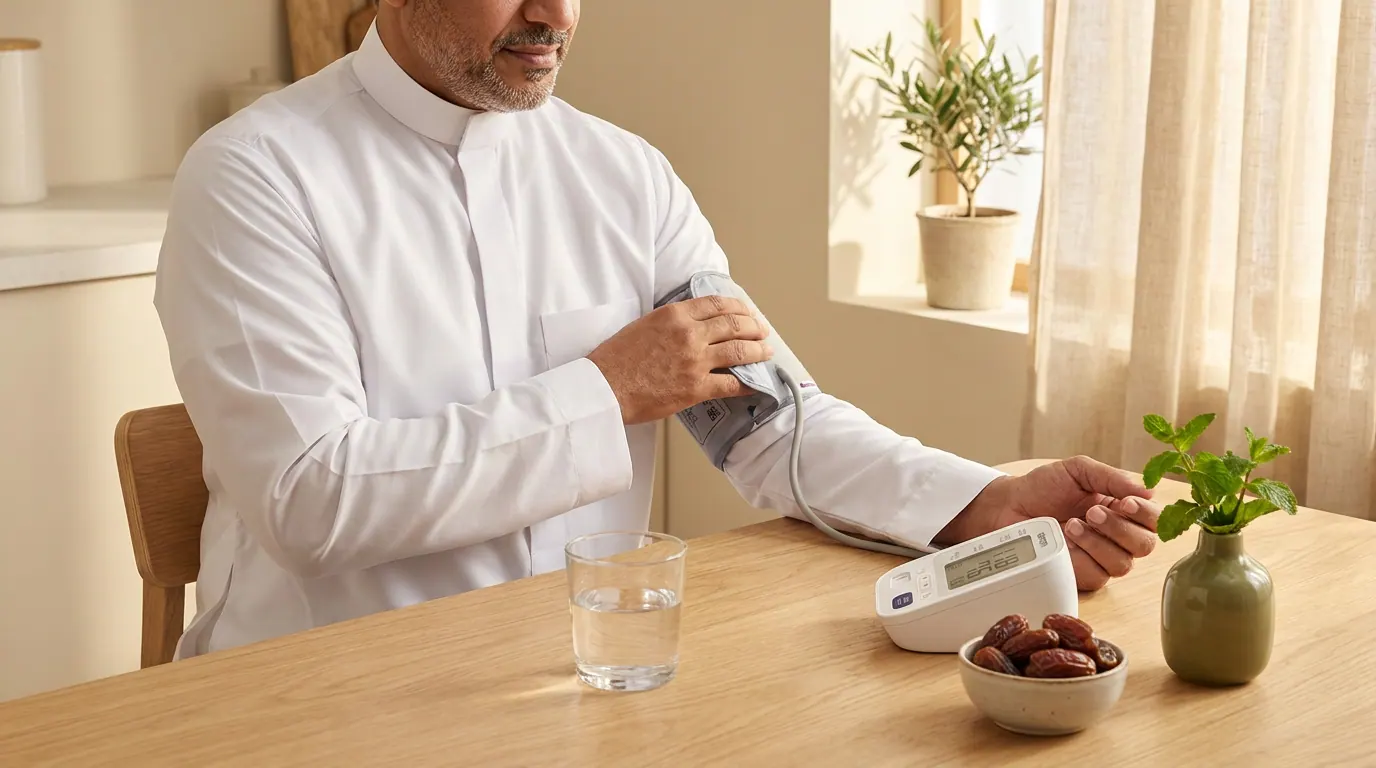
The World Health Organization recommends adults keep salt under 5 grams a day from all sources, about one teaspoon.[4] The menu's salt icon marks a dish that exceeds this on its own. Put simply, the icon means this item uses your whole day's salt allowance in one meal.
In practice: if you see the icon, don't ignore it, especially if you're watching your blood pressure. Ask for the sauce on the side, share the dish, or choose a grilled item without a salty marinade, and go easy on salt for the rest of the day. More on salt and blood pressure in our blood pressure guide.
Caffeine: add it up like calories
The US Food and Drug Administration cites about 400 mg a day as an amount not generally associated with negative effects in healthy adults.[5] The caffeine number on a café menu helps you add up your day: the large afternoon coffee, the evening energy drink and the tea with dinner all count.
Pregnant and breastfeeding women and anyone with a heart condition or sleep problem need a lower limit set by their doctor. More on caffeine in Saudi coffee in our Arabic coffee article, and in energy drinks in our energy drinks article.
Activity minutes: do they change what we order?
The idea is to see calories in the language of time: how many minutes of walking equal this item. A systematic review and meta-analysis of fifteen experimental studies found that showing these equivalents was followed by about 65 fewer calories selected per meal, and about 80 fewer consumed, compared with other labels.[6]
The difference looks small in one meal but adds up across a week of orders. An important note: the number is a tool for understanding, not a penalty paid in exercise. A meal isn't necessarily "burned off" by walking; the goal is to choose knowingly, not to punish yourself.
When not to trust the number alone
The menu number is an estimate, and a kitchen isn't a lab. A US study measured 269 items from 42 restaurants in the laboratory and found the stated numbers accurate on average, but 19% of items contained 100 calories or more above the label. And the lower-calorie items, the ones people choose when they want lighter, were the most likely to be understated.[7]
In Riyadh, a 2023 study checked 120 restaurants listed as "healthy" on a delivery app and found full calorie-labelling compliance in only 24.2% of them, and about 40% of restaurants that showed full numbers on their website did not show them in the app.[8] The rule: treat the number as a reasonable estimate, and add a margin for dishes served with sauces and oils.
How to order smart: seven habits
- Add it up before you order. Main, side, drink and sauce as one number.
- Start with the drink. Water instead of a soft drink or sweetened juice is the easiest swap and the biggest win.
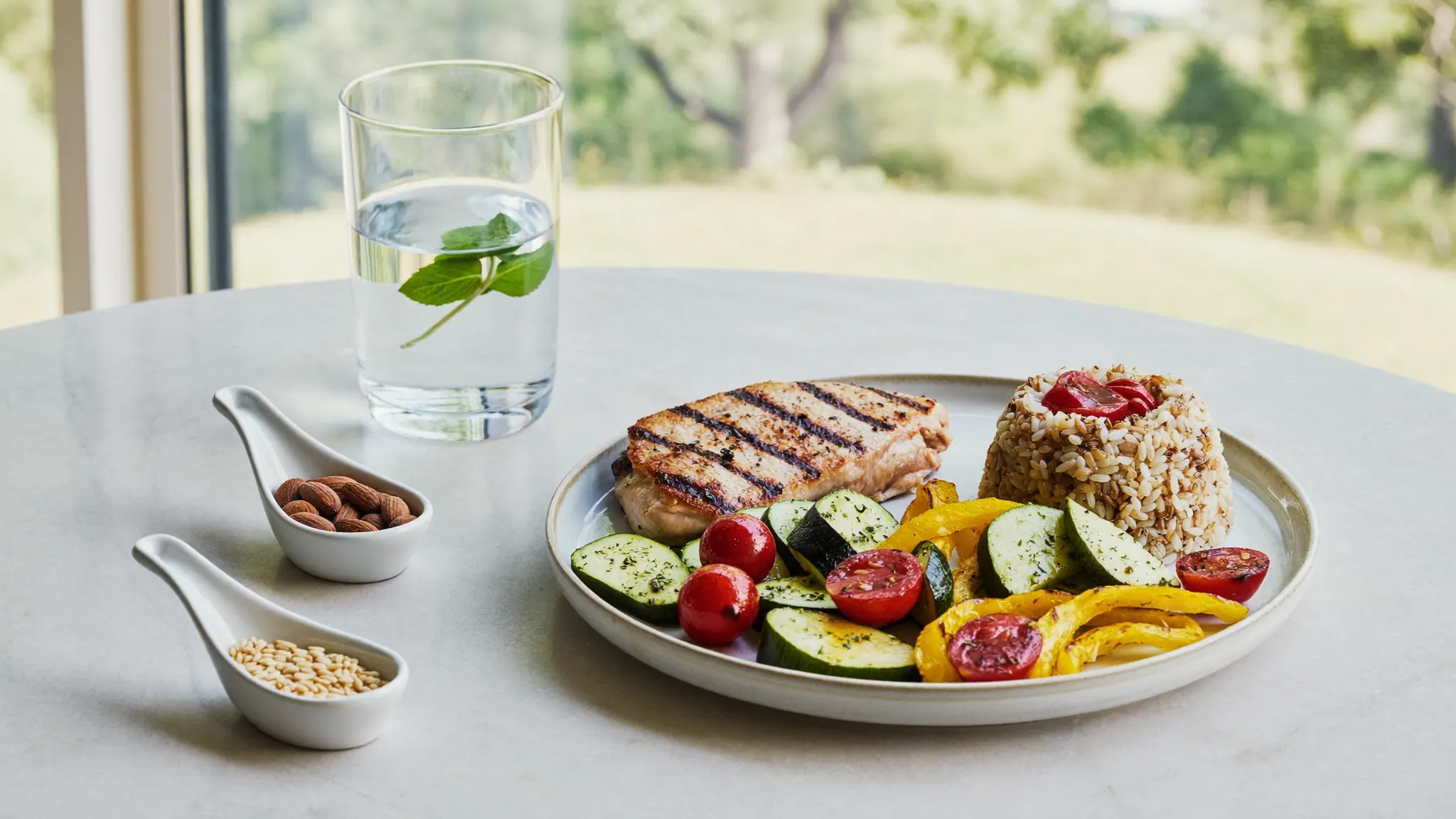
- Grilled before fried. The gap often shows in the menu number itself; compare.
- Sauce on the side. You control the amount instead of receiving it drowned.
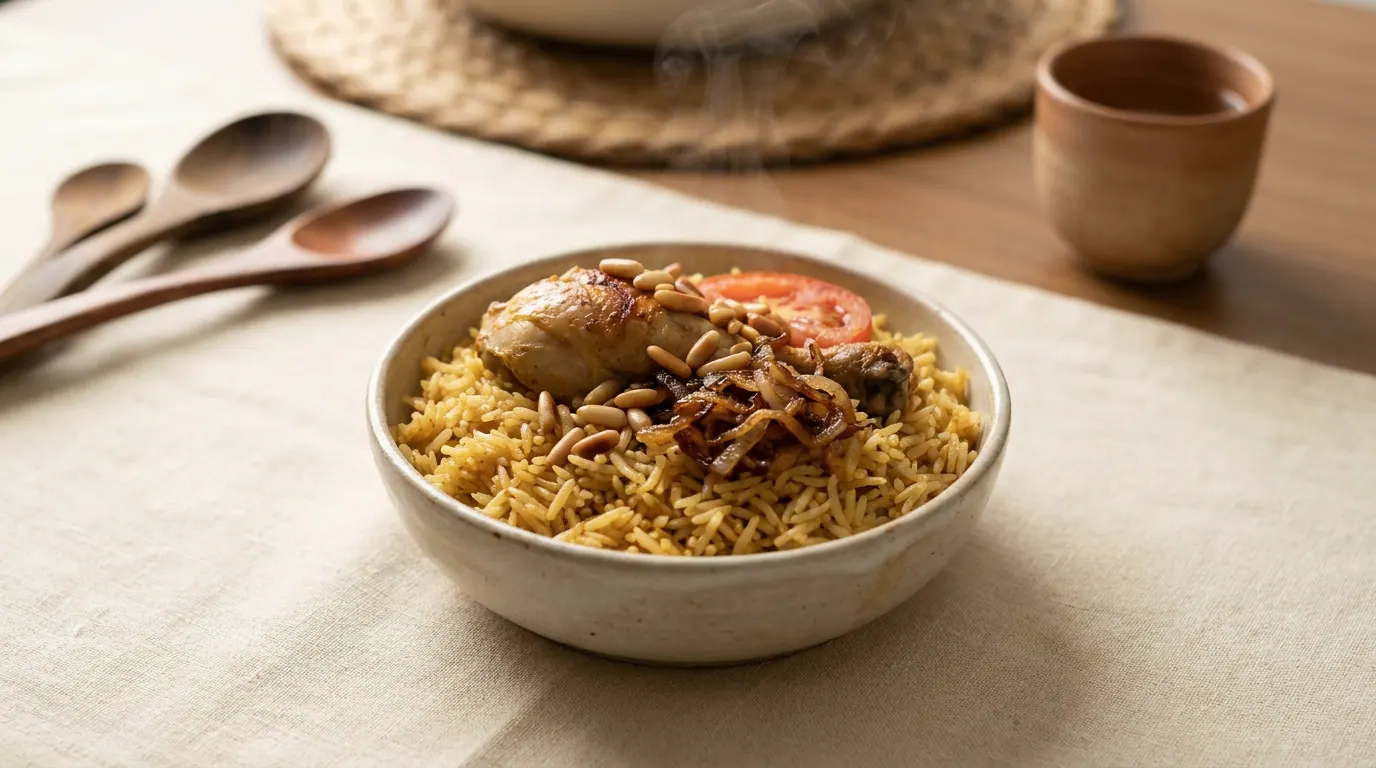
- Large platters are for sharing. A family kabsa or mandi platter is split, and half a portion keeps for another meal. Kabsa numbers are in our kabsa article.
- Look for the salt icon. If it's on your dish, go easy on salt for the rest of the day.
- Check the app against the restaurant. If the number is missing in the delivery app, look for it on the restaurant's website or menu.
Frequently asked questions
Is calorie labelling mandatory in Saudi restaurants?
What does the salt icon on a menu mean?
How much caffeine suits my day?
Are restaurant calorie numbers accurate?
How can I order a lighter meal without feeling deprived?
Your next step with EEINA
The EEINA app
Log your restaurant meal as you ordered it, and see where it sits in your day's calories and macros instantly.
Start free →How many calories do you need?
Work out your daily needs and build a measured deficit without deprivation.
Read →Calorie calculator
Know your day's number before you read the menu's.
Try it →