Arabic Coffee: A Ritual of Hospitality Before It's a Drink
In our homes, coffee isn't just a quick drink; it's a moment dedicated to the guest. The dallah is raised with the right hand, the cup is half-filled as a sign of honor and an invitation for more, and this continues as long as the guest gently shakes their cup. This ritual is part of our identity, so much so that the heritage associated with Arabic coffee is internationally recognized as a symbol of generosity.
However, this very ritual is the source of health confusion: the cup is small, making it seem innocent, but repeating it in a long gathering quickly accumulates caffeine that's hard to estimate. The practical message from the start: don't count the cups, but rather calculate your total daily caffeine intake. When you understand the gathering from this perspective, you can enjoy your habit without slipping into excess.
What's in an Arabic Coffee Cup?
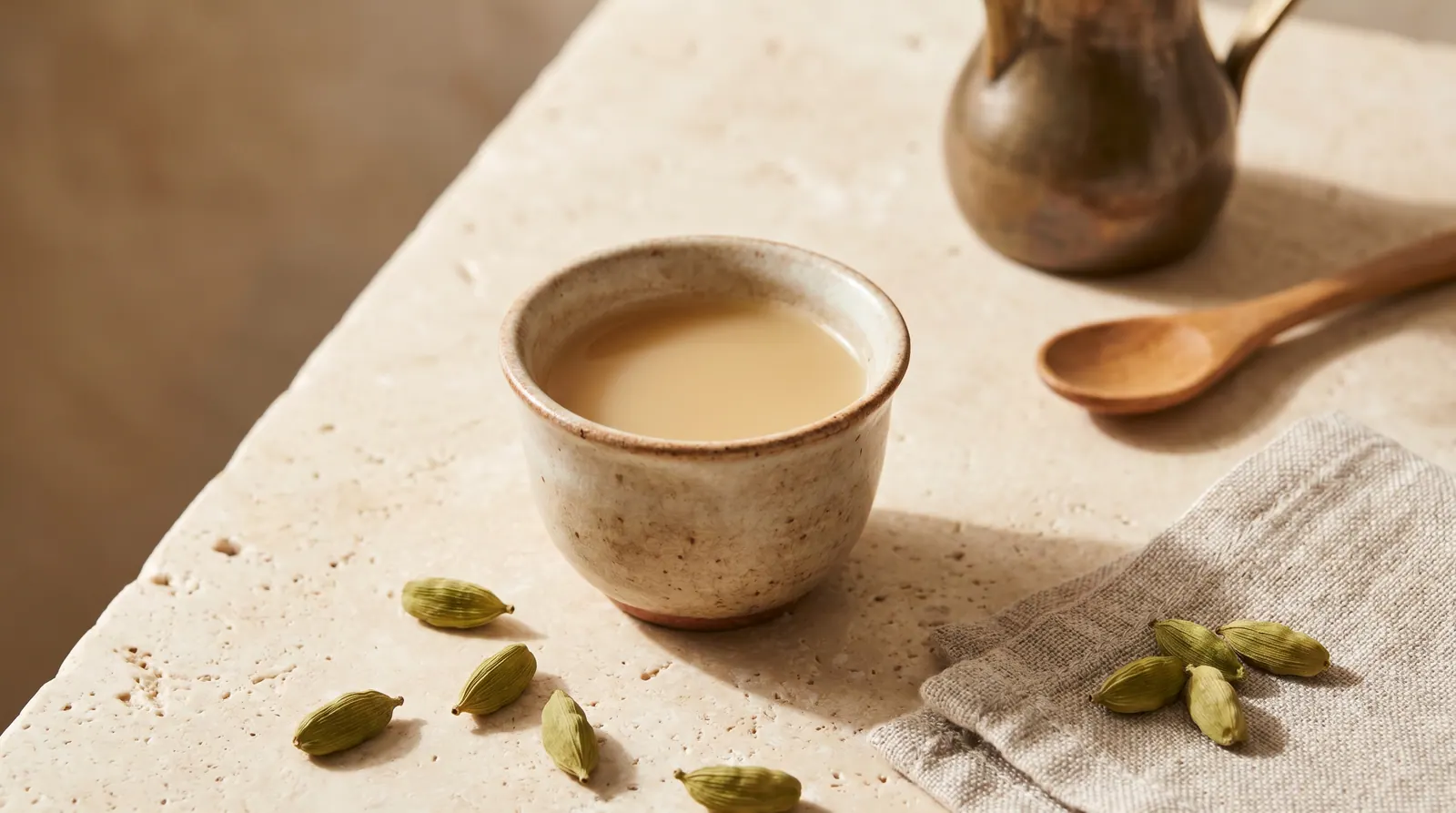
Arabic coffee is often light-roasted, retaining a golden color and a less bitter taste than dark espresso. It's ground and boiled with water without heavy filtration. Then, generous amounts of cardamom are added, and sometimes saffron, cloves, or a little ginger, giving it its distinctive aromatic flavor, typically without sugar.
The most prominent active ingredient is caffeine from the beans. Cardamom and saffron are more about flavor and tradition than proven health elements, as we'll detail later. Practically speaking: the value of your cup lies in its moderation and purity from sugar, not in the promises of spices. Keep the coffee as it is, aromatic without added sweetness, as this is closer to its spirit and better for your health.
Caffeine and Safe Limits — Calculate in Milligrams, Not Cups
For healthy adults, regulatory bodies suggest that around 400 mg of caffeine daily is not a cause for concern, which is approximately four to five standard cups of coffee. A single dose exceeding 200 mg may cause concern. A standard 240 ml cup contains about 80 to 100 mg of caffeine.
Here lies the confusion with Arabic coffee: its cup is small, so it might contain less caffeine than a full mug. However, repeating it in a gathering quickly accumulates the total amount. The practical rule: don't be reassured by the small cup size; estimate your total daily caffeine from all sources, including coffee, tea, and energy drinks. If you drink a lot and sleep poorly or feel palpitations and nervousness, this is a sign you've exceeded your personal limit, regardless of general numbers.
Is Your Relationship with Coffee Balanced? — A Self-Check
This is a guiding self-assessment that combines indicators of potential excess and non-specific symptoms. It does not replace a doctor's evaluation. Select what applies to you:
What Do Studies Really Say About Coffee and Health?
The most extensive overview of the evidence is a umbrella review published in the BMJ, which compiled hundreds of meta-analyses. It concluded that drinking three to four cups daily was associated with a lower risk of all-cause mortality and heart disease compared to non-drinkers, with the greatest relative risk reduction at around three cups. Coffee has also been linked to a lower risk of type 2 diabetes, chronic liver diseases, liver cirrhosis, and some cancers.
However, pay attention to the most crucial point in this article: this is observational data, noting an association between moderate coffee drinkers and better health, but it does not prove that coffee is the cause. Moderate coffee drinkers might have healthier habits in other areas, or hidden factors might be at play. Therefore, the authors themselves concluded that moderate coffee consumption is "more likely to benefit health than to harm it," with exceptions for pregnancy and women at risk of fractures. The practical takeaway: don't drink coffee as medicine, and don't avoid it out of fear. Treat it as a neutral to beneficial habit as long as it's moderate and pure from sugar.
The Other Side — When Coffee Becomes a Burden
Moderation is key to all the above. When it's broken, real problems emerge. Excessive caffeine can cause nervousness, anxiety, palpitations, tremors, and insomnia, especially with large single doses. And evening coffee can delay sleep and shorten its duration.
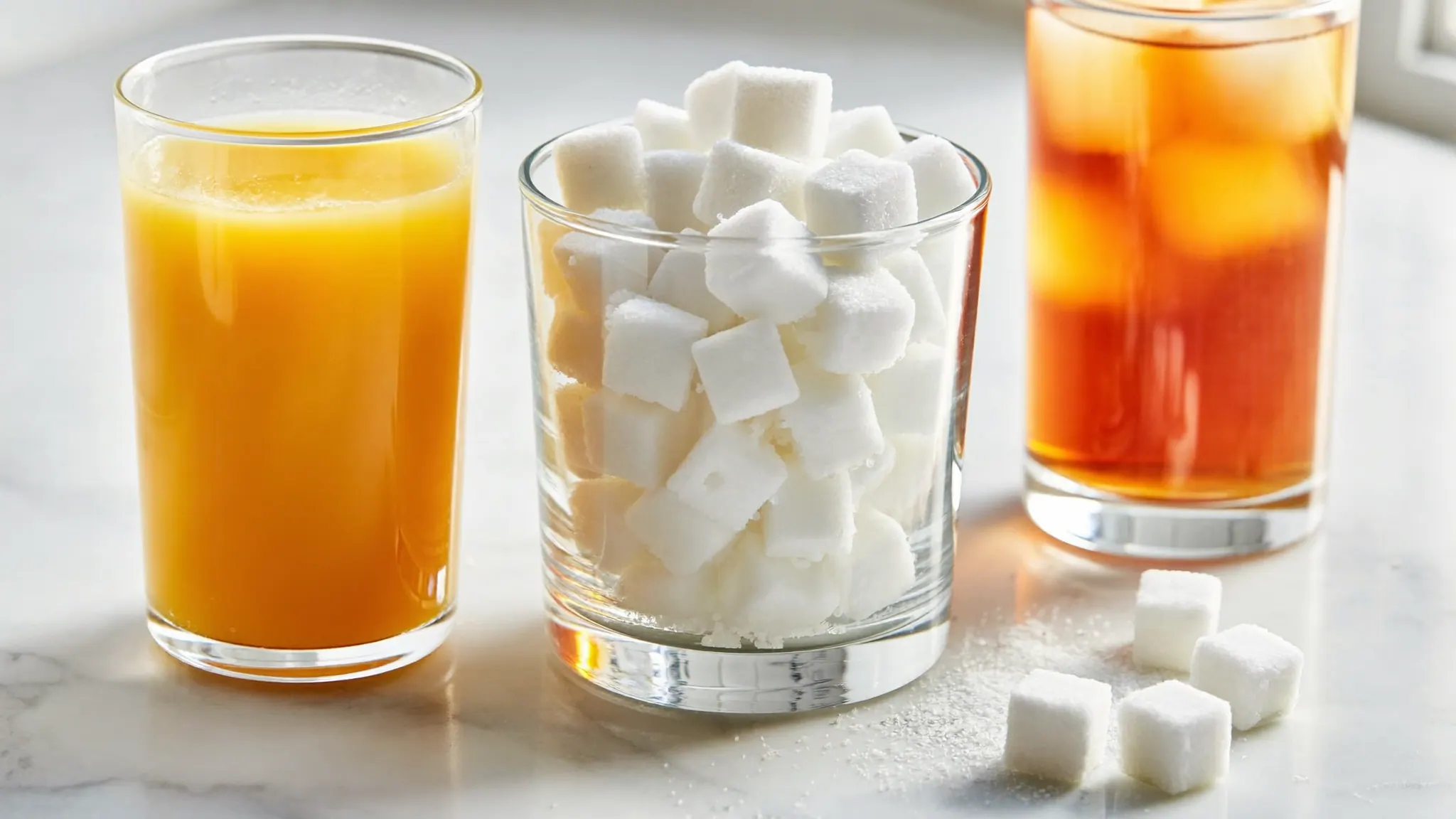
However, the biggest pitfall in our context is often not the coffee itself, but what accompanies it: added sugar, rich sweets, and excessive dates at every gathering. A pure cup has almost no calories, but a gathering with sweetened coffee, pastries, and kunafa can tip the balance from well-being to burden. Practically: keep your coffee aromatic without added sugar, and make accompanying treats moderate, as the problem is often with the table, not the cup.

Coffee and Sleep — The Last Cup Makes a Difference
Caffeine is a stimulant that lingers in the body for hours. Doses close to bedtime can prolong the time it takes to fall asleep and shorten sleep duration for many. This applies not only to coffee but to all sources of caffeine, including tea and energy drinks.
Practically: if you sleep poorly, try stopping caffeine after mid-afternoon for a week and observe the difference. Make your coffee a morning and late morning pleasure, not an evening companion. Remember that evening coffee combines two harms for those who sleep poorly: it delays their sleep and may increase their nighttime restlessness. Sleep is an integrated system affected by caffeine, screens, and regular schedules, so manage them all, not just caffeine.

Coffee and Iron — Separate It from Meals
Coffee contains polyphenols that form a compound with non-heme iron, which is iron from plant sources, thus reducing its absorption when consumed with a meal. A human study found that beverages rich in polyphenols reduced iron absorption from a bread meal by approximately 50% to 90%, depending on their concentration.
This effect applies to plant-based iron, not iron from meat, and only occurs when coffee is consumed concurrently with a meal. The practical rule is simple: separate coffee from your main meal by at least an hour, especially if you have iron deficiency, anemia, or rely on plant-based iron sources like legumes and leafy greens. For those with adequate iron stores and a balanced diet, the effect is less significant.
Coffee and Dates — The Council's Companion and Its Hidden Sugar
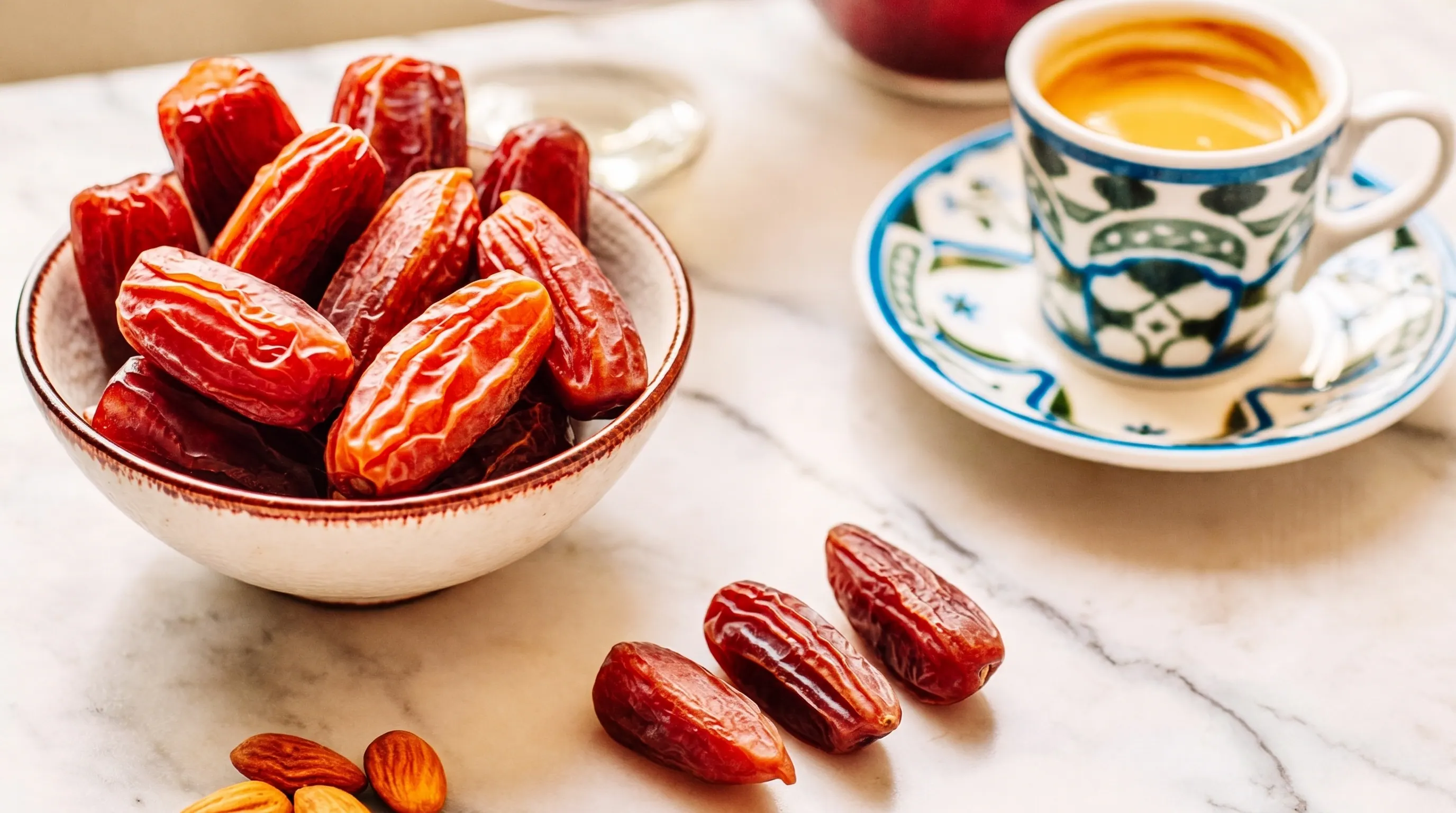
Dates are the authentic companion to coffee in our gatherings, and they are a good food rich in fiber and minerals. However, a long council can turn a pleasant handful of dates into a large quantity without notice, especially with repeated coffee servings. Dates contain natural sugars, but they are still sugars that add calories and can raise blood sugar if consumed excessively.
Practically: enjoy dates with your coffee, but with calculation. One to three dates with your cup is a pleasant treat and a gentle energy boost. However, unconscious overconsumption during a long gathering becomes a source of hidden calories and sugar. The rule: make dates with coffee a calculated pleasure, not an open habit, so they remain a good companion, not a burden.

Cardamom and Saffron — Flavor and Tradition, with Limited Evidence
Many ask about the health benefits of cardamom and saffron. The honest answer is: the evidence is preliminary and limited, not sufficient for therapeutic claims. For cardamom, a meta-analysis of small trials hinted at a potential effect on blood pressure and some inflammation markers, but the authors themselves cautioned about the low number of studies and that most were conducted in a single country, limiting generalizability.
For saffron, a large meta-analysis found indications of a slight reduction in some fats, sugar, and systolic blood pressure, but the authors classified the quality of evidence as "very low" for most results, with significant variability between studies. The practical conclusion: consider cardamom and saffron as aromatic flavors and beautiful traditions that enrich your cup, not as medicine. Do not add expensive saffron for therapeutic purposes, nor exaggerate quantities in search of a benefit not yet proven.
Who Should Cut Back on Coffee?
Moderate coffee is safe for most healthy adults, but certain conditions require reduction or caution and consultation with a doctor: pregnant and breastfeeding women, as the recommended limit during pregnancy is less than 200 mg of caffeine daily. Also, individuals with anxiety, sleep disorders, palpitations, acid reflux, iron deficiency, or those taking medications that may interact with caffeine.
The practical rule: if you fall into these categories, it doesn't necessarily mean complete avoidance, but rather moderation and consultation. Reduce the quantity, avoid evening consumption, and follow up with your doctor if you have a chronic condition or are pregnant. Conscious moderation allows you to enjoy your habit without risking it.
Five Common Coffee Myths
Half-truths about coffee abound, exaggerating harm or benefit. Here are the most common ones, and what the evidence says:
"Coffee is proven to extend life and protect your heart."
"Since coffee is beneficial, drinking more is better."
"An Arabic coffee cup is small, so its caffeine content doesn't count."
"Cardamom and saffron in coffee are proven natural remedies."
"Coffee with meals has no effect."
Practical Tips to Implement Today
Before diving into the full protocol, here are small guidelines from the core message, helping you enjoy your coffee and maintain your well-being without turning your habit into a burden:
- Calculate by caffeine, not cups. Estimate your total daily caffeine from coffee, tea, and energy drinks, aiming for around 400 mg or less for a healthy adult. Small, repeated cups add up more than you think.
- Keep it aromatic, not sweet. Arabic coffee is traditionally unsweetened. Keep it that way, as the problem often lies with the sugar and accompanying sweets, not the coffee itself.
- Stop caffeine after mid-afternoon. Make your coffee a morning and late morning pleasure. Evening coffee delays sleep and increases restlessness if you are sensitive to caffeine.
- Separate coffee from iron-rich meals. Drink it at least an hour before or after your meal, especially if you have iron deficiency and rely on plant-based sources like legumes and leafy greens.
- Be mindful of council dates. Enjoy one to three dates with your cup, and avoid unconscious overconsumption during long gatherings. Dates contain natural sugar, but it accumulates.
- Listen to your body. If you experience palpitations, nervousness, tremors, or heartburn after coffee, it's a sign to reduce your intake, as caffeine sensitivity varies from person to person.
- Reduce if pregnant or have a condition. The limit during pregnancy is less than 200 mg daily. Those with anxiety, reflux, chronic conditions, or on medication should consult their doctor before relying on coffee.
- Don't drink coffee instead of sleep. Coffee provides temporary alertness but doesn't replace lost sleep. Fix your sleep first and make coffee a pleasure, not a crutch.
EEINA's Protocol for Coffee That Honors Hospitality and Well-being
A practical plan combining the above into three progressive layers. Start layer by layer and note your response to find what works best for you.
This protocol is based on safe caffeine limits, observational evidence on coffee, and practical guidelines for sleep and iron.
Adjust Your Daily Amount
Four essential habits.
Adjust Your Clock
Steps to protect sleep and iron.
Consider Yourself Under Supervision
For those who need caution.
The Golden Rule: Coffee is not judged by a cup, but by your entire day, its timing, and what accompanies it. Adjust the quantity, the hour, and the sugar, and your habit will remain a source of well-being, honoring your guest and yourself.
Frequently Asked Questions
How many cups of coffee are safe per day?
Is coffee really beneficial for the heart?
How much caffeine is allowed during pregnancy?
Does coffee reduce iron absorption?
Do cardamom and saffron have proven health benefits?
When to Consult a Doctor — Red Flags
Moderate coffee is safe for most healthy individuals, but certain symptoms go beyond that and require immediate medical evaluation:
- Severe palpitations or irregular heartbeats that recur with or without coffee warrant evaluation.
- Chest pain, shortness of breath, or dizziness after consuming caffeine; stop and consult a doctor immediately.
- Severe anxiety or panic attacks linked to caffeine that do not subside with reduction.
- Chronic persistent insomnia despite stopping caffeine after mid-afternoon and regulating sleep routines.
- Iron deficiency or anemia with consistent coffee consumption with meals requires evaluation and adjustment.
- Pregnancy, breastfeeding, chronic conditions, or chronic medication before relying on coffee in moderate amounts.
Start Your Next Step with EEINA
Balanced Meal Plans
Saudi recipes that maintain your daily balance, making coffee and dates a calculated pleasure, not hidden sugar.
Get Your Plan →Moderate Hospitality Recipes
Lighter sugar dessert and hospitality dish ideas suitable for coffee gatherings without unbalancing your diet.
Try Them →EEINA App
Tracks your daily sugar intake and what accompanies your coffee, like dates and sweets, reminding you of moderation and timing.
Download →