
The Number at a Glance
For a traditional chicken Kabsa dish—1 cup cooked Basmati rice, 150g chicken with skin, 1 tbsp ghee, onion, tomato paste, and complete Kabsa spices—these are the numbers:
| Nutrient | Amount | Daily Value Percentage |
|---|---|---|
| Calories | 510 calories | 25% of 2,000 calories/day |
| Protein | 28 g | 56% of 50 g |
| Carbohydrates | 46 g | 15% of 300 g |
| Fat | 22 g | 34% of 65 g |
| Glycemic Index (GI) | 42 | Low (safe for diabetics within studied limits) |
The number is calculated from the USDA database + University of Sydney GI database, calibrated to the Saudi Healthy Plate 2024 proportions. This is not an estimation.
Where the Number Comes From
Each ingredient contributes its share. Here's the honest breakdown:
1 cup cooked Basmati rice. It accounts for 205 calories. It's the "dominant" component in terms of calories, but it's not the sole factor driving sugar levels as high as you might think. Basmati rice is long-grained, and its starch digests more slowly than short-grain Egyptian rice. Therefore, its individual glycemic index is 58—medium, not high.
150g chicken with skin. 210 calories. It provides 25g of protein and 12g of fat from the skin. This is where the "protection" happens—the fat and protein slow down the sugar spike after eating, which is what lowers the overall dish's GI to 42, even with rice at 58.
1 tbsp ghee. 45 calories. Small, but calorie-dense—adding more flavor than nutrition.
Complete Kabsa spices (cardamom, cinnamon, dried lime, black pepper, ginger). Minimal calories—around 5. However, they contain compounds that aid digestion. Ginger and cinnamon, in particular, have a slight effect on blood sugar stability, studied in several scientific reviews.
Onion and tomato paste. 45 calories. For seasoning and a small source of fiber in the dish.
Total: 510 calories. With a variation of ±40 calories depending on the amount of ghee and the size of the chicken.
Source: USDA FoodData Central · Quantities calibrated according to Saudi Healthy Plate 2024.
Why a GI of 42—Even Though Rice Alone is 58
This is the understanding most articles miss.
The glycemic index of individual foods differs from the glycemic index of a complete meal. When you eat rice alone, the starch enters the bloodstream quickly. But when you eat it with protein and fat—like chicken and ghee—the digestion process slows down, and the sugar from carbohydrates is released gradually.
The difference isn't theoretical. Measurements in published scientific studies[3] show that the same amount of carbohydrates produces 20-30% less blood sugar increase when eaten with protein and fat.
Three Modifications That Keep the Taste and Improve the Number
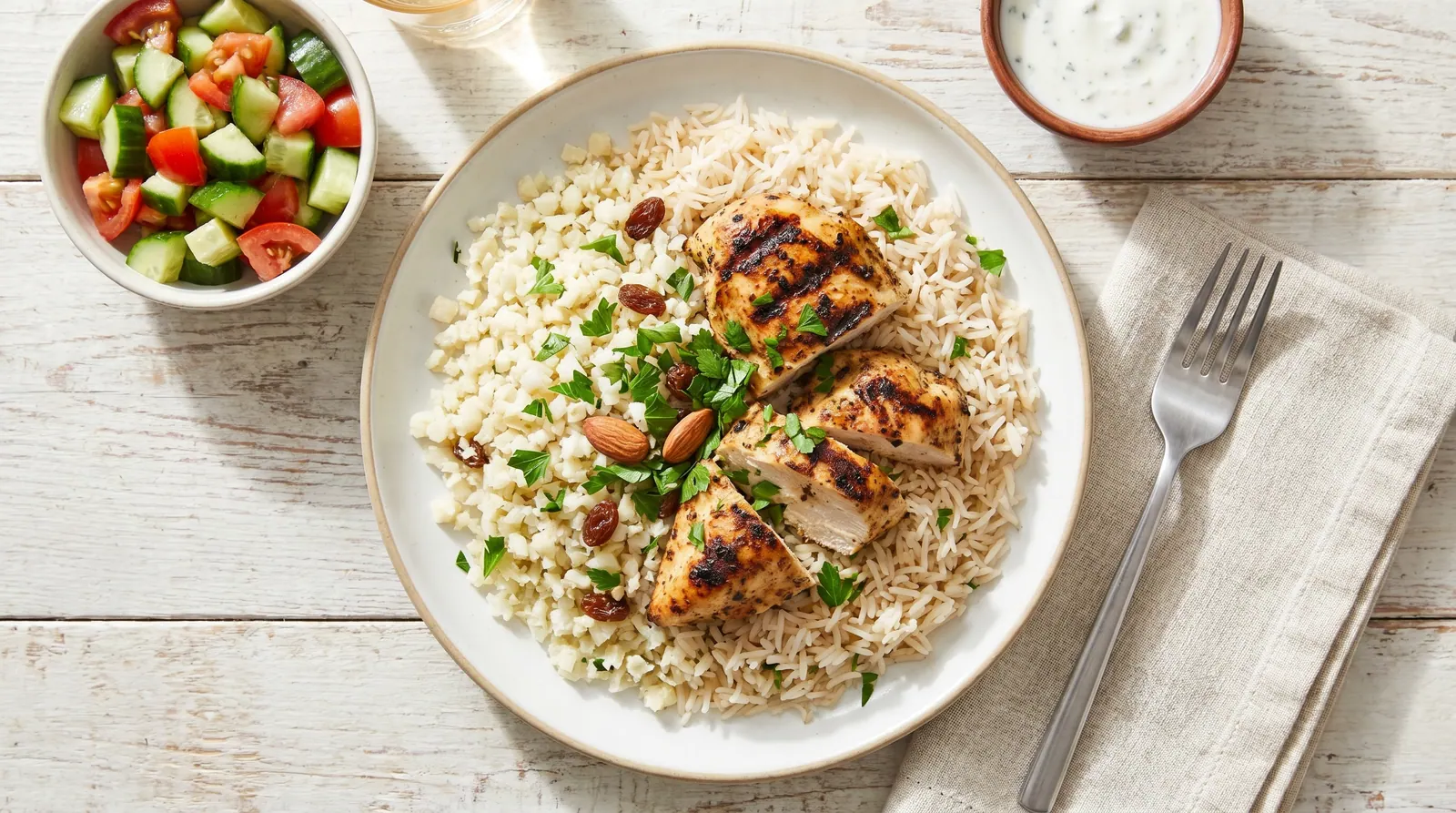
Modification doesn't mean giving up. Kabsa with its taste is still Kabsa. But three small adjustments can reduce calories by 30% and GI by 20%:
First: Remove the Skin Before Cooking
The chicken remains tender, saving 60 calories and 3 grams of saturated fat. The skin is for flavor, not the dish itself.
Second: Replace One-Third of the Rice with Grated Cauliflower
Steam it with the onions and mix it with the rice before serving. You'll barely notice it in taste, and it reduces calories from 205 to 135, and carbohydrates from 46 to 31 grams.
Third: Spices First, Ghee Last
Instead of 1 tbsp of ghee, use half a tbsp + a quarter cup of chicken broth. The flavor remains, but fat is reduced by 10 grams.
Diabetic Patient and Kabsa: Where's the Limit
Prohibition isn't a sustainable strategy. Complete abstinence can lead to cravings.
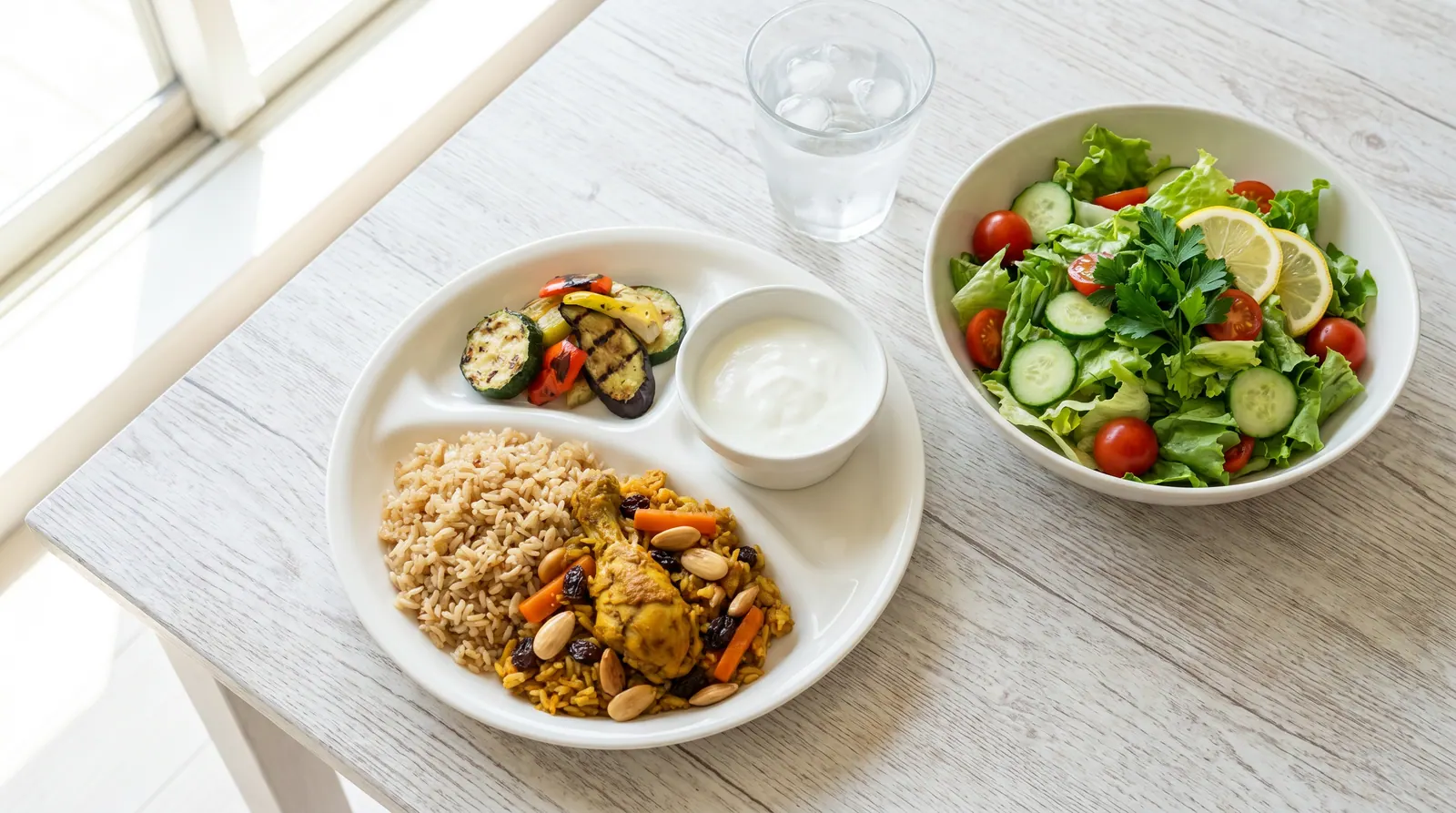
Portion control is the golden rule:
- 1 cup of rice (not a large plate) = a reasonable carbohydrate portion (46g).
- 150g of chicken = a protein portion that stabilizes blood sugar.
- A large salad before Kabsa = 5g of fiber that slows sugar absorption by 25%.
- A glass of water before eating = an earlier feeling of fullness, leading to eating less automatically.
With these four steps, a diabetic patient can eat Kabsa safely. Blood sugar levels measured two hours after eating should remain below 180 mg/dL in well-managed cases.
Kabsa on the Scale: A Final Thought
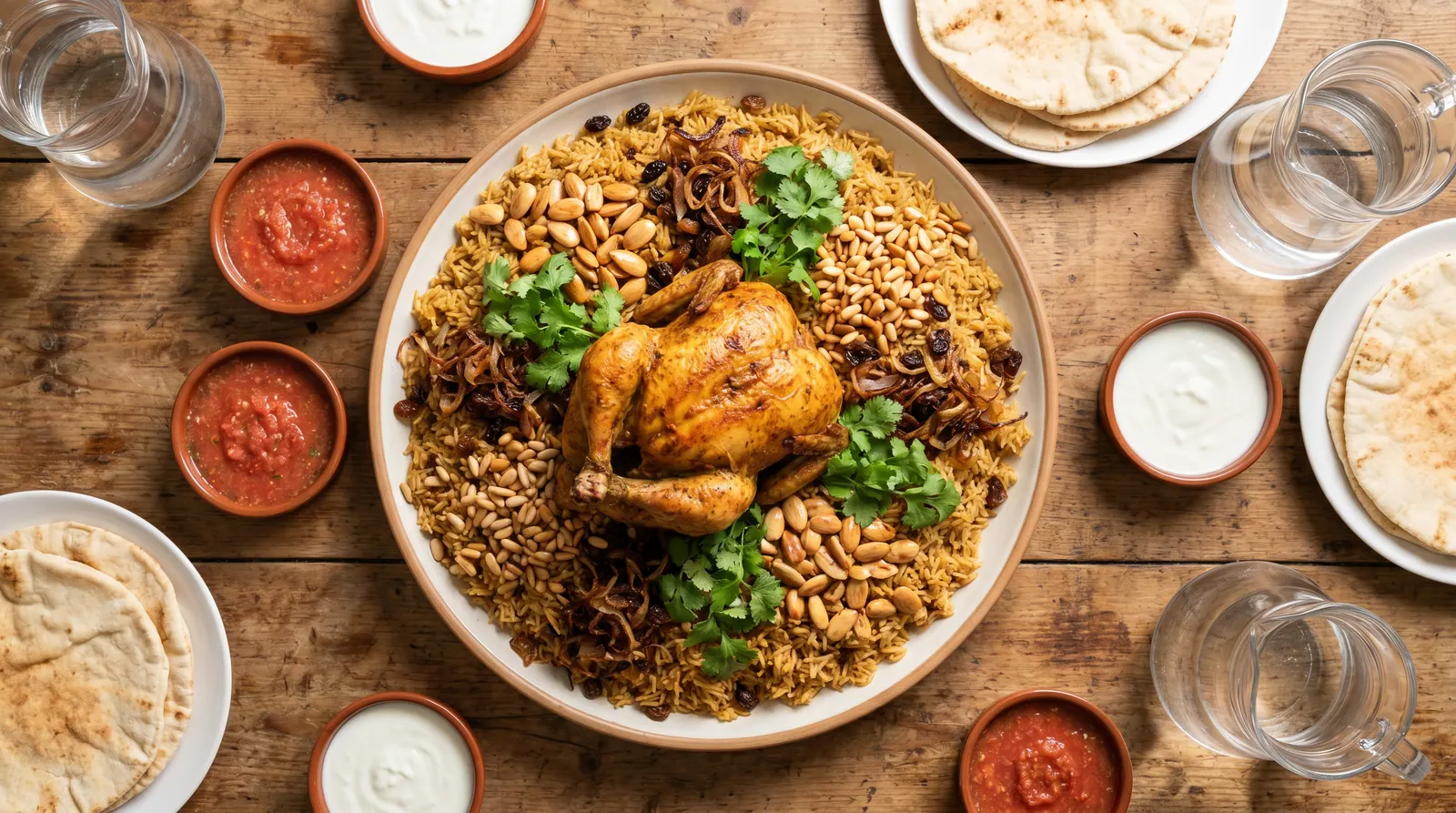
We don't eat calories; we eat memories. Kabsa comes with family gatherings, celebrations, and the mother who stirred it with her own hands. Calculation doesn't erase memory, but it adds awareness.
The 510 calories aren't a 'to eat or not to eat' decision. They are a 'how much and when' decision. Kabsa, after reading this, can be eaten with the same taste—but with more knowledge.
Every Favorite Dish Has a Number
Calculate the GI and calories for 30+ Saudi recipes calculated with the same methodology. Or start a planned weekly meal plan.