On cold winter mornings, many of us long for a warm bowl of grains to bring comfort — but anyone on a renal diet finds most warm breakfasts loaded with milk, oats, or banana, all rich in phosphorus or potassium.
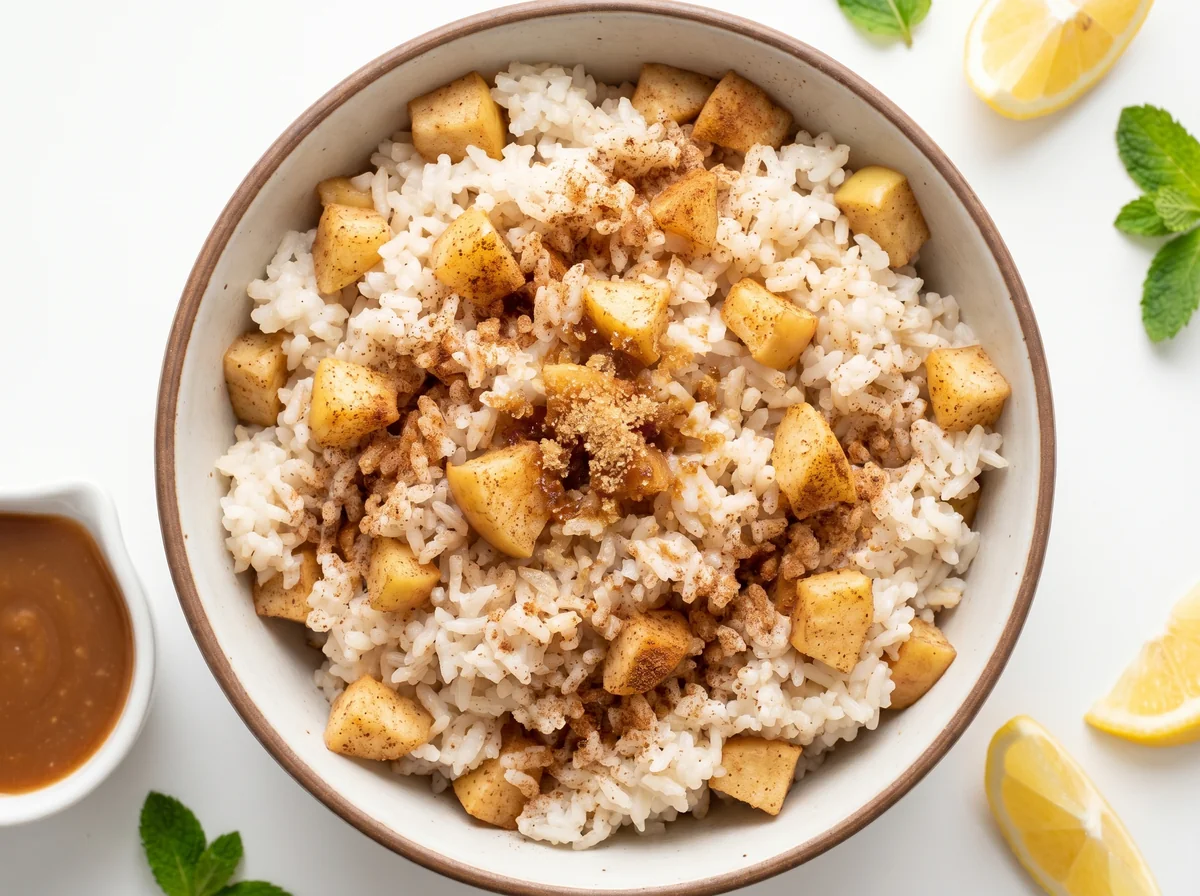
This dish was born to fill that gap: simple white rice cooked until tender, folded with lightly cooked apple and cinnamon.
Preparation Steps
Rinse the rice
Rinse the white rice under cold running water, rubbing it gently until the water runs clear and the surface starch is gone, about a minute. Repeated rinsing loosens the grains so they do not clump after cooking.
Cook the rice
Put the drained rice with 420 ml water and a light pinch of salt in a pot, bring it to a boil over medium heat, then lower the heat to gentle, cover the pot, and leave it for 18 minutes until all the water is absorbed and the grain is tender without turning mushy. Do not stir while it cooks, so the grains stay separate.
Soften the apple
In a separate skillet, put the apple cubes with 60 ml water, the cinnamon, and the lemon zest over medium heat for 6 to 8 minutes until the apple softens but keeps its shape (a fork slides in easily without it falling apart). The short cooking preserves the apple's natural sweetness with no need for added sugar.
Combine and serve
Turn off the heat under the apple, add the lemon juice and olive oil, and stir. Then fold the cooked rice gently over the apple until the mixture comes together and takes on the cinnamon's color. Serve it warm right away in bowls — the dish is at its best hot, when the cinnamon's aroma mingles with the warmth of the rice.
Blood Sugar Impact
The glycemic index (GI) measures how quickly a food raises blood sugar, while the glycemic load (GL) measures how much a full serving raises it. Together they give the complete picture.
Glycemic Index
GI
67Medium
Low0–55Medium56–69High70+
A low value (≤55) means a gradual rise in blood sugar — the most suitable range for diabetes and insulin resistance.
Glycemic Load
GL
38High
Low0–10Medium11–19High20+
Glycemic load reflects the impact of the full serving. To lower it: take half a serving, or pair the recipe with a source of protein and fiber.
Nutritional Information
Per ServingMakes 3 servings · one serving is about 300 g of raw ingredients
Calories295 kcal15%of Daily Value*
Protein4 g8%of Daily Value*
Carbohydrates58 g21%of Daily Value*
Fat5 g6%of Daily Value*
Fiber2 g7%of Daily Value*
Sodium263 mg11%of Daily Value*
Potassium158 mg3%of Daily Value*
Phosphorus78 mg6%of Daily Value*
* Percent Daily Values are based on a 2,000-calorie diet per FDA food-label reference values — your daily needs may be higher or lower. Values are derived from the recipe's ingredients via the USDA database.
Troubleshooting
The most common problems when preparing Warm White Rice with Apple and Cinnamon, and how to fix them:
The rice clumped into a sticky mass
The rice was not rinsed enough, or it was stirred while cooking. Rinse it until the water runs completely clear before cooking, do not stir it on the heat, and keep the lid closed for the whole cooking time.
The apple fell apart into a sauce
It cooked longer than needed, or was cut too small. Cut it into cubes about 1 cm and stop at six to eight minutes so it softens while keeping its shape.
The dish tastes flat despite the cinnamon
Usually a lack of acidity. Add the lemon juice after turning off the heat, not before — the fresh acidity lifts the flavor of the cinnamon and apple and makes up for the salt.
The rice stayed raw inside
The water evaporated before the grain cooked, because of high heat or a loose lid. Add two tablespoons of hot water, cover the pot tightly, and leave it over very low heat for five more minutes.
The dish dried out and stiffened soon after serving
White rice absorbs moisture quickly as it cools. Serve it the moment it is made, or add a splash of warm water and fold it gently before serving to bring back the softness.
Storage and Make-Ahead
Refrigerator
Keep it in an airtight container and refrigerate within two hours of cooking; it stays good for up to 3 days, following the USDA two-hour rule to avoid bacterial growth.
Reheating
Reheat with a splash of warm water over low heat or in the microwave with stirring, until it is hot all the way through. Do not reheat more than once.
Freezing
It can be frozen in an airtight container for up to a month, but the texture of the apple and rice softens a little after thawing. Thaw it overnight in the fridge before reheating.
Best timing
The dish is at its peak warm and fresh; cinnamon and apple lose some of their charm in storage, so make a day's amount fresh whenever you can.
Tested Ingredient Substitutions
Original Ingredient
Tested Substitute
Ratio
Flavor Difference
Green apple
Red apple or peeled pear
1:1
Both are relatively low-potassium fruits suited to a moderate renal diet; the red apple is sweeter, so it eases any need for sweetening.
Ground cinnamon
A whole cinnamon stick, removed before serving
One teaspoon of ground equals one stick
The stick gives a smoother, less dusty flavor and is taken out before serving. Both are free of added sodium and phosphorus.
Long-grain white rice
Short-grain white rice or small-cut white pasta
1:1 by weight
Both are low in phosphorus and potassium compared with whole grains; avoid brown rice on a renal diet because of its higher phosphorus.
Olive oil
Canola or sunflower oil
1:1
Neutral vegetable oils free of sodium and phosphorus; they add smoothness to the texture without affecting the dish's minerals.
Lemon juice
Mild apple cider vinegar
Half the amount
An acidic alternative that lifts the flavor without sodium; start with a small amount, as its tartness is stronger than lemon.
How Much Does It Make? Scaling Guide
Ingredient
3 servings
6 servings
9 servings
White rice
180 g
360 g
540 g
Cooking water
420 ml
840 ml
1260 ml
Green apple
200 g
400 g
600 g
Ground cinnamon
1 tsp
2 tsp
3 tsp
Lemon juice
1 tbsp
2 tbsp
3 tbsp
EEINA Nutrition Tip
If you want to lower potassium further, soak the rice in plenty of water for ten minutes before cooking, discard the soaking water, and cook it in fresh water; this dissolves some of the potassium into the water, which is then poured off. Keep the salt to a minimum and replace it with cinnamon and lemon zest, which give a clear flavor without sodium.
Add This Recipe to Your Plan
The EEINA app saves your favorite recipes, calculates them from their real ingredients, and shows your daily numbers toward your goal. Try it free now.
Its ingredients are chosen to be low in sodium, potassium, and phosphorus — minerals many kidney patients are asked to control. But needs differ from one patient to another by disease stage and whether they are on dialysis; so consult your nephrologist and renal dietitian to set your suitable portion of carbohydrates, protein, and minerals.
Why white rice and not brown, when brown is generally healthier?
On a renal diet specifically, white is preferred because brown rice keeps its bran, which is rich in phosphorus and potassium — two minerals many kidney patients need to reduce. The general rule 'whole is better' does not apply here, and the priority is controlling minerals.
Do I need sugar to sweeten it?
No. The sweetness of the cooked apple with cinnamon is enough to give the dish a gentle sweet taste with no added sugar. If you want it sweeter, add a little more apple instead of sugar.
How do I lower potassium further if my doctor asks?
Soak the rice for ten minutes in plenty of water before cooking, discard the soaking water, and cook it in fresh water; this dissolves part of the potassium. And stick to the portion size your renal dietitian sets.
Is this dish suitable for someone on dialysis?
It may be, but dialysis patients often need higher protein and a different balance of fluids and minerals. Do not adopt it as a fixed meal before checking with your nephrologist and renal dietitian to fit it to your treatment plan.