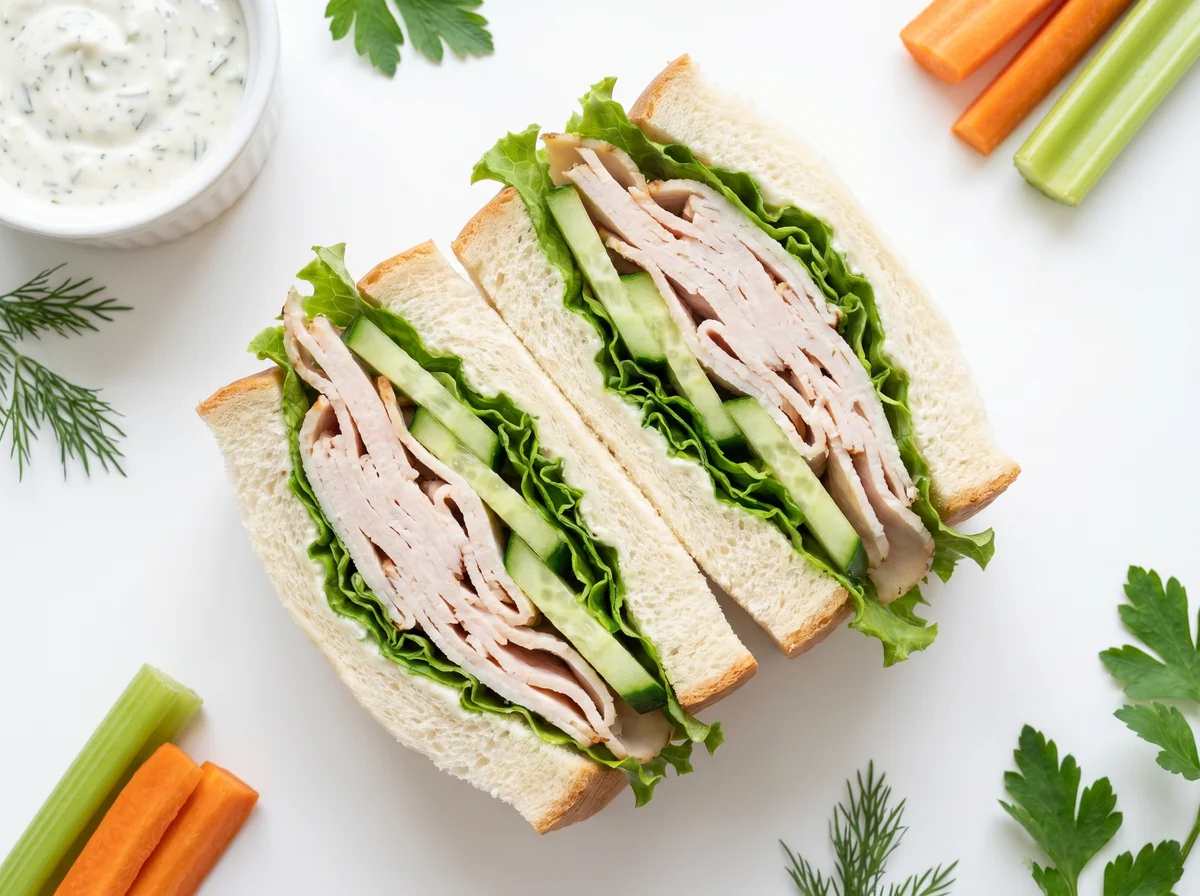
Ready-made wraps with packaged turkey cold cuts have become a tempting quick choice, but those processed cold cuts are loaded with salt and added phosphate salts that burden the kidneys.
Here we return to the source: fresh turkey breast we cook ourselves and season with lemon and thyme, wrapped with crunchy cucumber, red pepper, and light lettuce in soft white bread. A single lunch that proves a renal diet does not mean giving up the lightness and pleasure of a wrap — it means mastering it from your own kitchen.
Preparation Steps
Marinate the turkey
Rub the turkey breast slices with half the lemon juice, crushed garlic, thyme, and a pinch of black pepper, and let rest for five minutes. The aromatic acidic marinade builds flavor as an alternative to salt — this is the core sodium-reduction strategy for this recipe.
Cook the turkey
Heat half the olive oil in a pan over medium heat and cook the slices for about six to seven minutes per side until the center of the meat reaches 74°C and the juices run clear, not pink. This temperature guarantees poultry safety and eliminates harmful bacteria.
Rest and slice
Transfer the turkey to a board and let it rest for five minutes before slicing into thin strips. Resting before slicing locks the juices inside the meat so it does not dry out.
Prepare the vegetables
Slice the cucumber and red pepper into thin lengthwise strips, slice the onion very thinly, and tear the lettuce with your hands. Cutting the vegetables lengthwise makes rolling the wrap easier and prevents the bread from tearing.
Prepare the sauce
Whisk the remaining olive oil and lemon juice together with the parsley and a pinch of black pepper in a small bowl until combined. This is a light sauce with no dairy product or tahini, keeping the recipe low in phosphorus and potassium.
Wrap and serve
Lay out the wrap bread, distribute the lettuce then the turkey slices, cucumber, pepper, and onion, and drizzle with the sauce. Roll the wrap tightly from the bottom, folding in the sides, cut in half, and serve immediately.
Blood Sugar Impact
The glycemic index (GI) measures how quickly a food raises blood sugar, while the glycemic load (GL) measures how much a full serving raises it. Together they give the complete picture.
Glycemic Index
GI
13Low
Low0–55Medium56–69High70+
A low value (≤55) means a gradual rise in blood sugar — the most suitable range for diabetes and insulin resistance.
Glycemic Load
GL
1Low
Low0–10Medium11–19High20+
Glycemic load reflects the impact of the full serving. To lower it: take half a serving, or pair the recipe with a source of protein and fiber.
Nutritional Information
Per ServingMakes 2 servings · one serving is about 275 g of raw ingredients
Calories236 kcal12%of Daily Value*
Protein31 g62%of Daily Value*
Carbohydrates9 g3%of Daily Value*
Fat8 g10%of Daily Value*
Fiber3 g11%of Daily Value*
Sodium65 mg3%of Daily Value*
* Percent Daily Values are based on a 2,000-calorie diet per FDA food-label reference values — your daily needs may be higher or lower. Values are derived from the recipe's ingredients via the USDA database.
Troubleshooting
The most common problems when preparing Turkey Cucumber White Bread Wrap (Renal Diet), and how to fix them:
Wrap tears when rolling
Do not overfill. Distribute the ingredients in the bottom third of the bread only, and roll tightly while folding in the sides first. Warming the bread for a few seconds on a dry pan makes it more flexible and less likely to crack.
Turkey is dry after cooking
The most common cause is overcooking. Cook only to 74°C, rest for five minutes before slicing, and cut against the grain so the slices stay tender.
Flavor bland due to low salt
Compensate with acidity and aromatics: increase lemon juice, garlic, thyme, parsley, and black pepper. Acid and herbs trick the palate into tasting a full flavor without sodium.
Vegetables make the bread soggy
Dry the cucumber and lettuce leaves thoroughly with a kitchen towel after washing. Use the lettuce leaves as a barrier between the bread and the moist vegetables. Serve the wrap immediately after rolling — do not leave it for hours.
Turkey is pink inside
Return it to the pan over medium heat until the center reaches 74°C and the juices run clear. Using a meat thermometer is the only reliable way to ensure poultry safety.
Storage and Make-Ahead
Cooked turkey
Store in an airtight container in the refrigerator for up to three days at 4°C or below. Refrigerate within two hours of cooking, following the danger zone rule.
Assembled wrap
Best eaten fresh. If storage is necessary, wrap tightly in cling film and refrigerate for up to one day only, as the vegetables will make the bread soggy quickly.
Cut vegetables
Store cucumber, pepper, and lettuce separately in airtight containers in the refrigerator for up to two days. Dry them before cutting to extend their crunch.
Freezing turkey
Cooked turkey slices can be frozen for up to two months in an airtight bag. Thaw in the refrigerator, not at room temperature.
Tested Ingredient Substitutions
Original Ingredient
Tested Substitute
Ratio
Flavor Difference
Turkey breast
Skinless chicken breast
1:1
A safe, approximately equivalent renal alternative. Also cook to 74°C. Avoid pre-seasoned or brine-injected chicken as it raises sodium.
White wrap bread
Thin white Arabic flatbread
one small flatbread in place of two tortillas
Refined white bread is generally preferred in a renal diet for its lower phosphorus and potassium compared to whole grain bread.
Sweet red pepper
Green pepper or thin zucchini slices
1:1
Both are low in potassium and renally suitable. Avoid adding tomatoes as they are high in potassium.
Lemon and olive oil sauce
Light apple cider vinegar with olive oil
1:1
A refreshing acidic alternative with no sodium. Avoid ready-made mayonnaise and canned sauces as they are high in sodium and phosphates.
How Much Does It Make? Scaling Guide
Ingredient
2 servings
4 servings
6 servings
Turkey breast (g)
200
400
600
Wrap bread (piece)
2
4
6
Cucumber (piece)
1
2
3
Red pepper (piece)
0.5
1
1.5
Olive oil (1 tbsp)
1
2
3
Lemon juice (1 tbsp)
1
2
3
EEINA Nutrition Tip
Soaking the cucumber and onion in cold salted water for ten minutes before slicing slightly reduces dissolved potassium content and increases their crunch. Cook an extra turkey piece and refrigerate it so it is ready for tomorrow's wrap — this keeps you away from the temptation of processed cold cuts on busy days.
Add This Recipe to Your Plan
The EEINA app saves your favorite recipes, calculates them from their real ingredients, and shows your daily numbers toward your goal. Try it free now.
Why avoid ready-made turkey cold cuts on a renal diet?
Because they are processed with salt and added phosphate salts as preservatives, and added phosphate is absorbed in the body at a higher rate than natural phosphorus, burdening weakened kidneys. Home-cooked fresh turkey solves this problem. Consult your nephrologist to determine your portion.
Is cucumber safe for kidney patients?
Yes, cucumber is among the relatively low-potassium vegetables and its high water content makes it a gentle choice in a renal diet, especially when peeled. However, the permitted amounts vary by your stage of disease, so follow your dietitian's guidance.
Can I use whole wheat bread instead of white?
In a renal diet, refined white bread is usually preferred because whole grain is higher in phosphorus and potassium. This is the opposite of general advice for non-kidney patients. Check with your doctor about the restrictions specific to your condition.
How do I add flavor without salt?
Rely on acidity and herbs: lemon juice, garlic, thyme, parsley, black pepper, and cumin. These provide depth of flavor without raising sodium, and are the cornerstone of renal cooking.
How much protein is right for me in this meal?
Your protein needs depend on your stage of kidney disease: pre-dialysis patients may need to reduce protein, while dialysis patients may need to increase it. There is no single amount that suits everyone, so adjust the turkey portion according to your renal dietitian's recommendation.