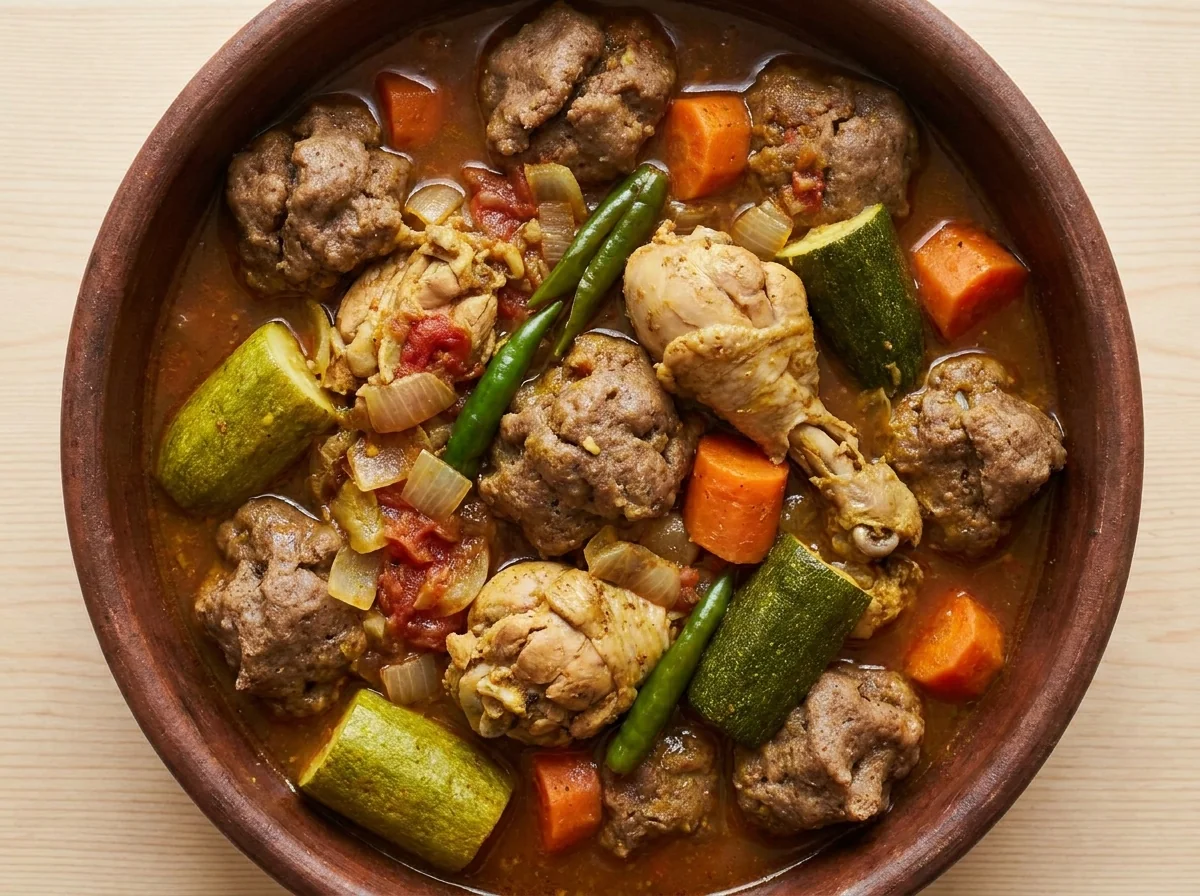
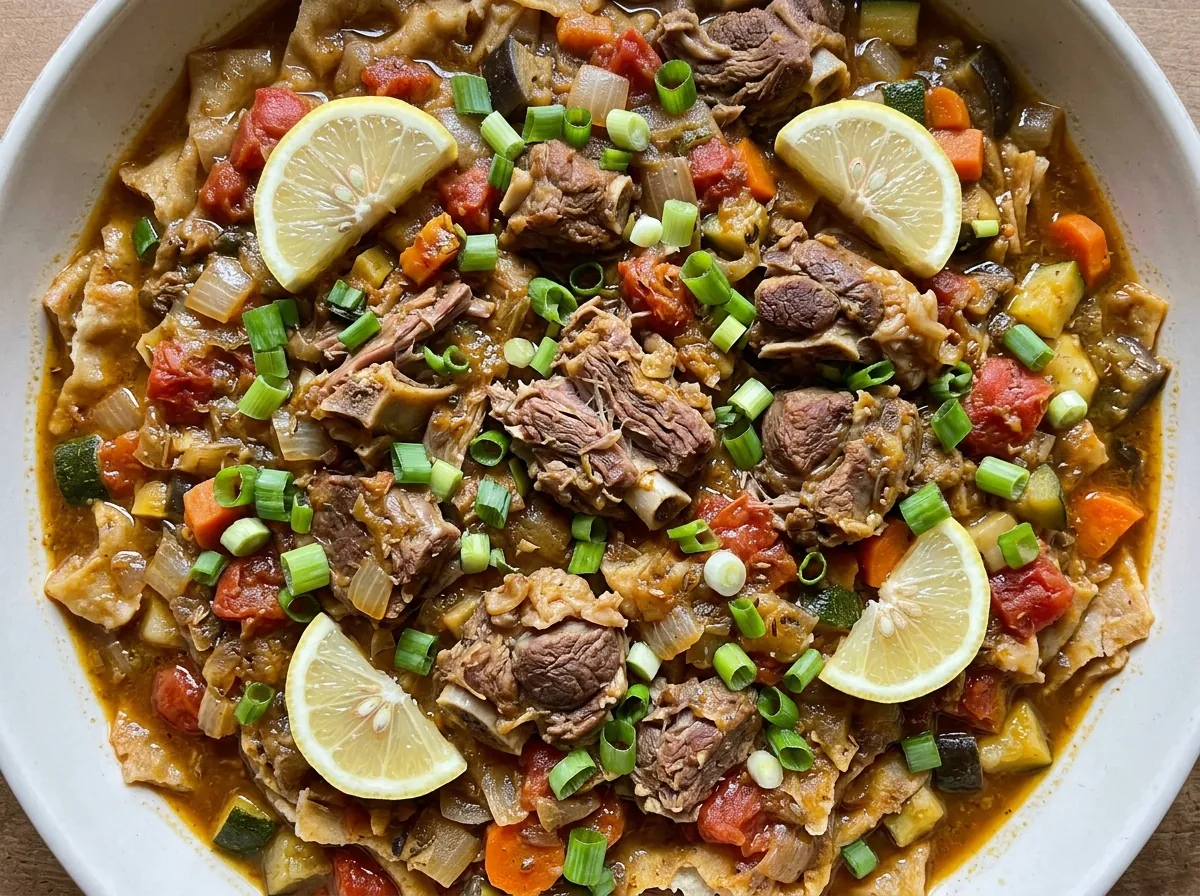
Daghabees is one of the most famous dishes of the Saudi south, especially Ghamid and Zahran, as documented in cooking references.
Discs of wheat dough cooked inside a seasoned meat or chicken broth, so they puff and drink the broth: the savory dumplings of the peninsula that bring the meal into one pot.
Preparation Steps
Knead the wheat dough and rest it
Knead the wheat flour with the salt and warm water into a cohesive soft dough and rest it for half an hour. It is the heart of daghabees: pieces of dough that will cook in the broth itself, like the dumplings of the south.
Build the red chicken broth
In a wide pot, brown the chicken in the ghee, add the onion until golden, then the garlic and spices, then the tomatoes and hot pepper, cover with the hot water, salt, and cook for half an hour until the chicken nears done.
Shape the daghabees into the broth
Cut the dough into date-sized pieces and flatten each one into a small thick disc between the palms, and drop them one by one into the boiling broth with the zucchini and carrot. They sink then float, announcing their firmness.
Cook until they puff and absorb
Twenty minutes over gentle heat covered, shaking the pot rather than stirring. The discs cook puffed and tender, having drunk the red broth and thickened it with their starch: asida, broth, and bread in one pot.
Serve it in its gathering pot
Ladle the daghabees with their chicken, vegetables, and broth into a deep plate. The winter dish of Ghamid and Zahran that brings a whole meal into one pot, as documented in southern cooking blogs.
Blood Sugar Impact
The glycemic index (GI) measures how quickly a food raises blood sugar, while the glycemic load (GL) measures how much a full serving raises it. Together they give the complete picture.
Glycemic Index
GI
48Low
Low0–55Medium56–69High70+
A low value (≤55) means a gradual rise in blood sugar — the most suitable range for diabetes and insulin resistance.
Glycemic Load
GL
21High
Low0–10Medium11–19High20+
Glycemic load reflects the impact of the full serving. To lower it: take half a serving, or pair the recipe with a source of protein and fiber.
Nutritional Information
Per ServingMakes 5 servings · one serving is about 745 g of raw ingredients
Calories771 kcal39%of Daily Value*
Protein71 g142%of Daily Value*
Carbohydrates51 g19%of Daily Value*
Fat29 g37%of Daily Value*
Fiber8 g29%of Daily Value*
Sodium500 mg22%of Daily Value*
Potassium1003 mg21%of Daily Value*
Phosphorus615 mg49%of Daily Value*
* Percent Daily Values are based on a 2,000-calorie diet per FDA food-label reference values — your daily needs may be higher or lower. Values are derived from the recipe's ingredients via the USDA database.
Troubleshooting
The most common problems when preparing Southern Daghabees with Chicken, and how to fix them:
The daghabees dissolved in the broth
A lukewarm broth or a slack dough. An honest boil and a cohesive dough, and a thick disc holds up better than a thin one.
They came out hard as pebbles
Dough with no rest or under-cooking. Half an hour of rest and a full twenty minutes of broth. They puff and turn tender.
The broth thickened until it set
The discs' starch tightened it. Its nature. A drink of hot water adjusts it, and it is a heavy-broth dish to begin with, not a soup.
The discs stuck together in a clump
They were dropped all at once. One by one with a shake of the pot between, and the room of the boil separates them.
Storage and Make-Ahead
Right away
Hot with its thick broth. The gathering winter dish.
In the fridge
Two days and its discs grow more saturated. Reheat with a drink of water over gentle heat.
Not suited to freezing
Dough cooked in broth goes mushy on thawing.
Tested Ingredient Substitutions
Original Ingredient
Tested Substitute
Ratio
Flavor Difference
Chicken
Bone-in lamb
800 g
The original meat daghabees. With an hour of boiling before the discs
Wheat flour
Half white
~
Lighter discs for those not used to whole wheat
Zucchini and carrot
Butternut squash and potatoes
1:1
All the season's vegetables suit it
Hot pepper
A side of sahawiq
~
Heat is each plate's choice
How Much Does It Make? Scaling Guide
Ingredient
5 servings
2.5 servings
10 servings
Flour
300 g
150 g
600 g
Chicken
1.2 kg
600 g
2.4 kg
Vegetables
300 g
150 g
600 g
EEINA Nutrition Tip
Drop the discs into a broth that is genuinely boiling, one by one. The boil firms their surface the moment they go down so they do not dissolve; a lukewarm broth melts them into a lost asida, and their floating to the surface is the announcement of their survival.
Add This Recipe to Your Plan
The EEINA app saves your favorite recipes, calculates them from their real ingredients, and shows your daily numbers toward your goal. Try it free now.
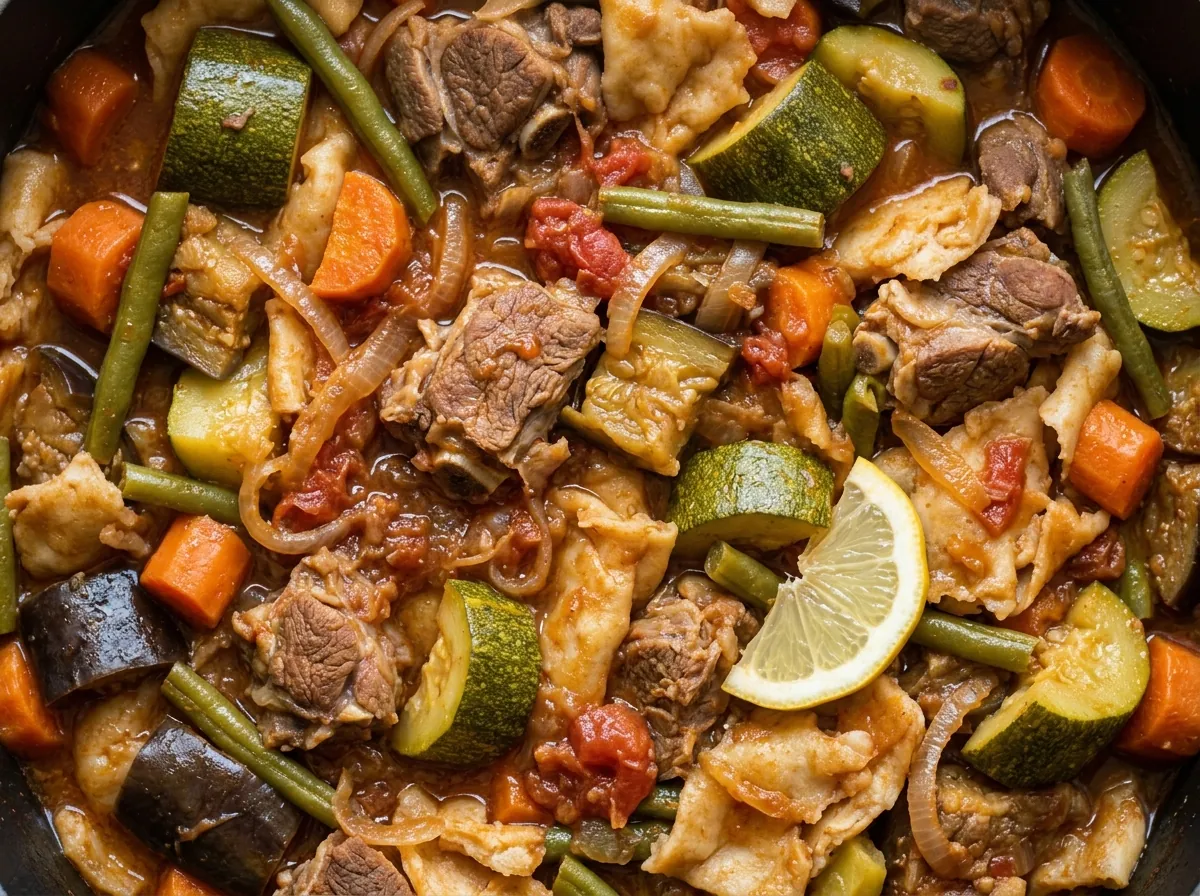
All three are dough in broth: Margoog (vegetable stew with flatbread) is thin sheets rolled out, Mataziz (dough-dumpling stew) is medium stretched discs, and daghabees is small thick pieces shaped by the palm. Three thicknesses for the one family of the south and Najd.
Why is it considered a complete meal?
Whole wheat, chicken protein, vegetables, and broth. The food pyramid in one pot, and its wheat fiber fills you with the fullness of a long winter.
Does it work in a pressure cooker?
The chicken with its broth a quarter hour under pressure, then the discs without pressure for twenty. The discs never go under the whistle.
How is it eaten in the original way?
From a deep communal plate by hand or spoon. A disc, a bite of chicken, and a scoop of broth: that is how the homes of Al-Sarat kept warm.