Oatmeal began as a humble northern dish cooked with water or milk and sweetened, until it became in many minds a sweet-only breakfast. But kitchens that have cooked grains in stock for centuries remind us that a whole grain is a neutral vessel waiting for whatever seasoning you choose.
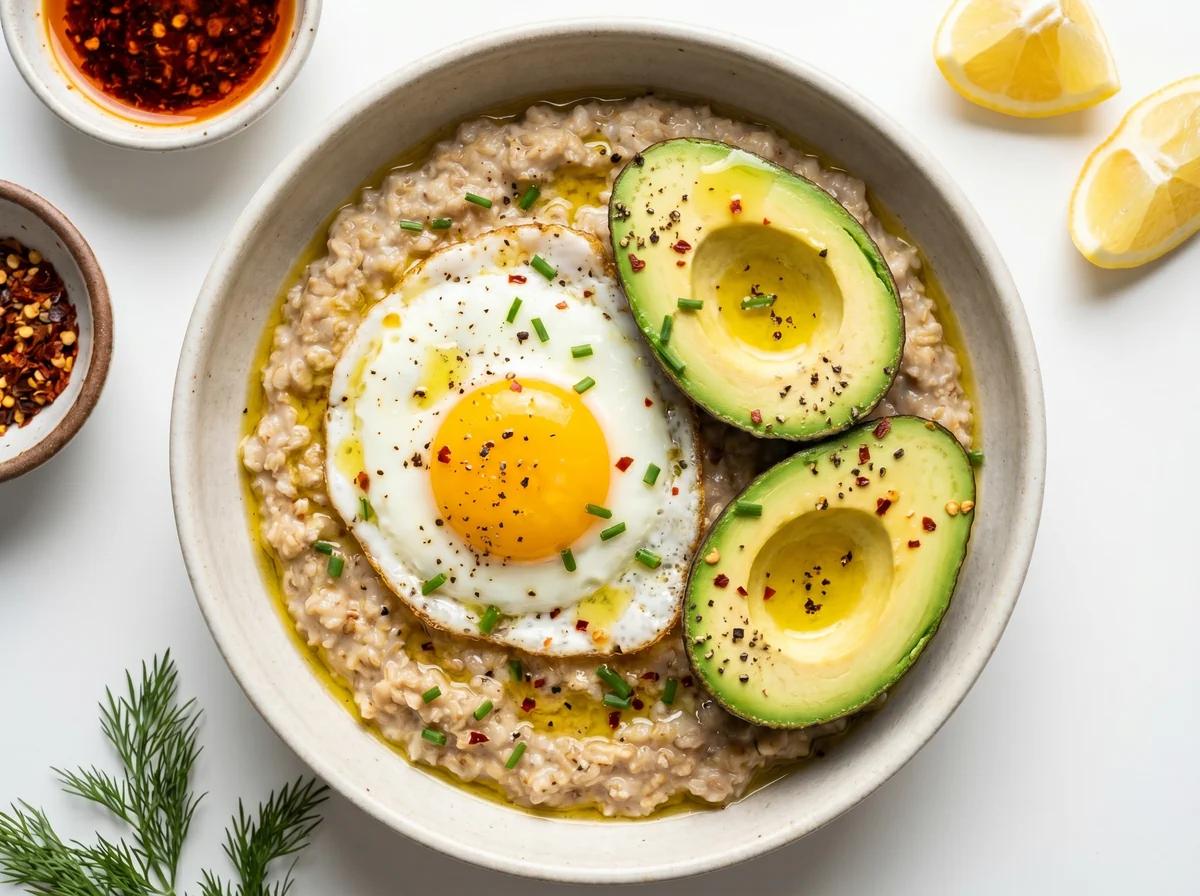
Here we flip the habit: cook the oats in vegetable stock instead of milk so they develop a savory depth, then crown them with a soft-boiled egg whose yolk runs onto the creamy base, and slices of avocado with dried za'atar (thyme-sumac-sesame blend) that recalls Levantine breakfast tables. The result is a warm, filling breakfast that opens the door to oatmeal for those who have grown tired of its sweet form.
Preparation Steps
Soft-boil the eggs
Place the eggs in a small saucepan with cold water to cover, bring to the boil over medium heat, then set a timer for seven minutes for a soft-set yolk with firm white. Transfer the eggs immediately to iced water to stop cooking and make peeling easier.
Heat the stock
Combine the vegetable stock and water in a medium saucepan and bring to a gentle simmer over medium heat. Stock replaces milk and gives the oatmeal a savory depth without any added fat.
Cook the oatmeal
Add the oats to the simmering stock and reduce the heat. Stir occasionally for about ten minutes until the mixture thickens and absorbs the liquid. Occasional stirring prevents sticking and releases the oats' creamy starch. Taste and add salt as needed if the stock is low-sodium.
Peel the eggs and slice the avocado
Peel the eggs gently and halve them. Slice the avocado into thin strips and squeeze the lemon juice over it immediately to slow oxidation and preserve the colour.
Top and serve
Divide the oatmeal between two bowls and place half an egg and the avocado slices on each. Scatter the za'atar (thyme-sumac-sesame blend), spring onion, olive oil, and black pepper over the top. Serve warm immediately before the texture dries out.
Blood Sugar Impact
The glycemic index (GI) measures how quickly a food raises blood sugar, while the glycemic load (GL) measures how much a full serving raises it. Together they give the complete picture.
Glycemic Index
GI
48Low
Low0–55Medium56–69High70+
A low value (≤55) means a gradual rise in blood sugar — the most suitable range for diabetes and insulin resistance.
Glycemic Load
GL
16Medium
Low0–10Medium11–19High20+
Glycemic load reflects the impact of the full serving. To lower it: take half a serving, or pair the recipe with a source of protein and fiber.
Nutritional Information
Per ServingMakes 2 servings · one serving is about 450 g of raw ingredients
Calories365 kcal18%of Daily Value*
Protein16 g32%of Daily Value*
Carbohydrates41 g15%of Daily Value*
Fat17 g22%of Daily Value*
Fiber8 g29%of Daily Value*
Sodium1009 mg44%of Daily Value*
Potassium546 mg12%of Daily Value*
Phosphorus392 mg31%of Daily Value*
* Percent Daily Values are based on a 2,000-calorie diet per FDA food-label reference values — your daily needs may be higher or lower. Values are derived from the recipe's ingredients via the USDA database.
Troubleshooting
The most common problems when preparing Savory Oatmeal with Soft-Boiled Egg and Avocado, and how to fix them:
The oatmeal is very gluey or sticks to the pot
Add a little hot stock and stir over low heat. Stir occasionally rather than continuously to avoid releasing excess starch.
The egg yolk is fully set and not runny
Reduce the boiling time to six and a half minutes and transfer to iced water immediately, as residual heat continues to cook the yolk if cooling is delayed.
The avocado turned brown
Squeeze lemon juice immediately after cutting and serve the dish straight away. Oxidation accelerates when the flesh is exposed to air.
The flavour is flat and bland
Increase the za'atar (thyme-sumac-sesame blend) and spring onion and add an extra squeeze of lemon and a pinch of black pepper. Acidity and herbs compensate for the absence of fat.
The oatmeal dried out within minutes of serving
Oats thicken as they cool, so cook them a little thinner than desired and serve warm. If they have already thickened, stir in a spoonful of hot stock to restore the texture.
Storage and Make-Ahead
Refrigerator (oatmeal alone)
Store cooked oatmeal without toppings in an airtight container for up to three days. Reheat with a spoonful of stock or water to restore the texture.
Soft-boiled eggs
Soft-boiled eggs should be eaten on the day they are cooked and are not recommended for storage as the runny yolk is a more hospitable environment for bacterial growth. If storage is necessary, boil to hard-set, then keep in the shell in the refrigerator for up to two days.
Avocado
Cut the avocado only at serving time. Store any remaining half in the shell with a sprinkle of lemon juice in an airtight container in the refrigerator for up to one day.
Freezer
Cooked oatmeal alone can be frozen in portions for up to one month and thawed in the refrigerator before reheating. Do not freeze the eggs or avocado as their texture deteriorates.
Tested Ingredient Substitutions
Original Ingredient
Tested Substitute
Ratio
Flavor Difference
Vegetable stock
Low-sodium chicken stock
1:1
Gives a slightly richer depth. Choose low-sodium stock and monitor the sodium.
Rolled oats
Steel-cut oats
1:1 with more liquid and time
Firmer texture and lower glycaemic index, but requires roughly double the cooking time and more liquid.
Avocado
Hummus or a small amount of tahini
2 tablespoons in place of half an avocado
A plant-based fat alternative. Note that tahini adds sesame, which changes the allergen profile.
Egg
Spiced tofu or cooked chickpeas
60 g per egg
A plant-based option that maintains protein. Eliminates the egg allergen; tofu adds soya.
Dried wild za'atar (thyme-sumac-sesame blend)
Za'atar spice mix with sesame or rosemary
to taste
Commercial za'atar spice mix usually contains sesame — be aware of the allergen. Rosemary is an alternative free from sesame.
How Much Does It Make? Scaling Guide
Ingredient
2 servings
4 servings
6 servings
Rolled oats
100 g
200 g
300 g
Vegetable stock
500 ml
1 liter
1.5 liters
Egg
2
4
6
Avocado
0.5
Piece
1.5
Dried wild za'atar (thyme-sumac-sesame blend)
1 tsp
2 tsp
3 tsp
EEINA Nutrition Tip
Cook the oatmeal in low-sodium vegetable stock or a home-made unsalted stock, then adjust the salt at the end. This way you control the sodium rather than being surprised by it — an important difference for anyone monitoring blood pressure.
Add This Recipe to Your Plan
The EEINA app saves your favorite recipes, calculates them from their real ingredients, and shows your daily numbers toward your goal. Try it free now.
Is this oatmeal suitable for people with diabetes?
The combination of whole-grain oats, protein, and healthy fat supports a more moderate blood sugar response compared to sweetened quick oats, but portions and individual responses vary. Monitor your reading and consult your doctor or dietitian to set the right amount.
Can I prepare it in advance for work?
Yes — cook the oatmeal alone and store in the refrigerator for up to three days. Add a fresh egg and avocado at serving time since they do not keep well when half-cooked.
Is oatmeal gluten-free?
Oats themselves do not contain wheat gluten, but they are commonly processed in facilities that handle mixed grains and may be cross-contaminated. Those with coeliac disease need oats labelled explicitly as gluten-free.
Why stock instead of milk?
Stock gives a savory depth and keeps the dish light and dairy-free, opening a different savory angle compared to the usual sweet oatmeal and suiting those who prefer a non-sweet breakfast.
Can I make it fully plant-based?
Yes — replace the egg with spiced tofu or cooked chickpeas and use vegetable stock. This gives a plant-based version rich in protein and fibre.