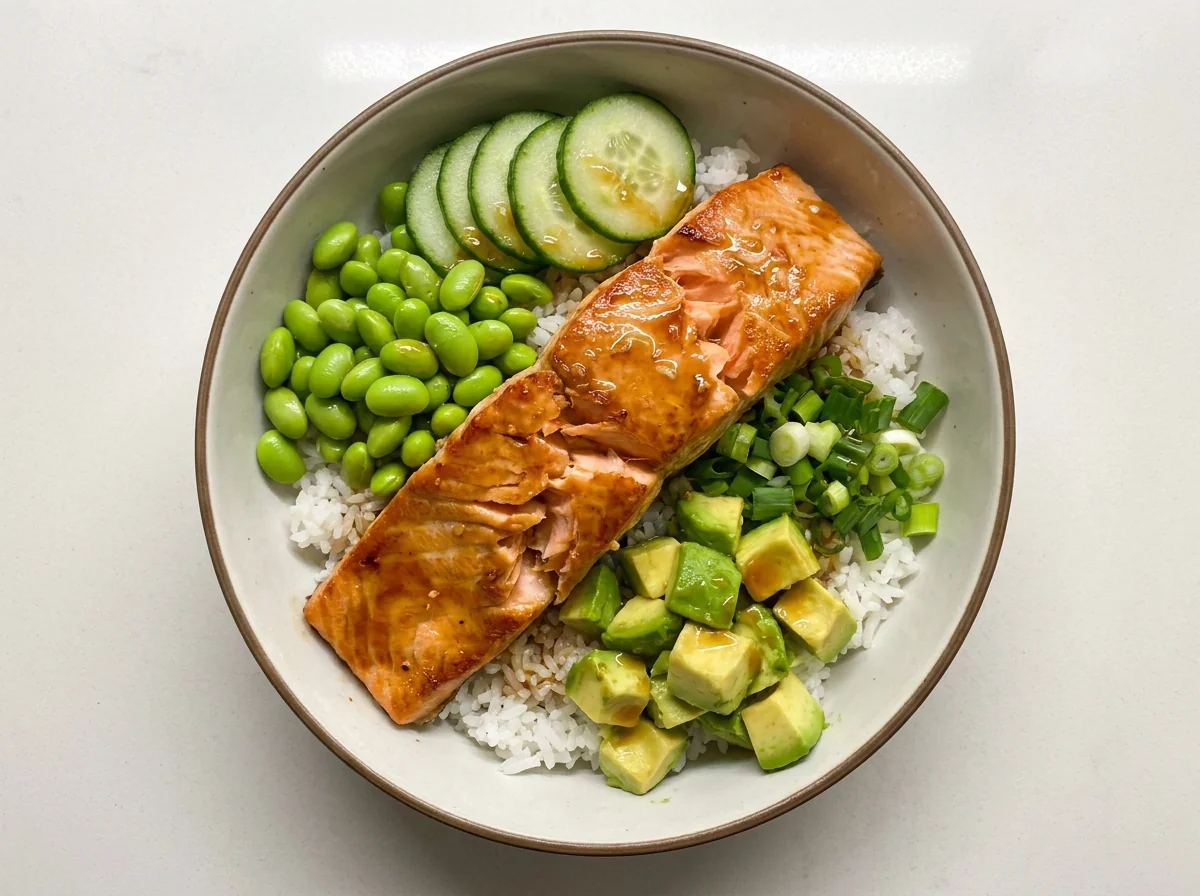
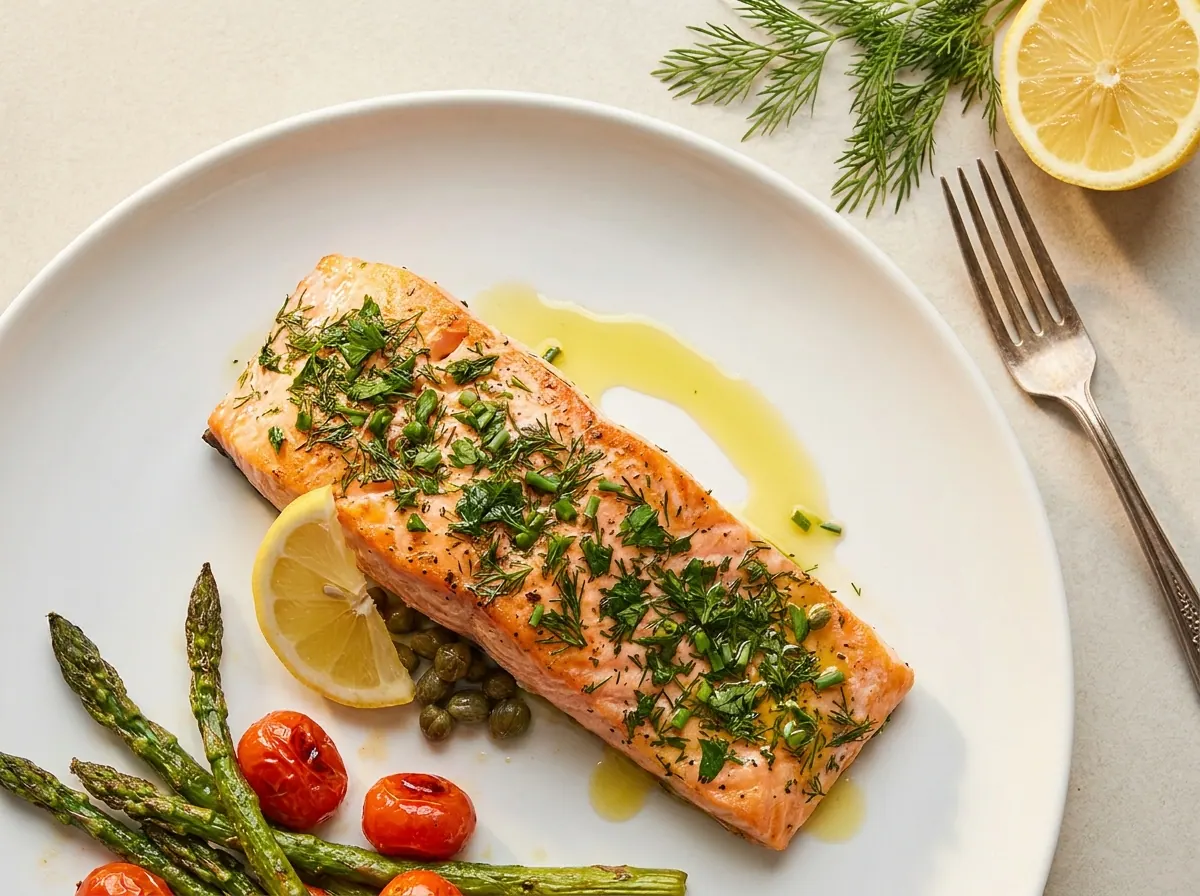
The salmon and rice bowl is one of the most popular healthy bowl dishes because it combines protein rich in omega-3 with colorful vegetables in one balanced plate.
We made our version with a low-sodium sauce and honey instead of refined sugar, and grilled the salmon to the safe temperature so it stayed tender and rich.
Preparation Steps
Prepare the sauce
Mix the soy sauce, rice vinegar, sesame oil, honey, ginger, and garlic in a small pot, and dissolve the cornstarch in the cold water separately.
Thicken the sauce
Heat the mixture over medium heat until it boils, then add the cornstarch mixture and stir for a minute until it thickens and coats the spoon, then leave it to cool.
Marinate the salmon
Brush the salmon fillets with a quarter of the sauce and leave them for 15 minutes to absorb the flavor.
Cook the rice
Cook the rice according to the package instructions until it is done and the grains are fluffy.
Grill the salmon
Grill the salmon in the oven or air fryer at 200°C until it flakes easily with a fork and its center reaches 63°C so it is safe to eat, about 8 to 10 minutes.
Assemble
Divide the rice among the plates and top with the salmon, edamame, cucumber, and avocado.
Finishing touch
Drizzle the rest of the sauce and the pepper flakes and garnish with the green onion and cilantro, then serve the dish right away.
Blood Sugar Impact
The glycemic index (GI) measures how quickly a food raises blood sugar, while the glycemic load (GL) measures how much a full serving raises it. Together they give the complete picture.
Glycemic Index
GI
67Medium
Low0–55Medium56–69High70+
A low value (≤55) means a gradual rise in blood sugar — the most suitable range for diabetes and insulin resistance.
Glycemic Load
GL
46High
Low0–10Medium11–19High20+
Glycemic load reflects the impact of the full serving. To lower it: take half a serving, or pair the recipe with a source of protein and fiber.
Nutritional Information
Per ServingMakes 4 servings · one serving is about 410 g of raw ingredients
Calories769 kcal38%of Daily Value*
Protein43 g86%of Daily Value*
Carbohydrates76 g28%of Daily Value*
Fat33 g42%of Daily Value*
Fiber7 g25%of Daily Value*
Sodium925 mg40%of Daily Value*
* Percent Daily Values are based on a 2,000-calorie diet per FDA food-label reference values — your daily needs may be higher or lower. Values are derived from the recipe's ingredients via the USDA database.
Troubleshooting
The most common problems when preparing Salmon Rice Bowl, and how to fix them:
The salmon is dry
It was grilled longer than needed; stop cooking when its center reaches 63°C and it flakes easily.
The rice is sticky
Too much water or too much stirring; follow the water ratio on the package and let it rest covered after cooking.
The sauce is runny
Not enough cornstarch or it didn't boil; let it boil for a full minute after adding the starch until it thickens.
The avocado turns black
It was cut too early; cut it at assembly time and sprinkle it with a few drops of lemon to preserve its color.
Storage and Make-Ahead
Refrigerator
Keep the components separate for up to 3 days, and add the avocado fresh at serving time.
Freezer
The cooked salmon and rice can be frozen for up to a month; do not freeze the avocado and cucumber because they lose their texture.
Reheating
Reheat only the rice and salmon and add the fresh vegetables afterward.
Tested Ingredient Substitutions
Original Ingredient
Tested Substitute
Ratio
Flavor Difference
Salmon
Fresh tuna or grilled chicken
An available protein substitute
Cook the chicken to 74°C and the fish to 63°C
Jasmine rice
Brown rice
Higher fiber and a firmer texture
It needs more cooking time and water
Edamame
Green beans or boiled chickpeas
An available plant-based protein substitute
Add it boiled and drained
Honey
Date molasses
A Gulf sweetener substitute
Add a little and taste, as it may be sweeter
How Much Does It Make? Scaling Guide
Ingredient
2 servings
4 servings (base)
8 servings
Salmon fillets
300 g
600 g
1200 g
Jasmine rice
150 g
300 g
600 g
Low-sodium soy sauce
30 ml
60 ml
120 ml
Avocado
100 g
200 g
400 g
EEINA Nutrition Tip
Let the sauce cool before brushing the salmon so it doesn't start cooking it, and grill the fish only until it flakes easily so it doesn't dry out.
Add This Recipe to Your Plan
The EEINA app saves your favorite recipes, calculates them from their real ingredients, and shows your daily numbers toward your goal. Try it free now.