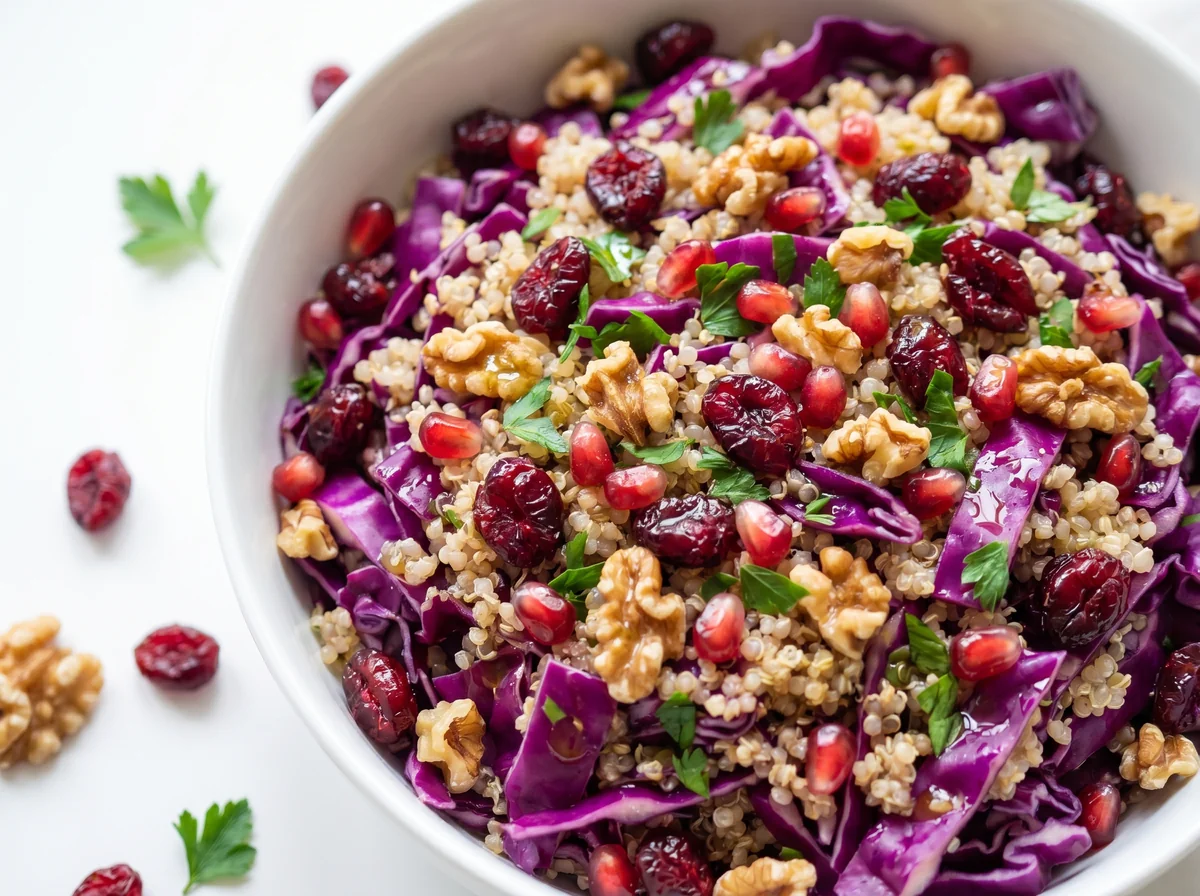
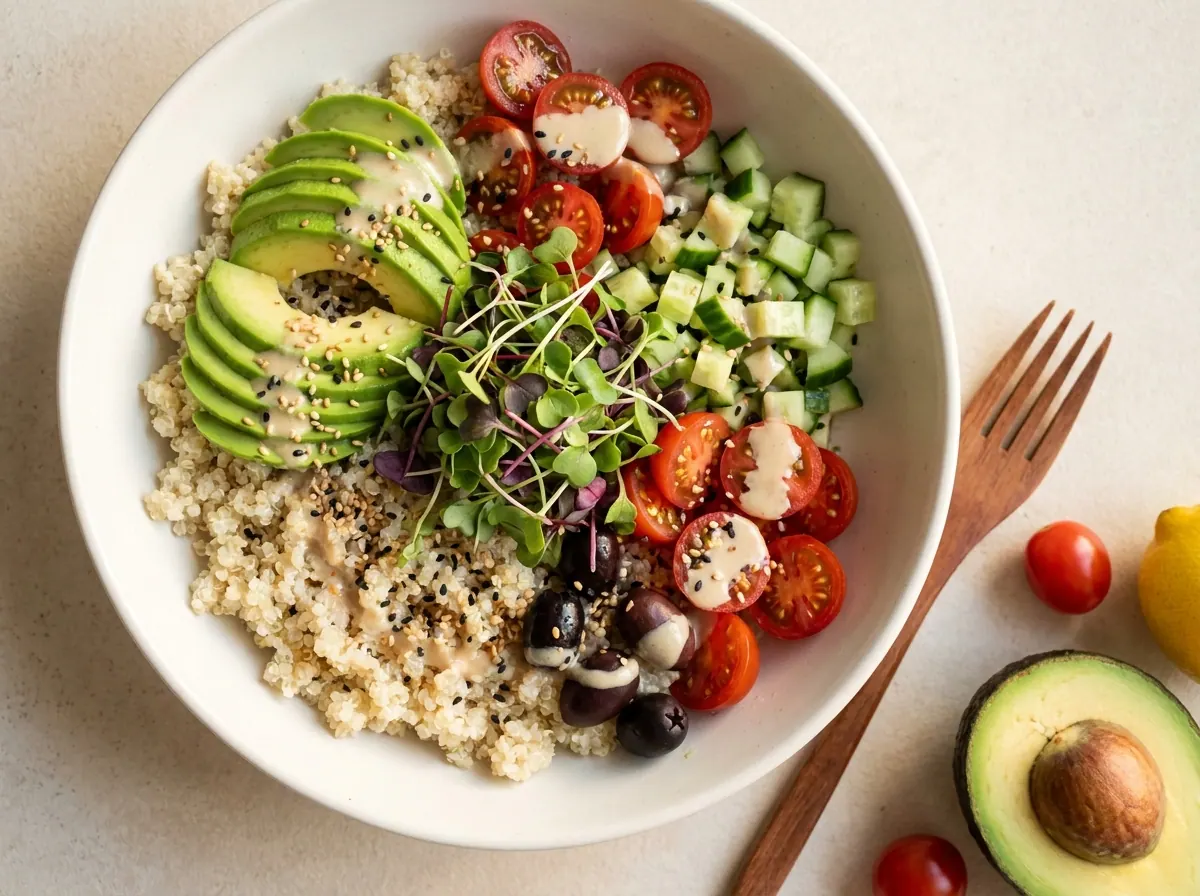
This bowl was born from a simple desire: a single lunch dish that brings the colours of autumn and the warmth of the Mediterranean together in one bowl, without weighing down the stomach or spiking blood sugar. Quinoa — the Andean grain that has made its way onto tables worldwide — gives the dish a satisfying body and complete plant protein, while the red cabbage adds crunch and its vivid purple colour, rich in anthocyanin antioxidants.
The dried cranberries break the simplicity with a sweet-tart note, and the toasted seeds finish the dish with a pleasant fatty crunch. We built it to be practical for someone who cooks once and eats twice: ready in half an hour, and just as delicious cold the next day once the flavours have melded.
Preparation Steps
Rinse the quinoa
Wash the quinoa in a fine sieve under cold running water for a full minute, rubbing it with your fingertips until the water runs clear. This step removes the bitter saponin coating on the grain — skip it and you are left with a soapy bitterness that ruins the whole dish.
Cook the quinoa
Place the rinsed quinoa with the water in a small pot and bring to a boil over medium-high heat, then reduce to a low simmer and cover. Cook for fifteen minutes until all the water is absorbed and a small white spiral ring appears around each grain — the sure sign it is done.
Steam and cool the quinoa
Remove the pot from the heat and leave it covered for five minutes, then fluff the quinoa with a fork and spread it on a wide plate to cool. Cooling it before mixing prevents the heat from wilting the fresh vegetables and keeps the cabbage crisp.
Massage the red cabbage
Finely shred the red cabbage, then massage it with half the lemon juice for one minute using your fingertips until it softens slightly and its colour brightens. The acid breaks down the tough fibres, making it gentler to chew and digest without losing its crunch.
Whisk the lemon dressing
In a small bowl, whisk together the olive oil, remaining lemon juice, apple cider vinegar, pomegranate molasses, cumin, and black pepper until the dressing is emulsified. Taste and add salt sparingly — this dish relies on the flavour of its ingredients, not on salt.
Assemble the bowl
In a large bowl, combine the cooled quinoa, cabbage, chickpeas, rocket, parsley, and cranberries, then pour the dressing over and toss gently until everything is coated. Leave for five minutes before serving so the flavours meld and distribute evenly.
Garnish and serve
Divide into two bowls and scatter the sunflower seeds and pumpkin seeds on top just before serving. Adding the seeds at the last moment keeps them crispy — if mixed in too early they absorb moisture from the dressing and go soft.
Blood Sugar Impact
The glycemic index (GI) measures how quickly a food raises blood sugar, while the glycemic load (GL) measures how much a full serving raises it. Together they give the complete picture.
Glycemic Index
GI
46Low
Low0–55Medium56–69High70+
A low value (≤55) means a gradual rise in blood sugar — the most suitable range for diabetes and insulin resistance.
Glycemic Load
GL
16Medium
Low0–10Medium11–19High20+
Glycemic load reflects the impact of the full serving. To lower it: take half a serving, or pair the recipe with a source of protein and fiber.
Nutritional Information
Per ServingMakes 4 servings · one serving is about 220 g of raw ingredients
Calories304 kcal15%of Daily Value*
Protein10 g20%of Daily Value*
Carbohydrates41 g15%of Daily Value*
Fat13 g17%of Daily Value*
Fiber7 g25%of Daily Value*
Sodium290 mg13%of Daily Value*
* Percent Daily Values are based on a 2,000-calorie diet per FDA food-label reference values — your daily needs may be higher or lower. Values are derived from the recipe's ingredients via the USDA database.
Troubleshooting
The most common problems when preparing Red Cabbage, Quinoa and Cranberry Bowl, and how to fix them:
The quinoa tastes bitter
The saponin layer was not rinsed off properly. Next time rinse for a full minute in a fine sieve with rubbing until the rinse water runs completely clear.
The quinoa is soft and clumpy like porridge
Too much water or overcooked. Stick to the ratio of one cup quinoa to two cups water and remove from heat as soon as the water is absorbed and the white ring appears around each grain.
The bowl is watery at the bottom
The cabbage released its moisture after dressing. Drain the cabbage well after massaging with lemon, and add the dressing just before serving rather than hours ahead.
Flavour is flat despite the ingredients
Usually more acid is needed, not more salt. Add a squeeze of extra lemon juice and a little pomegranate molasses — acidity highlights vegetable flavours without needing more salt.
The seeds lost their crunch
They were mixed in too early and absorbed moisture from the dressing. Scatter the seeds over the bowl at the moment of serving, and keep them separate if storing the dish.
Storage and Make-Ahead
Refrigerator (dressed bowl)
Store in an airtight container for up to three days. Flavour improves the next day, but add the seeds at serving time to keep them crispy.
Advance preparation (components separate)
Store the cooked quinoa, dressing, and vegetables each in a separate container for up to four days, then combine at meal time for a fresher dish with better texture.
Freezer (quinoa only)
Freeze cooled cooked quinoa for up to one month in a sealed bag. Thaw in the refrigerator before use. Freezing the assembled bowl is not recommended as the vegetables wilt.
Tested Ingredient Substitutions
Original Ingredient
Tested Substitute
Ratio
Flavor Difference
Quinoa
Coarse bulgur, cooked
Same cooked weight
An economical widely available substitute, but it contains gluten and is not suitable for those with wheat sensitivity; slightly higher glycemic index.
Dried cranberries
Raisins or fresh pomegranate seeds
Same quantity
Fresh pomegranate seeds are less concentrated in sugar than dried fruit — a better choice for those managing glycemic load carefully.
Cooked chickpeas
Cooked ful (stewed fava beans) or cooked brown lentils
Same weight
Plant protein and fibre are maintained; slight change in flavour and texture.
Pumpkin seeds and sunflower seeds
Ground flaxseed or chia seeds
Half the quantity
Alternatives rich in omega-3, but they do not add the same crunch — add at serving time.
Pomegranate molasses
Balsamic vinegar or a pinch of honey with vinegar
Same quantity
To achieve the same sweet-tart balance when pomegranate molasses is unavailable.
How Much Does It Make? Scaling Guide
Ingredient
2 servings
4 servings
6 servings
Dry quinoa
120 g
240 g
360 g
Water for boiling
240 ml
480 ml
720 ml
Red cabbage
200 g
400 g
600 g
Cooked chickpeas
120 g
240 g
360 g
Dried cranberries
30 g
60 g
90 g
Olive oil
20 ml
40 ml
60 ml
EEINA Nutrition Tip
For those tracking blood sugar or managing PCOS: do not skip the protein and fat in this dish (chickpeas, seeds, and olive oil). Protein and fat slow the absorption of carbohydrates from the quinoa and cranberries, making the post-meal blood sugar rise gentler and more stable. To lower the load further, halve the dried cranberries — they are concentrated in sugar — and increase the rocket and cabbage.
Add This Recipe to Your Plan
The EEINA app saves your favorite recipes, calculates them from their real ingredients, and shows your daily numbers toward your goal. Try it free now.
Yes — it relies on quinoa and chickpeas, which are slow-digesting with fibre and plant protein, a combination that helps stabilise post-meal blood sugar. For tighter control, halve the dried cranberries as they are concentrated in sugar. It is a supportive food, not a substitute for your treatment plan.
Is the dish suitable for kidney patients?
For general kidney health prevention, yes — it is low in sodium and plant-based. But quinoa, seeds, and chickpeas are rich in potassium and phosphorus, so if you are in an advanced stage of chronic kidney disease or following a potassium-restricted diet, consult your doctor first.
Can it be prepared ahead for a work day?
Yes — and it is one of the best dishes for that. Store the components separately in the refrigerator for up to four days and combine them with the dressing and seeds on the morning of the day you will eat it for a fresh bowl with ideal texture.
Why must quinoa be rinsed before cooking?
The grain's surface is coated with a natural compound called saponin, which tastes bitter and soapy. Rinsing for a minute with rubbing removes it and gives you a clean flavour. Some packaged varieties are pre-rinsed, but a quick rinse is always safer.
Is this dish filling enough as a complete meal?
Yes — it combines complex carbohydrates from quinoa, protein from the chickpeas and seeds, healthy fats from olive oil and seeds, plus vegetable fibre. For those needing more protein, a soft-boiled egg or a slice of grilled chicken on the side works well.