Palestinian Qidreh (Spiced Lamb and Chickpea Rice)
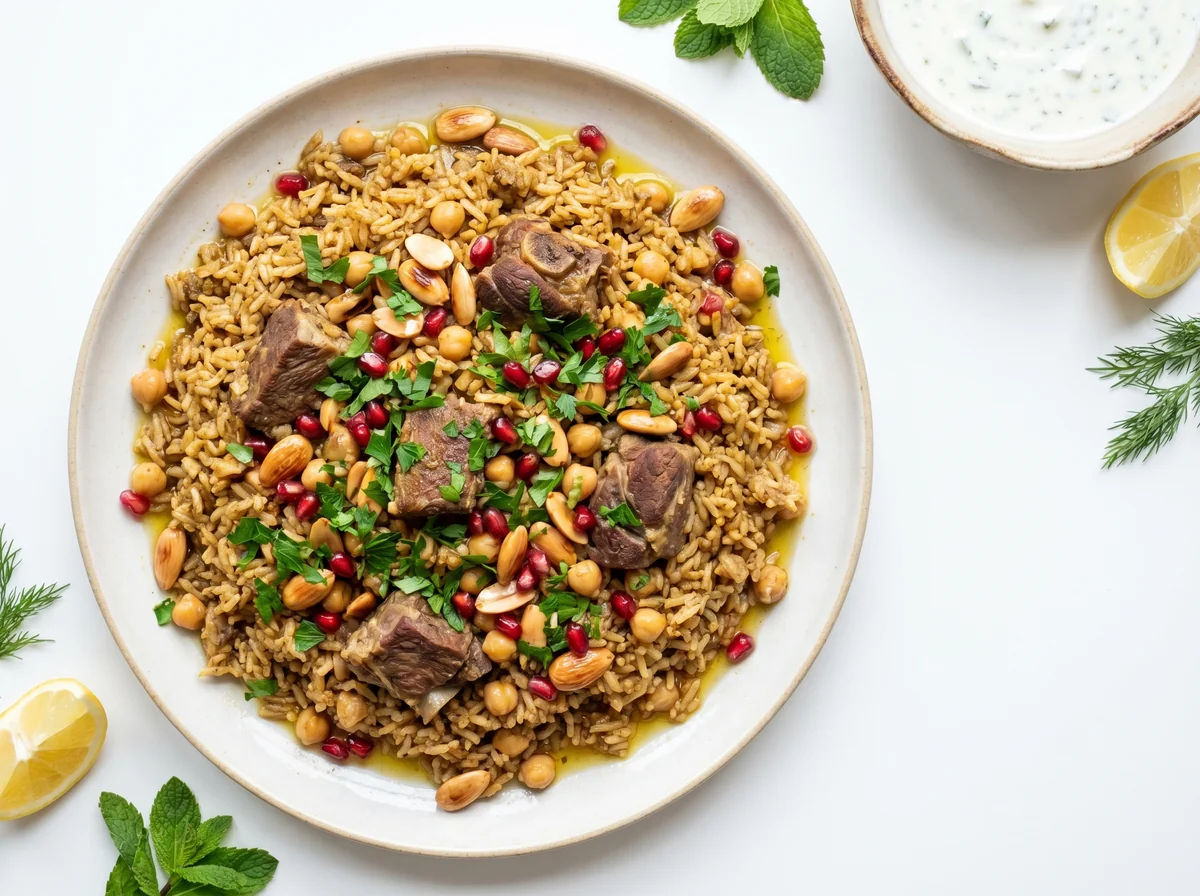
The famous dish of Hebron — basmati rice and lamb with chickpeas cooked in a clay pot with garlic and spices until the rice absorbs all the flavour of the broth. High glycemic load from the rice, rich in protein and iron, and free of common allergens.
Qidreh is the dish of the Palestinian city of Hebron, named after the clay pot it is cooked in and then inverted onto the serving platter. Traditionally prepared in neighbourhood ovens, the pot is filled with rice, lamb, chickpeas, generous garlic, and spices, sealed, and buried in the oven to cook slowly.
It is distinguished by its abundance of whole garlic and its unique spice blend, and is the dish of feasts and weddings in southern Palestine. The combination of chickpeas, meat, and rice makes it a rich, complete meal.
Preparation Steps
Boil the lamb and make the broth
Place the lamb in a pot with water to cover, an onion, a bay leaf, and some qidreh spices, and bring to a boil then skim off the foam. Reduce the heat, cover, and cook for one to one and a quarter hours until tender. Strain the broth and keep it — this is the liquid for cooking the rice.
Brown the garlic and bloom the spices
In the pot (preferably clay, for the authentic method), heat the oil and brown the whole garlic cloves until lightly golden and fragrant, then add the remaining qidreh spices and turmeric and stir for half a minute to open up their flavour. Generous garlic is the defining feature of qidreh.
Add the rice and chickpeas
Drain the soaked rice and add it along with the cooked chickpeas and the boiled lamb pieces, and gently stir so the rice is coated in oil and spices. Add the steeped saffron for colour and sheen, and a pinch of salt.
Add the broth and cook
Pour in the hot lamb broth at a ratio of 11/2 cups liquid per cup of rice, taste and adjust the salt (the broth should be slightly salty). Bring to a boil, then cover the pot tightly and cook over very low heat for fifteen minutes until the rice absorbs the broth and steam vents appear on the surface.
Steam and rest
Lower the heat to minimum and leave the covered pot for ten minutes for the rice to finish cooking in the steam, then remove from heat and leave covered for five minutes. The rest allows the rice grains to set and separate instead of breaking.
Flip and serve
In the traditional method, the clay pot is inverted upside-down onto a wide platter so the rice comes out set with the meat on top, or pour the rice onto a platter and arrange the meat over it. Serve qidreh hot with labneh (strained yogurt) or salad — a dish of Hebron feasts and Palestinian occasions.
Blood Sugar Impact
The glycemic index (GI) measures how quickly a food raises blood sugar, while the glycemic load (GL) measures how much a full serving raises it. Together they give the complete picture.
Glycemic Index
GI
66Medium
Low0–55Medium56–69High70+
A low value (≤55) means a gradual rise in blood sugar — the most suitable range for diabetes and insulin resistance.
Glycemic Load
GL
55High
Low0–10Medium11–19High20+
Glycemic load reflects the impact of the full serving. To lower it: take half a serving, or pair the recipe with a source of protein and fiber.
Nutritional Information
Per ServingMakes 6 servings · one serving is about 285 g of raw ingredients
Calories678 kcal34%of Daily Value*
Protein28 g56%of Daily Value*
Carbohydrates89 g32%of Daily Value*
Fat23 g29%of Daily Value*
Fiber5 g18%of Daily Value*
Sodium272 mg12%of Daily Value*
Potassium507 mg11%of Daily Value*
Phosphorus331 mg26%of Daily Value*
* Percent Daily Values are based on a 2,000-calorie diet per FDA food-label reference values — your daily needs may be higher or lower. Values are derived from the recipe's ingredients via the USDA database.
Troubleshooting
The most common problems when preparing Palestinian Qidreh (Spiced Lamb and Chickpea Rice), and how to fix them:
Rice is gluey and sticky
Too much water or stirred after adding the broth. Use a ratio of 11/2 cups broth per cup of soaked rice, stir only once, and do not open the lid during cooking.
Lamb is tough and not tender
Not boiled long enough. Bone-in lamb needs one to one and a quarter hours over low heat to become tender. The bone gives a richer broth, so do not rush the boiling.
Flavour is bland
Not enough garlic, spices, or broth salt. Qidreh is defined by generous garlic — do not skimp on it; toast the spices to open their flavour; and season the broth well, as the rice will absorb it.
Rice bottom is burnt
Heat too high or thin-bottomed pot. Cook over the lowest heat after adding the broth, and use a heavy-bottomed pot (or clay). A light golden crust is desirable, not a burnt one.
Rice is raw but broth has evaporated
Too little liquid or heat too high and evaporated it. Add a little hot broth, sprinkle around the edges, and continue covered over low heat until the rice is cooked through.
Storage and Make-Ahead
Refrigerator (4°C)
Qidreh keeps in a sealed container for three days. Reheat with a splash of water over low heat or by steaming to preserve the moisture of the rice.
Freezer (-18°C)
Freezes for a month in portioned containers. Thaw in the fridge and reheat by steaming or with a splash of water. The rice may soften slightly when thawed.
Advance prep
Boil the lamb, make the broth, and soak the chickpeas ahead of time, and cook the rice fresh at serving time. Pre-made broth deepens the flavour.
Food safety
Cook the lamb until completely tender, and do not leave cooked rice unrefrigerated for more than two hours (cooked rice is a sensitive environment for bacteria).
Tested Ingredient Substitutions
Original Ingredient
Tested Substitute
Ratio
Flavor Difference
White basmati rice
Brown basmati rice
Same quantity with more water and longer time
Higher fibre and lower glycemic load for the whole dish
Lamb
Bone-in beef or chicken
Same weight
Chicken is lighter with a shorter boiling time; lamb is the authentic, richer-flavoured choice
Cooking oil
Clarified butter (ghee)
Same quantity
ghee is closer to the traditional flavour; oil keeps it dairy-free
How Much Does It Make? Scaling Guide
Servings
Meat
Rice
Chickpeas
Garlic
3 (half recipe)
350 g
1 1/2 cups
3/4 cup
1/2 head
6 (base)
700 g
3 cups
1 1/2 cups
1 whole head
12 (large family)
1400 g
6 cups
3 cups
2 heads
EEINA Nutrition Tip
Qidreh is a rich rice dish with a high glycemic load, but the chickpeas add fibre and plant protein and the lamb adds protein and iron. To moderate: keep the rice portion fist-sized and increase the chickpeas and meat, and serve with labneh (strained yogurt) and a green salad. Replace a third of the white rice with brown to increase fibre. Suitable for moderate occasions — not a daily dish for those monitoring blood sugar.
Add This Recipe to Your Plan
The EEINA app saves your favorite recipes, calculates them from their real ingredients, and shows your daily numbers toward your goal. Try it free now.
It is named after the clay pot (qidr) it is cooked in and then inverted onto the platter at serving. Traditionally it is buried in a neighbourhood oven to cook slowly, and it is one of the most famous dishes of the Palestinian city of Hebron.
What is the difference between qidreh, Kabsa (Saudi spiced rice dish), and Mandi (Yemeni-Saudi smoked meat and rice)?
All are rice with meat, but qidreh stands out with its chickpeas, generous garlic, unique spice blend, and clay pot cooking. Kabsa (Saudi spiced rice dish) is Saudi with its own spices and loomi (dried black lime). Mandi (Yemeni-Saudi smoked meat and rice) cooks the meat through smoking in a pit.
Is qidreh suitable for diabetics?
With caution — it is a rice dish with a high glycemic load. With a small rice portion, plenty of chickpeas and meat, and salad, it can be enjoyed on a moderate occasion. Replace some rice with brown rice, and consult your doctor.
Do I need a clay pot?
No — a good heavy-bottomed regular pot gives an excellent result. Clay is traditional and gives a distinctive flavour and texture, but the recipe works in any good pot with gentle cooking.