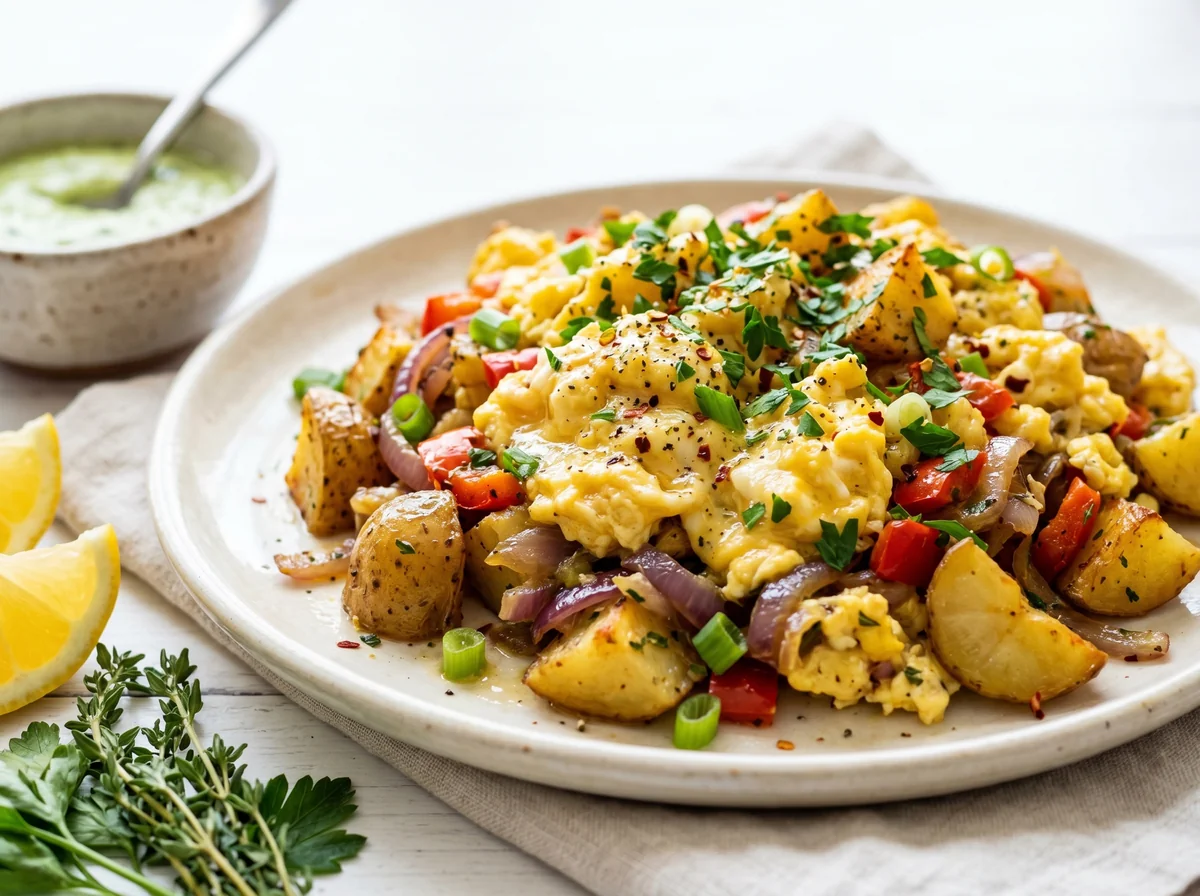
A quick Levantine breakfast — diced potatoes fried until golden then broken eggs are scrambled right in with them. Filling, budget-friendly, medium glycaemic load, and contains eggs.
Mafraka (potato and egg scramble) is a quick, homely Levantine breakfast — its name comes from the Arabic word for rubbing or scrambling the eggs into the potatoes in the pan. It is one of the most loved, fastest, and cheapest breakfast dishes in Lebanon, Syria, and Palestine, bringing together crispy potatoes and soft eggs in a single pan.
Its simplicity and always-available ingredients have made it a regular morning staple, eaten with bread and fresh vegetables. Every family has its own touch (onion, pepper, cumin), and it stands as a model of a practical, filling breakfast.
Preparation Steps
Fry the potatoes
Cut the potatoes into small, even cubes (small pieces cook faster and more evenly). Heat the olive oil in a frying pan and fry the potatoes over medium heat, stirring occasionally, until cooked through and the edges are golden and crisp — about 15 minutes. Golden, crispy potatoes are the foundation of this dish.
Add the onion and spices
Add the chopped onion (if using) and stir with the potatoes until softened, then add the cumin, baharat, salt, and pepper and stir through. The onion and spices add flavour, and the cumin gives a Levantine touch.
Crack the eggs
Lower the heat slightly, crack the eggs directly over the potatoes in the pan, and season with a pinch of salt. Mafraka means to rub/scramble: let the eggs sit for a few seconds, then begin to scrumble them (fold and turn them) with the potatoes using a spatula.
Scramble eggs with potatoes
Gently fold the eggs with the potatoes until they set and distribute between the cubes while staying soft and moist. Do not overcook or the eggs will dry out. The goal is soft, just-set eggs coating the crispy potatoes.
Garnish
Take the pan off the heat while the eggs are still slightly soft (they finish cooking in the pan's residual heat), then scatter the chopped parsley. Parsley adds colour and a fresh flavour.
Serve
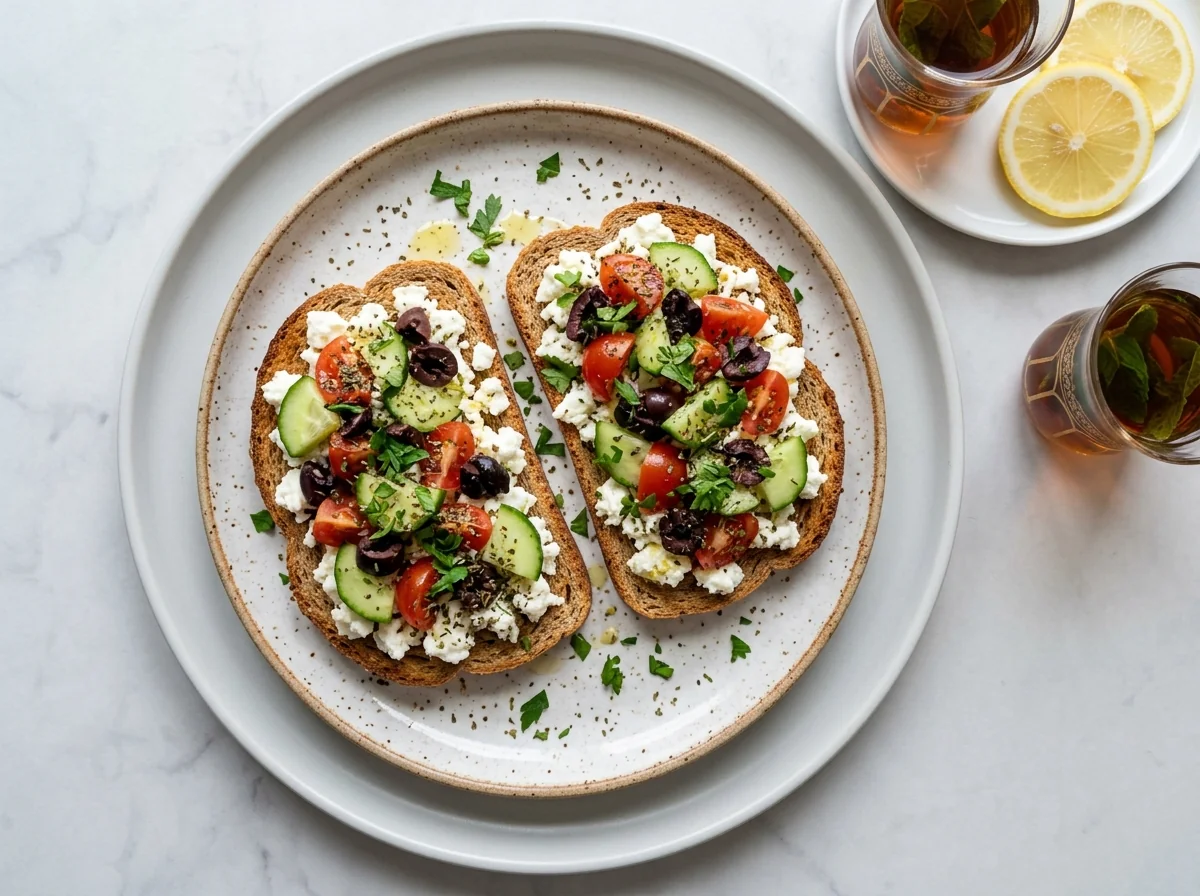
Serve the mafraka hot with Arabic pita bread and vegetables (tomatoes, cucumber, and olives). It is a quick, economical, and satisfying Levantine breakfast — one of the most beloved morning dishes for families — bringing together potatoes and eggs in a simple, nourishing plate.
Blood Sugar Impact
The glycemic index (GI) measures how quickly a food raises blood sugar, while the glycemic load (GL) measures how much a full serving raises it. Together they give the complete picture.
Glycemic Index
GI
69Medium
Low0–55Medium56–69High70+
A low value (≤55) means a gradual rise in blood sugar — the most suitable range for diabetes and insulin resistance.
Glycemic Load
GL
17Medium
Low0–10Medium11–19High20+
Glycemic load reflects the impact of the full serving. To lower it: take half a serving, or pair the recipe with a source of protein and fiber.
Nutritional Information
Per ServingMakes 3 servings · one serving is about 265 g of raw ingredients
Calories349 kcal17%of Daily Value*
Protein12 g24%of Daily Value*
Carbohydrates29 g11%of Daily Value*
Fat21 g27%of Daily Value*
Fiber4 g14%of Daily Value*
Sodium405 mg18%of Daily Value*
Potassium783 mg17%of Daily Value*
Phosphorus228 mg18%of Daily Value*
* Percent Daily Values are based on a 2,000-calorie diet per FDA food-label reference values — your daily needs may be higher or lower. Values are derived from the recipe's ingredients via the USDA database.
Troubleshooting
The most common problems when preparing Potato and Egg Scramble (Mafraka), and how to fix them:
Potatoes are raw inside
Cubes were too large or heat was too high. Cut the potatoes into small, even cubes and fry over medium heat with occasional stirring until cooked through before adding the eggs. You can also cover the pan for a few minutes to steam them through.
Eggs are dry and rubbery
Cooked too long. Take the pan off the heat while the eggs are still slightly soft — they finish in the residual heat. Scrambled eggs should stay moist and tender; prolonged cooking dries them out.
Potatoes are greasy
Too much oil. Fry the potatoes in a moderate amount of oil over medium heat, or bake them in the oven with a little oil then add the eggs; potatoes soak up oil when deep-fried.
Potatoes stuck to the pan
Pan was not greased or potatoes were moved too early. Use a good pan with sufficient oil and let the potatoes develop a crust before stirring so they release cleanly.
Bland flavour
Not enough salt or spices. Season the potatoes while frying, add cumin and onion, and a pinch of pepper. The parsley at serving time also brightens the taste.
Storage and Make-Ahead
Refrigerator (4°C)
Keep in an airtight container for two days; reheat in a frying pan or microwave. Best eaten fresh, as cooked egg changes texture slightly on storage.
Meal prep
Dice and fry the potatoes ahead and keep them chilled; add the eggs at breakfast time in just minutes. This speeds up a busy morning.
Freezer
Not recommended for freezing (eggs change texture on thawing). The dish comes together in 30 minutes, so make it fresh.
Food safety
Cook the eggs until set and the potatoes until cooked through; do not leave mafraka out of refrigeration for more than two hours.
Tested Ingredient Substitutions
Original Ingredient
Tested Substitute
Ratio
Flavor Difference
Frying potatoes in oil
Baking potatoes in the oven
A light drizzle of oil
Significantly reduces fat; bake the potatoes until golden then add the eggs in a frying pan
Whole eggs
A mix of whole eggs and egg whites
As needed
Less cholesterol and fat while keeping the protein
Potatoes only
Add bell pepper or tomato
To preference
Raises fibre and vegetable content, reduces the proportion of starch, and adds flavour and colour
How Much Does It Make? Scaling Guide
Servings
Potatoes
Eggs
2 (half recipe)
2 pieces
3 eggs
3 (base)
3 pieces
4 eggs
6 (family)
6 pieces
8 eggs
EEINA Nutrition Tip
Mafraka is a relatively balanced breakfast: eggs provide complete protein, potatoes provide energy-giving carbohydrates, and olive oil provides healthy fat. Its challenges are the oil quantity and the potato's moderate-to-high glycaemic index. For a lighter version: fry the potatoes in less oil (or bake them), add vegetables (bell pepper or tomato) to raise the fibre, and serve with fresh vegetables rather than more bread.
Add This Recipe to Your Plan
The EEINA app saves your favorite recipes, calculates them from their real ingredients, and shows your daily numbers toward your goal. Try it free now.
From the Arabic root meaning to rub or scramble — the eggs are folded and rubbed into the potatoes in the pan until set and distributed. It is a quick, homely Levantine breakfast, also known simply as potatoes and eggs (batata wa bayd).
How do I get crispy potatoes?
Cut them into small, even cubes, fry over medium heat in sufficient oil, and stir only occasionally (not constantly) until cooked through and the edges are golden before adding the eggs. Patience during frying is the secret to crispiness.
Is mafraka healthy?
A relatively balanced breakfast: protein from eggs, energy from potatoes, healthy fats from olive oil. Lighten it with less oil or baked potatoes, add vegetables, and serve with fresh salad for better balance.
When do I add the eggs?
Once the potatoes are cooked through and crispy. Lower the heat, crack the eggs over them, and scramble them in until just set and still moist. Potatoes take longer, so they are cooked first; the eggs go in at the end.