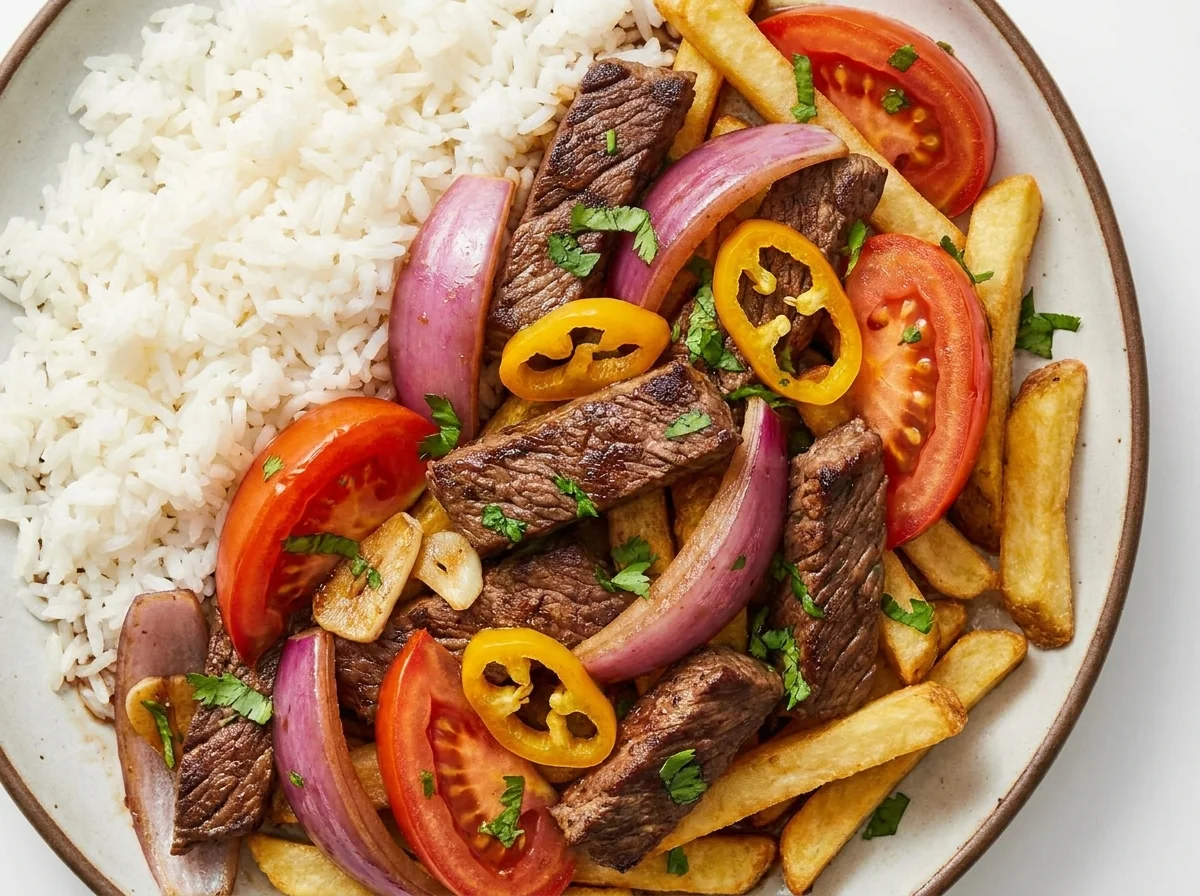
Lomo saltado is the national dish of Peru, bringing together Peruvian cuisine and the Chinese cuisine that Chinese immigrants carried to Peru in the nineteenth century, known there as chifa.
From it came soy sauce and the method of quick stir-frying over high heat in a deep pan, while the local ingredients stayed, like the hot yellow pepper and the potatoes Peru is famous for. It is traditionally served with white rice alongside the crispy potatoes in the same dish.
Preparation Steps
Prepare the crispy potatoes
Fry the potato fries in plenty of oil until they turn golden and crispy, then drain them on absorbent paper, sprinkle with a little salt, and set them aside. The crispy potatoes are an authentic part of the dish and are added at the last moment so they keep their crunch.
Season the meat and sear it over high heat
Mix the meat strips with the salt and black pepper. Heat half the oil in a wide pan over very high heat, and sear the meat in two batches for one to two minutes per batch until its surface browns and the inside stays tender, then set it aside. Crowding the pan lowers the heat so the meat boils instead of searing, so divide it into two batches.
Fry the onion, pepper, and garlic
In the remaining oil over high heat, toss the red onion, hot yellow pepper, and garlic for only two minutes until the onion softens but keeps some crunch. Quick cooking over high heat is the basis of this dish, known for its quick stir-fry method (saltado).
Add the tomato, soy sauce, and vinegar
Add the tomato slices, soy sauce, and red vinegar, and toss for one minute until the tomato softens a little and a light sauce forms. Return the meat with its juices and toss for half a minute until combined.
Add the potatoes and serve
Turn off the heat and add the crispy potatoes and cilantro, and toss gently just once so the potatoes do not lose their crunch. Serve immediately with white rice alongside.
Blood Sugar Impact
The glycemic index (GI) measures how quickly a food raises blood sugar, while the glycemic load (GL) measures how much a full serving raises it. Together they give the complete picture.
Glycemic Index
GI
66Medium
Low0–55Medium56–69High70+
A low value (≤55) means a gradual rise in blood sugar — the most suitable range for diabetes and insulin resistance.
Glycemic Load
GL
42High
Low0–10Medium11–19High20+
Glycemic load reflects the impact of the full serving. To lower it: take half a serving, or pair the recipe with a source of protein and fiber.
Nutritional Information
Per ServingMakes 3 servings · one serving is about 575 g of raw ingredients
Calories636 kcal32%of Daily Value*
Protein43 g86%of Daily Value*
Carbohydrates69 g25%of Daily Value*
Fat19 g24%of Daily Value*
Fiber5 g18%of Daily Value*
Sodium652 mg28%of Daily Value*
Potassium1262 mg27%of Daily Value*
Phosphorus440 mg35%of Daily Value*
* Percent Daily Values are based on a 2,000-calorie diet per FDA food-label reference values — your daily needs may be higher or lower. Values are derived from the recipe's ingredients via the USDA database.
Troubleshooting
The most common problems when preparing Peruvian Lomo Saltado, and how to fix them:
The meat came out tough or boiled
The pan was crowded or the heat was low. Use very high heat and sear the meat in two batches so its surface browns quickly and the inside stays tender.
The potatoes lost their crunch
They were added early or the sauce drowned them. Add them after turning off the heat in the last step and toss only once.
The onion melted and lost its texture
It was cooked too long. The onion in this dish keeps some crunch, so two minutes over high heat is enough.
The taste is bland
A shortage of vinegar or soy sauce. They are the source of the distinctive sour and salty flavor, so adjust the amount to taste.
Storage and Make-Ahead
Right away
Serve it as soon as it is made so the potatoes stay crispy and the meat tender.
In the fridge
Keep the meat and vegetables for two days in an airtight container, and prepare the potatoes fresh at serving time.
Freezing
Not suitable for freezing because the potatoes and fresh vegetables lose their texture.
Tested Ingredient Substitutions
Original Ingredient
Tested Substitute
Ratio
Flavor Difference
Tenderloin
Chicken breast strips
1:1
A lighter, lower-calorie version, with the chicken cooked fully through
Hot yellow pepper
Hot red pepper
1:1
An available alternative with a close hot flavor
Fried potatoes
Oven-roasted potatoes
1:1
Reduces the oil with good crunch
White rice
Brown rice
1:1
Higher fiber and a lower glycemic index
How Much Does It Make? Scaling Guide
Ingredient
3 servings
1.5 servings
6 servings
Meat
450 g
225 g
900 g
Red onion
150 g
75 g
300 g
Potatoes
300 g
150 g
600 g
EEINA Nutrition Tip
Choosing a lean cut of meat like the tenderloin reduces the saturated fat in the meal. And you must make sure the beef is cooked safely (an internal temperature of 71 degrees Celsius for ground or well-cooked cuts) per food safety guidelines.
Add This Recipe to Your Plan
The EEINA app saves your favorite recipes, calculates them from their real ingredients, and shows your daily numbers toward your goal. Try it free now.
So they keep their crunch. Adding them early makes them absorb the sauce and soften, and they are an authentic part of the dish that sets it apart from other stir-fry dishes.
What is the hot yellow pepper and what do I replace it with?
It is a Peruvian pepper known as ají amarillo with a hot, fruity flavor. If it is not available, replace it with hot red pepper or a mild hot pepper paste.
Why is it served with rice and potatoes together?
That is how it is traditionally served in Peru, with the potatoes inside the dish and the rice alongside. For anyone watching carbohydrates, one of them in a measured amount is enough.
Is it suitable for making ahead?
The meat and vegetables can be prepped shortly before serving, but the final stir-fry and adding the potatoes happen right at serving time so the dish does not lose its texture.