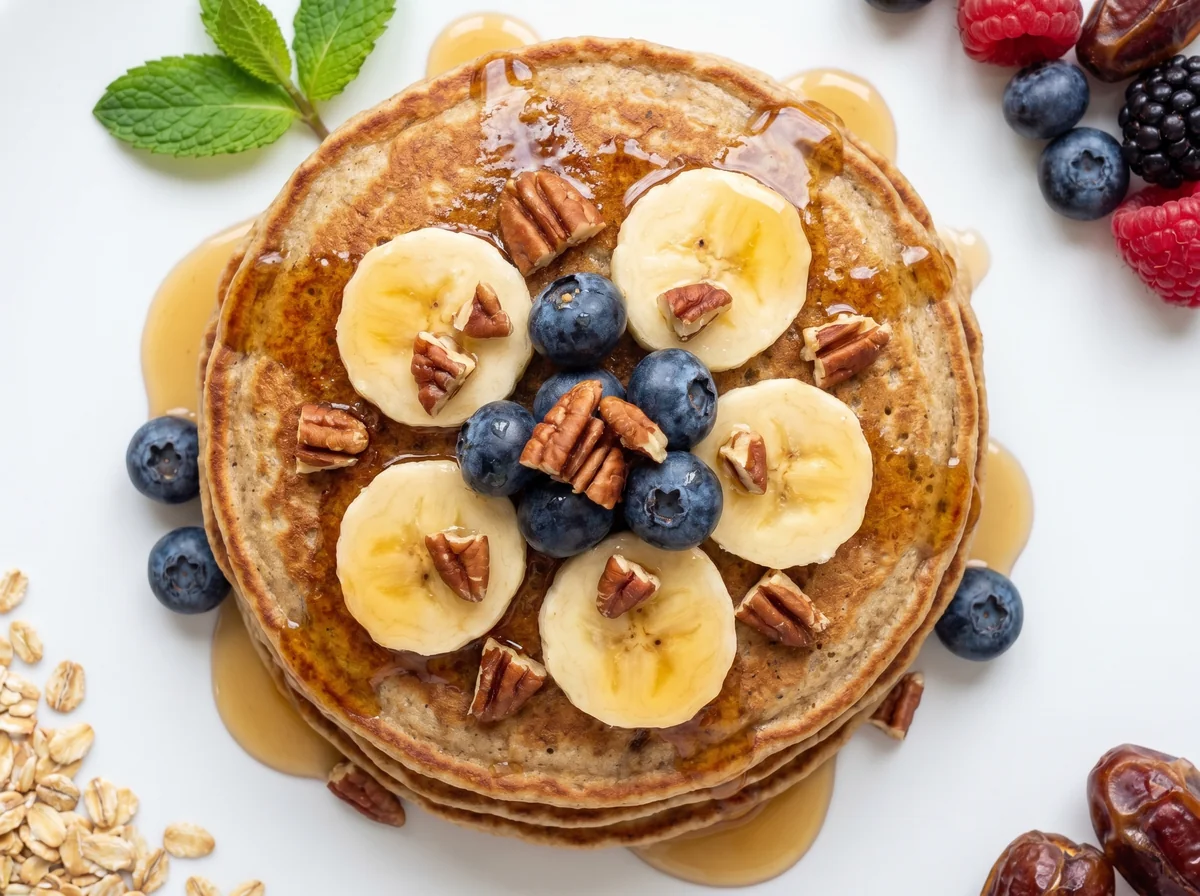
Pancakes made from whole oat flour, ripe banana and eggs — no added sugar. The fibre and protein keep blood sugar steadier than white-flour pancakes. A popular breakfast in a healthy, satisfying version.
Pancakes are the beloved weekend breakfast, but the white-flour, sugary version spikes blood sugar quickly.
The EEINA version builds them from whole oat flour and banana — which naturally sweetens them — along with eggs for protein, producing a satisfying breakfast that has a steadier, longer-lasting effect on blood sugar.
Preparation Steps
Grind the oats
Grind the oats in a blender until they form a fine flour (about 30 seconds). This gives the pancakes a smoother texture. If you prefer a slightly coarser texture, leave some oats unground.
Make the batter
In a blender or bowl, mash the bananas well, then add the eggs, milk and vanilla and whisk together. Add the oat flour, baking powder, cinnamon and salt and stir until just combined. Let the batter rest for 5 minutes so the oats absorb the liquid and thicken slightly.
Heat the pan
Heat a non-stick pan over medium-low heat and brush with a light drizzle of oil or butter. The pan is ready when a drop of water flicked onto it evaporates instantly. Gentle heat is important so the inside cooks through before the surface browns.
Cook the pancakes
Pour about 1/4 cup of batter per pancake. Leave undisturbed until bubbles appear on the surface and the edges look dry (2 to 3 minutes), then flip and cook the other side for 1 to 2 minutes until golden. The pancakes are done when they spring back lightly when pressed.
Serve
Serve warm with Greek yogurt and fresh fruit (berries or banana slices) instead of sugary syrup. A sprinkle of cinnamon or a spoonful of peanut butter completes the dish without any added sugar.
Blood Sugar Impact
The glycemic index (GI) measures how quickly a food raises blood sugar, while the glycemic load (GL) measures how much a full serving raises it. Together they give the complete picture.
Glycemic Index
GI
52Low
Low0–55Medium56–69High70+
A low value (≤55) means a gradual rise in blood sugar — the most suitable range for diabetes and insulin resistance.
Glycemic Load
GL
19Medium
Low0–10Medium11–19High20+
Glycemic load reflects the impact of the full serving. To lower it: take half a serving, or pair the recipe with a source of protein and fiber.
Nutritional Information
Per ServingMakes 4 servings · one serving is about 190 g of raw ingredients
Calories399 kcal20%of Daily Value*
Protein11 g22%of Daily Value*
Carbohydrates42 g15%of Daily Value*
Fat22 g28%of Daily Value*
Fiber6 g21%of Daily Value*
Sodium472 mg21%of Daily Value*
* Percent Daily Values are based on a 2,000-calorie diet per FDA food-label reference values — your daily needs may be higher or lower. Values are derived from the recipe's ingredients via the USDA database.
Troubleshooting
The most common problems when preparing Oat and Banana Pancakes, and how to fix them:
Pancakes burned on the outside and raw in the middle
The heat is too high. Reduce to medium-low — oats and banana need more time for the inside to cook. The correct temperature: a drop of water evaporates without immediately burning.
The batter was too thin and spread across the pan
Not enough oats or too much milk. Let the batter rest 5 minutes to thicken, and add a tablespoon of ground oats if it remains runny. A larger banana also adds more liquid.
Pancakes are dense and heavy, not fluffy
Old baking powder or over-mixed batter. Use fresh baking powder and stir only until just combined — over-mixing develops gluten and makes the texture heavy.
Pancakes stuck to the pan and tore when flipped
The pan was not hot enough, or there was too little fat, or they were flipped too early. Flip only after bubbles appear and the edges look dry, and brush the pan with a little oil between batches.
The flavour is bland
Not enough ripe banana, cinnamon or salt. Use a very ripe banana (brown spots) as it is much sweeter, and do not forget the pinch of salt and cinnamon — they bring out the natural sweetness.
Storage and Make-Ahead
Refrigerator (4 °C)
3 days in an airtight container after cooling. Reheat in a toaster or dry pan to restore the texture, or eat cold as a snack.
Freezer (−18 °C)
2 months. Place parchment between the pancakes before freezing. Reheat directly from the freezer in a toaster — perfect for busy weekday mornings.
Advance preparation
Make the batter the night before and store it in the fridge (it may thicken slightly — add a splash of milk). Or cook a full batch and freeze them for the week's breakfasts.
Reheating
In a toaster or dry pan over low heat — better than a microwave which makes them soft. Do not leave cooked pancakes out of the fridge for more than 2 hours.
Tested Ingredient Substitutions
Original Ingredient
Tested Substitute
Ratio
Flavor Difference
Oat flour
Almond flour
Same quantity
Fewer carbs and gluten-free; slightly more moist texture (adds tree nuts as an allergen).
Banana
Grated apple or mashed pumpkin
1/2 cup
For those who do not like banana — lighter sweetness, may need a little extra cinnamon.
Milk
Unsweetened almond or oat milk
Same quantity
For a dairy-free version.
Eggs
Flax egg (1 tbsp ground flaxseed + 3 tbsp water per egg)
Per egg
For a vegan version; slightly denser texture.
Sweet syrup for serving
Greek yogurt and fresh fruit, or peanut butter
To taste
Adds protein and avoids added sugar.
How Much Does It Make? Scaling Guide
Number of servings
Oats
Banana
Eggs
Milk
2 (individual × 2)
0.75 cup
Piece
1 egg
0.25 cup
4 (base)
1.5 cups
2
2 eggs
0.5 cup
6 (family)
2.25 cups
3
3 eggs
0.75 cup
8 (entertaining)
3 cups
4
4 eggs
1 cup
EEINA Nutrition Tip
The sweetness of the banana fully replaces added sugar — do not add any sugar or sweet syrup. For people with diabetes: serve with Greek yogurt and a handful of berries instead of honey or syrup, as the protein and fibre slow sugar absorption. A moderate portion (3 small pancakes) is sufficient.
Add This Recipe to Your Plan
The EEINA app saves your favorite recipes, calculates them from their real ingredients, and shows your daily numbers toward your goal. Try it free now.
Are these pancakes suitable for people with diabetes?
This version is much better than white-flour pancakes: whole oats and banana with no added sugar, glycaemic index around 50. But the glycaemic load is moderate, so keep to a small portion (3 pancakes) and serve them with protein like Greek yogurt, and avoid sweet syrup.
Are oats gluten-free?
Oats themselves are gluten-free but are often processed in facilities that handle wheat and may contain traces. If you are sensitive to gluten (coeliac), use certified gluten-free oats or almond flour.
How do I sweeten them without sugar?
A very ripe banana (covered in brown spots) sweetens them naturally. For serving, add fresh fruit or a pinch of cinnamon. Avoid honey and sweet syrup to keep the meal gentle on blood sugar.
Can they be made fully vegan?
Yes — replace each egg with a flax egg (1 tbsp ground flaxseed with 3 tbsp water) and the milk with plant-based milk. The texture will be slightly denser but the recipe still works.
Are they good for busy weekday mornings?
Excellent. Cook a batch on the weekend and freeze them with parchment between pieces, then heat them directly from the freezer in a toaster every morning.
Sources: USDA · University of Sydney · Gulf GSO · Our methodology · Updated on