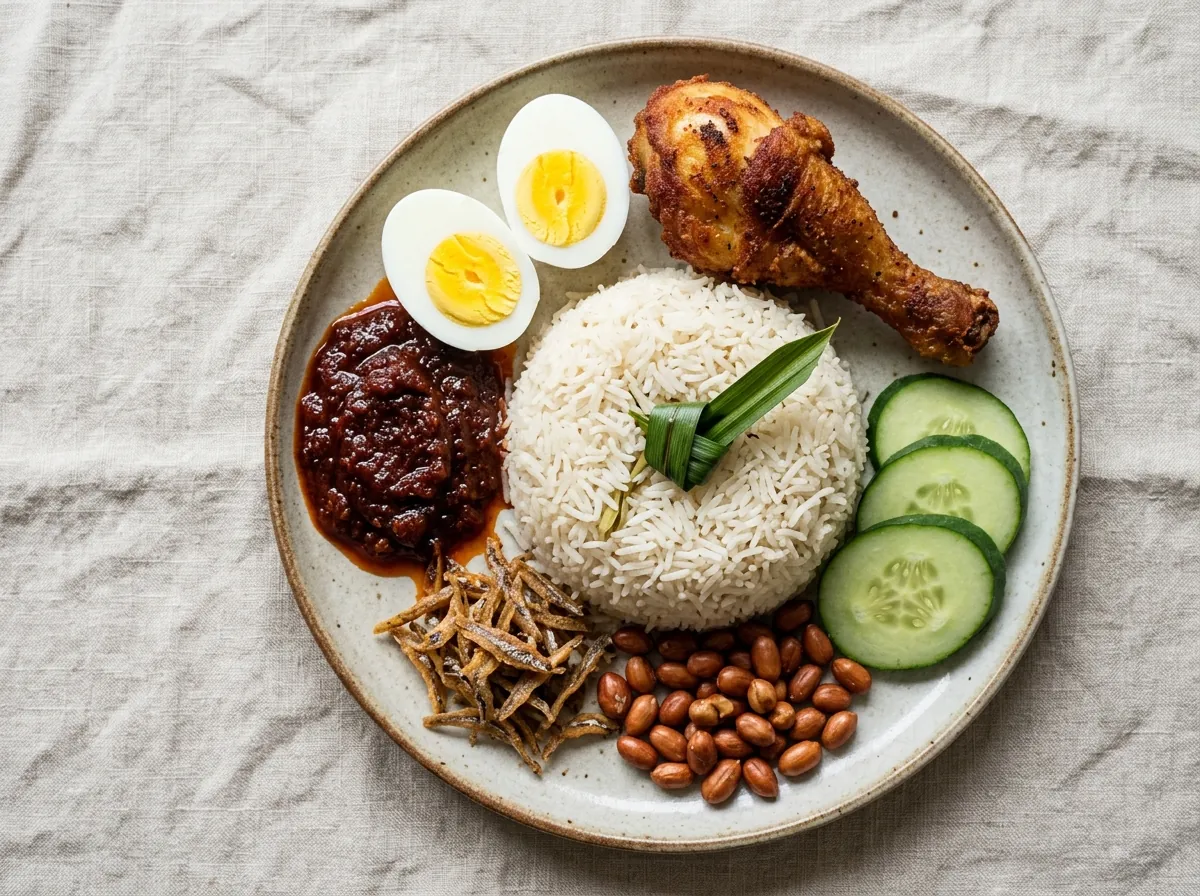
Nasi lemak — fragrant coconut milk rice served with fried turmeric chicken, a soft-boiled egg, cucumber slices, roasted peanuts, sambal, and crispy anchovies. Malaysia's national dish and a complete, filling suhoor.
Nasi lemak is the national dish of Malaysia; its name means 'creamy rich rice.' It traces back to the old Malay kitchen and spread across Southeast Asia.
It is traditionally served on a banana leaf. At suhoor it works as a complete meal that combines starches, protein, and healthy fats from coconut.
Preparation Steps
Cook the rice
Drain the soaked rice and place it in a pot with the coconut milk, water, pandan leaves, ginger, lemongrass, and salt. Cover and bring to a boil, then lower the heat and leave it for 20 minutes.
Prepare the sambal
In a pan, sauté Malaysian sambal with a spoon of oil for three minutes. Ready-made sambal is available in Asian stores.
Fry the chicken
Season the chicken thighs with turmeric and salt, and fry them in hot oil for 15 minutes until they turn golden with a crispy skin. Turmeric-marinated chicken is one of the classic dishes.
Boil the eggs
Boil the eggs for seven minutes, then chill, peel, and halve them.
Toast the peanuts
Toast the peanuts in a dry pan for three minutes and crush them. The fried anchovies are toasted the same way.
Serve
Arrange the rice on plates and place the chicken, eggs, cucumber, sambal, peanuts, and anchovies over it. Nasi lemak is one of the most popular suhoor dishes in Malaysia and Indonesia.
Blood Sugar Impact
The glycemic index (GI) measures how quickly a food raises blood sugar, while the glycemic load (GL) measures how much a full serving raises it. Together they give the complete picture.
Glycemic Index
GI
69Medium
Low0–55Medium56–69High70+
A low value (≤55) means a gradual rise in blood sugar — the most suitable range for diabetes and insulin resistance.
Glycemic Load
GL
57High
Low0–10Medium11–19High20+
Glycemic load reflects the impact of the full serving. To lower it: take half a serving, or pair the recipe with a source of protein and fiber.
Nutritional Information
Per ServingMakes 4 servings · one serving is about 1390 g of raw ingredients
Calories2589 kcal129%of Daily Value*
Protein270 g540%of Daily Value*
Carbohydrates86 g31%of Daily Value*
Fat119 g153%of Daily Value*
Fiber3 g11%of Daily Value*
Sodium1803 mg78%of Daily Value*
* Percent Daily Values are based on a 2,000-calorie diet per FDA food-label reference values — your daily needs may be higher or lower. Values are derived from the recipe's ingredients via the USDA database.
Troubleshooting
The most common problems when preparing Nasi Lemak Coconut Rice, and how to fix them:
The rice is dry
Add 100 ml of coconut milk and cook for 5 more minutes. The rice absorbs the liquid.
The flavor is flat
Double the ginger and add an extra pandan leaf. The classic flavor needs pandan leaves.
The chicken is not crispy
Pat it dry with a paper towel before frying. Moisture prevents the crust.
The sambal is too hot
Soften it with a spoon of sugar and a spoon of lemon juice. Sambal varies in heat.
Storage and Make-Ahead
In the refrigerator
Two days. Reheat the rice with a spoon of coconut milk.
In the freezer
Two months for the rice only. Reheat it with coconut milk.
Tested Ingredient Substitutions
Original Ingredient
Tested Substitute
Ratio
Flavor Difference
Coconut milk
Light coconut milk
Same amount
Lighter flavor.
Chicken
Fried fish
Same weight
Lighter flavor with similar nutritional value.
Anchovies
Fried onion
30 g
A plant-based version.
Sambal
Arabic chili paste
Same amount
Different flavor.
How Much Does It Make? Scaling Guide
Ingredient
4 people
8 people
12 people
Rice
400 g
800 g
1200 g
Coconut milk
400 ml
800 ml
1200 ml
Chicken
4 pieces
8 pieces
12 pieces
Eggs
4 eggs
8 eggs
12 eggs
EEINA Nutrition Tip
Soak the rice for 30 minutes before cooking. Full-fat coconut milk gives a deeper flavor. Pandan leaves are essential for the classic flavor. Serve the dish right away because the rice dries out quickly.
Add This Recipe to Your Plan
The EEINA app saves your favorite recipes, calculates them from their real ingredients, and shows your daily numbers toward your goal. Try it free now.