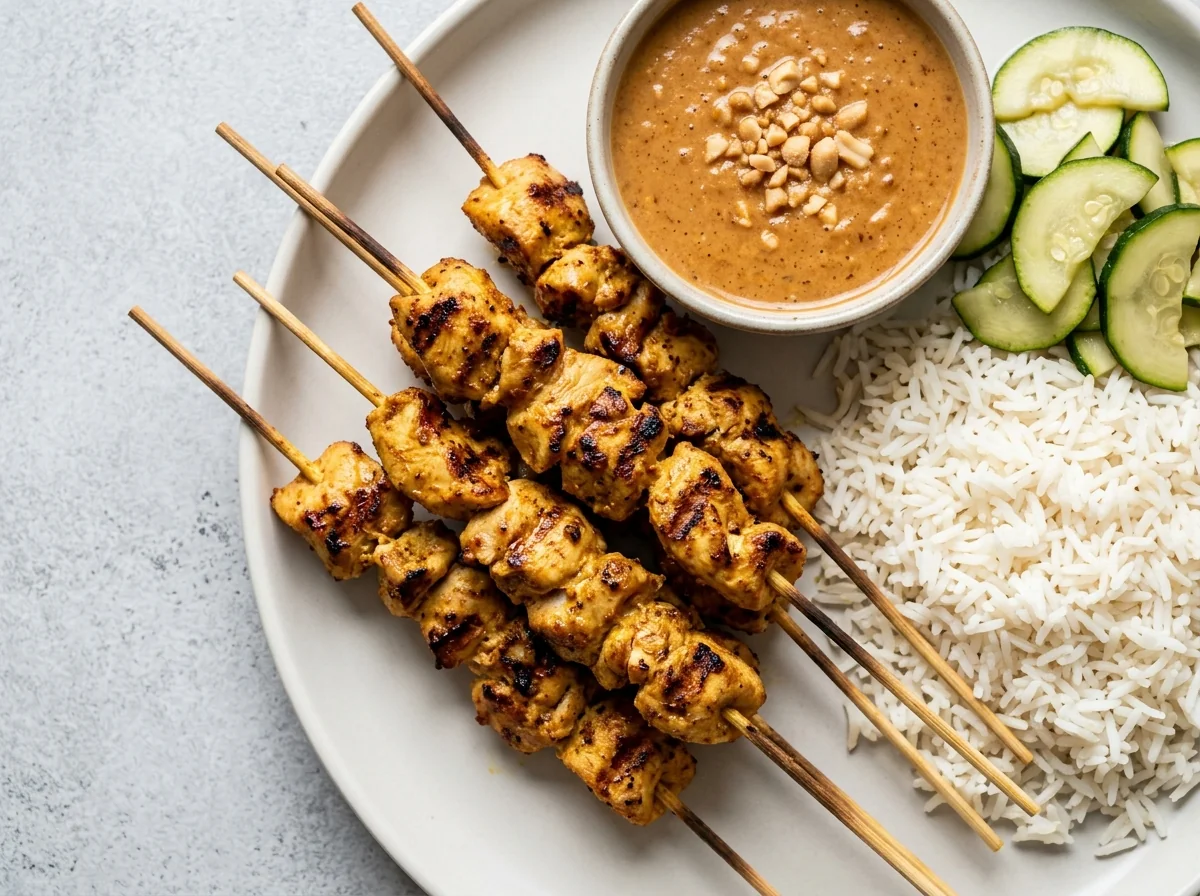
Skewered, marinated chicken thighs grilled and served with a rich coconut-peanut sauce — a Southeast Asian classic that doubles as a high-protein suhoor.
Satay is one of the most famous Southeast Asian dishes. It appeared in Indonesia in the 19th century, and one story says an Indian vendor was inspired by the Turkish kebab and invented the recipe.
Today it is found at every street market. On the suhoor table it works as a protein-rich plate with a peanut sauce that delivers quick energy.
Preparation Steps
Marinate the chicken
Combine the curry paste with the coconut milk, sugar, turmeric, and salt. Add the chicken slices, toss, cover, and refrigerate for 2 hours. The long marinade is essential for flavor.
Thread the skewers
Thread the chicken slices onto the soaked skewers in wavy, overlapping folds. Soaked skewers will not burn on the grill.
Make the peanut sauce
In a skillet, sauté the garlic, ginger, and curry paste for 2 minutes. Add the ground peanuts, coconut milk, sugar, and soy sauce and stir for 5 minutes until the sauce thickens.
Adjust the sauce
Stir in the lemon juice and taste. The sauce should be sweet, spicy, and salty all at once. Adjust with more salt or sugar to taste.
Grill
On an electric or charcoal grill, cook the skewers for 3 minutes per side. Thin chicken cooks quickly. Brush with a spoonful of the sauce in the final minutes.
Serve
Arrange the skewers on a platter and serve with the sauce on the side and basmati rice or pickled zucchini. Satay is one of the most beloved suhoor dishes in Indonesia and Malaysia.
Blood Sugar Impact
The glycemic index (GI) measures how quickly a food raises blood sugar, while the glycemic load (GL) measures how much a full serving raises it. Together they give the complete picture.
Glycemic Index
GI
37Low
Low0–55Medium56–69High70+
A low value (≤55) means a gradual rise in blood sugar — the most suitable range for diabetes and insulin resistance.
Glycemic Load
GL
5Low
Low0–10Medium11–19High20+
Glycemic load reflects the impact of the full serving. To lower it: take half a serving, or pair the recipe with a source of protein and fiber.
Nutritional Information
Per ServingMakes 4 servings · one serving is about 260 g of raw ingredients
Calories520 kcal26%of Daily Value*
Protein40 g80%of Daily Value*
Carbohydrates18 g7%of Daily Value*
Fat33 g42%of Daily Value*
Fiber4 g14%of Daily Value*
Sodium1118 mg49%of Daily Value*
* Percent Daily Values are based on a 2,000-calorie diet per FDA food-label reference values — your daily needs may be higher or lower. Values are derived from the recipe's ingredients via the USDA database.
Troubleshooting
The most common problems when preparing Chicken Satay with Peanut Sauce, and how to fix them:
The sauce is bitter
Add a tablespoon of sugar and a tablespoon of coconut milk. The bitterness comes from the curry paste.
The chicken is dry
Reduce the grilling time and tent it with foil. Thin cuts cook through quickly.
The sauce is thin
Cook for 5 more minutes and add a spoon of soy sauce. The starch thickens it.
The flavor feels flat
Double the lemon and add a spoonful of turmeric. The spices open up in sugar and acid.
Storage and Make-Ahead
Refrigerator (4°C)
Two days. Reheat in a skillet with a splash of water.
Freezer (-18°C)
Up to two months before grilling. Grill straight from the freezer.
Tested Ingredient Substitutions
Original Ingredient
Tested Substitute
Ratio
Flavor Difference
Chicken
Beef slices
Same weight
Cook longer.
Peanuts
Ground cashews
Same weight
Different flavor.
Curry paste
Paprika + turmeric
Same amount
A milder flavor.
Soy sauce
Fish sauce
Same amount
Deeper flavor.
How Much Does It Make? Scaling Guide
Ingredient
4 people
8 people
12 people
Chicken
500 g
1000 g
1500 g
Peanuts
150 g
300 g
450 g
Coconut milk
250 ml
500 ml
750 ml
Curry paste
35 g
70 g
105 g
EEINA Nutrition Tip
Peel the peanuts before roasting if they are still in their skins. Roast them in the oven at 150°C for 10 minutes, not in a skillet, to avoid burning. Choose an authentic Malaysian curry paste.
Add This Recipe to Your Plan
The EEINA app saves your favorite recipes, calculates them from their real ingredients, and shows your daily numbers toward your goal. Try it free now.